




🏰 Bethlehem Street in Tbilisi: churches, a fire temple, and stairs to Narikala
📋 Useful Information
| 📍 Location | Kldisubani district, at the foot of Narikala Fortress, next to Meidan Square |
| ⛪ What's Here | Two Betlemi churches (Zemo and Kvemo), Atashgah Zoroastrian temple, stained-glass house, gallery, museum of illusions |
| 🪜 Betlemi Stairs | About 120 steps, built in the mid-19th century, leading up to Zemo Betlemi |
| 🚗 For Drivers | Narrow two-way street. It is better to enter from Bread Square (Gvini Square) and make a U-turn there |
| 🚇 How to Get There | On foot from Meidan Square, 5 minutes |
| 💰 Admission | Free entry to the churches and Atashgah. Museum of Illusions and the gallery require tickets and follow a schedule |
🧭 Who is this article for
Bethlehem Street (Betlemi, "Bethlehem" in Georgian) is one of the few routes in Old Tbilisi where, in a single climb, you can see two Orthodox churches with different histories, a hidden Zoroastrian fire temple, and views of the entire city. This article will be useful for those who want to climb the famous staircase not blindly, but with an understanding of what stands there and why, and who are curious about why two churches with almost identical names are located on the same street.
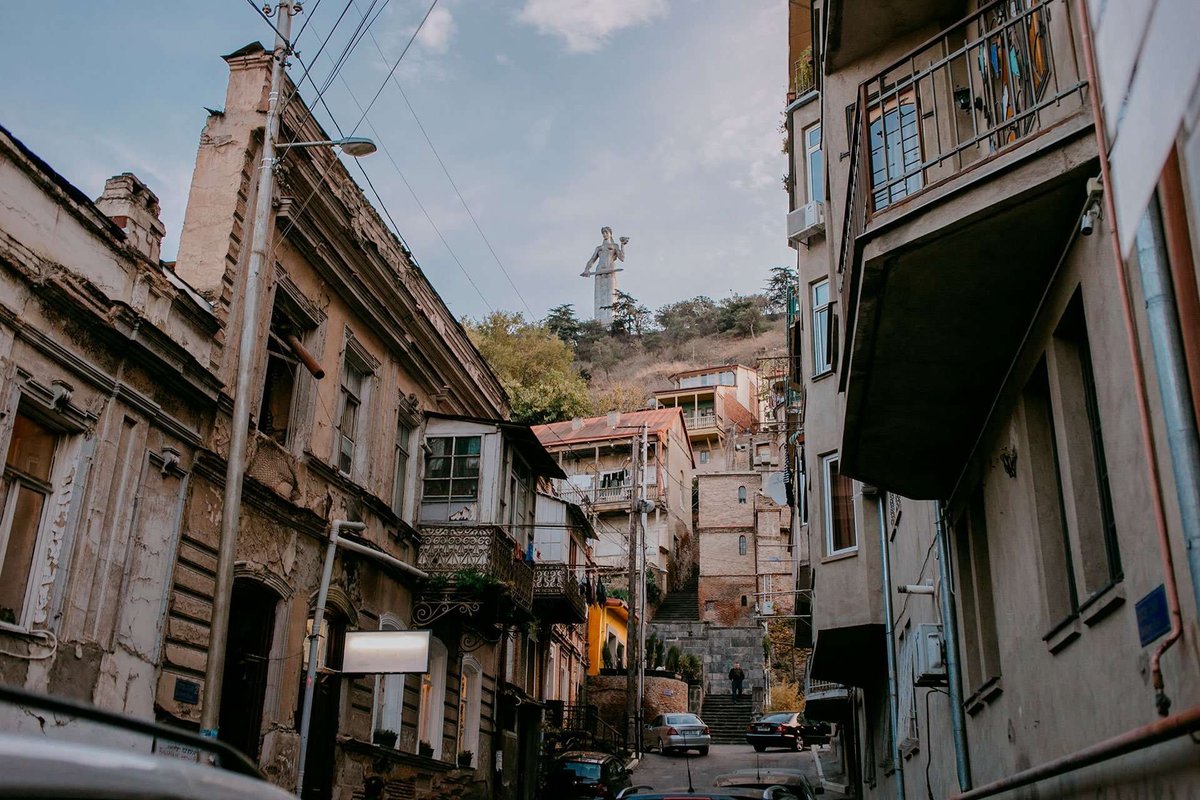
🏛️ Kldisubani Quarter and Betlemi Rise
Kldisubani translates as "rock district," and it's literally true: the street runs along the slope beneath the Narikala Fortress, and the houses here stand directly on the rock. Betlemi Street (officially Betlemi Ascent) is one of the oldest in this part of the city, narrow, cobbled, with carved balconies that haven't been rebuilt for decades.
The name comes from the Betlemi Church, which means "Bethlehem" in Georgian. In fact, there are two churches here: Zemo Betlemi (Upper) and Kvemo Betlemi (Lower). They stand almost on the same vertical axis: Kvemo is slightly lower down the slope, and Zemo directly above it, at the top of a stone staircase of approximately 120 steps, built in the mid-19th century. Climbing this staircase has become a tourist ritual in itself: at the top, one of the best views opens onto the rooftops of Sololaki, the Kura River, and Avlabari.
Hidden between two churches, in the courtyard of a residential building, is the third and most unexpected landmark on the street: the Zoroastrian fire temple, Ateshgah. It is several centuries older than both churches and serves as a reminder that long before Christianity, this was the border of the Persian Empire's influence.
It's worth climbing Betlemi slowly: the street is short, but densely packed with history, every twenty meters.
⛪ Zemo Betlemi: the upper church and the best viewpoint
📍 Betlemi Rise, 18
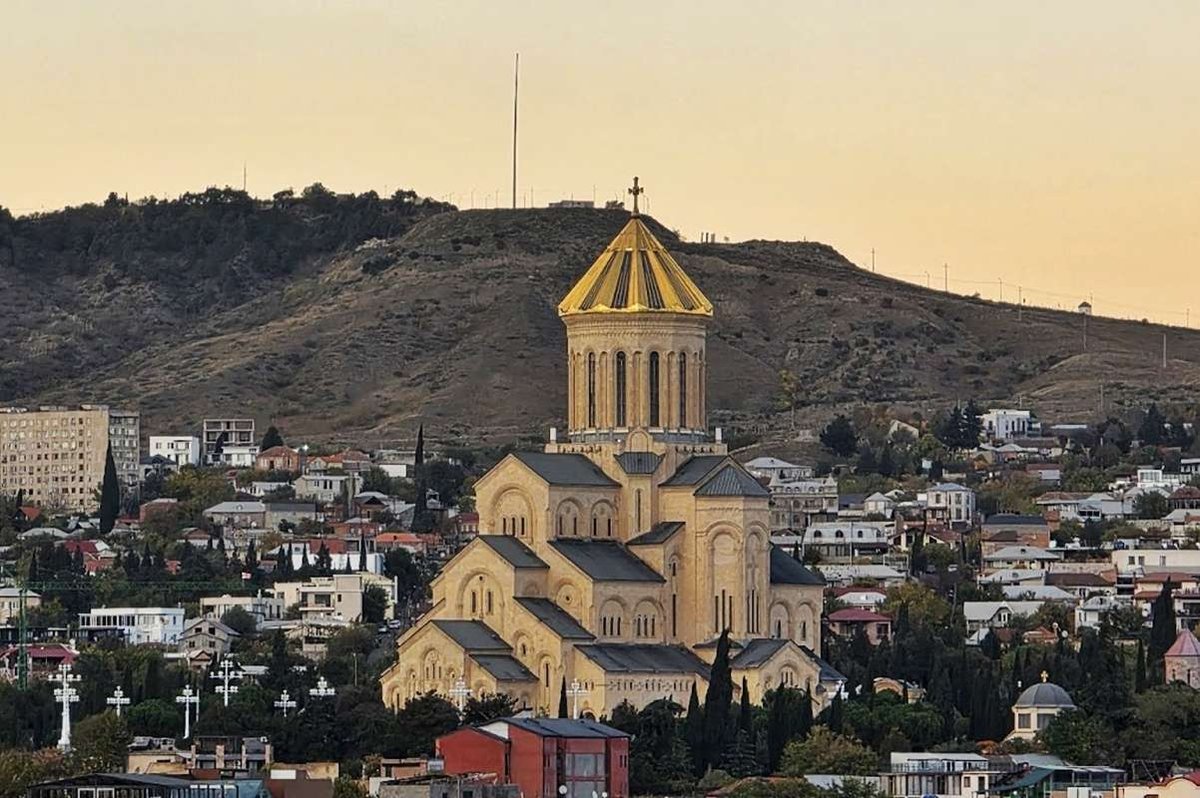
The official name of the church is the Church of the Nativity of the Savior, but it is commonly known as "Zemo Betlemi" meaning Upper Betlemi. It is believed that the first church on this site was built in the 5th century during the reign of King Vakhtang Gorgasali; according to legend, his mother and sister are buried here. That church has not survived: it was destroyed during the invasion of Jalal ad-Din in the 13th century.
Later, an Armenian community settled here and founded a monastery dedicated to the Mother of God. The current brick building with a dome was built in the 18th century and for a long time belonged to the Armenian Apostolic Church under the name Surb Astvatsatsin. The church was transferred to the Georgian Orthodox Church in the early 1990s. Interior paintings from the same period, painted by the artists D. Khidasheli and M. Chakvetadze, have been preserved.
The main reason to climb here, besides the church itself, is the platform next to it. From here, you can see Sololaki, the Kura River bend, and Avlabari, and you can continue up the stone stairs to the Mother of Kartli monument. It's quiet inside, and there are almost no tourist groups: people come here more for the view and the silence than for the building itself.
You can learn more about this church in the article "The Church of the Nativity of the Savior in Betlemi: History, Facts."
⛪ Kvemo Betlemi: the lower church and the Armenian trace
📍 Betlemi Rise, 7
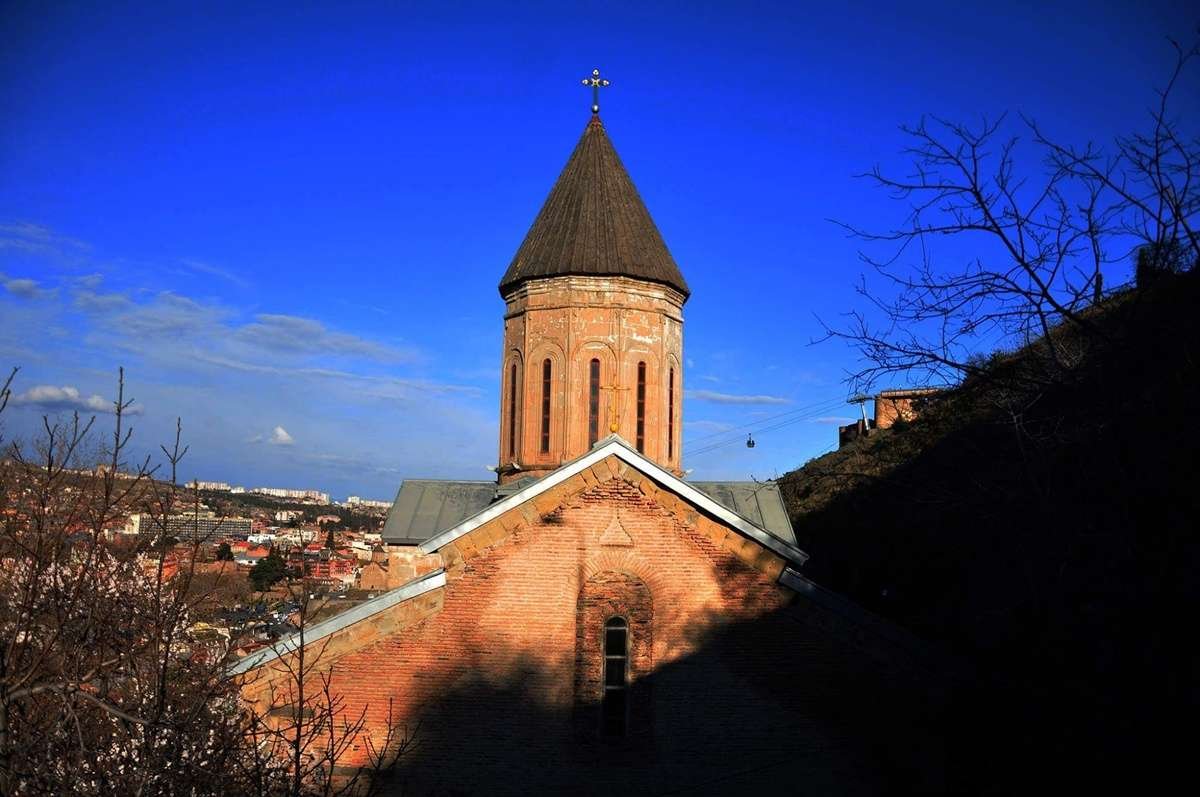
Kvemo Betlemi, the Lower Church, is located slightly lower down the slope and is noticeably different visually: it is built of dark brick, has a more austere and massive appearance, and its dome is clearly visible from below, toward Gudiashvili Square.
The church's history dates back to the 18th century: it was founded by Armenian nuns who migrated from New Julfa near Isfahan, and initially housed the St. Stephen Convent. The current domed building was constructed in 1868 and rebuilt in 1910. Like Zemo Betlemi, the church came under the jurisdiction of the Georgian Orthodox Church at the end of the 20th century.
Kvemo Betlemi's unique feature is its integration into the landscape: the church literally grows into the steep cliff face, earning it the nickname "one of the most unusually located churches in Tbilisi." A few steps from here, in the courtyard of a neighboring building, the entrance to the Ateshgah is hidden, so it makes sense to visit both places in succession. The dress code here is the same as in most active churches in Georgia: modest clothing, and women are advised to cover their heads.
🔥 Ateshgah: A Fire Temple Hidden in the Courtyard
📍 Gomi Street (yard between Zemo and Kvemo Betlemi)
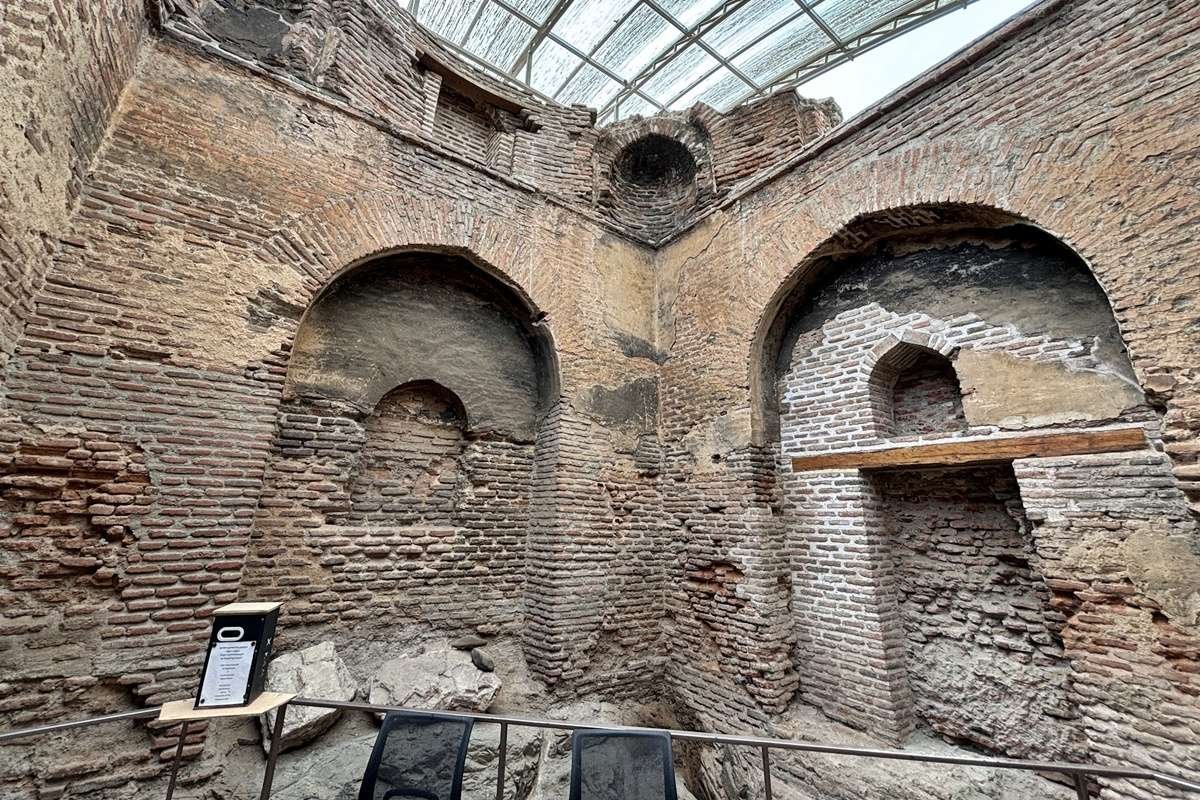
Ateshgah: the only surviving Zoroastrian fire temple in Georgia and, according to some researchers, the northernmost fire temple in the world. Scholars date its construction to the Sassanid era, approximately the 5th-6th centuries, when Eastern Georgia was under strong Persian influence and Zoroastrianism was the state religion of the neighboring empire. The name comes from the Persian words "atesh" (fire) and "ga" (place).
The building has survived a succession of religions and eras: in 628, it was partially destroyed by the Byzantines, in the 1720s, the Ottoman Turks converted Ateshgah into a mosque, and during the Soviet era, the structure was used as a warehouse and housing. It was precisely the temple's integration into the urban fabric that saved it from demolition. Restoration was carried out between 2007 and 2009 with the participation of Norway and ICOMOS; the building is now a national monument.
Finding Ateshgah isn't easy: you have to climb the stone steps from Gomi Street to the massive brown door and ask to enter the courtyard. There are no ticket offices or signs; this is private property, so please behave quietly and respectfully toward the building's residents.
🎯 Four more reasons to stay outside
🏠 House No. 3, the stained glass house
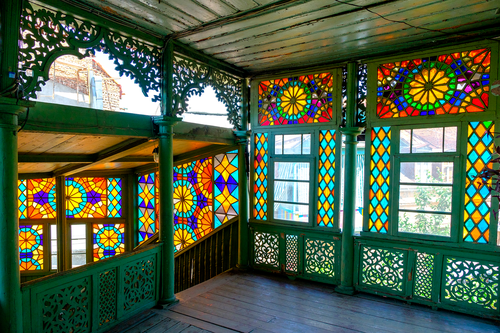
Betlemi's main photographic attraction is a house with stained-glass windows that capture the light in a unique way. Several rooms inside are rented out to tourists, and photographers come here specifically for this effect. Light shines through the glass best on a sunny day, around midday, when the rays fall at just the right angle. The house is residential, so it's best to photograph from the street, not entering the courtyard without permission.
🎨 Gallery of house No. 27
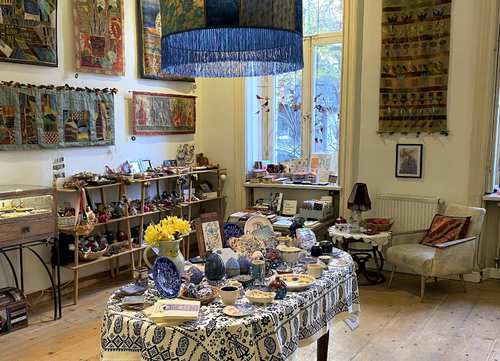
A small space dedicated to contemporary Georgian art: paintings, graphics, and art objects. A good stop for those interested not only in historical art but also in current local art developments. The exhibition is regularly updated, so even a return visit in a few months will reveal new works. Many artists live and work in Tbilisi, making it more likely to pick up something local than the nearby souvenir shops.
☕ Art-cafe Home, building No. 13
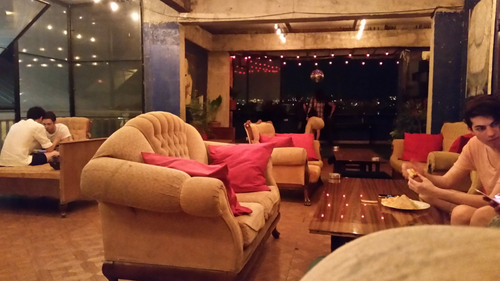
One of the most comfortable options for a break on the climb. A simple, unpretentious interior, coffee, food, and a view of the Old Town rooftops. The small terrace has only a few tables, so it's best to reserve a seat early during the warmer months. The menu is compact: pastries, coffee, and light dishes, enough to replenish your energy before the final climb to Zemo Betlemi.
🎭 Museum of Illusions
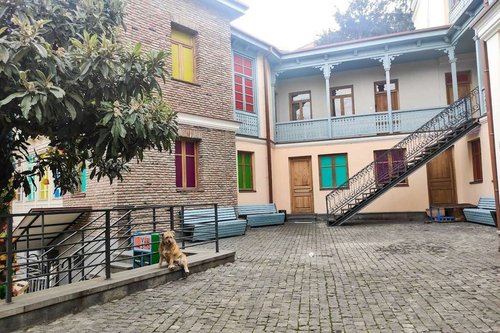
Interactive halls with optical effects are located right at the beginning of the climb. This format is especially popular with children, but adults usually don't leave in a hurry either. It's best to check tickets and opening hours on site. Almost every hall has a photo station, so it's a good idea to charge your phone beforehand. A good option if you're climbing with children and want to add more to the route than just churches and history.
Atashgah is the easiest place to miss: there is no sign, and the entrance looks just like a regular door to a residential building. Look for the stone steps from Gomi Street side between the two Betlemi churches and don't hesitate to knock. As for going up to Zemo Betlemi, it's best to climb closer to evening: the light is softer at this time, and there are fewer tourists on the stairs.
🗺️ Route: how to walk down the street without missing anything
1️⃣ Start at Meidan Square and stop at the Museum of Illusions at the very beginning of the climb.
2️⃣ Climb a little higher to building No. 3 and stop by the stained-glass windows.
3️⃣ Walk to Kvemo Betlemi, the lower church made of dark brick.
4️⃣ Find the entrance to the courtyard from Gomi Street and look inside Ateshgah, the fire temple.
5️⃣ Climb the stairs to Zemo Betlemi and stop at the observation deck.
6️⃣ Descend and stop at the Home Art Cafe, building No. 13, if you need a break.
7️⃣ On the way back, if you have time, stop by the gallery at building No. 27.
💬 What those who have already been say
"I walked along this street during my trip to Tbilisi. I was particularly impressed by the carved balconies on the buildings and the evening lighting. Very cozy."
"I walked along the cobblestones, catching the sun's rays on the stained-glass windows of building No. 3, and felt my heart fill with peace. It's not just beautiful there, you can truly breathe there."
There aren't many reviews yet about the churches and Ateshgah themselves: the place is well-known, but not exactly a tourist hotspot, so impressions are mostly passed on by word of mouth rather than in reviews on maps.
🏁 Why come here
Betlemi Street functions as a short but dense lesson in urban history: five centuries, three religions, and one slope. Zemo and Kvemo Betlemi show how a single church could change denominations several times, Ateshgah recalls the Persian period long before, and the stained-glass windows of Building No. 3 and the gallery of Building No. 27 add a contemporary layer. Come here if Meidan and Narikala aren't enough and you want to see Old Tbilisi from not just one, but several sides of its history.
ℹ️ Information on opening hours, prices, and visiting hours is current at the time of publication. Ateshgah is located on private property and does not have a ticket office or schedule. Please confirm details on site before your visit.
🏛️ What to see nearby




Have you climbed the Betlemi Stairs? What stood out to you the most: the view from Zemo Betlemi, the dark brickwork of Kvemo Betlemi, or the unexpected discovery of Atashgah in the courtyard? Tell us about it, we read all the comments ❤️
❓ Frequently asked questions
💬 These are two different churches on the same street. Zemo (Upper) stands at the top of the stairs and is known for its observation deck, while Kvemo (Lower) is located slightly further down the slope, built of dark brick and literally built into the cliff. Both churches are active, and both currently belong to the Georgian Orthodox Church, although they were previously associated with the Armenian community.
💬 Yes, but there are no signs or ticket offices: this is private property. You need to climb the steps from Gomi Street between the two Betlemi churches, find the brown door, and ask the locals to let you into the courtyard.
💬 About 120. The staircase was built in the mid-19th century; it leads from the ascent to Zemo Betlemi and serves as one of the most famous walking routes in Old Tbilisi.
💬 Technically, yes, it's a two-way street. But it's narrow and cobblestoned, making it difficult to pass another car. It's best to enter from Khlebnaya Square and return the same way.
💬 It's quiet in the morning, and the light falls beautifully on the stained-glass windows of building No. 3. Later in the evening, the light is softer for photos at Zemo Betlemi, and there are fewer people on the stairs. Both views are worth a separate visit.
💬 Yes, the format is designed for everyone: the interactive rooms and optical effects are enjoyed by both children and adults. The tour typically takes about an hour and a half.
💬 Yes, right on the street. The art cafe Home at building #13 is the most famous, but there are other establishments with terraces and city views.
Read also
- Free Places in Tbilisi: Where to Go on a Budget
- Wine Rise in Tbilisi: history, wine and views of Metekhi
- Vake Sameba Church in Tbilisi: A Parish Church in the Heart of the District
- St Michael the Archangel Church in Tbilisi: a quiet church with a literary secret
- The Fire Temple of Nekresi: Pre-Christian Sun Worship in Kakheti

41 comments
Log in to leave a comment
вось толькі задумаўся: тут, у гэтым горадзе, кожны камень мае сваю гісторыю. на вуліцы тваіх думак столькі, што дарога не сканчаецца. а што, калі ў той храм зайсці, убачыць нешта, што зменіць усю перспектыву? які там настрой ўнутры?
But let's talk about those stairs. 120 steps might not sound like much, but trust me, they give your legs a run for their money, especially on a hot afternoon. The view from Narikala is worth every breathless moment, though! Have you ever tried going there at sunset? The golden hour turns the whole city into a painting. So, what’s the best time to visit if I want to dodge the crowds?
Эти улочки, дома, все разношерстное и пропитанное уютным менталитетом Грузии выглядят ну очень привлекательно.
Посетить эту улицу было бы замечательным знакомством с Грузией.