




Batumi's Medea Statue: Who She Is, What She's Holding and Why She Faces the Sea
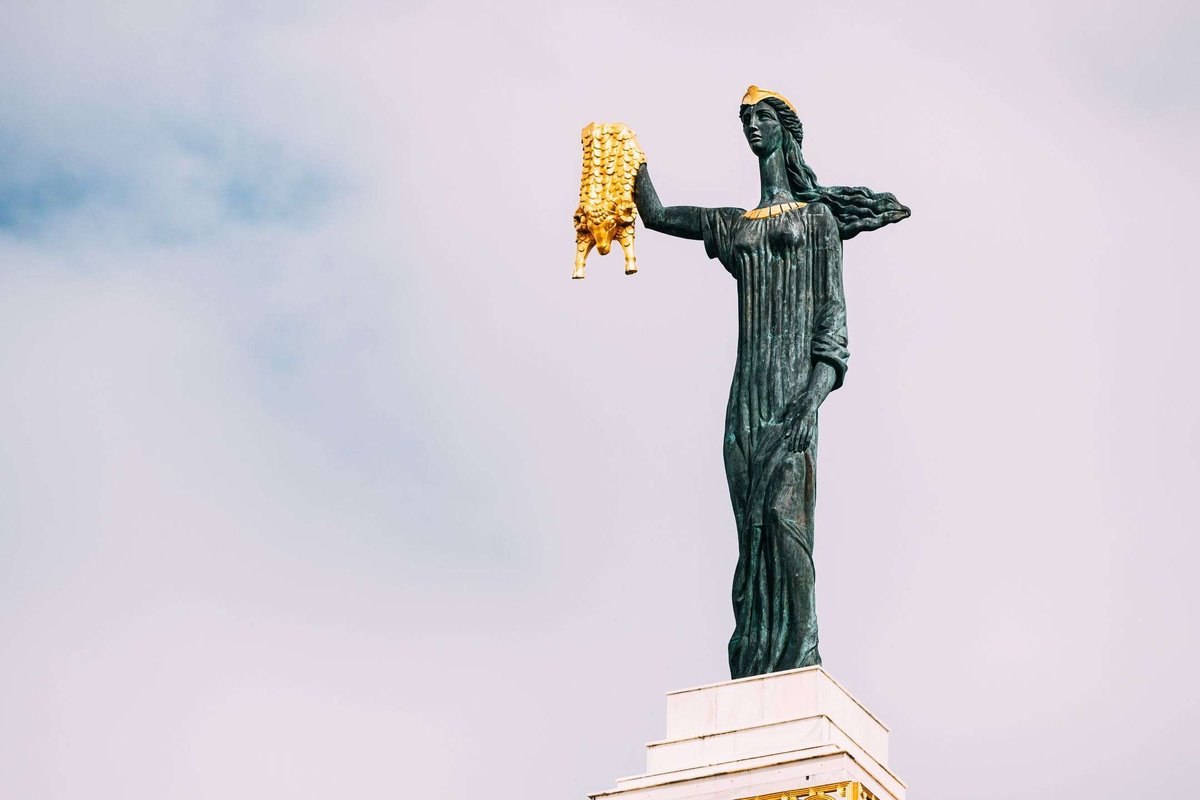
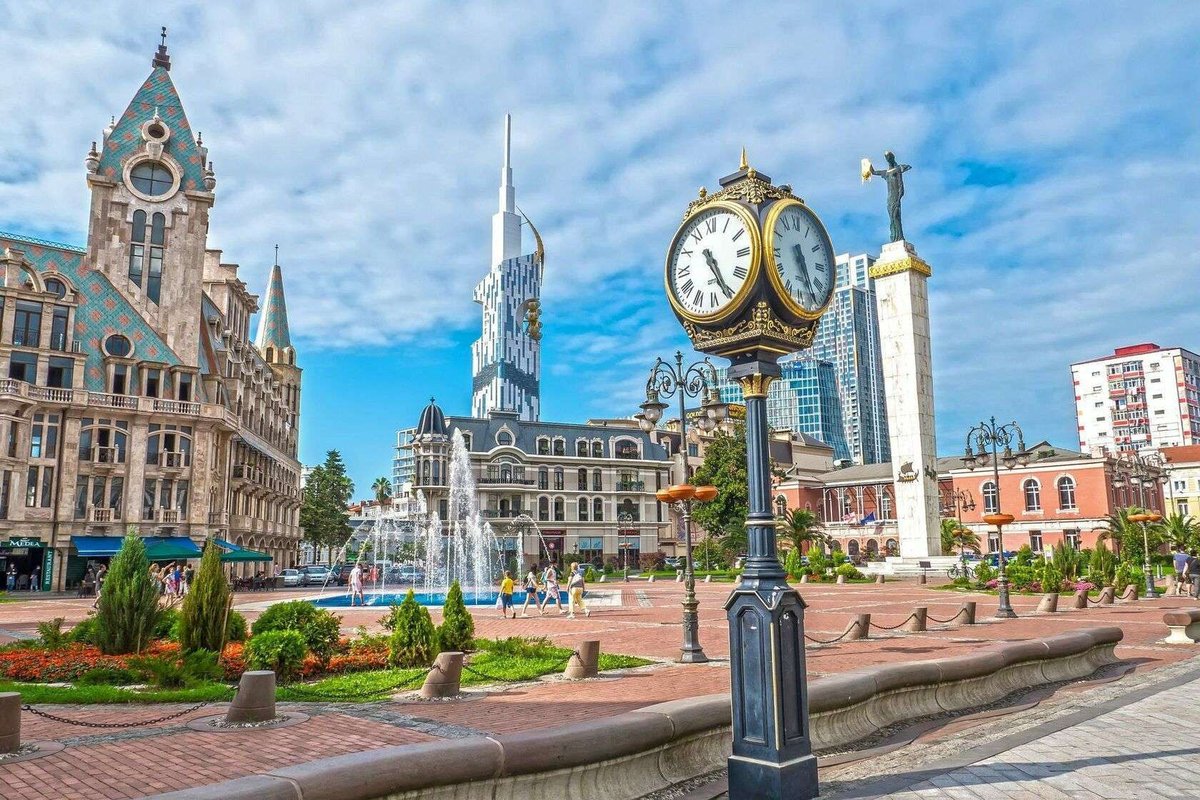
In the centre of Batumi's Europe Square, a bronze woman stands on a tall white column. She holds the Golden Fleece in an outstretched hand and faces the sea, the direction from which, by myth, the Argonauts arrived. The statue rises above the rooflines of the surrounding buildings and reads as a landmark from some distance before you can make out who it is.
Most visitors photograph it without knowing the full story. The full story is worth knowing.
📜 Who Is Medea and Why Batumi
Medea was the daughter of Aeëtes, king of Colchis. Ancient sources place Colchis on the eastern Black Sea coast of the Caucasus, roughly where the Adjara region sits today. Apollonius of Rhodes in the Argonautica describes the voyage to this specific coastal location, the Georgian connection is not a modern invention.
Jason arrived in Colchis for the Golden Fleece, Colchis's most sacred object and a symbol of the kingdom's power and prosperity. Medea, falling in love with Jason, helped him pass the trials her father had set and then helped steal the Fleece. The two fled on the ship Argo to Greece.
The story does not end well. Jason later chose to marry a wealthier bride. Medea's revenge was extreme: she killed Jason's new wife, then killed her own two children by Jason, and escaped on a winged chariot. It is one of the darkest stories in Greek mythology, and also one of the most psychologically complex. Ancient Greek audiences did not read Medea as simply a villain, she was a wronged foreign woman, abandoned after betraying her homeland for a man who had used her.
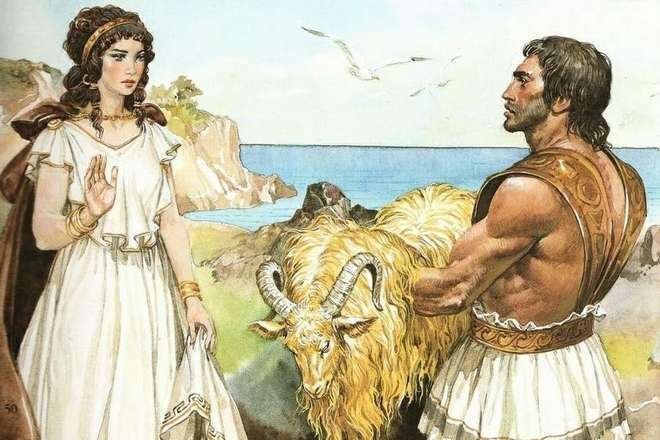
This is a point worth noting. Batumi chose to emphasise one reading of Medea over another. The statue does not depict the revenge; it depicts the princess of Colchis at the moment she holds her homeland's greatest treasure. The city is making a claim about identity and heritage, not endorsing the myth's violent resolution.
Batumi did not erect a monument to the act of revenge. The statue represents Medea as the Colchian princess: the woman who belonged to this land before any of it happened. The Fleece in her hand is the treasure of her country. Her gaze toward the sea is toward the man who came for it. It is a monument to place and heritage, not to the myth's violent ending.
🗿 The Statue: What to Notice
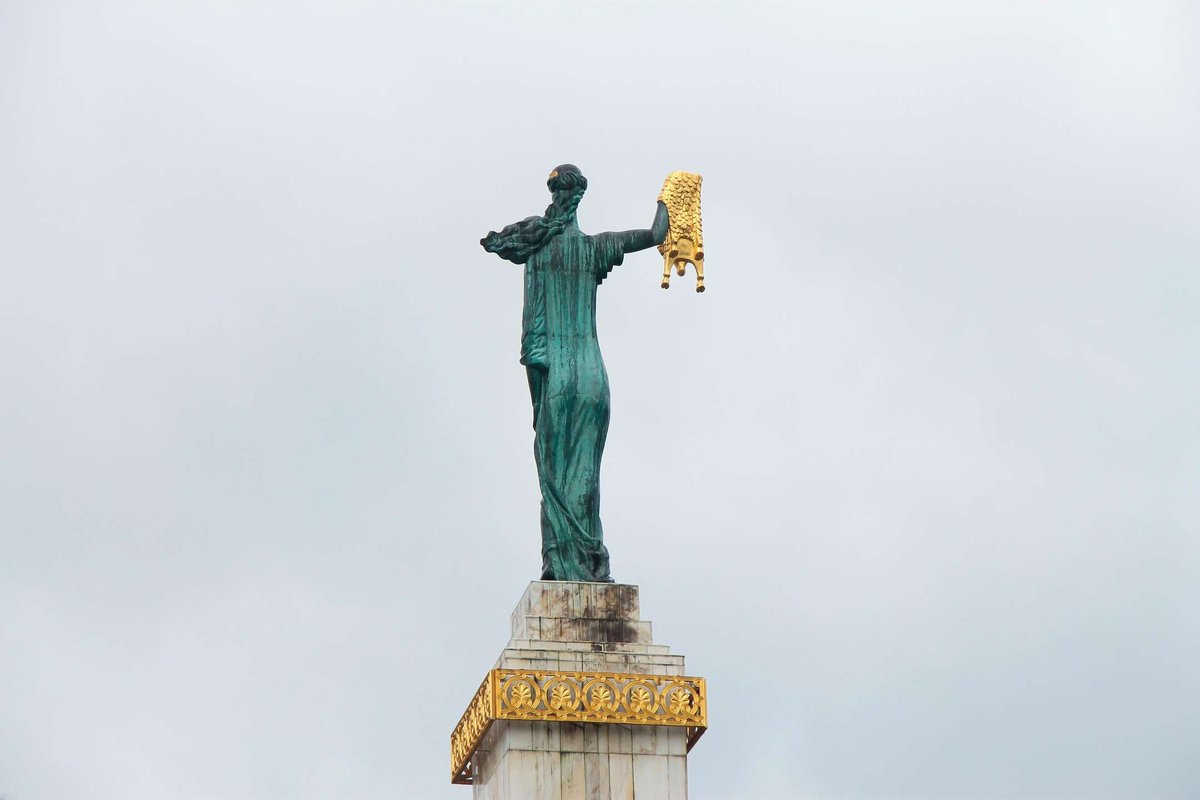
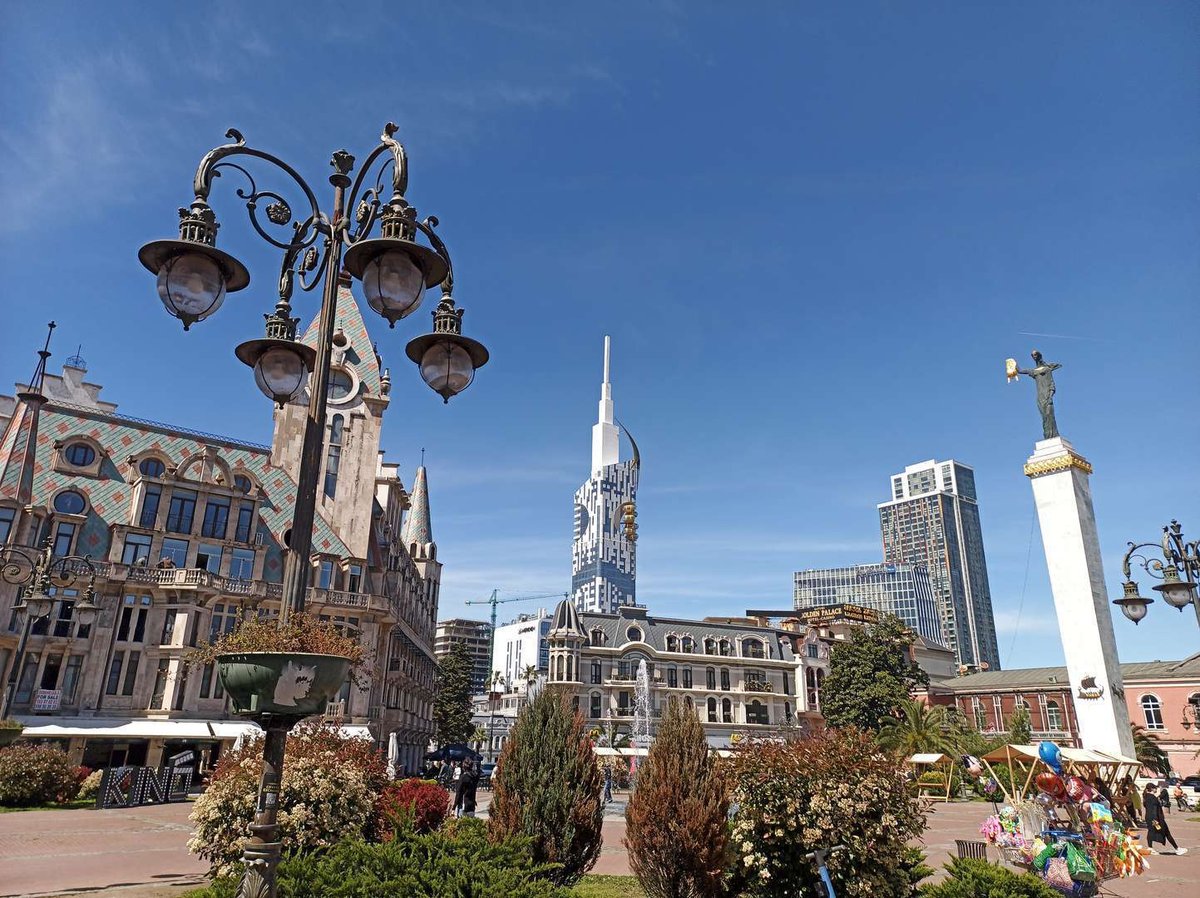
A bronze figure on a tall white column in the centre of the square. The sculpture clears the rooftops of adjacent buildings and is visible from a distance.
The Golden Fleece in her right hand. Medea holds it extended, an offering, a display, or a surrender, depending on how you read it. Sculptor David Khmaladze left the interpretation open.
The gaze toward the sea. Her head is turned toward the Black Sea, where by myth the Argonauts' ship appeared.
The column and base. A white narrow column contrasts with the dark bronze figure. The tiled base was partially replaced during the 2022 restoration; the column and statue surfaces were cleaned and treated.
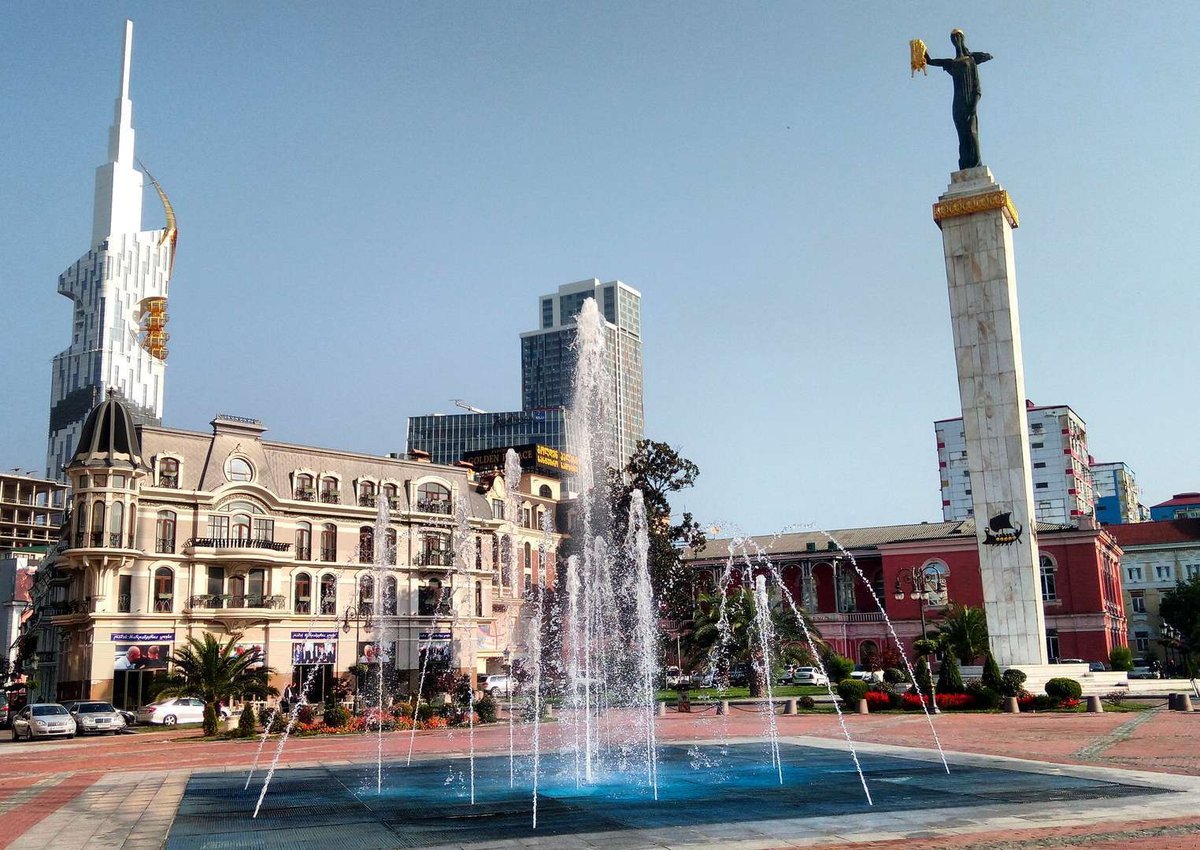
Beside the statue: a ground-level fountain plaza where jets of water shoot directly from the pavement. Children run through it in summer, this becomes its own attraction alongside the monument.
🏛️ Europe Square: the Setting
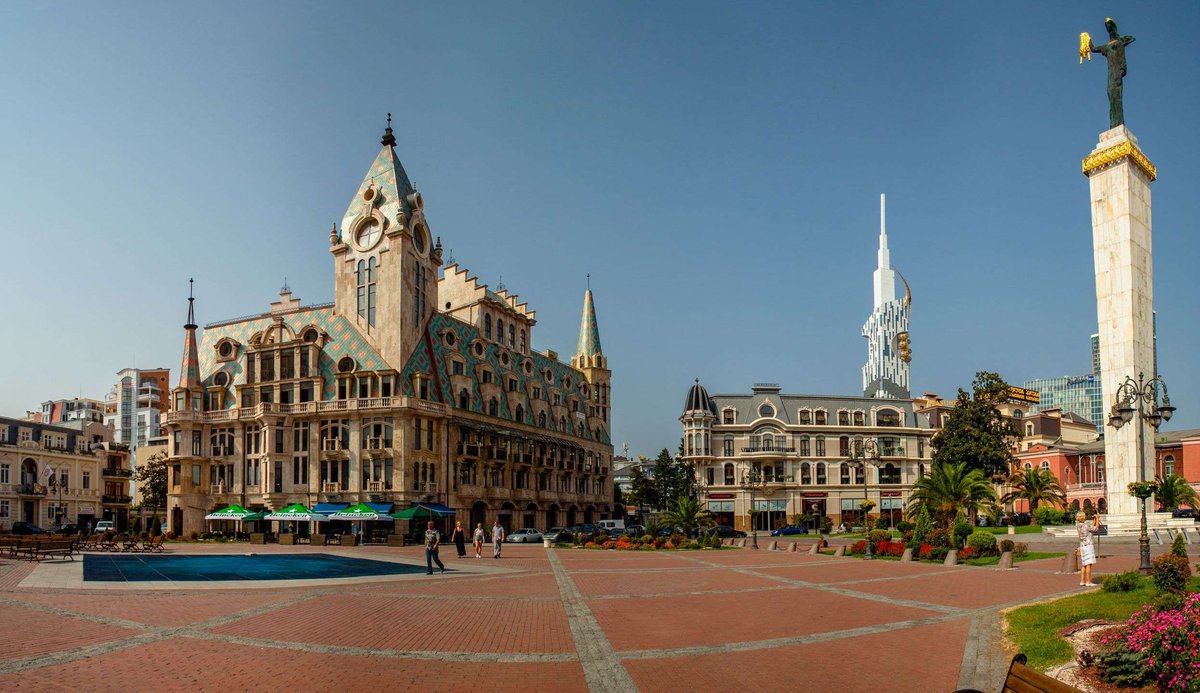
Europe Square occupies a central position in Batumi's old city, adjacent to Memed Abashidze Avenue. Locals often call it the "Square of the Argonauts", the mythological reference runs through both names. The official name came when Batumi joined the Assembly of European Regions; the choice of Medea as its centrepiece reinforces the idea of Georgia's ancient connection to European civilisation through the myth of Colchis.
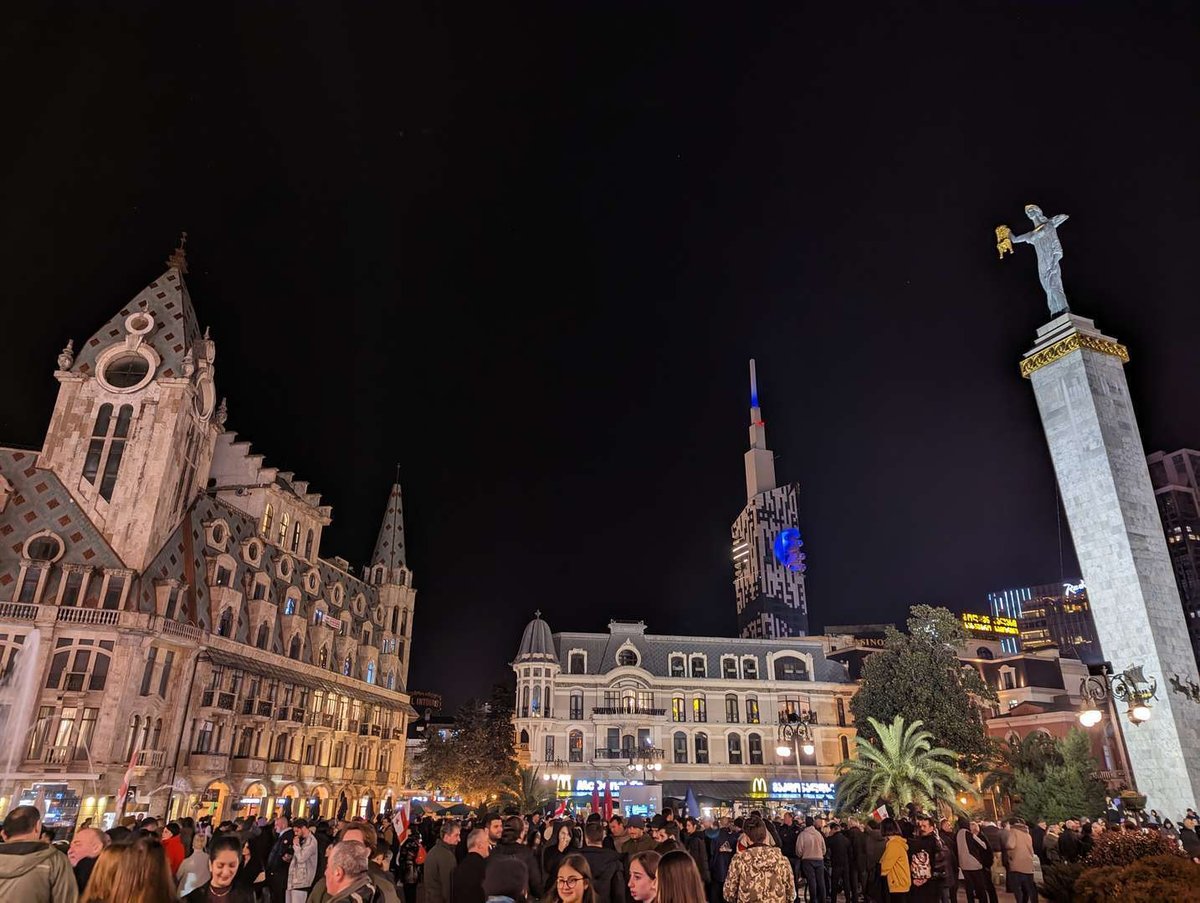
The square is lined with 19th and 20th century buildings in a mix of neoclassical, eclectic and Art Nouveau styles, the Batumi that existed before the casino towers and beach hotels. In the evenings the facades are lit, and the atmosphere shifts. Concerts, markets and official celebrations take place here. On New Year's Eve this is where the city's main Christmas tree stands.
The square's European name came when Batumi joined the Assembly of European Regions. Unveiled the same year Georgia was accelerating integration with European institutions, the Medea statue carried a political as well as a cultural message: Georgia is ancient, mythologically connected to the civilisation that created Greece, and belongs in a European context. This reading sits beneath the tourist surface of the monument.
It functions as a working civic square, not a tourist display. Residents walk their children here, young people meet at the fountain, cafés cater to a mixed local and visitor crowd. The statue presides over all of it.
🏗️ Who Made It and When
The monument was unveiled on 6 July 2007 during Georgian President Mikheil Saakashvili's visit to Batumi. This was a period of intensive reconstruction of the historic city centre, the same impulse that produced Piazza Square, the renovated boulevard and other landmarks of 2000s Batumi.
Sculptor: David Khmaladze, a Georgian architect. The bronze figure on a white column was conceived as a visual focal point for the centre and a reference to the mythological identity of the Colchian coast.
In 2022, the city hall spent approximately 500,000 GEL on restoration work: replacement of damaged base tiles, cleaning and treatment of the column and statue surfaces. This was the first significant maintenance since the 2007 opening, a normal cycle for outdoor bronze in a Black Sea coastal climate, where salt air accelerates oxidation.
🗺️ Getting There
Address: Europe Square, Batumi. Coordinates: 41.651176, 41.636461.
Walking from the seafront boulevard: approximately 10 minutes, heading into the old city. Landmark: Memed Abashidze Avenue, ground-level fountain in the square.
By bus: several routes run along Abashidze Avenue. Stop: Europe Square.
Entry is free and the square is open around the clock.
🌟 The Medea Myth in Batumi's Identity
Batumi's relationship with the Argonaut myth goes beyond one statue. The city's cable car is named Argo. Colonnades on the waterfront feature scenes from the myth. The Ali and Nino sculpture on the seafront tells a different story with a similar resonance: borders, love, a choice between two worlds. Batumi consistently frames itself as a city where myth and place overlap.
One cultural note worth mentioning: a popular tradition links the word "medicine" to Medea's name, citing her skill as a healer in the myth. Linguistically, the word derives from the Latin mederi (to heal), not from the name Medea. The connection is a folk etymology, not historical fact, but it is persistent in local storytelling and worth knowing when you hear a guide mention it.
All monuments and statues in Batumi are listed in the catalogue.
What Visitors Say
Reviews of the Medea statue split fairly evenly. Some describe a strong impression: "a sense of grandeur, like standing at the base of the Alexander Column"; "I knew the story, and standing there meant something." Others are candid: "a gold statue in a square, no real emotional weight, it stands, it shines, but it doesn't connect."
Both reactions are understandable. Without knowledge of the myth, the statue works only visually. With the story behind you, it works differently. This is a monument you partly bring the meaning to, rather than one that delivers it regardless.
One practical note that comes up frequently in reviews: there are no benches immediately around the statue. The square is set up for movement, not contemplation. If you want to sit and take it in, you'll need to find a café chair at the perimeter.
🗨️ Over to you! Have you seen the Medea statue? Did you know the myth before visiting, or did you find out on the spot? Leave a comment, we read all of them.
ℹ️ Information verified June 2026. Free entry, open around the clock.

38 comments
Log in to leave a comment
Архитектура, статуи – это всё-таки очень важные вещи в городе или стране. Потому что они бросаются в глаза и формируют у туристов мнение об этом месте, а у жителей страны радуется глаз, глядя на то, как подобные статуи украшают город.