




🏰 Surami Fortress: The Legend of the Walled-In Young Man
According to legend, the walls of Surami Fortress would not hold, and for the stronghold to finally stand, a young man was walled into the masonry. This tragic legend was made famous by a novella by the Georgian writer Daniel Chonkadze and by a film by Sergei Parajanov. And its underlying motif, a sacrifice made so that a structure will stand, appears in the folklore of many peoples, so the Surami legend is not a local oddity but part of a much larger tradition.
🏰 In short
According to legend, the walls of Surami Fortress kept collapsing. So that the fortress would finally stand, a young man was walled into the masonry (Zurab, in the literary version). The legend is known from Daniel Chonkadze's novella (1859) and Sergei Parajanov's film (1984). It is one variant of an ancient folklore motif, the "building sacrifice".
🏰 The Legend of Surami Fortress in Brief
The short version of the tale goes like this. The fortress at Surami simply could not be built: the walls would rise and then collapse again, as if the earth would not accept them. On the advice of a seer, for the masonry to finally hold, a young man had to be walled into it. The young man (in the literary version his name is Zurab) accepts his fate, and from that moment the fortress stands. This is a tragic story of sacrifice, not a heroic victory, and it is customary to tell it exactly that way, with restraint and compassion.
🧱 The Heart of the Legend: A Sacrifice for the Walls
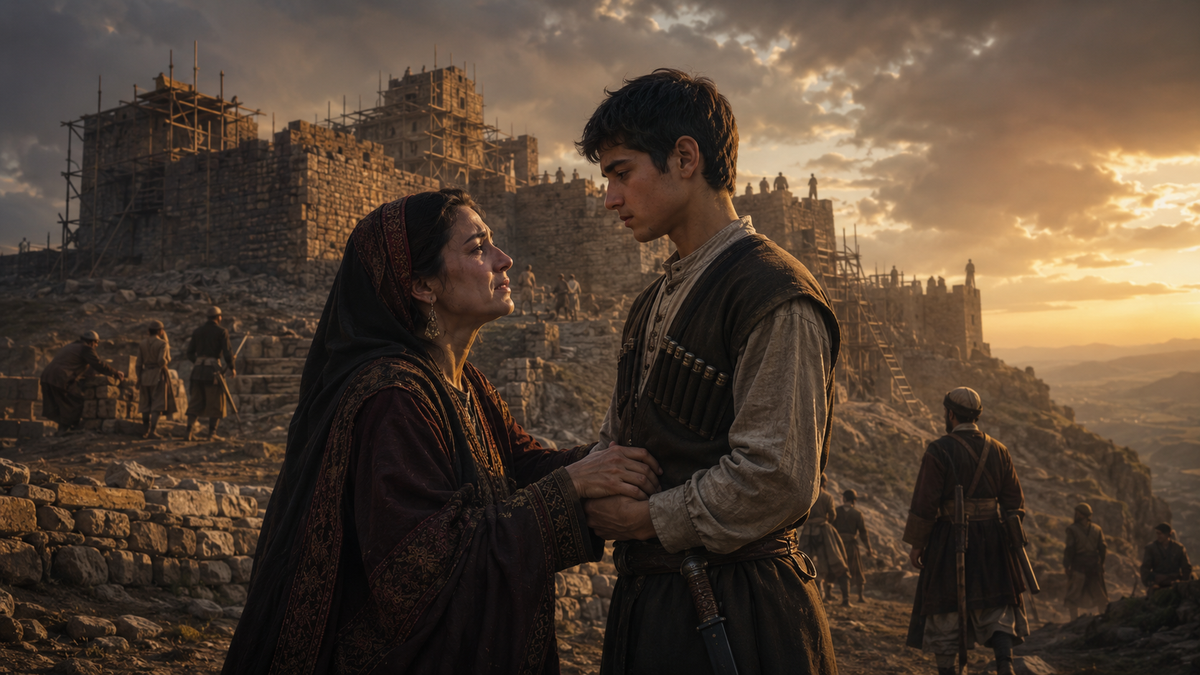
The meaning of the tale is simple and, for that very reason, terrible: the strength of the structure seems tied directly to a human sacrifice. The fortress "demands" a young man in order to stand for centuries, and without this price it will not yield itself to people.
But what truly moves us is not the mysticism, but the human heart of the legend. In most retellings a mother is there beside him, and it is precisely the parting of mother and son, her grief, that makes this story so piercing. The legend speaks not so much of stones as of the price that the living pay.
The details differ from one teller to another: who exactly named the price, by whose will the young man goes to his sacrifice, what the mother's role is.
🧱 The essence of the tale
The fortress walls collapse. A seer names the price: the fortress will hold only if a young man is walled into the masonry. The young man goes to his sacrifice, and the walls hold at last. This is an ancient folklore motif, the "building sacrifice".
🌍 Where the Story Comes From: The Building-Sacrifice Motif
The Surami legend is a local variant of a very ancient and widely known folklore motif called the "building sacrifice". Its logic is the same everywhere: for an important structure (a bridge, a fortress, a temple) to stand firm and long, a sacrifice is symbolically offered into its foundation.
Similar stories exist among many peoples, especially in the Balkans and the Caucasus. One need only recall the Balkan legends of a bridge that is built by day and collapses by night until a person is walled into the masonry, or tales of a master builder who walled his dearest into a wall. It is not worth equating them directly, but the kinship of the stories is obvious.
This perspective matters: it shows that the legend of Surami Fortress is not a "local oddity" but part of a large folklore tradition shared across an entire region.
📖 "The Fortress of Surami" by Daniel Chonkadze
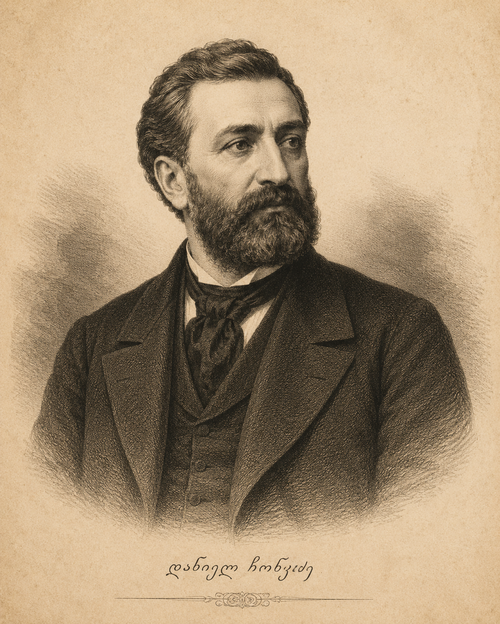
The legend was made widely known by the novella "The Fortress of Surami" by the Georgian writer Daniel Chonkadze, published, by the commonly accepted dating, in 1859. It is one of the significant works of 19th-century Georgian literature.
The novella contains not only the legend itself but also a strong social subtext: Chonkadze wrote about the burden of serfdom, and the tragedy of the sacrifice sounds in his work as a discussion of unfreedom as well. In the literary version, Zurab and other characters appear, among them Durmishkhan and a female seer, while the plot ties the sacrifice to the themes of fate and a broken word.
We will not retell the novella in detail, still less quote it: for the literary text it is better to turn to the work itself. One thing matters here: it was Chonkadze's book that carried the local legend to a wide readership.
🎬 Parajanov's Film
The legend has been recalled in art more than once, but its most famous screen adaptation was the film "The Legend of Suram Fortress", made by Sergei Parajanov together with Dodo Abashidze, by the commonly accepted dating, in 1984.
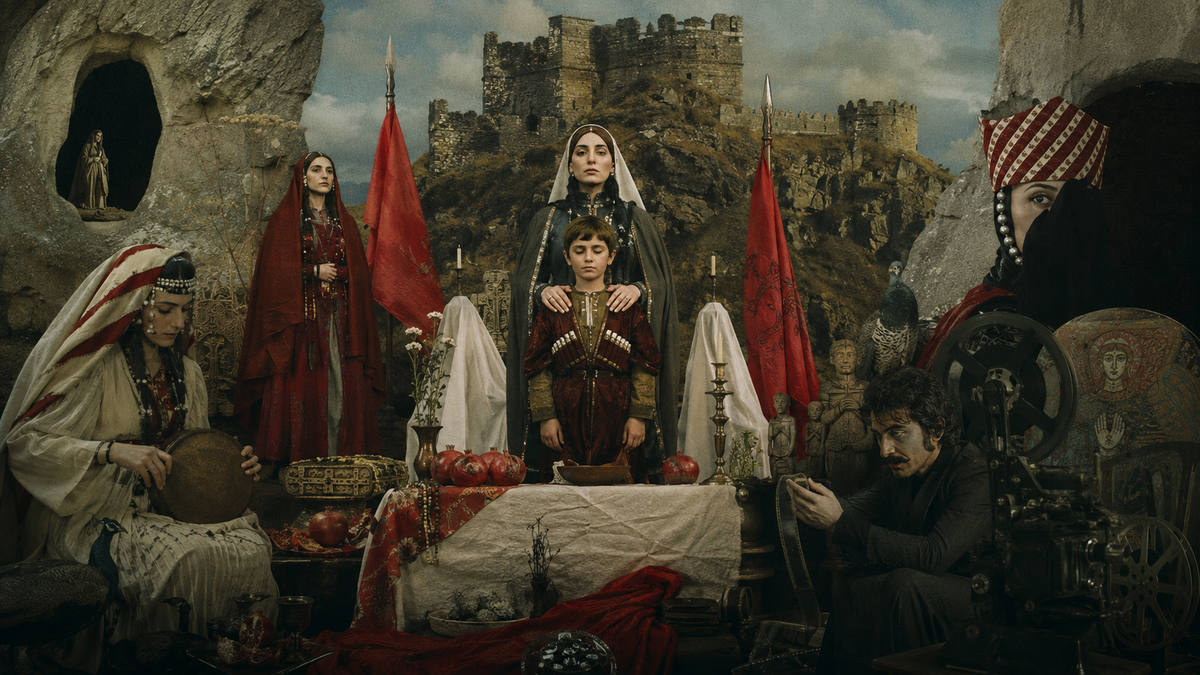
The film is renowned for its wholly distinctive visual language: it is built as a sequence of painterly, almost theatrical tableau-like frames, where what matters is not narrative momentum but image, colour and ritual. Many consider it one of the peaks of auteur cinema and a striking monument of Georgian, and more broadly Caucasian, visual culture.
For the legend, this is another layer of fame: thanks to Parajanov, the tale of Surami Fortress came to be known far beyond Georgia.
🗺️ Surami Fortress Today: Shida Kartli
Surami Fortress itself is the ruins of an old stronghold on a hill in the town of Surami, in the Shida Kartli region (Inner Kartli) in central Georgia. From the heights, views open onto the town and the surrounding mountains, while the walls themselves have long ceased to be fortification so much as a backdrop to the legend.
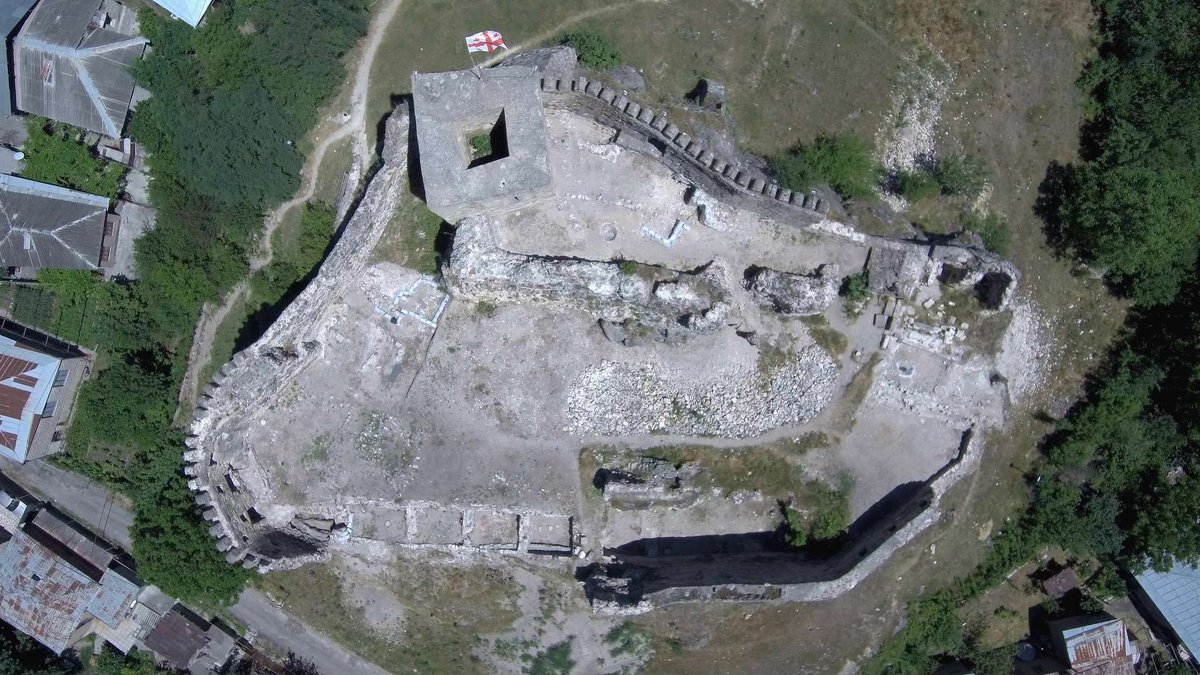
Surami is known for more than the fortress: it is an old climatic resort where people have long come to improve their health, and the town is also famous for nazuki, a sweet spiced bread baked and sold here along the road. The fortress with its legend is a good reason to stop in Surami on the way between Tbilisi and Western Georgia.
❓ Frequently Asked Questions About Surami Fortress
💬 According to the tale, the fortress walls would not hold, and so that it would stand, a young man was walled into the masonry. In the literary version his name is Zurab.
💬 It is a folklore legend, not a documented fact. Similar legends of a "building sacrifice" are known among many peoples.
💬 By the logic of the tale, the fortress gained its strength through sacrifice. This is a common folklore motif, while the legend itself is, above all, a tragic story.
💬 The Georgian writer Daniel Chonkadze. His novella came out around 1859 and made the legend widely known.
💬 Yes, the film "The Legend of Suram Fortress" by Sergei Parajanov and Dodo Abashidze (1984), known for its unusual visual style.
💬 In the town of Surami in Shida Kartli (Inner Kartli), in central Georgia. It is the ruins of an old fortress on a hill.
💬 Yes, the ruins are open to visitors.
💬 It is an old climatic resort, and the town is also famous for nazuki, a sweet spiced bread.
📌 The Key Points in Brief
The legend of Surami Fortress is a tragic story about the price the tale demands for the strength of its walls. The fortress simply cannot be built, and so that it will stand, a young man is walled into the masonry, Zurab in the literary version. Behind this story lies an ancient folklore motif, the building sacrifice, familiar to many peoples from the Caucasus to the Balkans. The legend was made widely known by Daniel Chonkadze's novella (around 1859) and Sergei Parajanov's film (1984). And you can still see the fortress itself today: its ruins stand on a hill in the town of Surami, in Shida Kartli, on the road between Tbilisi and Western Georgia.
🗣️ Now Over to You
- Had you heard the legend of Surami Fortress before, and in which version?
- Why do you think stories of a "building sacrifice" arose among so many different peoples?
- Have you read Chonkadze's novella or seen Parajanov's film, and what impression did they leave?
- And have you been to the fortress itself in Surami, is it worth a stop?
Share your thoughts and impressions in the comments, we would love to hear them.

0 comments
Log in to leave a comment