




🦅 The Legend of Tbilisi's Founding: Vakhtang Gorgasali, a Falcon and the Warm Springs
According to legend, Tbilisi was founded by King Vakhtang Gorgasali in the 5th century. While out hunting, his falcon caught a pheasant, and both birds fell into a hot spring, revealing healing warm waters to the people. This is where the city's name comes from: it derives from the Georgian word „tbili“, meaning warm, and is tied directly to these springs. And the waters from the legend have not gone anywhere, to this day they feed the famous sulphur baths of the Abanotubani district in the historic centre of Tbilisi.
🦅 In short
According to legend, Tbilisi was founded by King Vakhtang Gorgasali (5th century). While hunting, his falcon caught a pheasant, and both birds fell into a hot spring. Struck by the warm waters, the king founded a city here. The springs themselves gave the city its name: "Tbilisi" comes from the Georgian word "tbili", meaning warm. The same waters feed the sulphur baths of Abanotubani to this day.
🦅 The Legend of Tbilisi's Founding in Brief
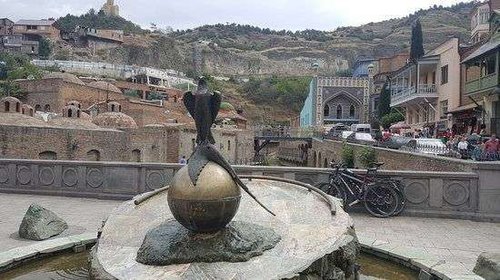
The short version goes like this. Vakhtang Gorgasali, King of Iberia, was hunting in the wooded valley of the Kura River (Mtkvari in Georgian). His falcon caught a pheasant, and both birds fell into a hot spring that rose up out of the ground. Struck by the warm waters, the king decided to found a city on this very spot, and the springs themselves gave it its name: "tbili" means "warm" in Georgian.
👑 Who Was Vakhtang Gorgasali?
Vakhtang Gorgasali, also known as Vakhtang I, was the king of Iberia, that is Kartli, or Eastern Georgia, who reigned, by tradition, in the 5th century. He is one of the key figures in Georgian history: his name is linked with strengthening the state, the struggle for independence and, of course, the founding of the future capital.
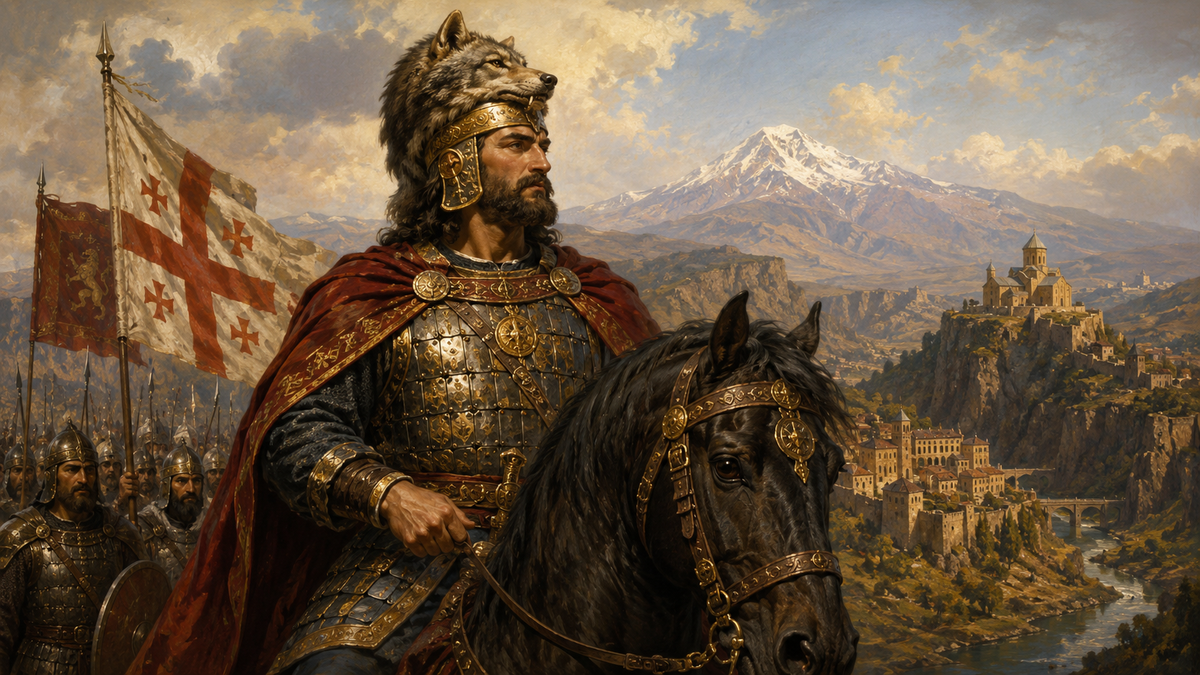
The nickname "Gorgasali" is usually explained like this: it goes back to a Persian expression meaning "wolf's head". According to one version of the tradition, the king wore a helmet bearing the image of a wolf, and this figure so frightened his enemies that in battle they would warn one another to beware the "wolf's head".
We will not cover the king's full biography here; for that it is better to read the separate article on Vakhtang Gorgasali. For the legend of the city's founding, one thing matters: it is with him that tradition links the first stone of Tbilisi.
🏹 How the Falcon Found the Warm Springs: The Legend Itself
The classic version of the legend sounds romantic and a little grim. During a royal hunt, a hunting bird, more often called a falcon, less often a hawk, caught a pheasant. In the heat of the chase, both birds fell into a hot spring and were boiled in the scalding water. And so, while chasing their quarry, the hunters stumbled upon warm waters that had never been seen before.
There is another, gentler version. In it, a deer wounded during the hunt (by other accounts, simply wounded game) fell into the spring, plunged into the hot water and was healed, showing people its curative power.
The details differ, but both versions explain one and the same thing: exactly how the hot springs were discovered, the springs for whose sake the king founded the city. That discovery is echoed in the recognisable symbol of Tbilisi's founding, a falcon bearing down on a pheasant.
🏹 Two versions of the legend
Version 1: the falcon and the pheasant. The king's falcon caught a pheasant, both birds fell into a hot spring and were boiled. This is how the warm waters were discovered.
Version 2: the deer. A deer wounded during the hunt fell into the spring, was healed by the warm water, and revealed its curative power.
♨️ Why Tbilisi Means "the Warm City"
The name "Tbilisi" comes from the Georgian word "tbili" (თბილი), meaning warm. The city was named after the hot sulphur springs that the king, according to legend, stumbled upon while hunting. In other words, the city's name is essentially a short retelling of the legend itself.
The old name Tiflis, under which the city was long known in Russia and Europe, goes back to the same root: it is simply another form of the same "warm" word, one that came through Persian and Russian transmission. So both "Tbilisi" and "Tiflis" speak of the same thing, the warm waters welling up out of the ground.
🏛️ From Legend to City: The Founding and the Capital
Here it is important to separate two things that are often confused. Archaeologists know that people settled in this place long before the 5th century: the convenient valley by the river was inhabited long ago. But it is with Vakhtang Gorgasali that popular tradition links the founding of the city as such.
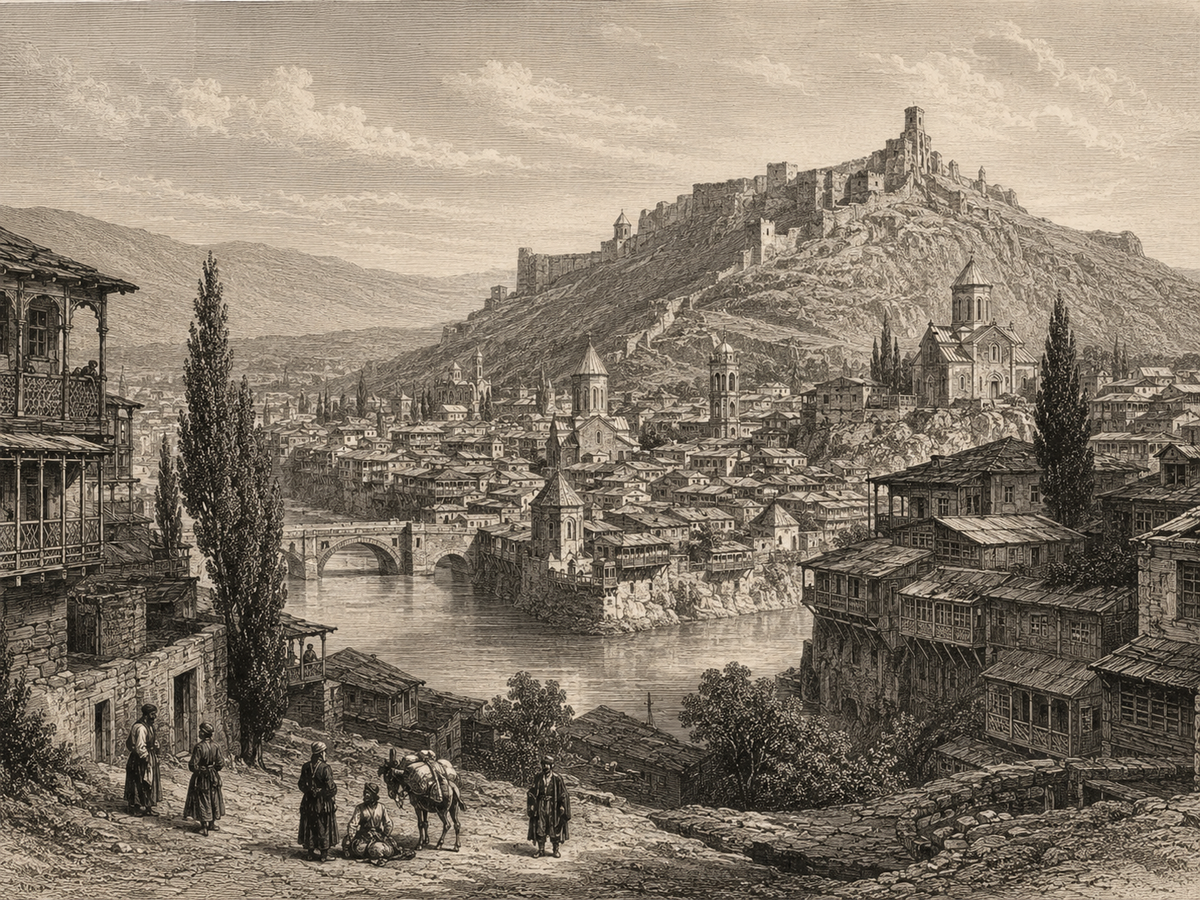
As for becoming the capital, Tbilisi took on that role, by tradition, only after Vakhtang. The usual account is that his son, King Dachi, carrying out his father's will, moved the capital of Kartli from ancient Mtskheta to the new city. And so Tbilisi gradually turned from a legend about a successful hunt into the country's new capital, while Mtskheta remained its spiritual heart.
🛁 The Sulphur Baths of Abanotubani: Where the Legend "Comes Alive"
The founding legend reads best where it all began, in the Abanotubani district. This is an old quarter of sulphur baths that grew up around those very hot springs. It is easy to recognise by its distinctive brick domes, which rise just slightly above the ground: the bathing halls themselves are hidden beneath them, in dim light and steam.
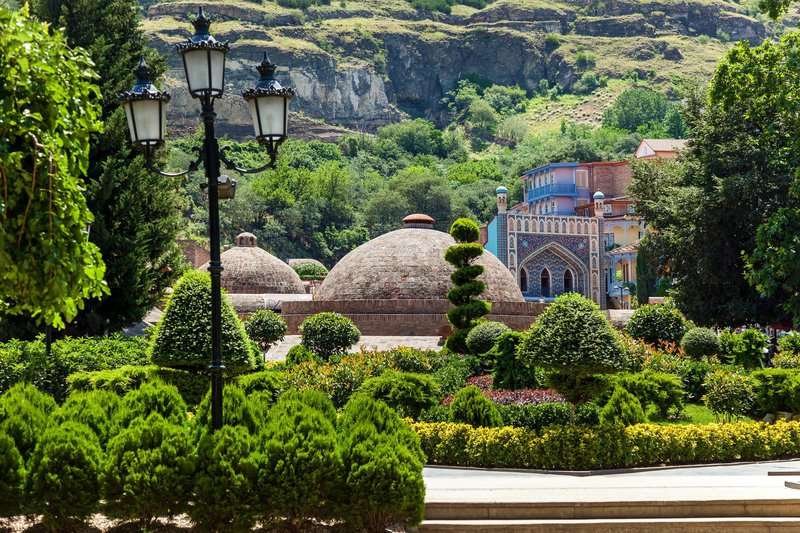
For the city, these baths are not just a landmark but a living illustration of the legend: here they are, the warm waters for whose sake, if the tradition is to be believed, Tbilisi was founded. It is little wonder that the sulphur baths were admired even by famous travellers of the 19th century: Alexander Pushkin, for instance, who visited Tiflis, wrote that he had never encountered such luxury anywhere before.
📝 Tbilisi and the Legend Today
The story of the hunt, the falcon and the warm waters became part of the city's identity long ago. The falcon bearing down on a pheasant is recognised as the symbol of Tbilisi's founding, and this image is echoed, now and then, in the city's art and souvenirs.
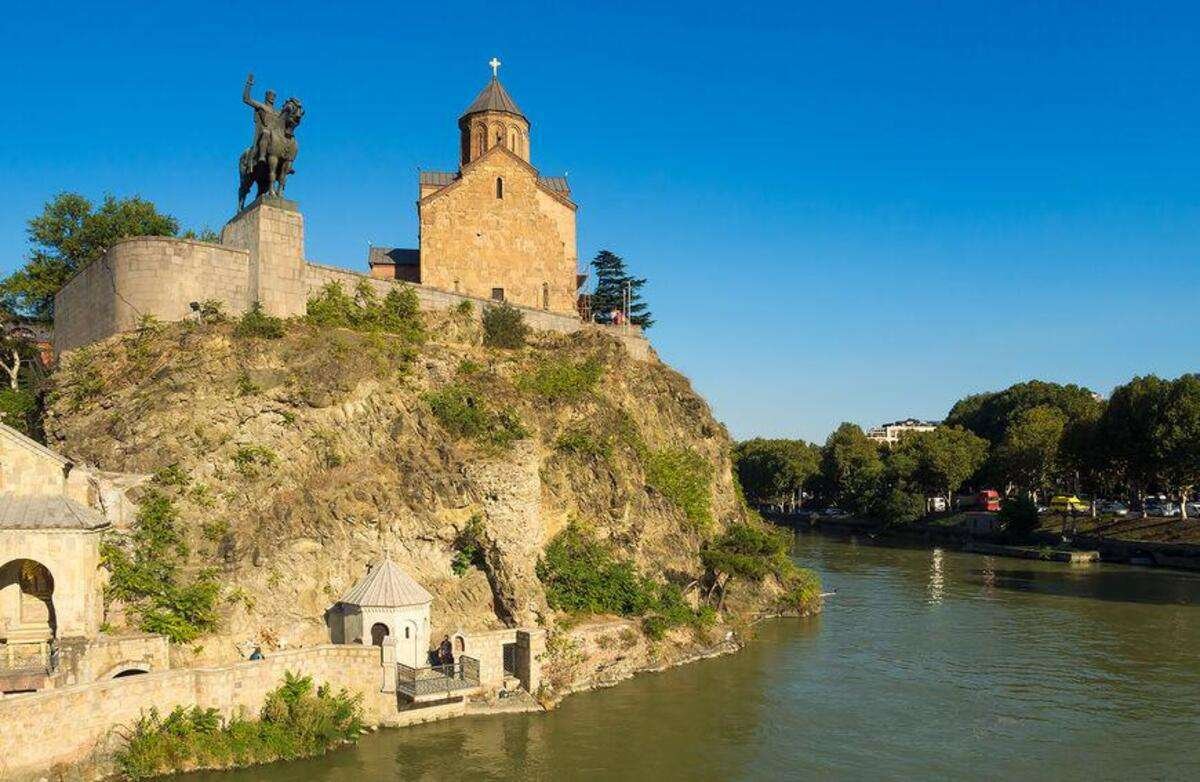
The legend also has a very concrete monument: the equestrian statue of Vakhtang Gorgasali. It stands beside the ancient Metekhi Church, on a cliff above the Kura River, from which one of the best views of the old town opens up. The king on his horse looks out precisely toward the quarters that, by tradition, he himself founded.
So if you want the legend to "come alive", there are two places for you: Abanotubani, with its bath domes and springs, and the viewpoint by Metekhi, with the rider above the Kura.
❓ Frequently Asked Questions About the Founding of Tbilisi
💬 By tradition, the city was founded by Vakhtang Gorgasali, King of Iberia, in the 5th century. Tbilisi became the capital later, under his son Dachi, who moved the capital here from Mtskheta.
💬 From the Georgian word "tbili", meaning warm. The city was named this way because of the hot sulphur springs on which, according to legend, its whole story rests.
💬 While hunting, King Vakhtang Gorgasali's falcon caught a pheasant, and both birds fell into a hot spring. Struck by the warm waters, the king decided to found a city here.
💬 There is such a version: a wounded deer fell into the spring and was healed by the warm water. Both versions, the falcon and the deer alike, explain how the hot springs were discovered.
💬 A 5th-century king of Iberia (Kartli), one of the central figures of Georgian history. His nickname "Gorgasali", meaning "wolf's head", is linked to his helmet. There is more in the separate article about the king.
💬 An old quarter of sulphur baths in Tbilisi that grew up around those very hot springs from the legend. Today it is one of the most popular spots among visitors to the city.
💬 Yes. The warm sulphur waters still feed the baths of Abanotubani in the historic centre. The practical details are gathered in a separate listing.
💬 The equestrian statue of the king stands beside Metekhi Church, on a cliff above the Kura River, with a view of the old town.
📌 The Key Points in Brief
The legend of Tbilisi's founding fits into a single chain. King Vakhtang Gorgasali is hunting in the Kura valley, his falcon and a pheasant fall into a hot spring, and the king, struck by the discovery, founds a city here. The name cements the wonder: "tbili" means "warm", and the city is quite literally named after its hot waters. It is the king's son, Dachi, who makes Tbilisi the capital, moving it there from Mtskheta. And you can still see for yourself today that the legend does not rest on nothing: those same warm springs feed the sulphur baths of Abanotubani, while above the Kura, by Metekhi Church, an equestrian monument stands to the king who founded the city.
🗣️ Now Over to You
- Which version of the legend do you like more: the one with the falcon and the pheasant, or the one with the deer that was healed in the spring?
- Have you ever taken a soak in the sulphur baths of Abanotubani, and do they live up to their fame?
- Why do you think it was the "warm" name in particular that stuck to the city?
- And what would you be sure to show a guest who wants to feel the spirit of old Tbilisi?
Share your thoughts and stories in the comments, we would love to hear them.

0 comments
Log in to leave a comment