




🐉 Demons and Creatures of Georgian Folklore: Ali, Kaji, Veshapi
Georgian folklore is densely populated with astonishing creatures: here you will find the giant devi, the dragon-like veshapi, the cunning sorcerer-kaji, and the treacherous ali spirits. In this longread we will set up a little "zoo" of Georgian myths and work out who is who: who was worth fearing, and who, on the contrary, came to the heroes' aid. And yes, not everyone here is evil: alongside the demons live kindly magical birds and horses too.
🐉 In short
Devi, giants. Veshapi, dragons. Kaji, sorcerers and blacksmiths. Ali, evil spirits. Kudiani, witches. Ochokochi, the wild man of the forest. And paskunji and rashi are kindly magical beings: a bird and horses.
| Creature | Who they are | Dangerous or not |
|---|---|---|
| Devi | Huge giants, often many-headed; they guard treasure and abduct beautiful maidens | Dangerous |
| Veshapi (gveleshapi) | Dragons and giant serpents; they block the water and demand tribute | Dangerous |
| Kaji | Sorcerers and blacksmiths, masters of enchantment and shape-shifting; their land is Kajeti | Dangerous, cunning |
| Ali | Evil spirits, most often in female form; they lead travellers astray | Dangerous |
| Kudiani | Witches, said in folk belief to be "tailed"; they fly to their sabbaths | Dangerous |
| Chinka | Petty water and marsh imps, mischievous spirits | Minor mischief |
| Ochokochi | The "wild man" of the forest from Mingrelian folklore | Dangerous |
| Tkashi-Mapa | The "queen of the forest", the beautiful and dangerous mistress of the woods | She lures and she destroys |
| Paskunji | A wondrous bird; it carries the hero up from the underworld and heals | Kindly |
| Rashi | Magical horses (celestial, sea and earthly), companions of heroes | Kindly |
🐉 Creatures of Georgian Folklore: Who Are All These Characters?
If you gather together everyone who dwells in Georgian fairy tales and legends, you get a proper menagerie: giants, dragons, sorcerers, spirits, witches and forest creatures. Some of them are openly hostile to people and heroes, while others, on the contrary, are ready to come to the rescue, such as the magical birds and horses.
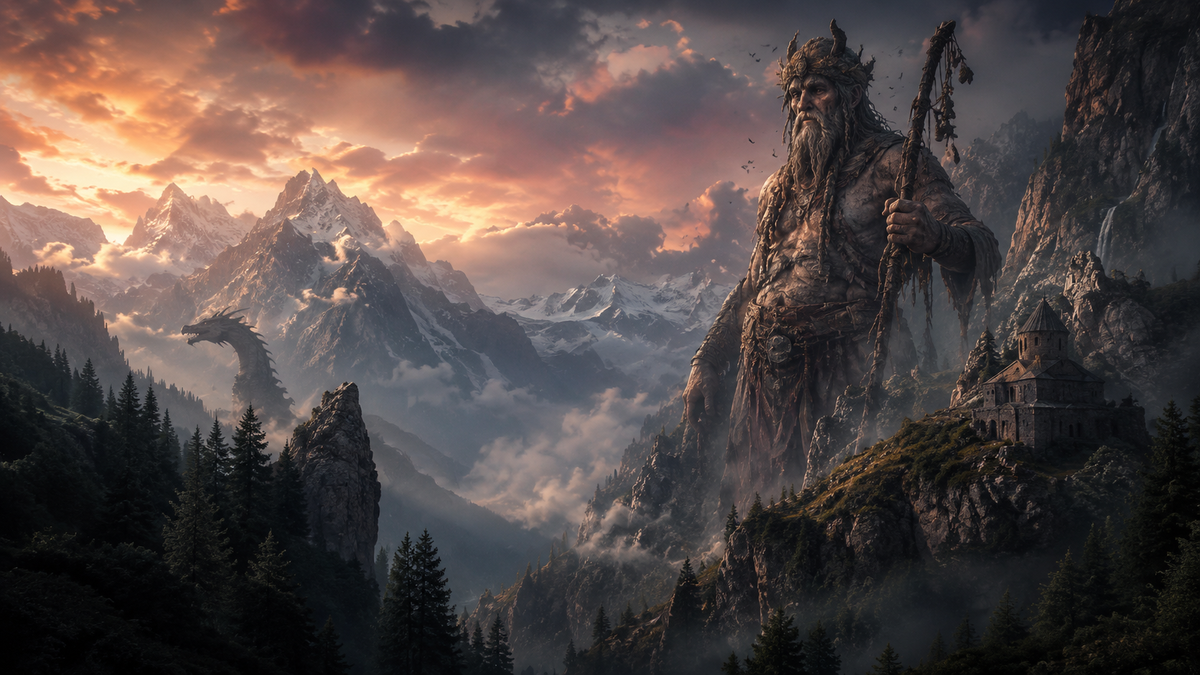
Many of these figures do not live on their own but are closely tied to Georgian gods and heroes (think only of the goddess Dali or the hero Amirani), and they echo the folklore of the neighbouring peoples of the Caucasus. Below we will go through the main "inhabitants" of this world one by one.
👹 Devi: The Many-Headed Giants
The devi are enormous man-eating giants, most often depicted in fairy tales as many-headed: one has three heads, another nine, or even more. According to various legends, they live in the mountains, in deep forests or underground, where they guard untold treasure and hold captive the maidens they have abducted.
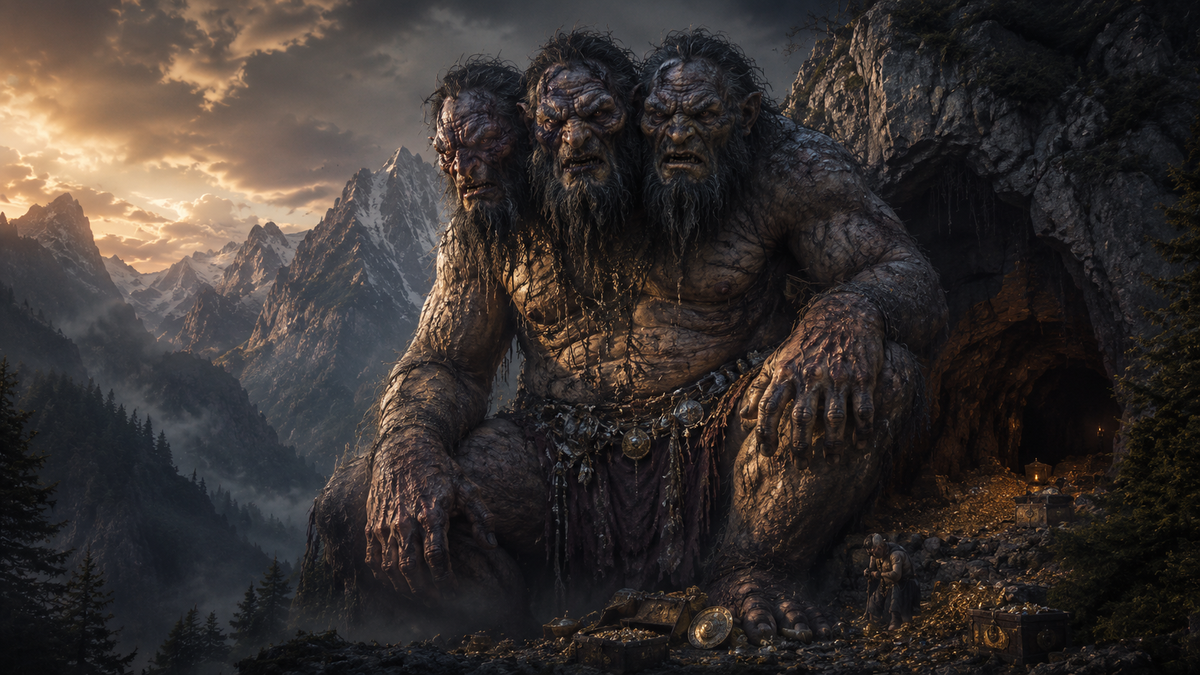
In heroic tales the devi are the classic opponents of the champions. They are terrifyingly strong, but often rather simple-minded as well, so they are usually defeated not by force but by cunning. The devi, then, are a formidable power rather than a clever one.
🐉 Veshapi: Dragons and Serpents
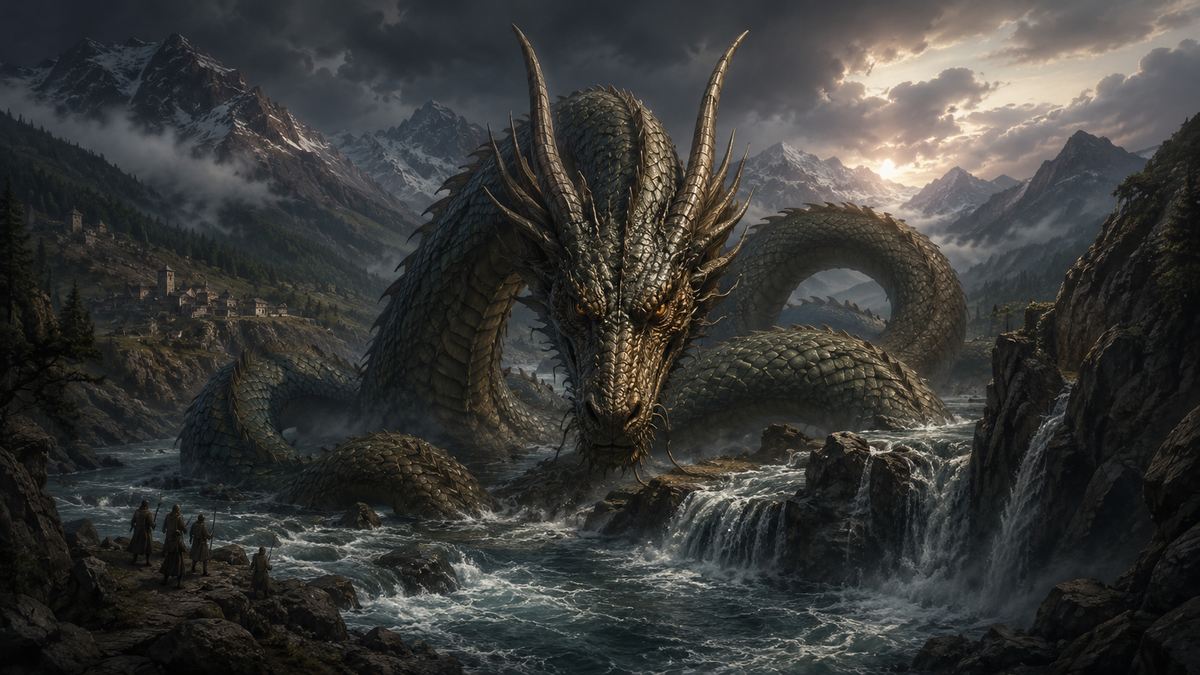
The veshapi (and also the gveleshapi, which can be translated as "serpent-dragon") are the giant dragons and serpents of Georgian mythology. In the legends they block rivers and springs, demand tribute from people, and by some accounts are even able to "swallow" the sun, thus explaining eclipses.
In Georgian myths it is the heroes who fight the veshapi dragons. The best-known example is the champion Amirani, a Georgian relative of Prometheus; but his famous battle we examine separately, in the article about Prometheus and Amirani. Here what matters to us is the veshapi itself, as one of the chief "villains" of the folklore.
🔮 Kaji: Sorcerers and Blacksmiths
The kaji are cunning supernatural beings, renowned as skilled magicians and blacksmiths. They are credited with the ability to "cloud the eyes", to cast an illusion and to change their shape, in short, with everything connected to enchantment and the deceiving of sight.
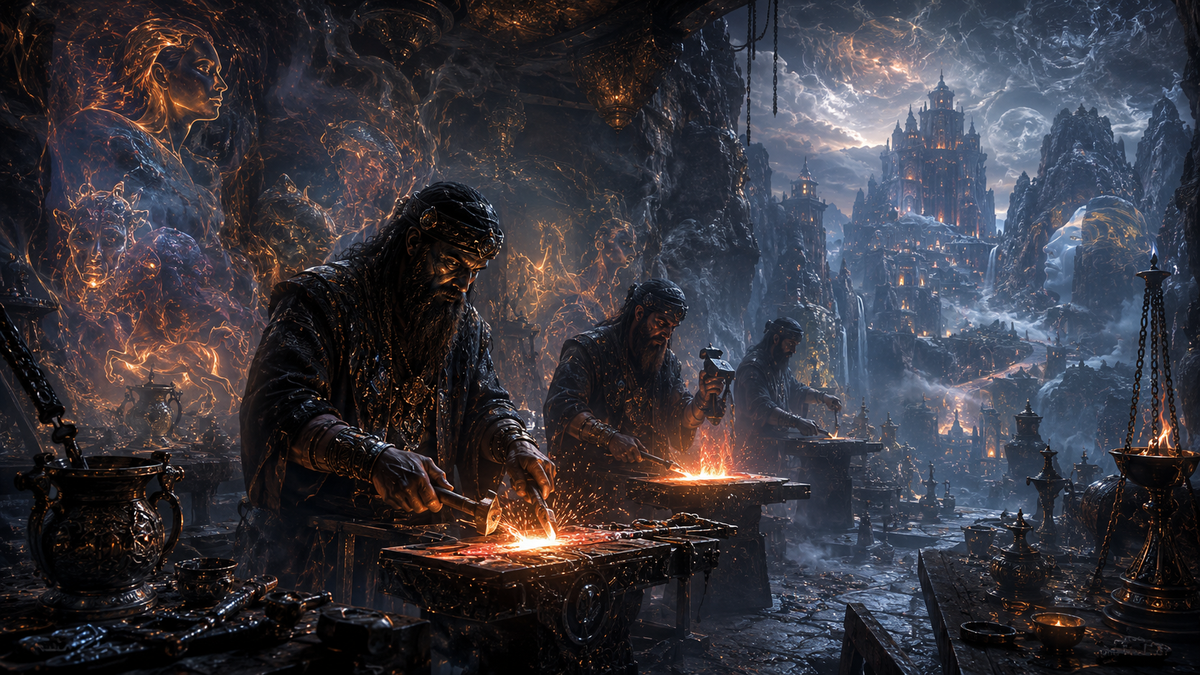
The kaji also have their own "country", Kajeti, a kingdom of magic; the name even found its way into Shota Rustaveli's poem "The Knight in the Panther's Skin". Interpretations of the kaji, however, differ: by some versions they are outright demons, by others almost a separate magical people living by their own laws. That is exactly what makes the kaji intriguing: they balance between "demons" and "another people".
🧙 Kudiani: The Witches with Tails
The kudiani are the Georgian witches. The word itself is usually linked to the Georgian "kudi", meaning tail, so kudiani literally means "the tailed ones". According to folk belief, a real witch hides a tail beneath her clothes.
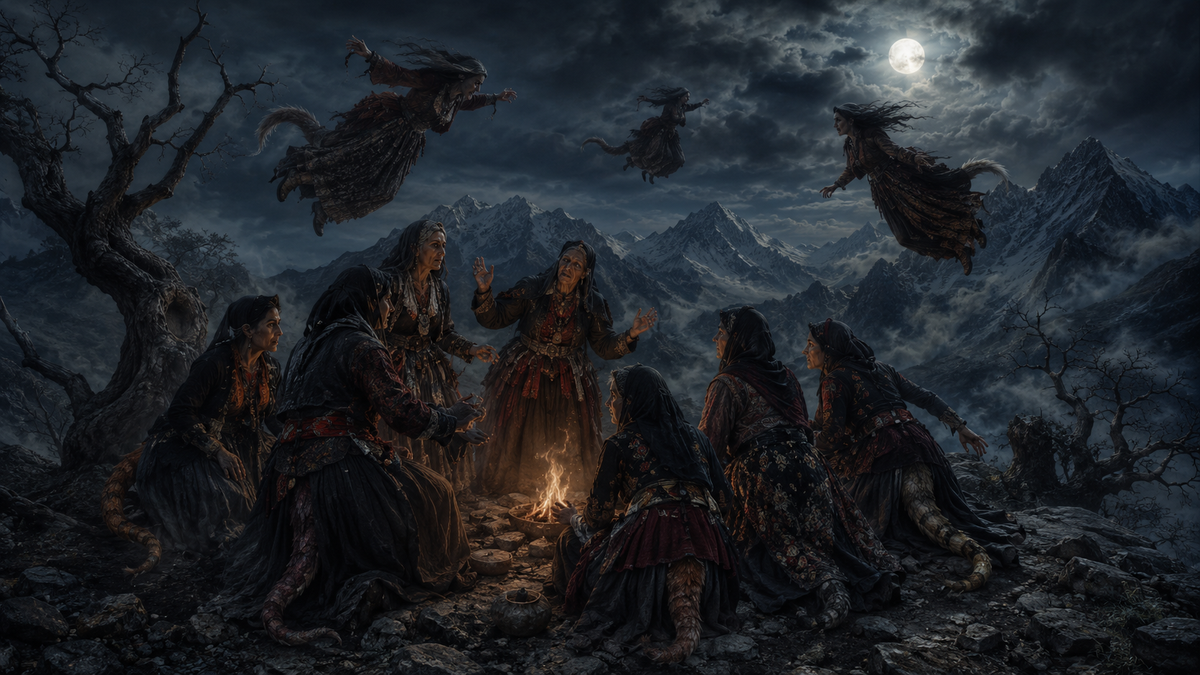
It is held that the kudiani harm people, know how to fly, and from time to time gather for their sabbaths on a particular mountain. It is a vivid, eerie image, the kind you can easily picture on the pages of an old fairy tale or in a scary story told by a fire at night.
👻 Ali and Chinka: Evil Spirits
The ali are evil spirits, most often imagined in female form (although in different regions it varies). According to folk belief, they lead travellers astray, lure them into the wilds and bring harm to young mothers and infants, though the legends speak of this with restraint, in half-hints.
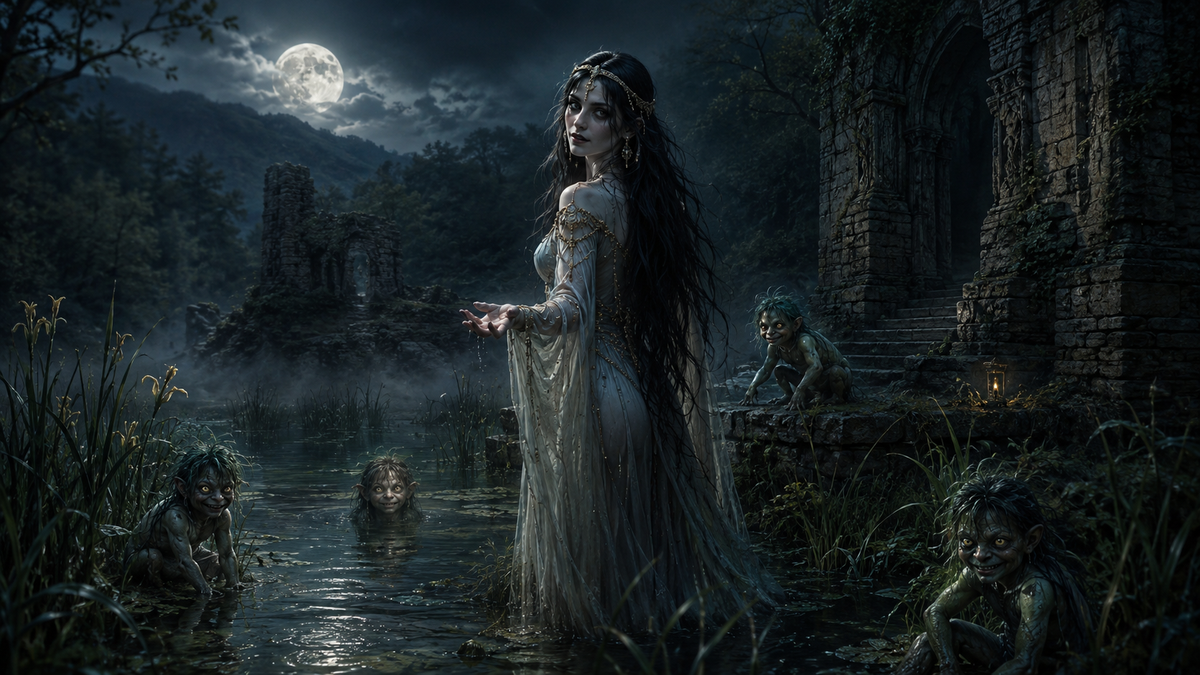
The ali are shape-shifters: now they appear as a beautiful woman, now they turn into a monster. They dwell by water, in forests and in old ruins, in the places where a person feels uneasy anyway. Alongside them, folk tales also mention the chinka, petty water and marsh imps, mischievous but not so frightening: these are more like tiresome pranksters than a real threat.
🌲 Forest Creatures: Ochokochi and Tkashi-Mapa
The forest creatures of Western Georgia are a company of their own. Ochokochi is the "wild man" of the woods from Mingrelian folklore, a being covered in fur who frightens hunters and guards the wild thickets. Meeting him in the forest bodes no good.
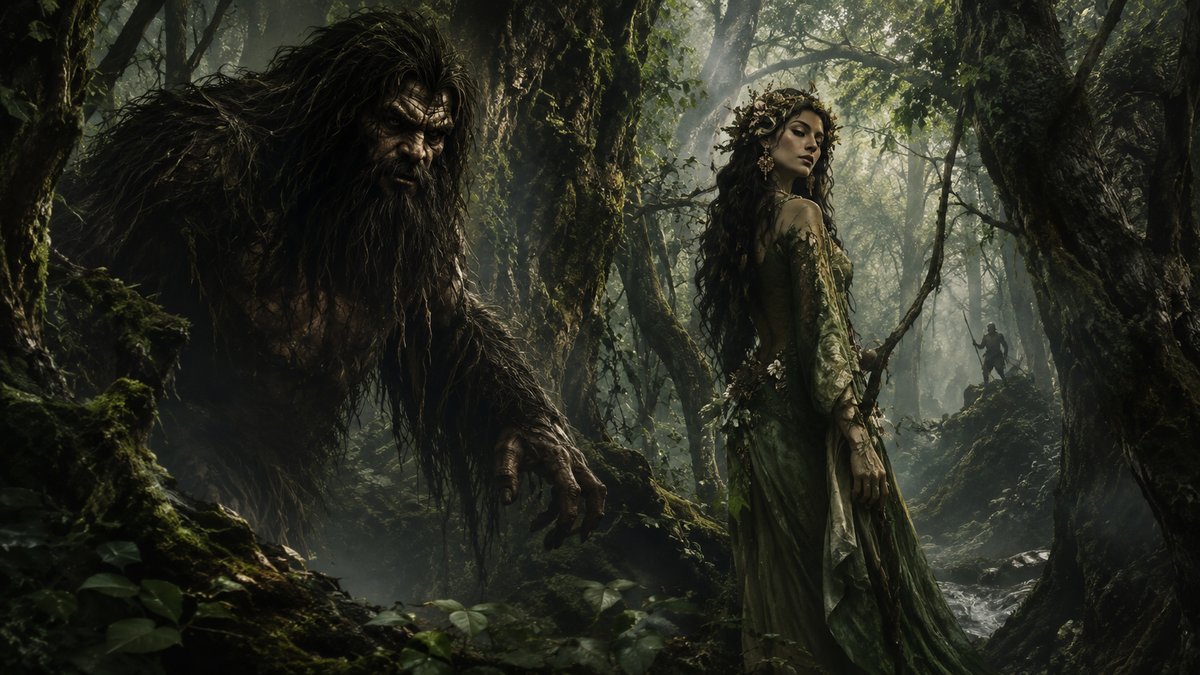
Beside him people recall Tkashi-Mapa, the "queen of the forest", the beautiful and dangerous mistress of the Western Georgian woods. She can both reward a hunter and destroy him, it all depends on how he behaves. In this "mistress of nature" it is easy to recognise a relative of Dali, the goddess of the hunt.
🦅 Not Only Evil: Paskunji and Rashi
But Georgian folklore is not only scary tales. It also has kindly, wondrous creatures. Paskunji is a magical bird, a little like a phoenix or a griffin: in the tales it carries the hero up from the underworld into the light of day and heals his wounds. Its help sometimes has to be earned, but in a moment of need paskunji is a true salvation.
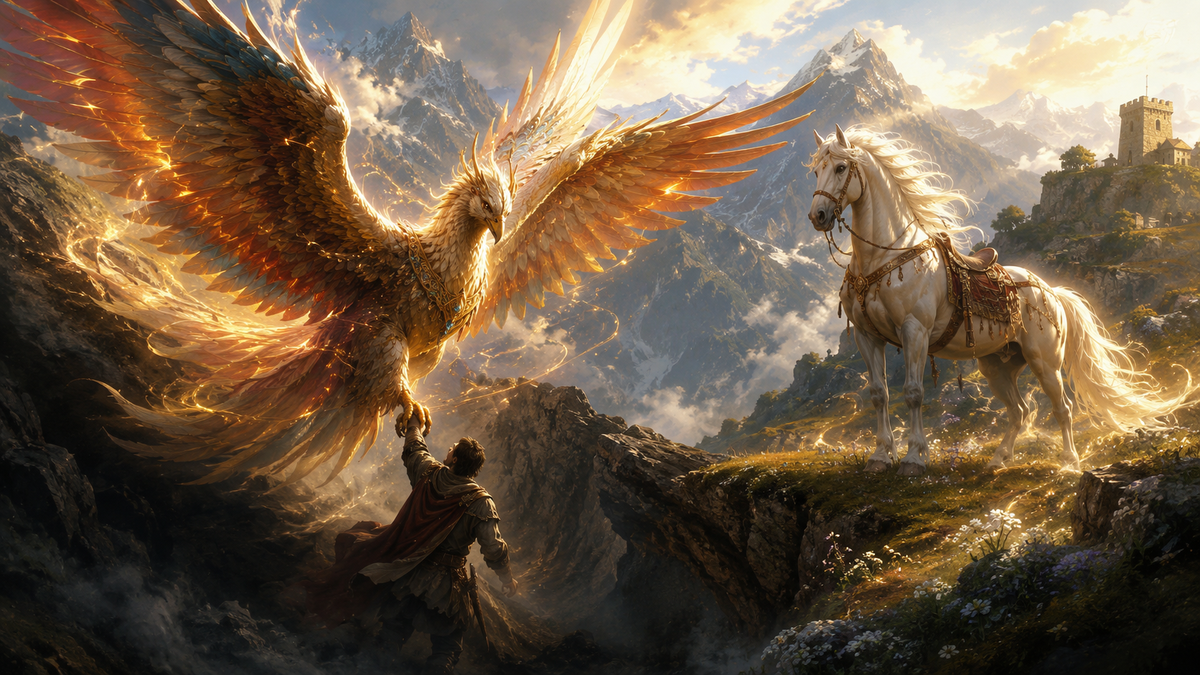
And then there are the rashi, magical horses, the faithful companions of heroes. They come in different kinds: celestial, sea and earthly, and each helps its master in its own way. So the world of Georgian legends rests not only on the fear of demons but also on faith in kindly helpers.
❓ Frequently Asked Questions About Georgian Folklore
💬 The main ones include devi (giants), veshapi (dragons), kaji (sorcerers), ali (evil spirits), kudiani (witches) and the forest-dwelling ochokochi. There are kindly creatures too, such as the bird paskunji.
💬 Many-headed man-eating giants from Georgian fairy tales. They guard treasure, abduct heroines and do battle with champions.
💬 Cunning supernatural beings, skilled in magic and blacksmithing. Their "country", Kajeti, is mentioned in Rustaveli's poem as well.
💬 The dragons and giant serpents of Georgian mythology. Amirani the hero, for instance, fights a veshapi.
💬 Evil spirits, most often in female form, who harm travellers and lead people astray. They can change their shape.
💬 The word "kudiani" is linked to the Georgian "kudi", meaning tail. According to folk belief, these witches have a tail, and they gather on a particular mountain.
💬 The "wild man" of the forest from Mingrelian folklore, who frightens hunters. He is linked with Tkashi-Mapa, the queen of the forest.
💬 Yes. For example paskunji, the wondrous bird that carries the hero up from the underworld, and the rashi, magical horses.
💬 Yes. Amirani defeats the veshapi dragons, the forest-dwelling Tkashi-Mapa echoes the goddess Dali, and the creatures themselves populate the world of Georgian mythology.
📌 The Key Points in Brief
Georgian folklore is a whole bestiary to suit every taste. The forces of evil are represented by the giant devi, the dragon veshapi, the sorcerer kaji, the spirit ali, the witch kudiani, the petty imp chinka and the forest-dwelling ochokochi. But there is another side too: Tkashi-Mapa, the "queen of the forest", as double-natured as nature itself, and the genuinely kindly wonders, the bird paskunji and the magical horses rashi. Many of these creatures are connected with the Georgian gods and heroes, from the goddess Dali to Amirani, and together they make up the living and by no means one-dimensional world of Georgian legends.
🗣️ Now Over to You
- Which of the Georgian creatures impressed you the most: the many-headed devi, the veshapi dragon, or perhaps the tailed kudiani?
- Had you heard before about the forest-dwelling ochokochi or Tkashi-Mapa, the "queen of the forest"?
- What similar creatures have you come across in the folklore of other peoples?
- And whom would you call on for help in a moment of need, paskunji or a faithful rashi?
Share your thoughts and favourite scary tales in the comments, we would love to hear them.

2 comments
Log in to leave a comment