




👑 Bagrat III: The First King of a United Georgia
Bagrat III was the first king of a united Georgian state, ruling at the turn of the tenth and eleventh centuries with his capital at Kutaisi. Before him the Georgian lands had existed for centuries as separate kingdoms and principalities; in 1008 they came under one crown for the first time. Bagrati Cathedral in Kutaisi, the great symbol of that age, carries his name.
📌 In Brief
- The first king of a united Georgian state, ruling at the turn of the tenth and eleventh centuries.
- Heir to two crowns at once: the Abkhazian through his mother and the Kartvelian through his father.
- On the Abkhazian throne from 978; the united kingdom came together in 1008.
- Kutaisi became the capital of the united country.
- He built the cathedrals of Bagrati in Kutaisi, Bedia and Nikortsminda in Racha.
- He died in 1014 and was buried in Bedia Cathedral, which he had built himself.
❓ Who Bagrat III Was in Simple Terms
Bagrat III belonged to the Bagrationi, the dynasty that ruled the Georgian lands for around a thousand years. His own contribution to that history is the largest of any: it was under him that scattered kingdoms first came together into a single state, and the very possibility of speaking about a united Georgia as a political reality dates from his reign.
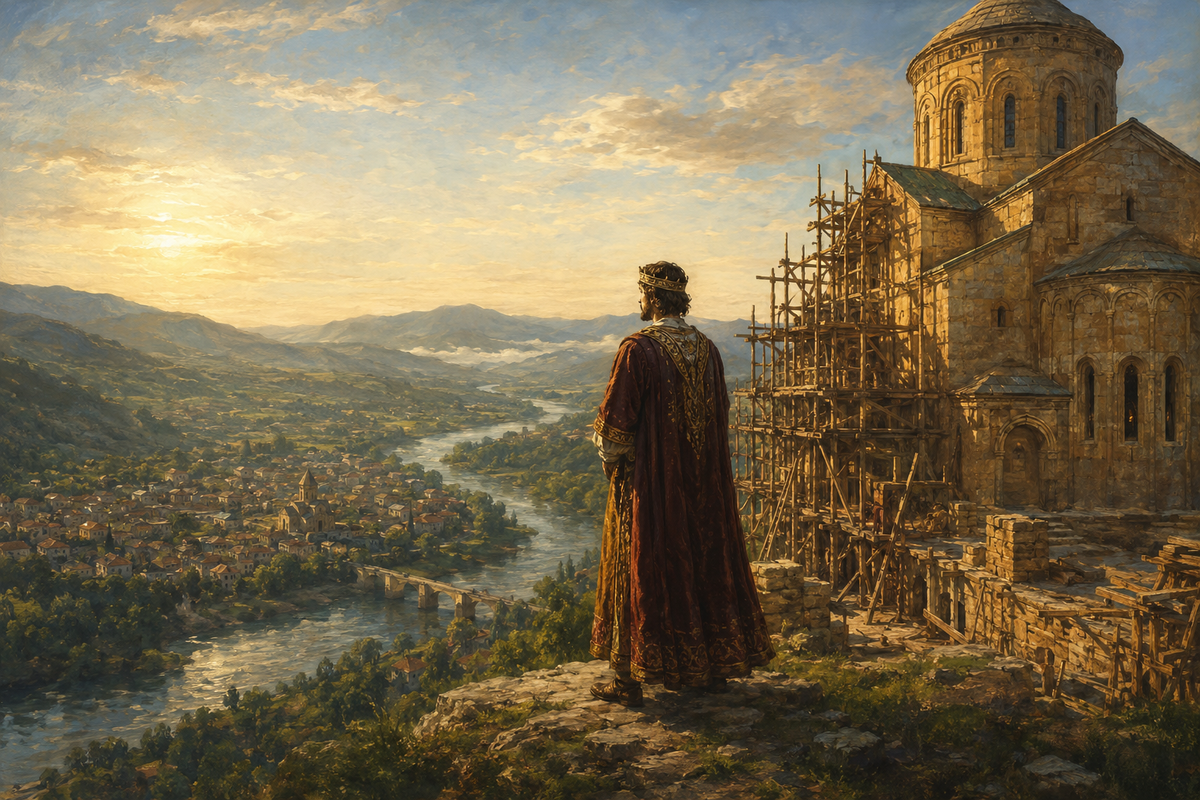
The mechanics of the union were dynastic rather than military. Bagrat held claims to two thrones at once: the Abkhazian through his mother and the Kartvelian through his father. Such a convergence of rights in one man was a rare piece of luck, and it was used to the full.
The rise of the family, the theories about the origins of the Bagrationi and the history of Tao-Klarjeti are covered in the survey of the dynasty. This article stays with the biography.
| Detail | Value |
|---|---|
| Lifespan | About 960–1014. The year of birth is not firmly established |
| Reign | The Abkhazian kingdom from 978, the united kingdom from 1008 to 1014 |
| Dynasty | The Bagrationi |
| Father | Gurgen, king of the Kartvelians |
| Mother | Gurandukht, an Abkhazian princess |
| Guardian | David III Kouropalates, ruler of Tao |
| Title | King of the Abkhazians and the Kartvelians |
| Capital | Kutaisi |
| Heir | George I |
| Burial | Bedia Cathedral, built by the king himself |
🔢 Bagrat II or Bagrat III: Two Crowns, Two Numberings
The confusion over the number comes up often and has a simple explanation. Bagrat ruled two kingdoms, each with its own list of rulers. By the Abkhazian list he is the second Bagrat, by the list of the kings of the Kartvelians the third. Historical writing settled on the form Bagrat III, and that is the one used here.
Three different things are worth keeping apart. Bagrat III is a man and a king. Bagrati Cathedral is the church in Kutaisi named in his honour. And there are other kings of the same name, Bagrat IV among them, his grandson. This article is about the first of them only.
🧭 David Kouropalates: The Man Who Made a King
The decisive role in Bagrat’s fortunes was played not by his father but by his adoptive one. David III Kouropalates ruled Tao, a province in the south-west of the Georgian world, and was the most influential man in the region. The title of kouropalates came to him from the Byzantine court: it was a high court rank that gave its holder weight far beyond his own lands.
David had no children of his own and adopted the young Bagrat. The decision was political rather than familial: behind the boy stood claims to two crowns, and behind David the resources to make those claims real.
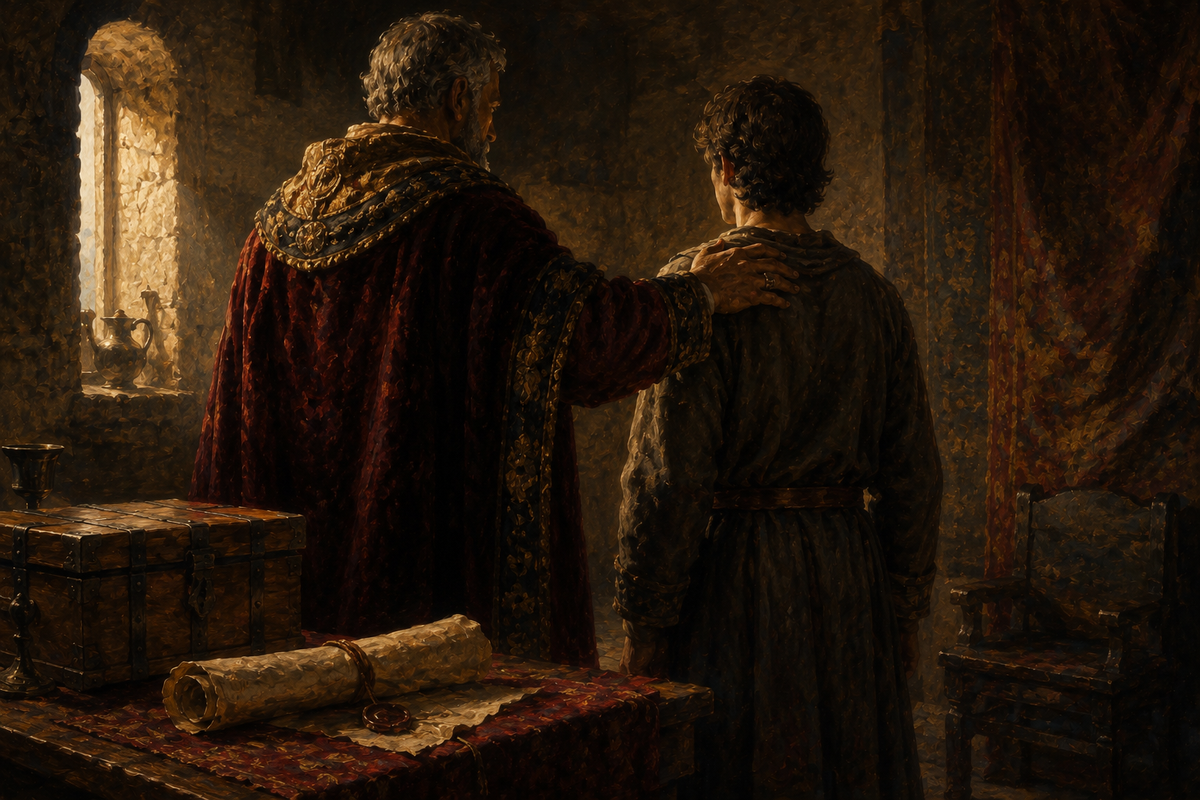
In 978 David saw to it that Bagrat was placed on the throne of the Abkhazian kingdom. The boy was about eighteen; real power stayed with his elders for a while, but formally his reign is counted from that date.
💡 An Interesting Fact
The unification of Georgia began with an adoption. David Kouropalates, the most powerful ruler of the Georgian south-west, had no direct heir. He took in another man’s son, the young Bagrat, and put his own political weight behind him. Thirty years later that child brought under one crown lands that had existed apart for centuries.
👑 1008: The Birth of a United Georgia
For thirty years Bagrat ruled in the western part of the country. The court was at Kutaisi, and those decades went on consolidating his authority: he brought unruly nobles to heel, settled matters with his neighbours and gradually turned the kingdom he had inherited into a durable structure.
The turn came in 1008, when his father Gurgen, king of the Kartvelians, died. The second crown passed to the son and the two lines came together in one ruler. This is how the first united Georgian state appeared, and its head took the title king of the Abkhazians and the Kartvelians.
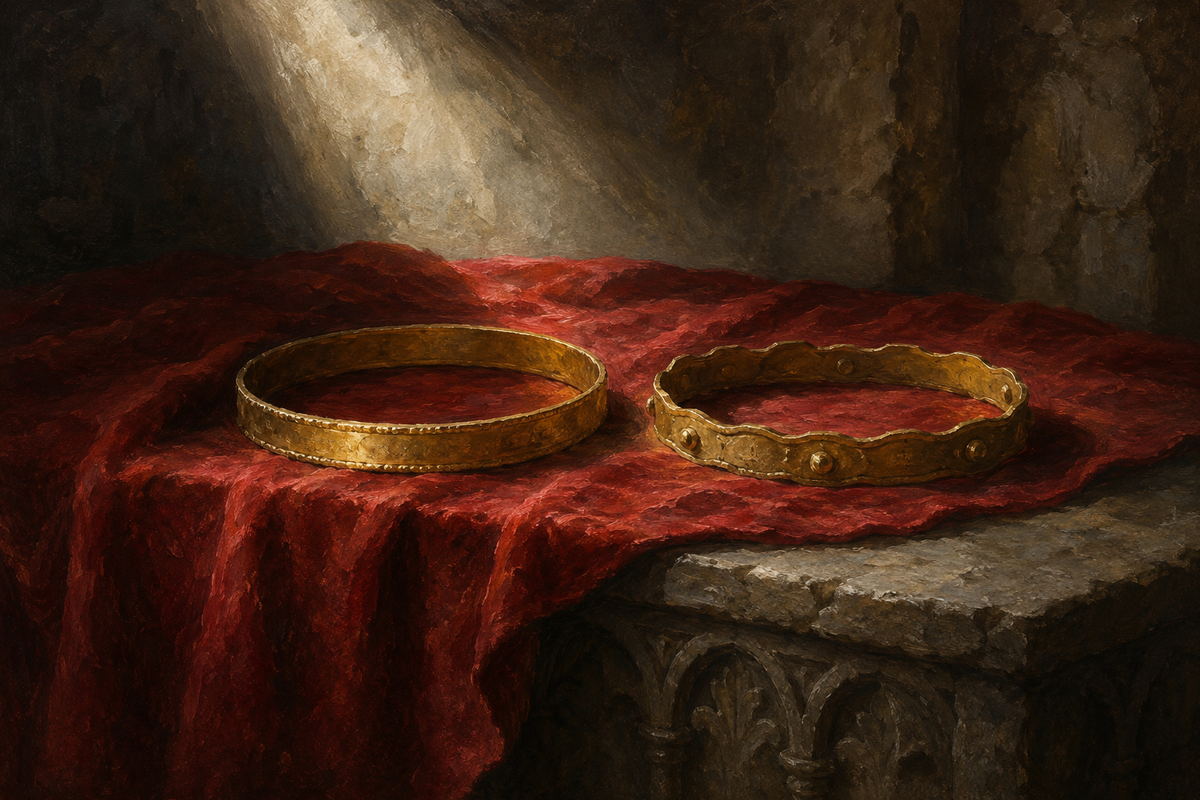
The title needs a word of explanation. The Abkhazian kingdom of the early Middle Ages was a state of western Georgia, and the title reflects the political history of that age rather than any modern map. The Kartvelians were the population of the eastern and southern parts of the country. The title listed the main groups of subjects, as was usual in medieval monarchies.
Around 1010 Kakheti and Hereti, the eastern lands, were joined to the state. After that most of the Georgian territories lay under Bagrat: not the whole country in its modern borders, but a single whole for the first time in a long while.
The significance of that step reaches far beyond one reign. The united monarchy became the frame within which the golden age would unfold a century later: the campaigns of David the Builder and the reign of Queen Tamar would have been impossible without the state Bagrat assembled.
| Year | Event |
|---|---|
| About 960 | Born to Gurgen, king of the Kartvelians, and the Abkhazian princess Gurandukht |
| 978 | David Kouropalates places Bagrat on the throne of the Abkhazian kingdom |
| About 1003 | Bagrati Cathedral in Kutaisi is consecrated |
| 1008 | On his father’s death the crowns unite and a single kingdom is born |
| About 1010 | Kakheti and Hereti are joined to the kingdom |
| 1014 | The king dies and is buried in Bedia Cathedral |
🏛️ Kutaisi: Capital of the First United Kingdom
The capital of the united kingdom became Kutaisi, and the decision shaped the fortunes of the city for a whole century. The court sat here, the country was governed from here, and the great cathedral of the age was raised here.
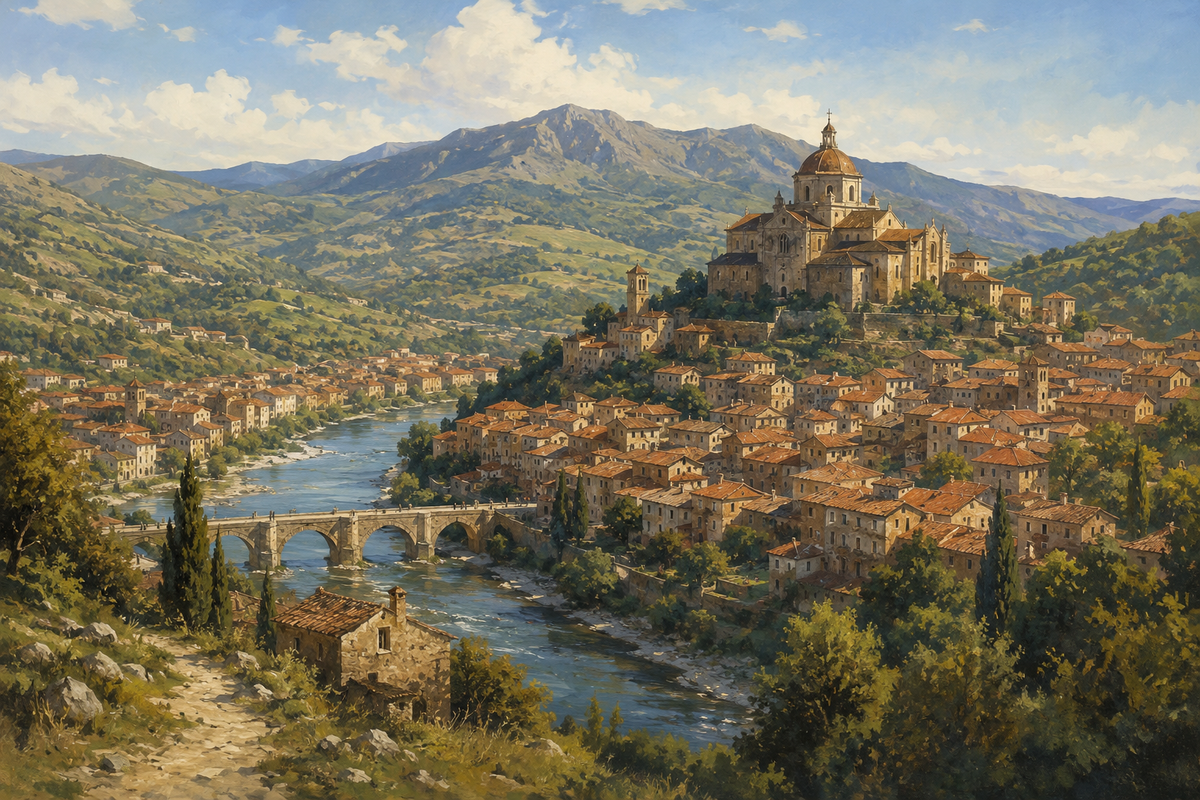
Kutaisi kept its capital status until the time of David the Builder: in 1122, after the recovery of Tbilisi, the capital moved east. But for the century between Bagrat and David, Kutaisi was the political centre of Georgia, and the traces are still visible in the city. What to see in the modern town is gathered in the guide to Kutaisi.
⛪ The Builder King: Bagrati, Bedia and Nikortsminda
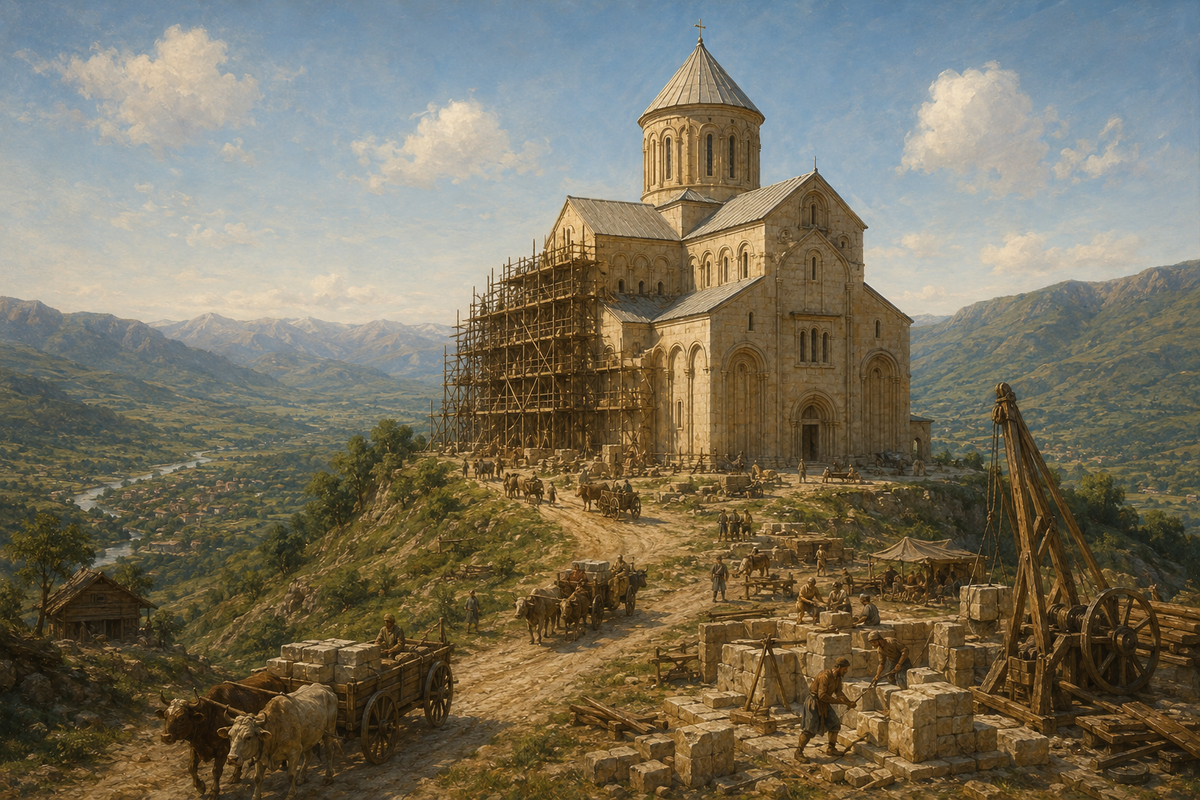
The chief building of the reign is the cathedral in Kutaisi, consecrated around 1003 and given the name of the man who commissioned it: Bagrati Cathedral. For its time it was a structure of enormous scale, standing on the hill above the city and visible from far off. The building history, the architecture and the later fortunes of the cathedral are covered in a separate article.
The second major building was Bedia Cathedral, raised around 999. It was there that the king was later buried, so this church closes his biography.
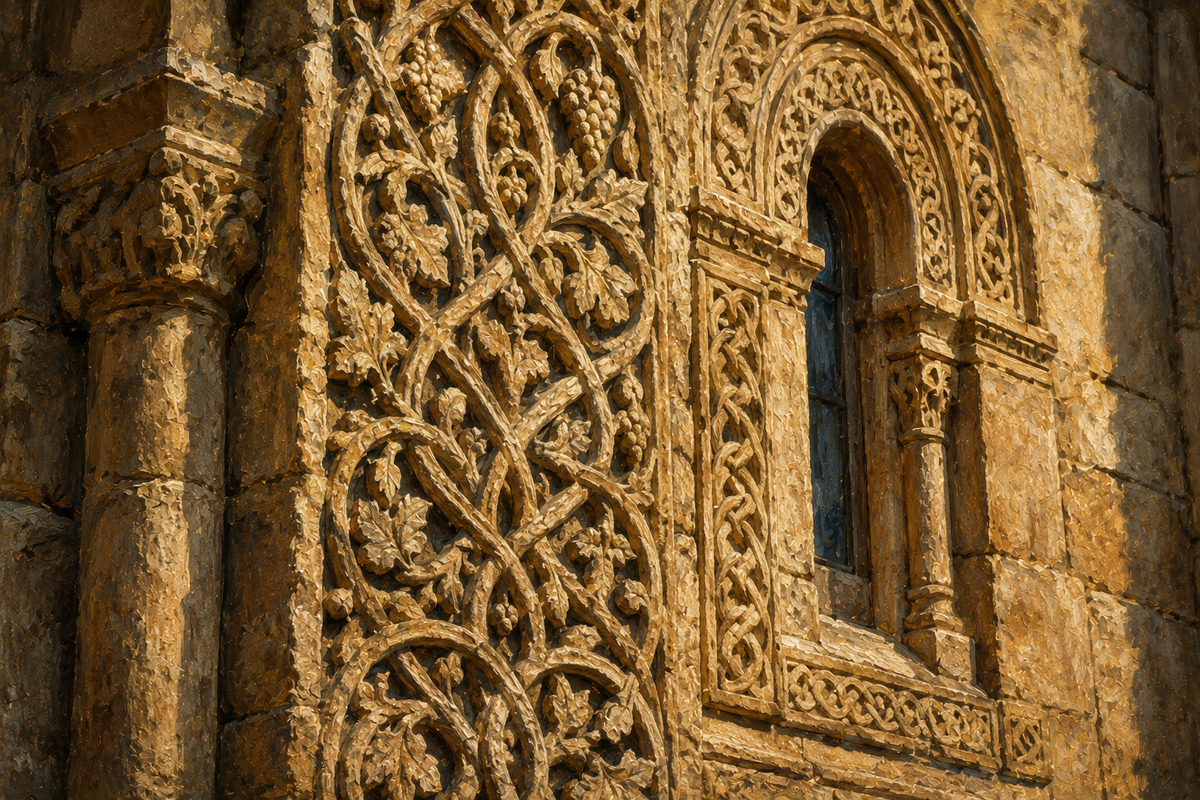
The third church is Nikortsminda in Racha, built in the last years of Bagrat’s reign. It stands away from the main roads and is known above all for its stone carving.
Three cathedrals in one reign is not piety in the pure sense but a programme. A stone church was the loudest statement of power available in that age: it showed that the kingdom was rich, stable and intended to last. Bagrat built in different corners of his domains, and each cathedral worked as a sign that the lands were now held in common.
🕯️ Death and the Grave at Bedia
Bagrat III died on 7 May 1014, having reigned over the united state for only six years. He was buried in Bedia Cathedral, the very church he had built fifteen years earlier: the biography closes in a circle.
The throne passed to his son George I. The state his father had assembled had to be defended at once, but that is another story.
🗺️ Remembering Bagrat III
Little material trace of the reign survives, but what does is substantial: three cathedrals and the city that became the capital under him.
| Place | Where | Link with the King |
|---|---|---|
| Bagrati Cathedral | Kutaisi | Consecrated around 1003 and carrying the name of the king |
| Kutaisi | Imereti | Capital of the first united Georgian kingdom |
| Nikortsminda | Racha | A cathedral built in the last years of Bagrat’s reign |
| Bedia Cathedral | Raised by the king and the place of his burial |
❓ Frequently Asked Questions About Bagrat III
💬 He was on the throne of the Abkhazian kingdom from 978, and he ruled the united Georgian state from 1008 until his death in 1014.
💬 Because it was under him that the Georgian lands first came under one crown. The second crown passed to him in 1008, and around 1010 Kakheti and Hereti were joined to the kingdom.
💬 He ruled two kingdoms, each with its own list of rulers: by the Abkhazian list he is the second Bagrat, by the Kartvelian the third. Historical writing settled on the form Bagrat III.
💬 Bagrati Cathedral. It was consecrated around 1003, in the king’s lifetime, and became the great symbol of the age of unification.
💬 David III Kouropalates ruled the province of Tao and was the most influential man in the Georgian south-west. He had no children of his own, adopted Bagrat and in 978 placed him on the Abkhazian throne.
💬 In Bedia Cathedral, which he built around 999. The king died in 1014 and was laid to rest in his own foundation.
📌 Key Points in Brief
Bagrat III is interesting because his chief achievement looks dull on paper and enormous in its consequences. He won no famous battles and left no law code. He assembled into one structure what had been a set of separate holdings before him, and he held it together. After that the structure worked on its own: a century later it let David the Builder think on the scale of the whole Caucasus, and a century after that it gave Georgia its golden age. Three cathedrals and a capital at Kutaisi are the material trace of the same decision, the stone confirmation that the kingdom was now one.
💗 Read Next
- The Bagrationi Dynasty: The Royal House of Georgia
- David the Builder: How Georgia Became the Strongest Kingdom in the Caucasus
- Bagrati Cathedral in Kutaisi: History and Architecture
- Nikortsminda and Barakoni: The Churches of Racha
- Getting to Know Kutaisi: What to See in the City
- Gelati Monastery: The Next Age of Kutaisi
- King Mirian III: How Georgia Adopted Christianity
💬 Now Over to You
- Have you seen Bagrati Cathedral in person, and what impression does it make?
- Did you know that Kutaisi was the capital of a united Georgia before Tbilisi?
- Which of Bagrat’s three cathedrals would you most like to see?
- Which of the Bagrationi should we cover next: George V the Brilliant, or someone else?
Tell us in the comments: good arguments and corrections make their way into the article.

5 comments
Log in to leave a comment
והקתדרלה, וואו. זה לא רק בניין, זה סמל, זכרון היסטורי שהוא חלק מהנשמה של המדינה. היום, כשאני חושב על גאורגיה, אני חושב על הקשר ההיסטורי הזה. שאלה לי, מה עוד כתוב על ההשפעה של בגרט השלישי על התרבות הגאורגית?