




✨ George V the Brilliant: The King Who Drove Out the Mongols
George V the Brilliant, in Georgian Brtskinvale, was the king of fourteenth-century Georgia under whom the country came out from under Mongol rule and became united again. He inherited a ruined and fragmented state paying tribute to a foreign power, and he left behind a single kingdom with laws and a coinage of its own. Georgian history treats his reign as the last rise of a united medieval Georgia.
📌 In Brief
- A king of fourteenth-century Georgia under whom the country came out from under Mongol rule.
- Son of Demetrius II the Self-Sacrificer, executed at the Horde in 1289.
- On the throne from 1314; by the mid-1330s the tribute had stopped.
- He brought Imereti and Samtskhe back under his authority and restored the unity of the country.
- His reforms included a law code for the highlands, a court regulation and a coinage of his own.
- He died in 1346 and is buried at Gelati Monastery.
❓ Who George V Was in Simple Terms
George V belonged to the Bagrationi, the dynasty that ruled the Georgian lands for around a thousand years. Within that history he holds a particular place: neither founder nor conqueror but restorer. By the time he was born the country had spent almost a century under Mongol rule, the united state had effectively fallen apart, and the royal title meant little.
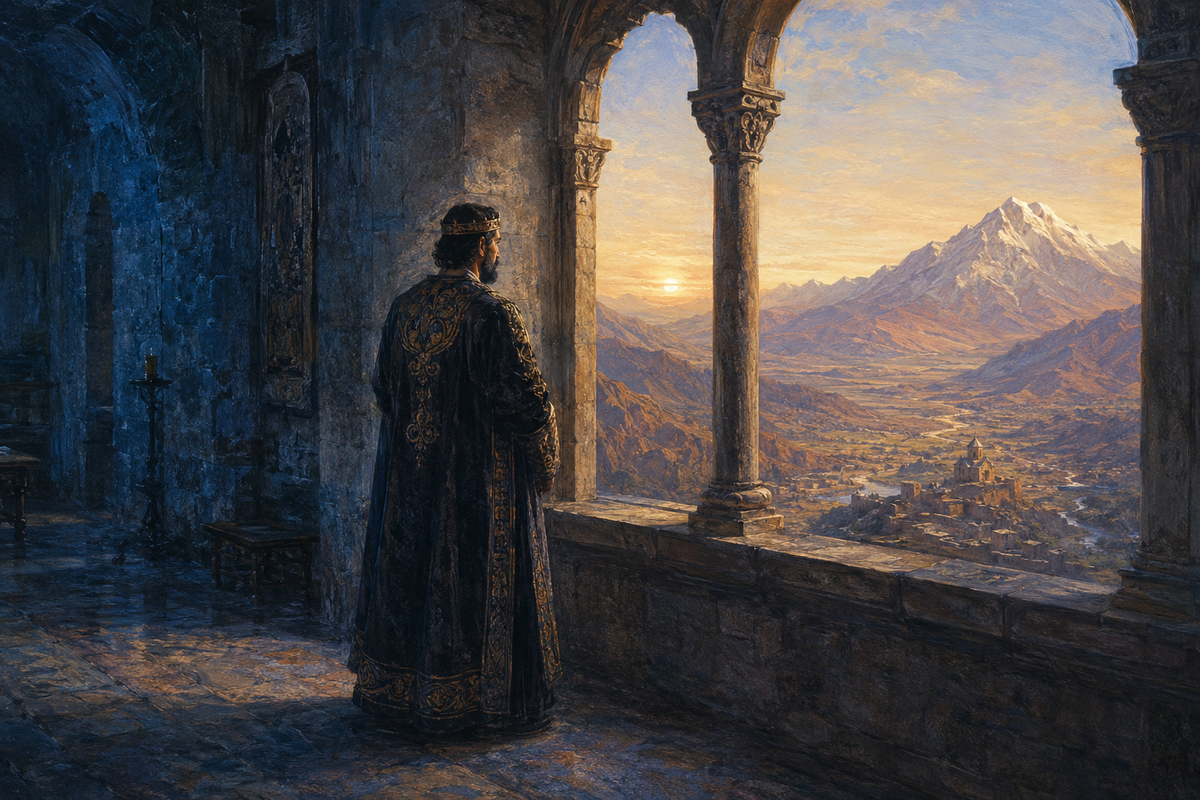
The task he solved sounds simple and was close to impossible: remove a foreign power without provoking a devastating campaign, and put a broken country back together. It took him more than twenty years.
In the line of the cluster he closes the medieval chain. Bagrat III gathered the country for the first time, David the Builder and Queen Tamar raised it to its height, and George V restored it after the collapse. Medieval Georgia knew no comparable rise after him.
| Detail | Value |
|---|---|
| Lifespan | About 1286–1346. The sources differ on the year of birth |
| Reign | From 1314 to 1346. He had already been formally proclaimed king in 1299 |
| Dynasty | The Bagrationi |
| Father | Demetrius II the Self-Sacrificer, executed at the Horde in 1289 |
| Guardian | His maternal grandfather Beka Jakeli, ruler of Samtskhe |
| Epithet | The Brilliant, in Georgian Brtskinvale |
| Chief achievement | Freeing the country from Mongol rule and restoring its unity |
| Burial | Gelati Monastery |
✨ Why the Brilliant: The Epithet Brtskinvale
The Georgian word brtskinvale translates as brilliant or shining. The epithet attached itself to the king in the historical tradition and is easy to explain: he gave the kingdom back a brightness it had all but forgotten. Exactly when it first appeared is hard to say; in the chronicles and in later historiography it is used as a settled epithet.
It is also worth keeping the Georges apart, and there are more than a dozen of them in Georgian history. George III was the father of Queen Tamar, George XII the last king of Kartli-Kakheti. Our subject is the fifth of the line. He has nothing to do with Saint George, whose name hundreds of Georgian churches carry, nor with the British king George V, who lived six centuries later.
🌑 A Childhood Under the Horde: Son of an Executed King
To grasp the scale of what he did, picture the country he grew up in. From the second half of the thirteenth century Georgia paid tribute to the Mongol rulers, Georgian detachments marched in their campaigns, and royal authority was curtailed to the point where questions of succession were settled at a foreign court. The country was being drained: the population grew poorer, provinces fell away, and the united monarchy existed largely on paper.
In 1289 George’s father, King Demetrius II, was summoned to the ilkhan’s court on a charge of conspiracy. He went, understanding that he might not return: refusal meant a punitive campaign. Demetrius was executed, and the Georgian church later numbered him among the saints under the name Tavdadebuli, which translates as the Self-Sacrificer. George was about three years old.
By Georgian tradition Demetrius II went to the Horde knowing how it would most likely end: the choice lay between his own life and a punitive campaign against the country. He chose the first, and the church later named him the Self-Sacrificer. His son, then about three years old, inherited that example instead of a father.
A paraphrase from Georgian historical and church tradition
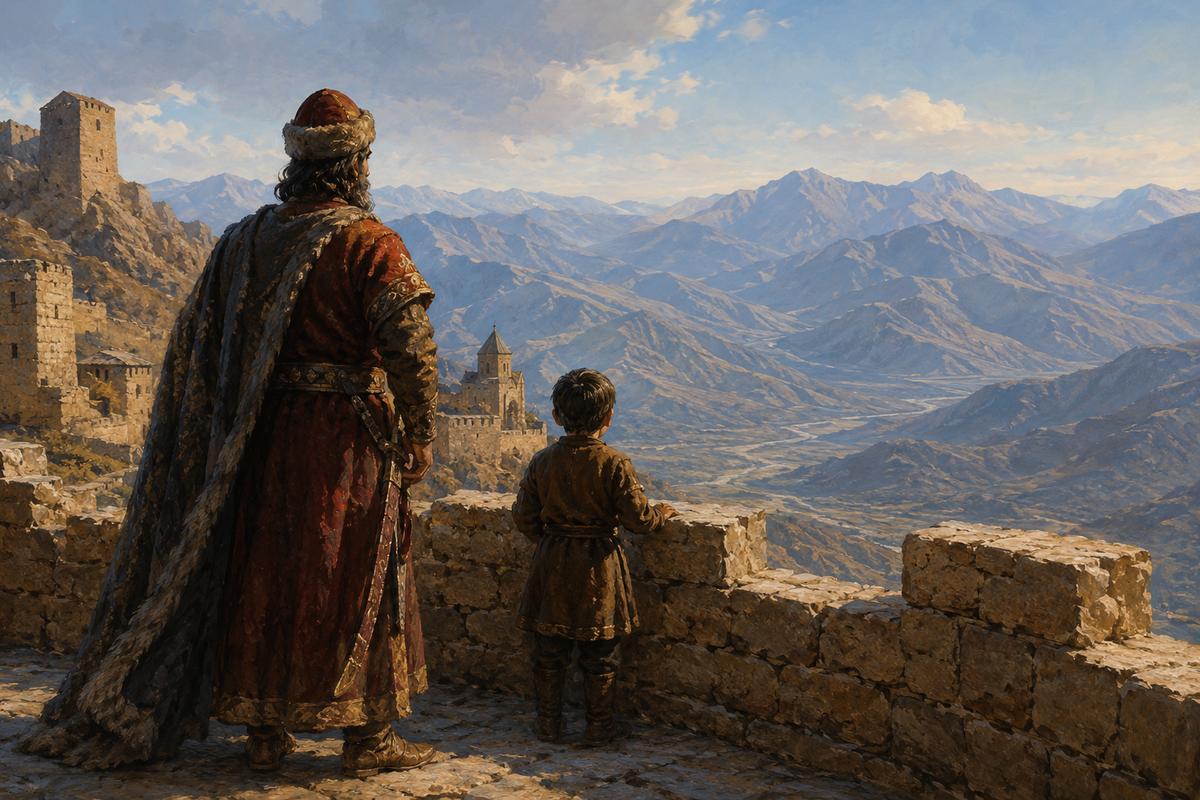
The boy was taken south, to his mother’s father. Beka Jakeli ruled Samtskhe, a province that in those years held itself noticeably more independent than the rest of the country, and his court stood at Akhaltsikhe. It was there, on the site of the present Rabati Fortress, that the future king spent his childhood. It is worth bearing in mind that the fortress has been rebuilt many times since, and its present appearance has nothing to do with the thirteenth century.
👑 The Road to the Throne: The Patience of a Strategist
George was first made king in 1299, while still a boy: the Mongols proclaimed him in Tbilisi as a counterweight to another claimant. It brought no real power, and the episode has stayed in the record as just that, an episode.
The real reign began in 1314. And here is what sets George apart from many Georgian kings: he did not rush into war. For the first years he behaved as a loyal vassal, met his obligations to the ilkhans, damped down internal conflicts and brought unruly nobles to heel. At the same time he was gathering resources and strengthening his position.
The calculation was that the Mongol state was weakening from within, and that the fewer pretexts for a campaign Georgia gave, the better its chances of living through that process without being ruined. The calculation proved right.
⚔️ Driving Out the Mongols and Gathering the Country
The phrase drove out the Mongols should be understood without a picture of a decisive battle: there was no such battle. Liberation came as a process. George gradually stopped paying tribute, took the administration and the courts out from under Mongol control, and by the mid-1330s the presence of the ilkhans in Georgia had faded away. It helped that the Mongol state itself was falling apart in those years.
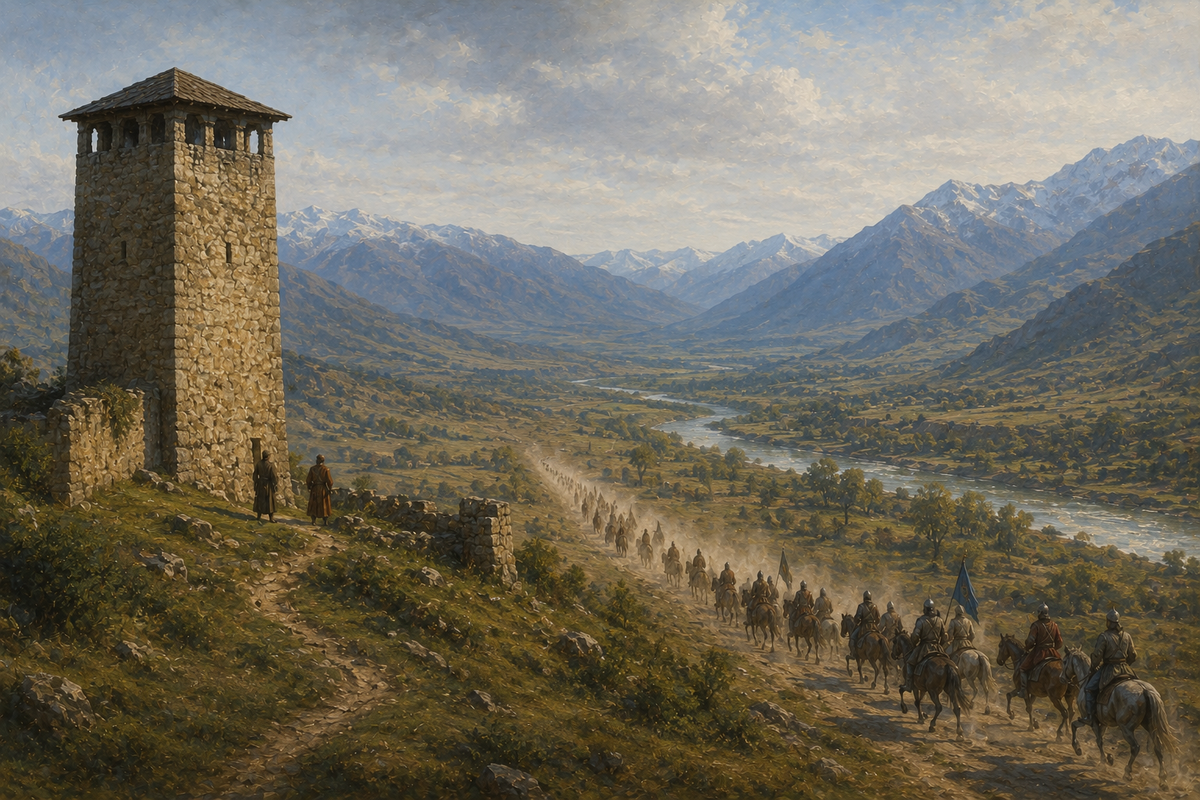
The gathering of the country ran in parallel. In 1329 Imereti, the western part of Georgia that had lived apart for many years, returned under royal authority. In 1334 the same happened with Samtskhe, the province of his own childhood. Restoring control over the mountain districts, which had spent a century of disorder learning to do without a central power, was a separate piece of work.
By the end of the reign George V held nearly the whole country: a single state of a kind that had not existed since the invasion.
| Year | Event |
|---|---|
| 1289 | His father Demetrius II is executed at the ilkhan’s court |
| 1299 | The Mongols formally proclaim the young George king in Tbilisi |
| 1314 | His real reign begins |
| 1329 | Imereti returns under royal authority |
| 1334 | Samtskhe returns under royal authority |
| Mid-1330s | Mongol power over Georgia fades away |
| 1346 | The king dies and is buried at Gelati |
⚖️ The Reforms of the Brilliant
Gathering a country is not enough; it has to be made to work. The reforms of George V addressed what had held up worst after a century of disorder: law, order and money.
Dzeglis Dadeba, the code for the mountain districts. Highlanders had lived by customary law for centuries and the state reached them poorly. The code set down rules for settling disputes and for punishment, which is to say it fitted mountain society into the common judicial system without breaking its way of life outright.
The regulation of the royal court. The second document set out how the court was arranged: who did what, which offices existed, how ceremonies ran. It sounds like bureaucracy, but for a country where for half a century it had not been clear who was actually in charge, this was a way of giving government a shape again. Historians discuss the exact dating and authorship of the text.
A coinage of his own. Under George the striking of Georgian silver coin resumed, and that was a political as much as an economic statement: in the Middle Ages the right to put your own name on the money meant sovereignty.

💡 An Interesting Fact
One of the most unexpected successes of George V lies a thousand kilometres from Georgia. The king negotiated with the Egyptian sultans, who then held Palestine, and secured guarantees for Georgian monks at the holy places of Jerusalem, the Monastery of the Cross among them. The sources differ on the details of those arrangements, but diplomacy at that range, from a country only just out from under foreign rule, says a good deal in itself.
🕯️ Legacy: The Last Brightness Before the Storm
George V died in 1346 and was buried at Gelati Monastery, where David the Builder also lies. The symbolism came out neatly: the restorer was laid beside the gatherer.
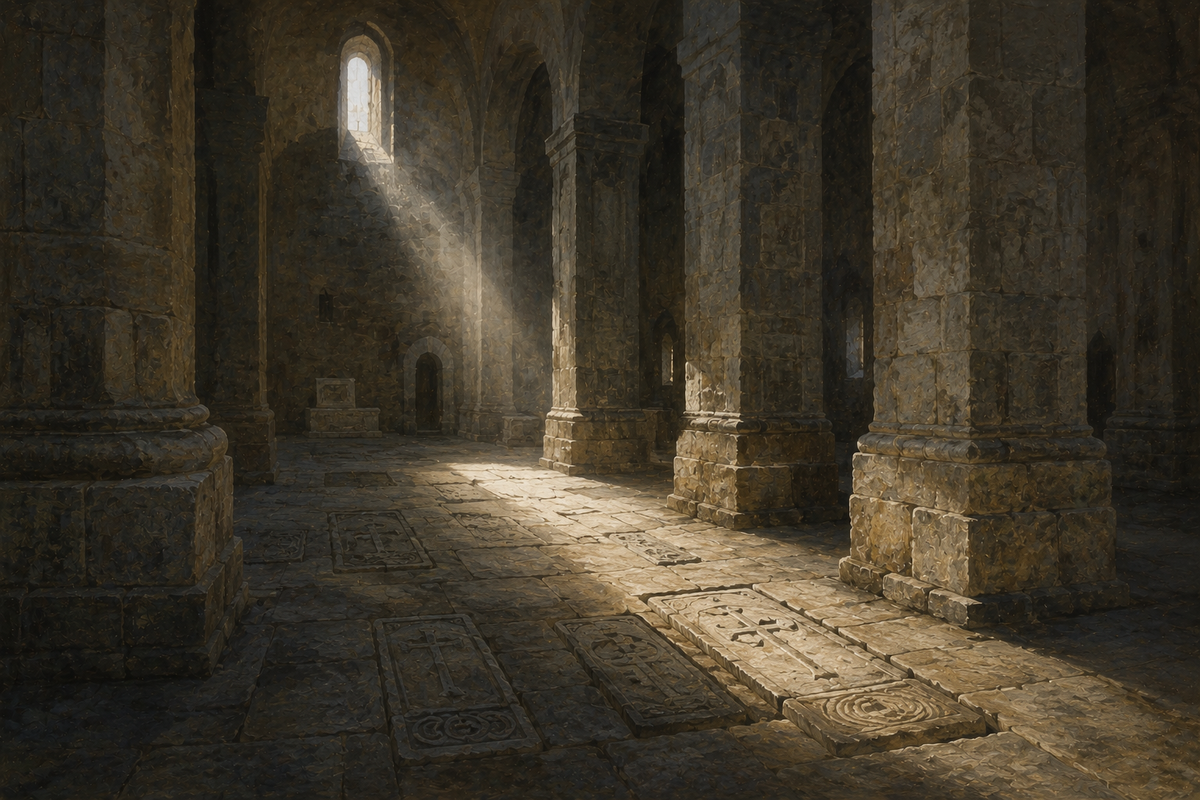
The order he built held for another generation. But in the second half of the fourteenth century the invasions of Timur fell on the country, and medieval Georgia never rose to its former level again. That is why the reign of George V is often called the last brightness of the age: not an exaggeration and not a verdict, but an honest frame. What the earlier rise looked like, the one he remembered, is set out in the piece on the golden era of the Georgian kingdom.
🗺️ Where to Look for Traces of George V
Little material trace of the reign survives: George built a state rather than churches. The places tied to him directly are few.
| Place | Where | Link with the King |
|---|---|---|
| Gelati Monastery | Near Kutaisi | The burial place of the king |
| Rabati Fortress | Akhaltsikhe | On the site of the Jakeli residence where George spent his childhood |
| Akhaltsikhe | Samtskhe-Javakheti | The centre of the Jakeli domains, where the boy was taken after his father’s death |
| Rulers of Georgia: From King David to the Russian Empire | Survey | Where George V stands in the wider gallery of Georgian kings |
❓ Frequently Asked Questions About George V
💬 From 1314 to 1346. He had already been proclaimed king in 1299, but that episode brought him no real power.
💬 The Georgian word brtskinvale means brilliant or shining. The epithet settled on him in the historical tradition because he gave the kingdom back the brightness it had lost.
💬 Not in a single battle but as a process. George V gradually stopped paying tribute and took the running of the country out from under the control of the ilkhans, and by the mid-1330s Mongol power over Georgia had faded away.
💬 He issued Dzeglis Dadeba, a code for the mountain districts, introduced a regulation of the royal court and resumed the striking of a coinage of his own. Separately he secured guarantees for Georgian monks at the holy places of Jerusalem.
💬 He was his father. Demetrius II was executed at the court of the Mongol ruler in 1289 and is venerated by the Georgian church as the Self-Sacrificer. George was about three years old at the time.
💬 At Gelati Monastery near Kutaisi, where David the Builder is buried as well.
📌 Key Points in Brief
What sets George V apart among Georgian kings is that his chief weapon was patience. He grew up an orphan at another man’s court in a country where everything was decided by an outside power, spent twenty years behaving as an obedient vassal and in that time waited out the moment when the Mongol state stopped being dangerous. Then, instead of celebrating a victory, he took up dull matters: courts for the highlands, a regulation for his own household, the striking of coin. It was out of those dull matters that a state emerged which, after a century of disintegration, was whole again. That the rise turned out to be the last in the medieval history of the country is no fault of the king and takes nothing from what he did: he gave Georgia half a century of normal life.
💗 Read Next
- The Bagrationi Dynasty: The Royal House of Georgia
- The Golden Era of the Georgian Kingdom
- Queen Tamar: The Golden Age of Georgia
- David the Builder: How Georgia Became the Strongest Kingdom in the Caucasus
- Bagrat III: The First King of a United Georgia
- From King David to the Russian Empire: The Famous Rulers of Georgia
- Gelati Monastery: The Burial Place of the Georgian Kings
💬 Now Over to You
- Had you heard of George V before this article, or is the name new to you?
- Which surprised you more: how he got rid of the Mongols, or the negotiations over Jerusalem?
- Have you been to Rabati and to Gelati, and which left the stronger impression?
- Should we write a separate article about his father, Demetrius II the Self-Sacrificer?
Tell us in the comments: good arguments and corrections make their way into the article.

1 comment
Log in to leave a comment