




✝️ King Mirian III: How Georgia Adopted Christianity
Mirian III was the king of Kartli, the Iberia of classical authors, who ruled in the fourth century and under whom Christianity became the state religion. Kartli was among the first states in the world to take that step. The conversion of the king is bound up with the preaching of Saint Nino, and his grave at Samtavro Monastery in Mtskheta is venerated to this day.
📌 In Brief
- King of Kartli, the Iberia of classical authors, who ruled in the fourth century.
- Converted through the preaching of Saint Nino; Queen Nana came to the faith before her husband.
- The baptism of Kartli is traditionally dated to 326, although some historians give 337.
- Founder of the Chosroid house, to which tradition assigns Vakhtang Gorgasali.
- The first church on the site of the future Svetitskhoveli was raised in his reign.
- Buried with Queen Nana at Samtavro Monastery; both are venerated as Equal-to-the-Apostles.
❓ Who King Mirian III Was in Simple Terms
Kartli, which classical authors called Iberia, was a kingdom in eastern Georgia with its capital at Mtskheta. Mirian ruled it in the fourth century and entered history through a single decision: under him the country moved from paganism to Christianity, and the change was an act of state rather than a private choice of the sovereign.
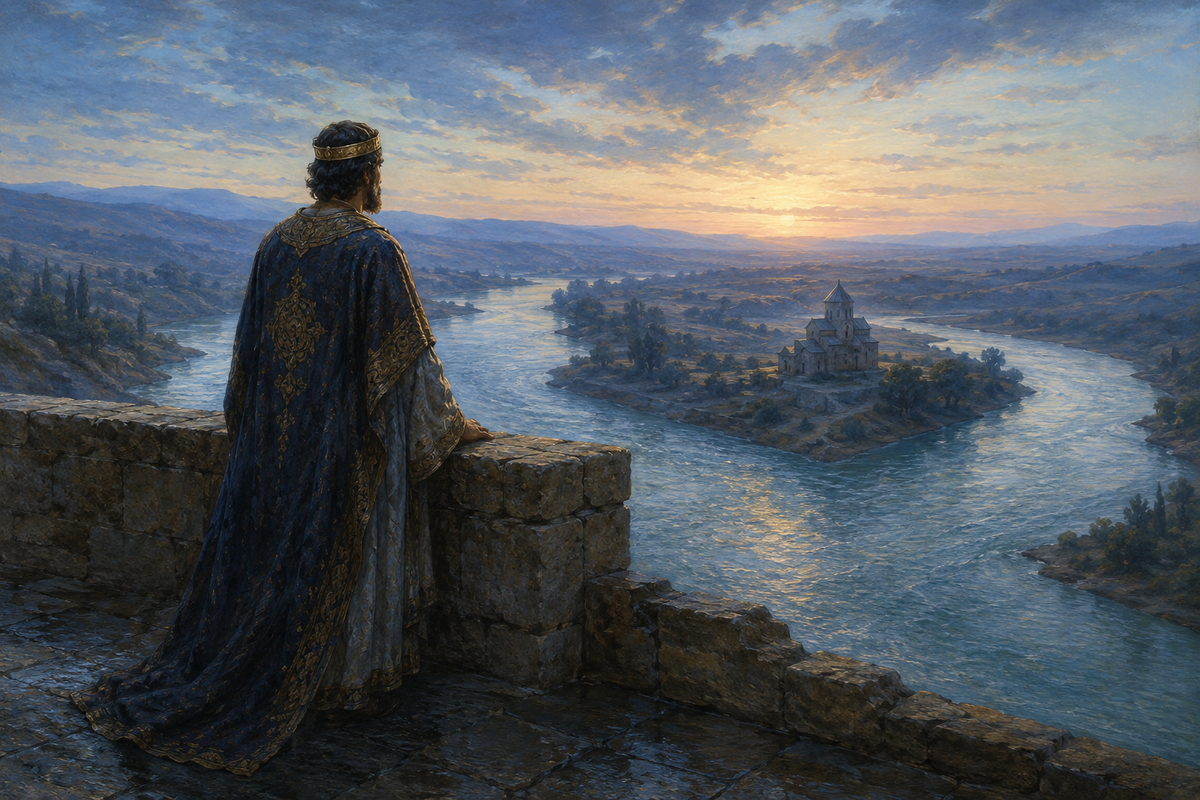
The scale is worth stating carefully. Kartli was among the first states in which Christianity was given official standing. The phrase the first Christian country in the world is often used, but applied to Kartli it is not correct: it happened earlier in neighbouring Armenia. Both dates are discussed by researchers, yet the sequence is as described.
One more note, about the number. Kings named Mirian appear in the Georgian royal lists earlier as well, in the semi-legendary period. Hence the third: the subject of this article is the third Mirian by the count of the chronicles, even though it is he who is remembered under the name.
| Detail | Value |
|---|---|
| Period | Fourth century. The traditional regnal dates, roughly 284–361, are conventional and come from the chronicles |
| Title | King of Kartli, called Iberia in the classical tradition |
| Dynasty | Founder of the Chosroid house |
| Wife | Queen Nana, converted to Christianity before her husband |
| Capital | Mtskheta |
| Chief event | The baptism of Kartli: traditionally 326, with 337 given by some historians |
| Burial | Samtavro Monastery, Mtskheta |
| Veneration | Saints Mirian and Nana, Equal-to-the-Apostles |
🏛️ Origins: Mirian and the House of Chosroid
Mirian is regarded as the founder of the Chosroid dynasty, which ruled Kartli for several centuries. The name of the house itself points to an Iranian origin, and Georgian tradition calls Mirian outright the son of the Persian king. Historians more often connect the house with the Iranian family of the Mihranids, but the details of those arguments lead a long way from a biography, so we will leave it at this: the roots of the family are Iranian and the specifics remain under discussion.
Tradition assigns to the same house Vakhtang Gorgasali, the founder of Tbilisi: he was a descendant of Mirian. So the thread that runs from the conversion of the country to the appearance of a new capital stays inside one dynasty.
The age he ruled in was defined by two neighbours. Kartli lay between Rome and Persia, and each regarded it as its own sphere. The sources say little about the secular side of Mirian’s reign, so there will be no detailed military chronicle in this biography: what survives is above all what is bound up with the conversion of the country.
🌑 Darkness on Mount Tkhoti: The Legend of the Conversion
The story of the conversion begins not with the king but with his wife. According to hagiographic tradition Queen Nana fell gravely ill and nothing helped. Relief came from Nino, a preacher then living in Mtskheta: after her prayer the queen recovered and accepted Christianity. Mirian at first took his wife’s faith coolly.
The turning point, as the tradition tells it, came on a hunt. The king was near Mount Tkhoti when day gave way to a thick darkness. He called on his former gods and there was no answer. Then Mirian turned to the God of whom Nino spoke and promised to believe if help came. The darkness lifted and the light returned.
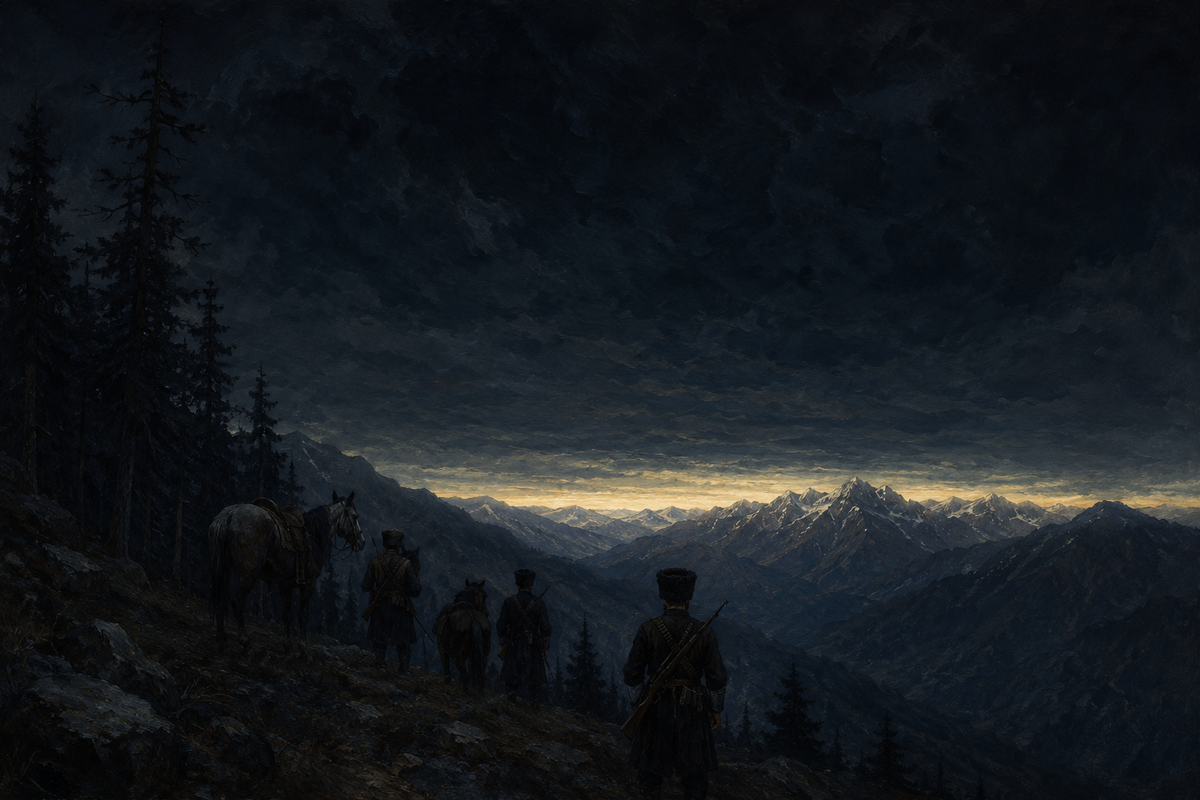
The episode is known from hagiographic tradition, above all from the Moktsevai Kartlisai and the Life of Saint Nino. This is not a chronicle entry by an eyewitness but an account that took shape within the church tradition, and it should be treated accordingly: as a text that explains the meaning of an event rather than recording its minutes.
According to hagiographic tradition, day turned suddenly to night while the king was hunting near Mount Tkhoti. He called on his former gods and received no answer, and when he turned to the God whom Nino preached, the darkness lifted and the light came back. It was there, tradition says, that Mirian resolved to accept the new faith.
A paraphrase of the episode from hagiographic tradition, the Moktsevai Kartlisai and the Life of Saint Nino
Nino herself appears in this article only where her path crosses the king’s. Her journey to Kartli, her life, the cross of vine wood and the monastery of Bodbe where she is buried deserve an article of their own.
✝️ The Baptism of Kartli: Christianity Becomes the State Religion
After the conversion of the king events moved quickly. Mirian sent an embassy to the emperor Constantine asking for clergy, and priests arrived in Kartli. The king was baptised, with his family, his court and then the people: by tradition the rite was performed in the waters of a river, and the accounts name now the Kura, now the Aragvi.
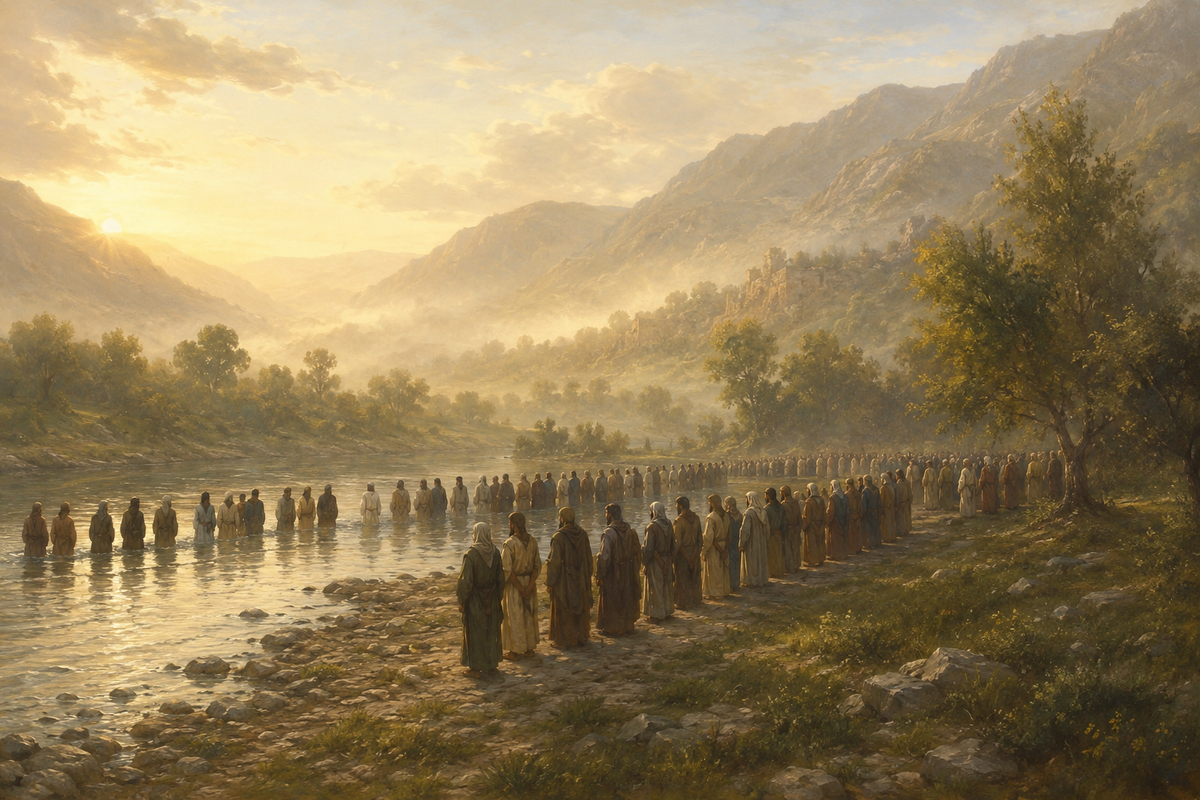
The date is harder. The baptism of Kartli is traditionally placed in 326, but a number of historians give 337. The discrepancy arises because the early sources date the event indirectly, by tying it to other events, rather than recording a year outright. We give both dates and do not choose between them.
The old faith went out with its idols. The chief of them was Armazi, the supreme deity of pre-Christian Kartli: tradition holds that it was set up by Pharnavaz, the first king of the country, and that the cult came to an end under Mirian. The hagiography says the idol was brought down by Nino’s prayer. In this way one thread of Georgian history closed after some six hundred years.
For the country it meant a change of cultural sphere. Kartli entered the Christian world with everything that followed: church building, a written culture, new ties with Byzantium and the Near East. How the religious map of Georgia developed after that, and which confessions live side by side in the country today, is set out in the separate article on world religions in Georgia.
💡 An Interesting Fact
Kartli was among the first states in which Christianity was given official status. It happened earlier in neighbouring Armenia, which tradition names as the first country to adopt Christianity at state level, in the early fourth century. In the Roman Empire itself Christianity became the state religion only at the end of that same century. The dating is discussed by researchers in all three cases, but the order of events is as set out here.
⛪ The First Churches: Svetitskhoveli and the Cross Above Mtskheta
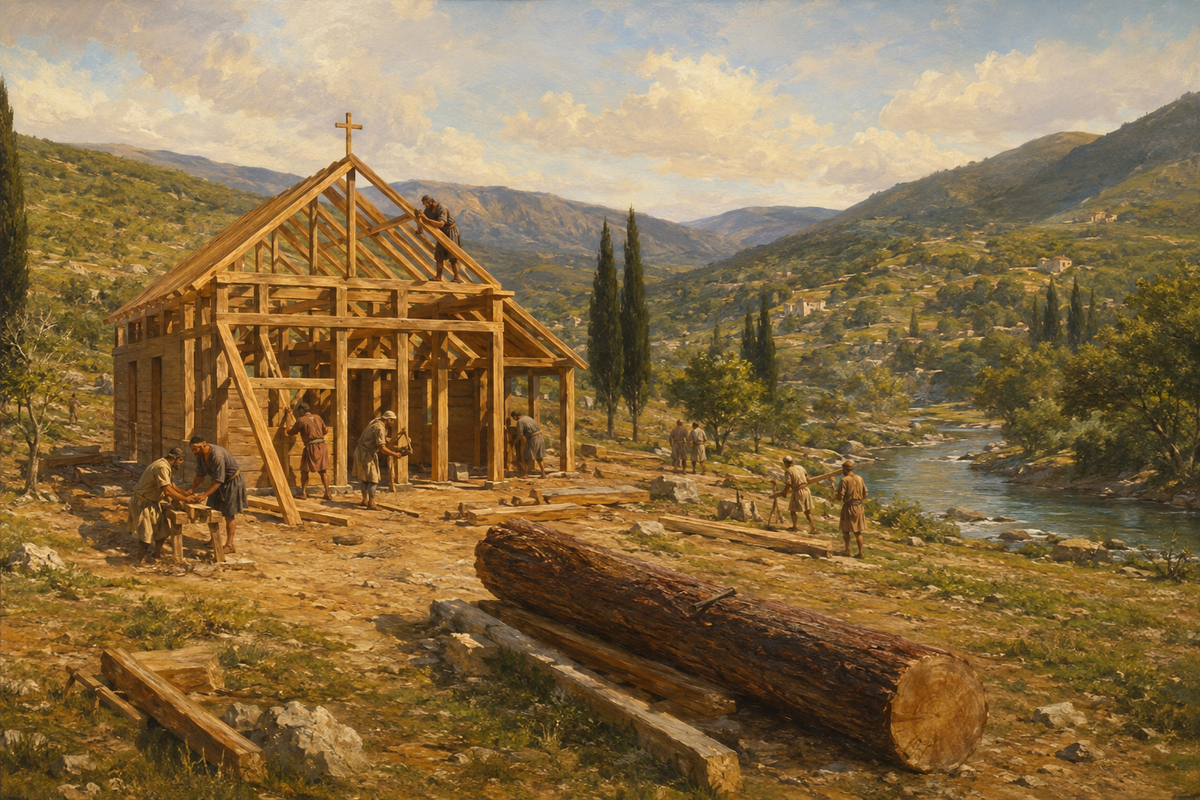
The first church in Mtskheta was raised under Mirian, and it was built of wood. The site was not chosen at random: by tradition the Robe of Christ was buried there, and during the building a wonder occurred with a column that would not yield to the builders and set itself in place, giving off myrrh. Hence the name of the cathedral that later grew on the same spot: Svetitskhoveli, the life-giving pillar. The full version of the legend and the history of the church are covered in the article on the cathedral.
At the same time, by tradition, a cross was raised on the hill above Mtskheta: on that spot Jvari Monastery later rose, the one that stands over the meeting of the Aragvi and the Kura. It is this Jvari, and not the monastery of the same name in Zugdidi, that belongs to the age of Mirian.
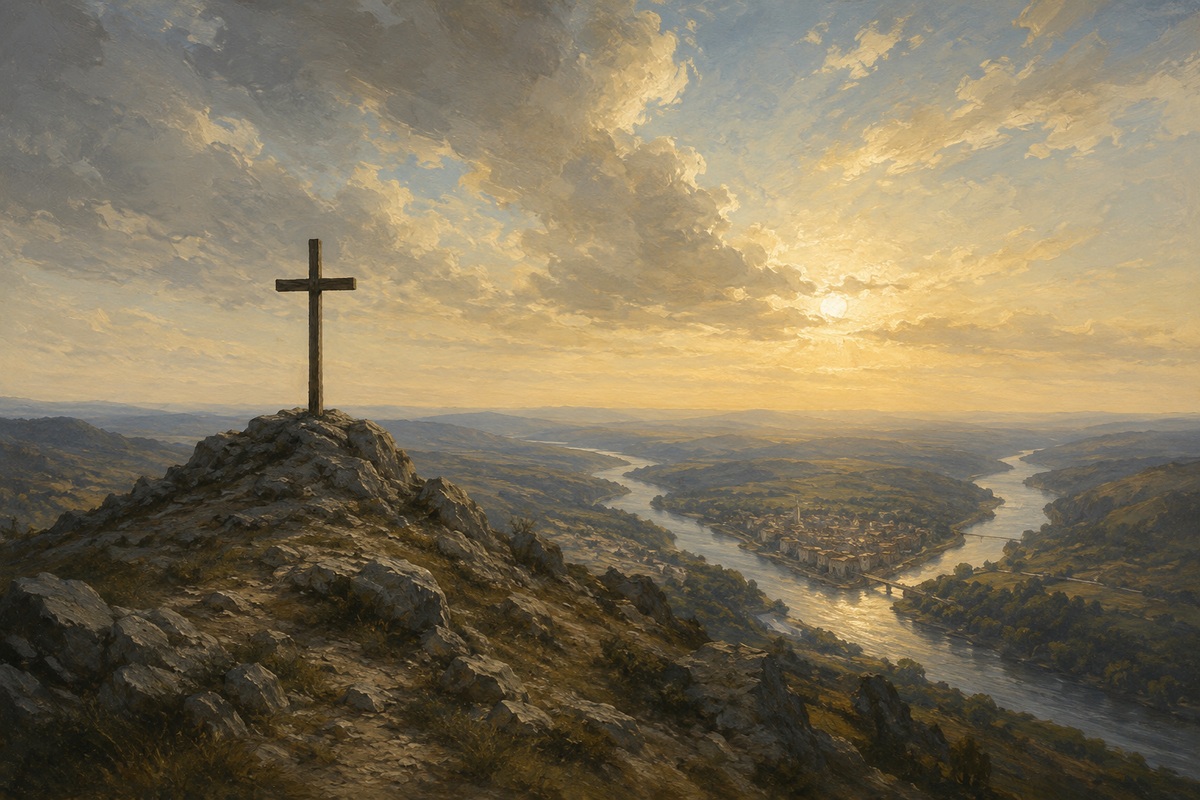
The memory of these events lives in the calendar as well: Mtskhetoba-Svetitskhovloba, the great feast of the ancient capital, draws thousands to the town.
🕯️ Final Years and the Grave at Samtavro
The sources are restrained about the king’s last years. Tradition describes them as a time of humility and care for the new church, and before his death Mirian is said to have left his heirs an injunction to keep the faith. There are no firm dates here: the years of his life and reign are conventional in the chronicles.
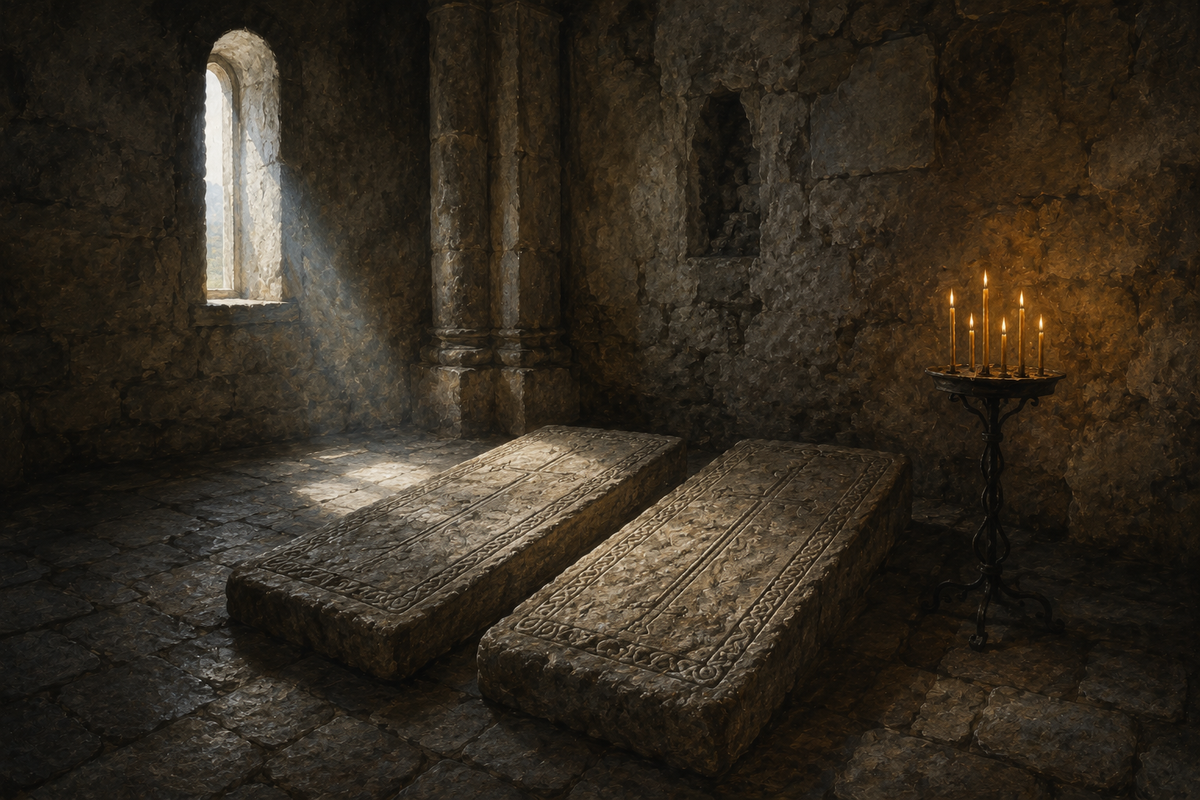
Mirian was buried together with Queen Nana at Samtavro Monastery in Mtskheta. Their graves survive inside the monastery church: this is one of the principal places of pilgrimage in Georgia, and there is almost always someone at the tombs.
🙏 Saints Mirian and Nana: Canonisation and Remembrance
The Georgian Orthodox Church venerates Mirian and Nana as Equal-to-the-Apostles, that is, as saints whose work is counted alongside the labours of the apostles. The rank is given to rulers under whom whole peoples came to Christianity, and the Georgian royal couple stands in that line with several other historical figures.
The feast day of Saints Mirian and Nana is traditionally kept on 1 (14) October.
The Georgian calendar keeps a separate day for Saint Nino, Ninooba, in honour of the woman whose preaching began the conversion of the king and of the country.
🗺️ Remembering Mirian: A Route Through Mtskheta
Everything connected with the king fits into one town and its surroundings. Mtskheta is small, and the three main points can be walked in a day; the fourth, in Kakheti, is tied to the story through Saint Nino.
🗺️ The Mtskheta of Mirian on the Map
All three points lie within Mtskheta. Bodbe is in Kakheti, outside this map: the link to it is in the table below.
Mtskheta. The graves of King Mirian and Queen Nana.
Mtskheta. It stands on the site of the first church raised under Mirian.
The hill above Mtskheta. Where tradition says the cross was raised.
| Place | Where | Link with the King |
|---|---|---|
| Samtavro Monastery | Mtskheta | The graves of King Mirian and Queen Nana, a place of pilgrimage |
| Svetitskhoveli Cathedral | Mtskheta | It stands on the site of the first church raised under Mirian |
| Jvari Monastery | The hill above Mtskheta | Where tradition says a cross was raised under Mirian and Nino |
| Bodbe Monastery | Kakheti, near Sighnaghi | The grave of Saint Nino, whose preaching brought the king to the faith |
❓ Frequently Asked Questions About King Mirian III
💬 In the fourth century. The chronicles give approximate regnal years, around 284 to 361, but those dates are conventional: the early sources name them only roughly.
💬 Under Mirian III. The baptism of Kartli is traditionally dated to 326, with some historians giving 337. This concerns the eastern Georgian kingdom of Kartli, the Iberia of classical authors.
💬 By hagiographic tradition, day gave way to sudden darkness while he was hunting near Mount Tkhoti. The king called on his former gods without answer, and when he turned to the God whom Nino preached he saw the light returning. After that he resolved to accept Christianity.
💬 Mirian founded the Chosroid dynasty, and Vakhtang Gorgasali, the founder of Tbilisi, was his descendant within that house.
💬 At Samtavro Monastery in Mtskheta. Their graves survive inside the monastery church and remain a place of pilgrimage.
💬 That is how the church names saints whose work in bringing peoples to the faith is counted alongside the apostles. Mirian and Nana received the rank because under them Christianity became the faith of a whole country.
📌 Key Points in Brief
Mirian III is remembered not for campaigns or reforms but for a single turn. A pagan king of Iranian descent who set the state on a new religious footing, he made a choice that shaped the whole later culture of the country: its writing, its architecture, its calendar, its ties with the world outside. The circumstances of that choice reach us through hagiographic tradition rather than an eyewitness chronicle, and in that sense the biography of Mirian is half made of legend. The outcome, though, needs no legend: Kartli did become Christian in the fourth century, the first churches of Mtskheta stand where they stood, and the graves of the king and queen at Samtavro can be seen today.
💗 Read Next
- World Religions in Georgia
- Svetitskhoveli in Mtskheta: The Cathedral and the Legend of the Living Pillar
- Ninooba: The Feast of Saint Nino
- Mtskhetoba-Svetitskhovloba: The Great Feast of the Ancient Capital
- Vakhtang Gorgasali: Warrior King and Founder of Tbilisi
- Pharnavaz I: The First King and the Birth of the Georgian Monarchy
- Mtskheta: The Oldest Georgian Capital
💬 Now Over to You
- Have you been to Samtavro and seen the graves of King Mirian and Queen Nana?
- Which part of the tradition strikes you more: the healing of Queen Nana or the darkness on Tkhoti?
- Should we write a separate article on Saint Nino, her journey to Kartli and the cross of vine wood?
- Which of the Georgian kings should we cover next?
Tell us in the comments: good arguments and corrections make their way into the article.

2 comments
Log in to leave a comment
გულში ვგრძნობ, რომ ჩვენს ისტორიაში ასეთი მნიშვნელოვანი მომენტები თანამედროვე გვიანთა პრობლემებთან შედარებით როგორ გაიზრდება ღირებულება. მშვენიერი ჯადოსნობა, თანაც ჩვენი ქვეყნის სულიერების დასაწყისი. მაგრამ, ამ ყველაფრის ფონზე, მეფე მირიანს ხომ ცოტა რთული იყო იმ დროს ამის გაკეთება? 🤔