




⛪ Svetitskhoveli Cathedral: The Thousand-Year "Living Pillar" at the Heart of Mtskheta
⛪ Svetitskhoveli Cathedral at a Glance
The main cathedral of the Georgian Church in Mtskheta, a UNESCO World Heritage Site. For a thousand years, the country's spiritual heart and the coronation place of its kings.
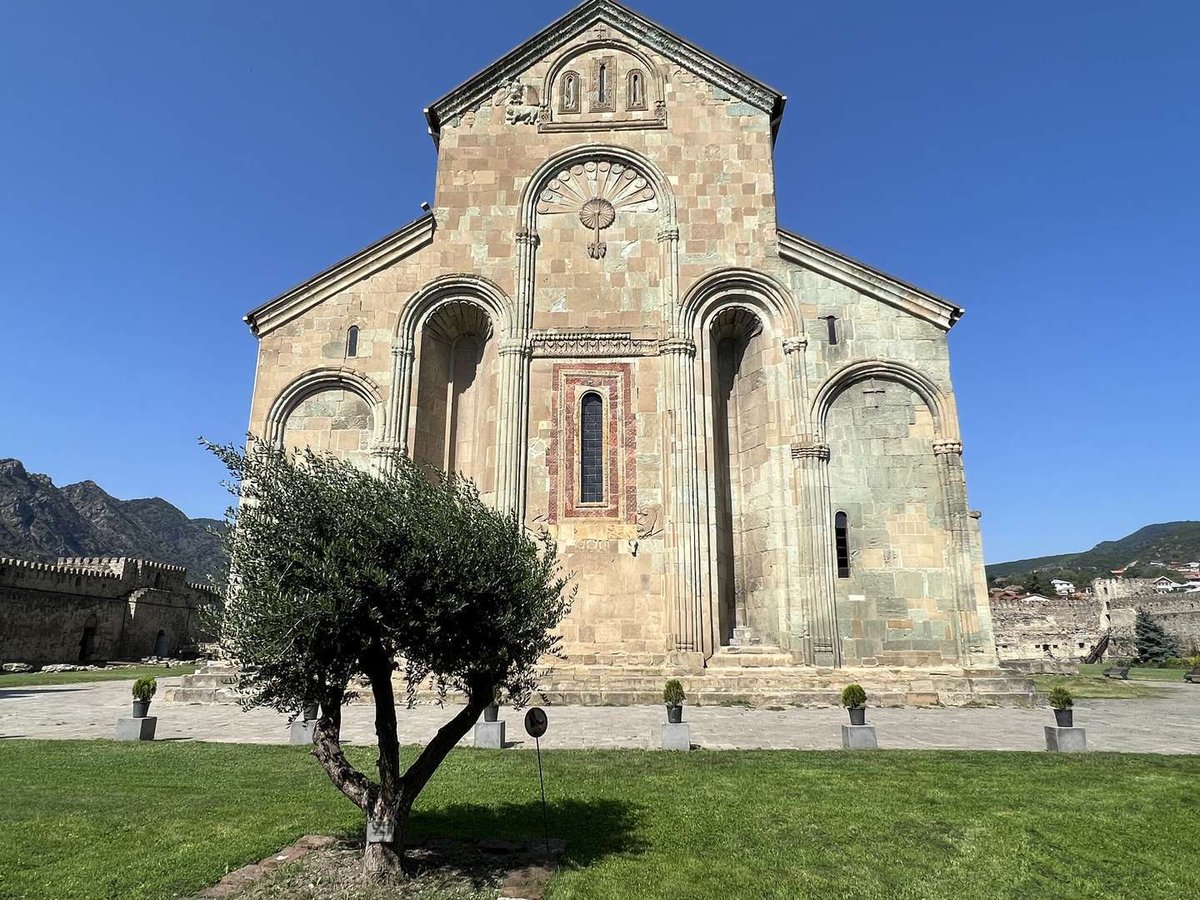
Svetitskhoveli isn't just one of Georgia's churches, it's the main cathedral of the Georgian Orthodox Church, its spiritual centre for a full thousand years. It stands in Mtskheta, Georgia's ancient capital, in the sacred valley where the Kura and Aragvi rivers meet, roughly 20 km from Tbilisi. For the full listing with coordinates, opening hours, and photos, see the Svetitskhoveli Cathedral page.
It's a UNESCO World Heritage Site (since 1994) and the largest surviving historical building in Georgia. For centuries, Georgian kings were crowned and buried here, and the cathedral became one of the symbols of Orthodox Georgia. If you have just one day near Tbilisi, Svetitskhoveli is the site worth making the trip to Mtskheta for.
✝️ What "the Living Pillar" Means
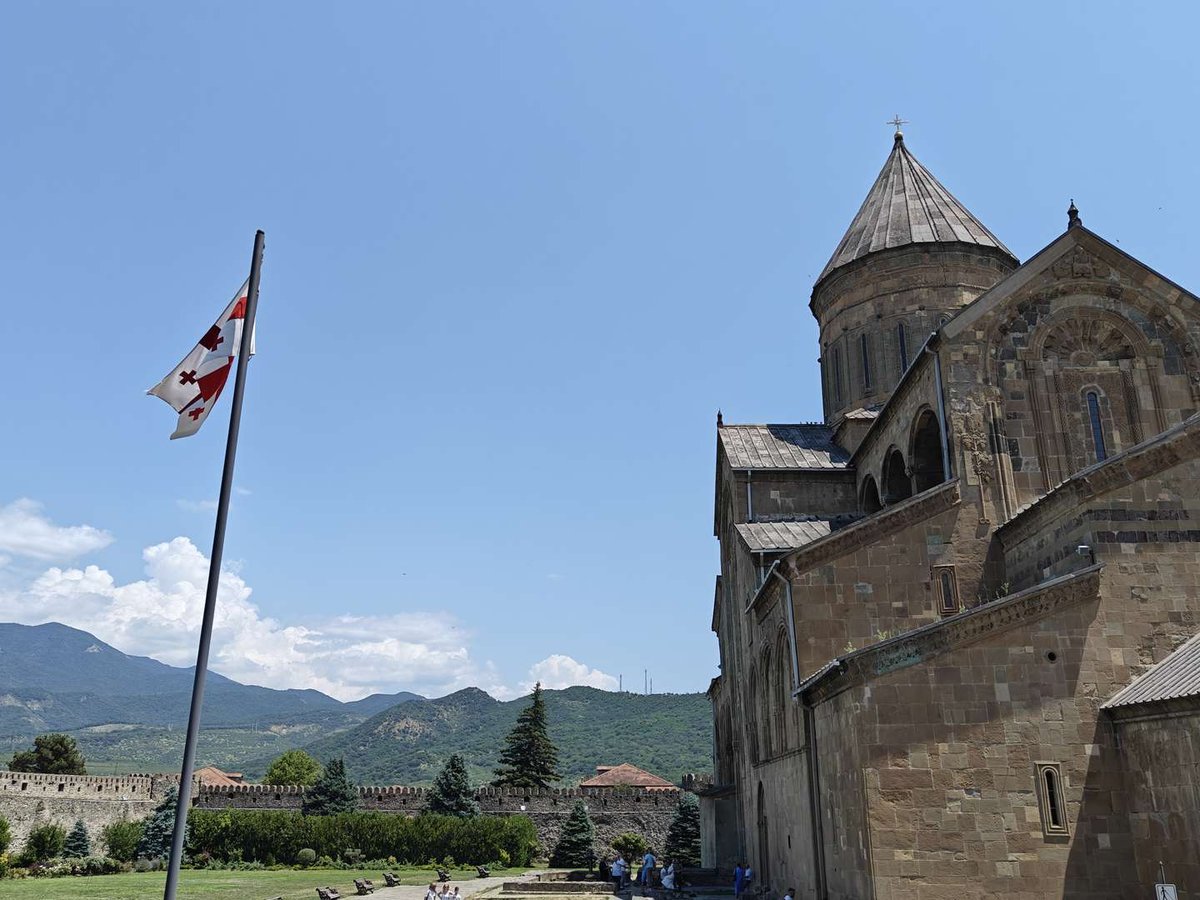
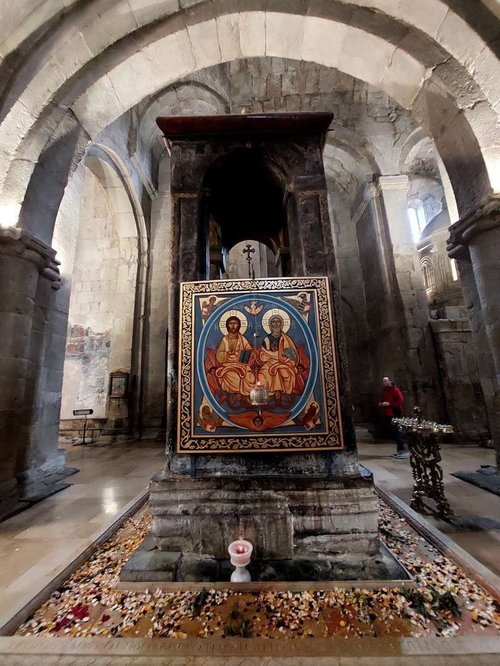
The name "Svetitskhoveli" translates from Georgian as "the Living Pillar," and behind it lies the central legend of this place. According to tradition, back in the 4th century, King Mirian III, who had adopted Christianity through the preaching of Saint Nino, built Georgia's first wooden church here. One of its supports was to be the trunk of an enormous tree (a Lebanese cedar, according to the chronicles) that had grown over the spot where, by a tradition preserved among Mtskheta's Jews, Christ's Robe was buried, the seamless robe over which Roman soldiers cast lots.
According to the legend, the felled pillar could not be moved until it rose on its own and set itself over the place where the robe was buried, streaming myrrh. That's where the name comes from, "the Living Pillar."
The Legend of the Living Pillar
How, by tradition, Georgia's greatest relic grew from a cedar trunk.
🏛️ What to See Inside
It's the interior that leaves the strongest impression on visitors, and it's what people search for most. Here's what to look out for.
🏛️ What to Look for in the Interior
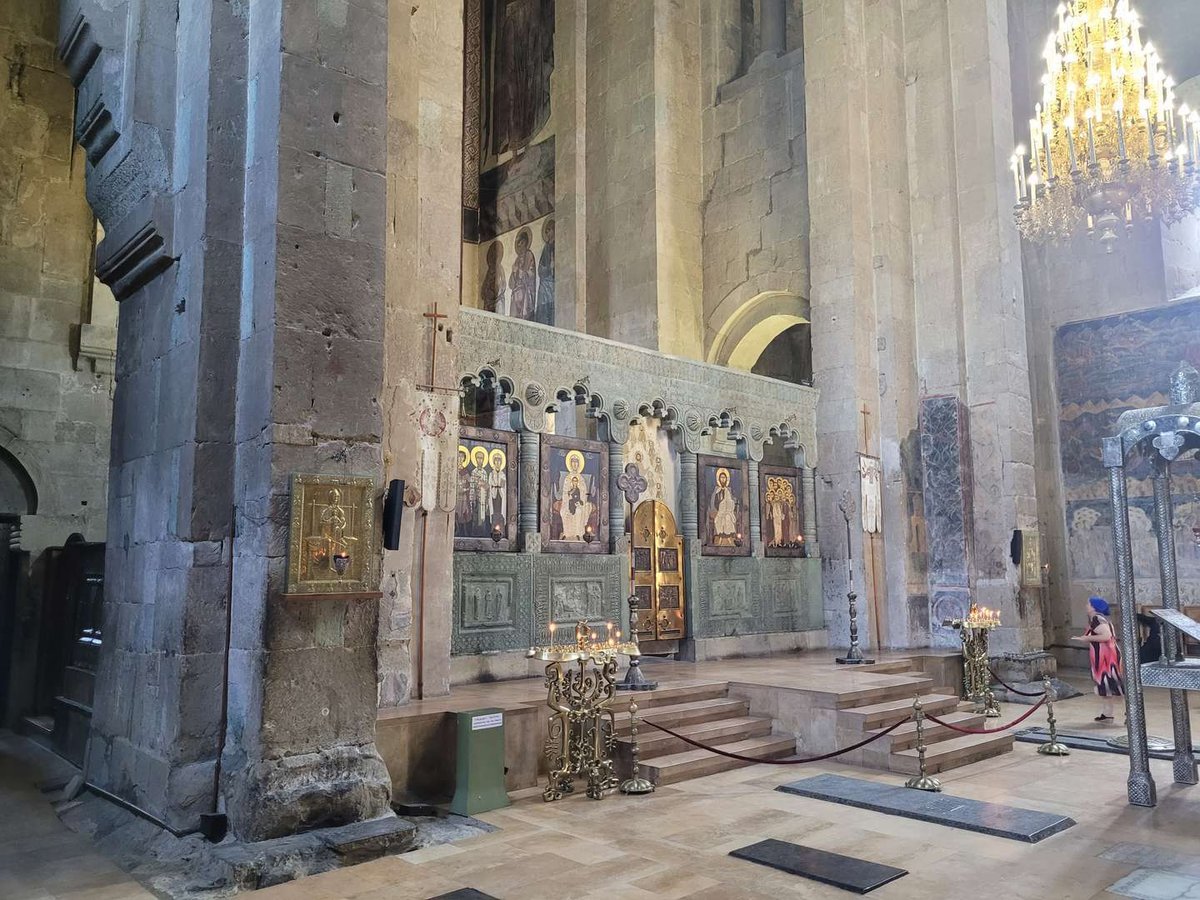
The so-called "UFO fresco" deserves a special mention: in the painting on the arch around the Living Pillar there's an image that fans of the unusual read as a "flying saucer with a face in the porthole." In reality it's a symbolic depiction of the heavenly hosts, but spotting it is a favourite pastime among visitors.
🏗️ History and the Riddle of the Architect
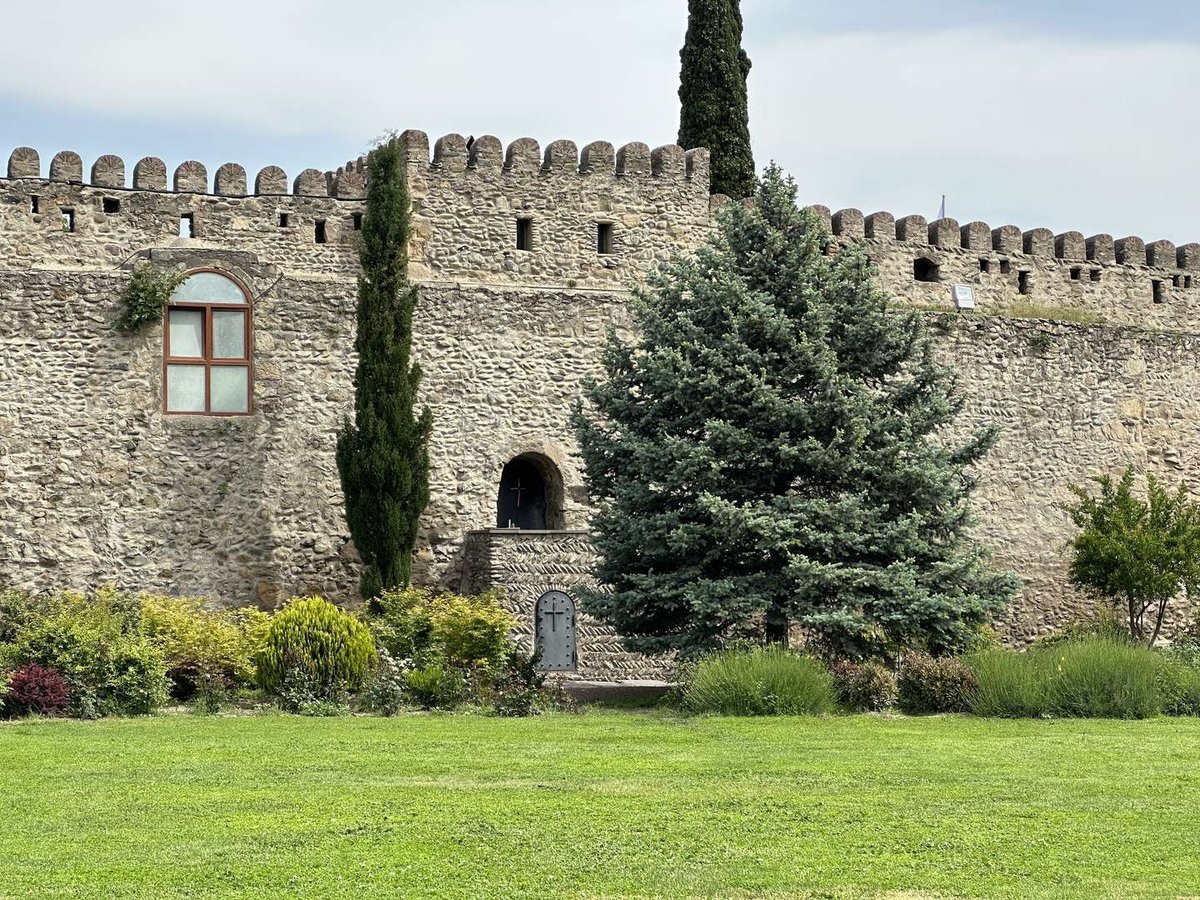
The present stone building was constructed in the 11th century, between 1010 and 1029, by an architect named Arsukisdze, on the site of earlier churches. A dramatic tradition surrounds this master: the temple he built supposedly surpassed expectations and stirred the envy of his own teacher, who slandered his student, and Arsukisdze had his right hand cut off. How much is historical fact and how much a cautionary legend is hard to say, but the story is firmly woven into the cathedral's lore, and one wall bears a relief of a hand with a set square, linked to this tale.
🗓️ The Cathedral Through History
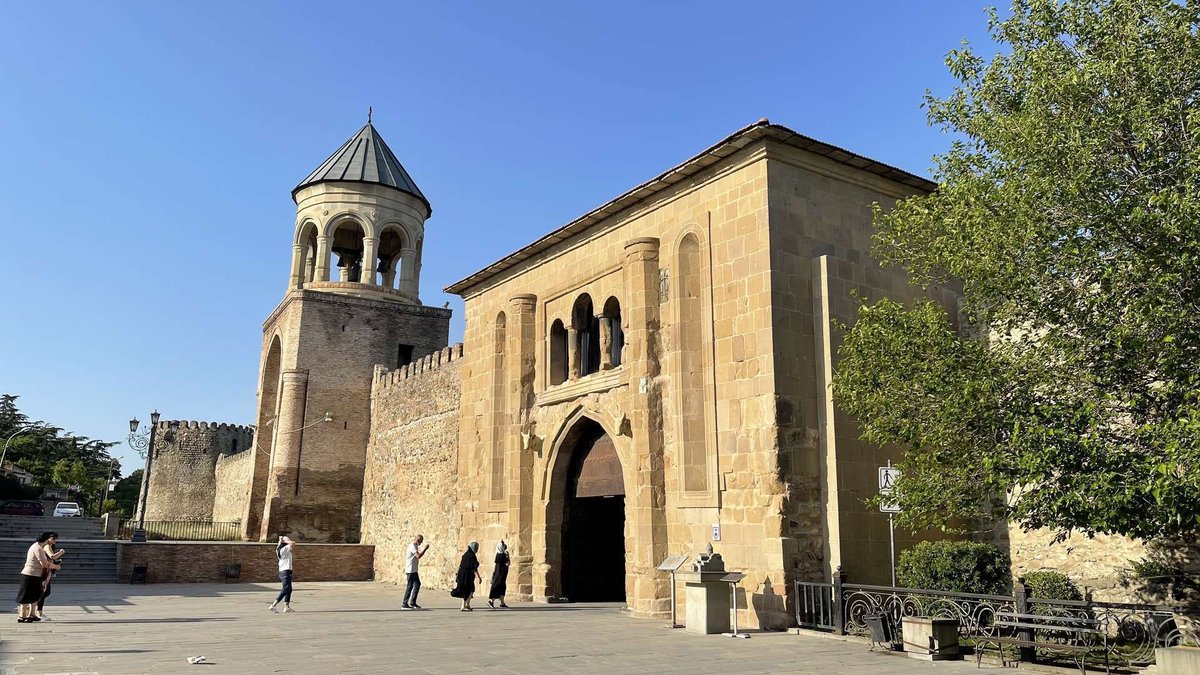
Svetitskhoveli is the largest surviving medieval building in Georgia. The 1964-1965 restoration returned the church to its original appearance, and during excavations by the wall, the remains of Catholicos Melchizedek from the 11th century were found.
✝️ A Living Shrine, Not a Museum
It's worth remembering: Svetitskhoveli is not a museum exhibit but an active cathedral, a living centre of Georgia's religious life. Services, baptisms, and the major church celebrations still take place here. Every year on 14 October, Mtskheta marks Svetitskhovloba (Mtskhetoba), a feast dedicated to the finding of Christ's Robe and the story of the Living Pillar; since 1991 it has been a Georgian state holiday. On that day the cathedral becomes a place of pilgrimage for thousands of the faithful, so if you want quiet, plan your visit for another date.
🕗 Practical Information
🚗 Getting There and What's Nearby
Mtskheta is about 20-25 km from Tbilisi, roughly half an hour by car. You can get there by marshrutka, taxi, or on a tour, in Tbilisi's travel agencies this is excursion number one. The cathedral stands in the very historical centre of town and is visible from almost anywhere, you can't miss it.
It makes sense to combine a visit to Svetitskhoveli with Jvari Monastery on the mountain opposite and Samtavro Monastery, all part of the UNESCO-protected historical monuments of Mtskheta.
🎒 Tips for Your Visit
A few practical details to make the trip smoother.
Have you been to Svetitskhoveli Cathedral? Leave a review on Madloba: tell us what impressed you most, the Living Pillar, the frescoes, or the atmosphere itself, whether you managed to spot the "UFO fresco," and what first-timers should know.
Information is current as of July 2026. Opening hours, service schedules, and visiting rules can change, check details before you go.
❓ Frequently asked questions
💬 In Mtskheta, Georgia's ancient capital, at the confluence of the Kura and Aragvi rivers, about 20-25 km from Tbilisi.
💬 The cathedral is usually open daily from 08:00 to 19:00, and entry is free. Hours can vary by season and during services, so check on site.
💬 The present stone building was constructed in the 11th century, between 1010 and 1029, by the architect Arsukisdze, on the site of earlier churches.
💬 "The Living Pillar." It refers to the sacred column at the centre of the church, around which the whole cathedral was built.
💬 The Living Pillar beneath its stone canopy, 16th-17th century frescoes, royal tombstones in the floor, the puzzling "UFO fresco," and Christian relics including a fragment of St Andrew's relics.
💬 Yes, since 1994 the cathedral has been on the UNESCO World Heritage List as part of the historical monuments of Mtskheta, and it's the largest surviving historical building in Georgia.
💬 By tradition, the seamless robe of Christ is buried on this spot. It was over the place of its burial that the Living Pillar, according to legend, rose.
💬 For centuries it was the country's main cathedral, the place where Georgian kings were crowned and buried, and the spiritual centre of Orthodox Georgia.

3 comments
Log in to leave a comment
It's not just a monument; it's a canvas painted with history - the place where Christ's Robe is said to lie, and with it, a weight of belief. You can almost sense the echoes of kings and their coronations, the tremendous gravity of such moments. It’s a heavy, enriching aura that stays with you long after you’ve left. Georgia’s heart beats here, in every crevice and shadow, inviting you to pause and reflect.
But I wonder, given its age and significance, how do they balance preservation with the bustle of tourists? It feels like such a delicate dance. The photos I’ve seen don’t quite capture that atmosphere-there’s a pulse in the air that’s hard to explain. Have you noticed how the light shifts inside as the day goes on? It’s magical. What's your favourite spot in the cathedral?