




Abkhazia Temples: 5 Ancient Shrines & Georgian Motifs
The golden chalice of Bedia (height 12.5 cm, diameter 14 cm). The chalice was donated to the Bedia Monastery (10th century, Ochamchira) by Bagrat III, the first king of a united Georgia, who built the monastery. The chalice is kept in the Georgian State Museum of Art.
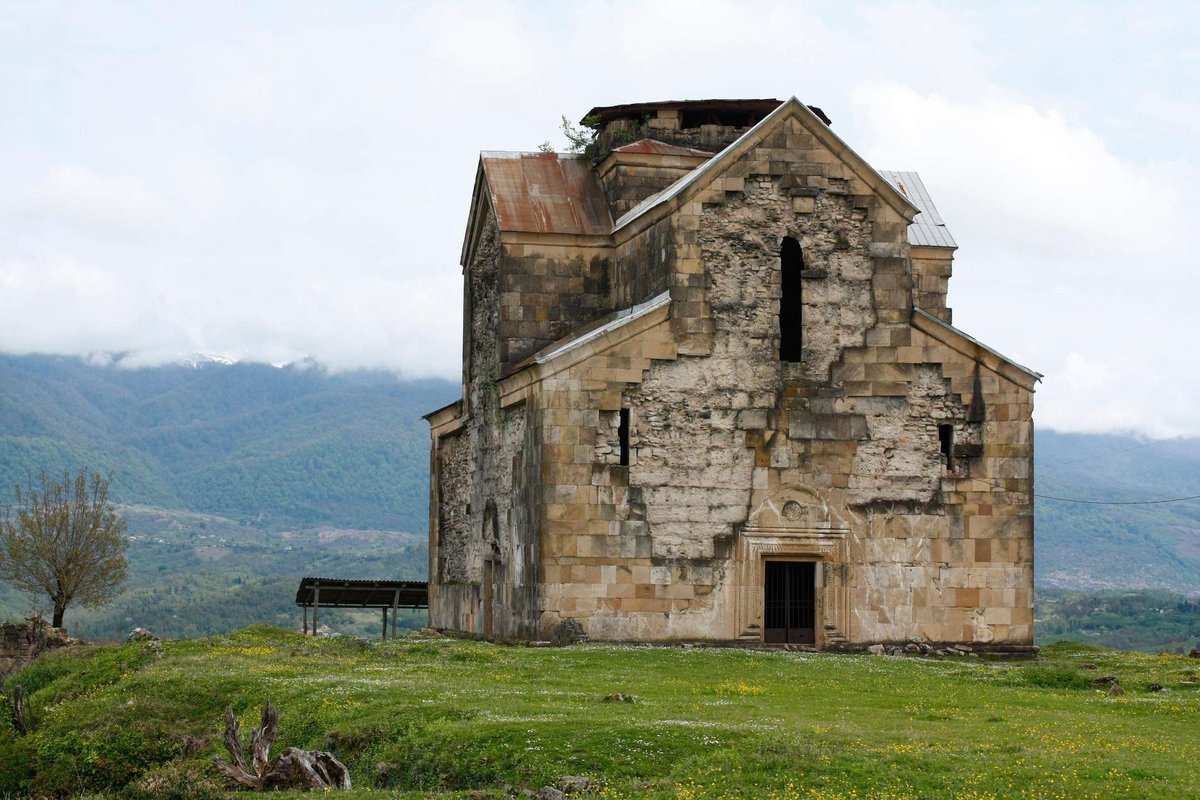
In Abkhazia, one of Georgia's oldest provinces, numerous Christian cultural monuments have been preserved.
The Lykhny Dormition Cathedral, a 10th-11th century cross-domed structure, is located 4 km from Gudauta. The walls of this cathedral are covered with 14th-century frescoes. There are Georgian inscriptions in Asomtavruli (the ancient Georgian alphabet). One of these inscriptions, in the southern part of the upper tier, reports the approach of a shaggy star—Halley's Comet—in 1066.
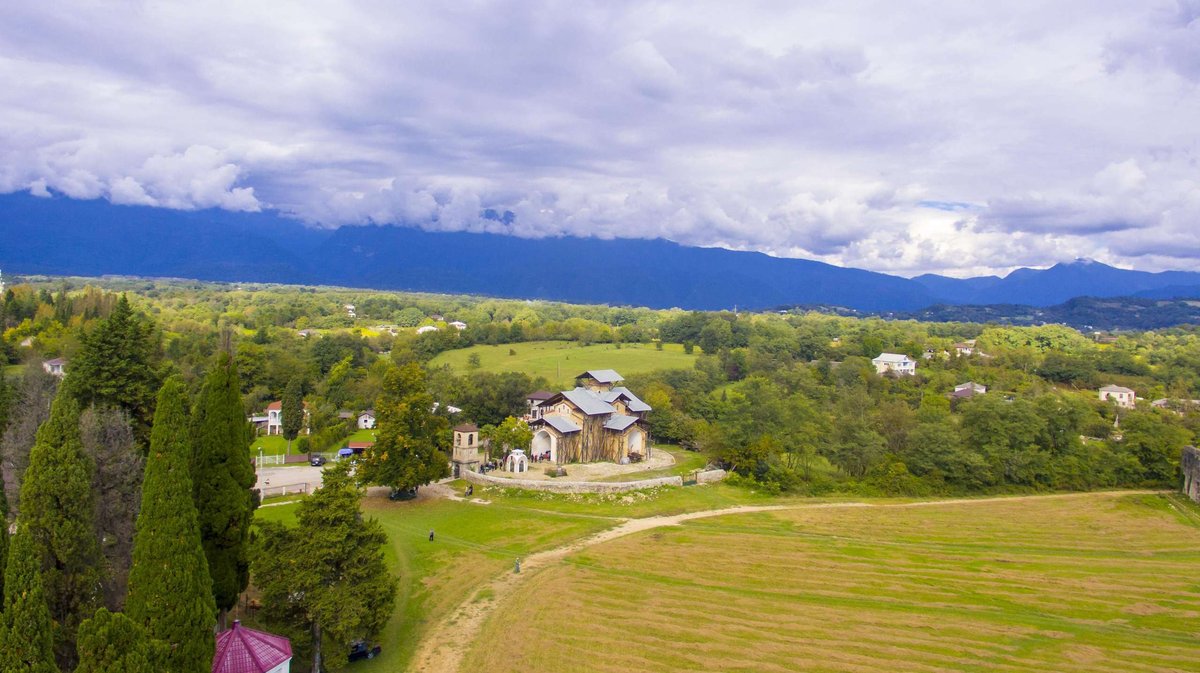
Between 967 and 975, the Abkhazian King Leon III built the Mokva Cathedral at the mouth of the Mokvistskali and Dvabi rivers. During the Middle Ages, manuscripts were produced and copied in the cathedral. It was here that the remarkable monument of Georgian culture, the Mokva Gospels, dating from 1301, was created. Today, the Gospels are housed in the repository of the National Center of Manuscripts of Georgia.
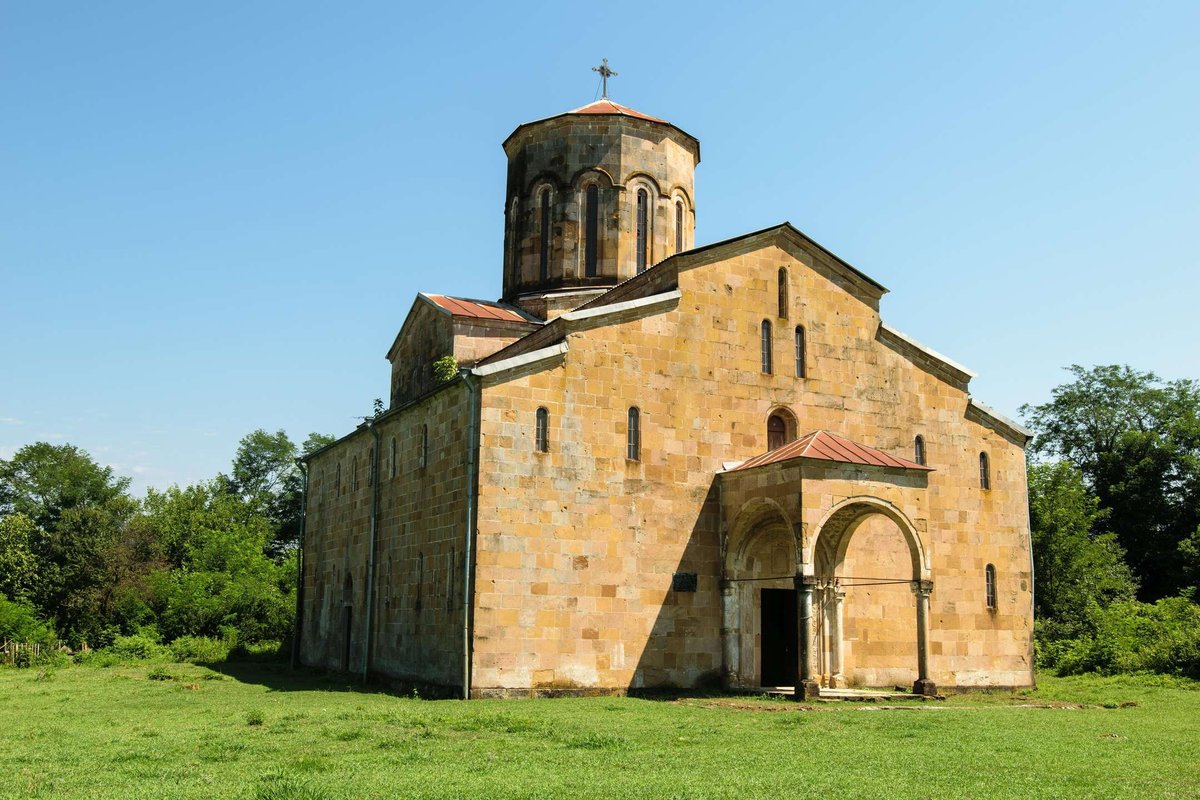
One of the significant monuments of Georgian architecture is the single-nave Ilori Church of St. George (11th century, Ochamchire Municipality). In 2010, local authorities carried out a restoration of the monument, which resulted in the loss of the building's Georgian character: the façade and interior were painted white, and the stones on the eastern façade with Georgian inscriptions were plastered over. The cathedral's ceiling was also replaced, with a dome installed that is completely different from the original.
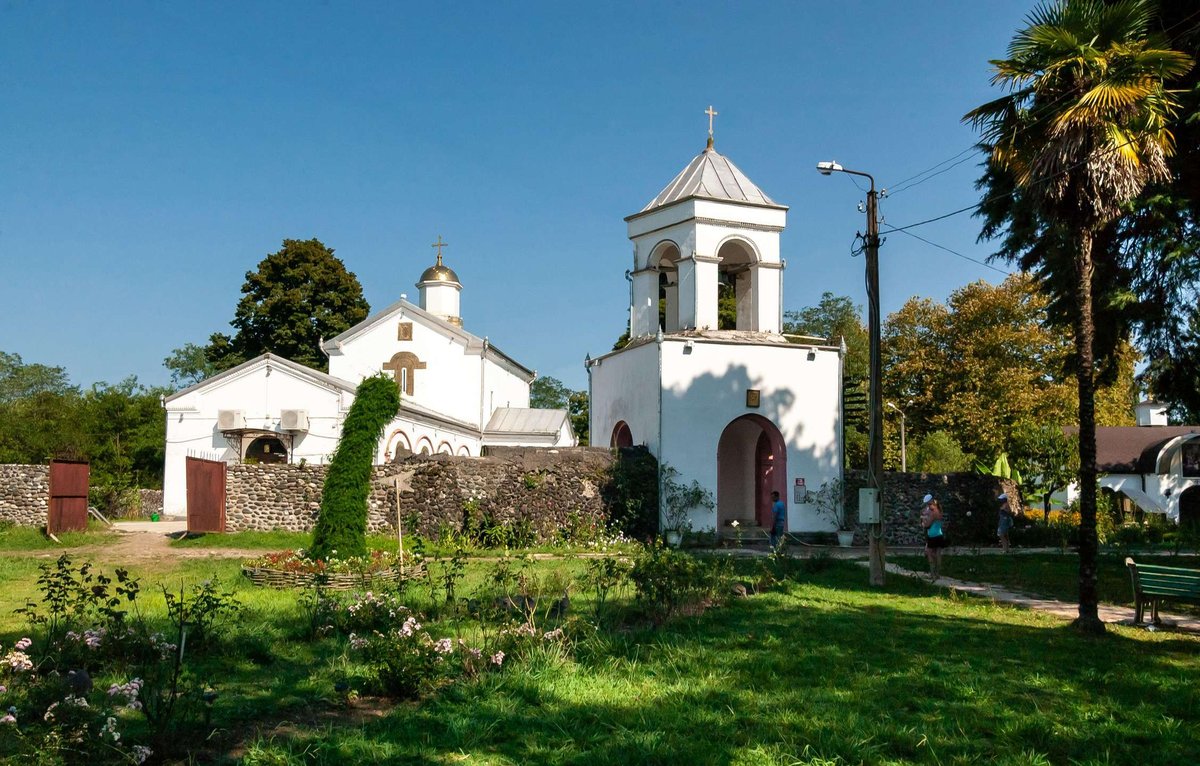
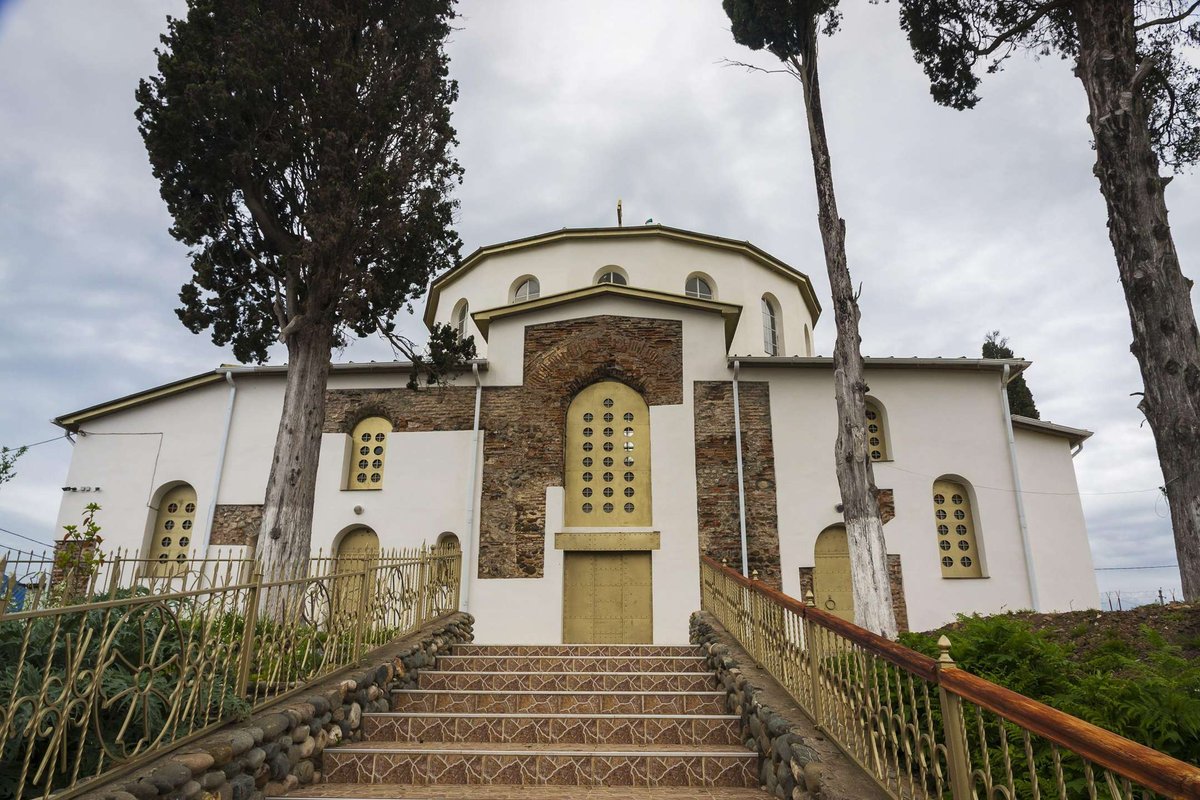
Nine kilometers from Gulripshi, on an elevated plateau by the Kodori River, stands another monument of Georgian architecture: the Dranda Dormition Cathedral (6th-7th centuries). It is known that a monastery functioned here in the late 19th century. The monks established a thriving economy here: they opened a school, built a mill, a forge, a carpentry workshop, a printing house, and an infirmary. In 2006, by presidential decree, the Dranda Cathedral was designated an immovable cultural monument of national significance.

34 comments
Log in to leave a comment
I recently watched that video you shared, and the honesty about living in Georgia really resonated with me. It’s made me curious-how do these historical sites influence everyday life in the area now? Do locals feel a strong connection to them, or is it more of a tourist attraction? Thanks for sharing this glimpse into such a unique part of the world!
Оказалось, в Абхазии сохранилось множество архитектурных памятников — от Лыхнского Успенского собора X–XI веков с фресками XIV века до Драндского Успенского собора VI–VII веков, где когда‑то был целый мужской монастырь с мельницей и кузницей!
Особенно впечатлил Моквийский кафедральный собор, где в Средние века переписывали рукописи, и Илорская церковь Св. Георгия XI века, хоть и реставрированная с потерей оригинала.
Я уже отметил несколько храмов, которые обязательно хочу посетить — особенно церковь в Лыхны, чтобы увидеть древние фрески своими глазами. Интересно, какой храм из этого списка вдохновил бы вас больше всего на путешествие?
В Абхазии, также как и в Грузии, много святых мест. И эта страна тоже привлекательна своей красотой природы.
1. Илорская церковь им. Св. Георгия реставрирован в 2010 году. Поменяли купол, фасад и интерьер покрыли белой краской, потеряв грузинский характер строения.
2. Лыхнский Успенский к
собор Х-ХI веков, в 4 км от Гудауты расписан фресками. Одна из надписей гласит о приближении в 1066 году звезды-кометы Галлеи.
3. В 967-975 годах у устья рек Моквисцкали и Дваби абхазский царь Леон III построил Кафедральный собор Мокви, где в средние века выпускали и переписывали рукописные книги, среди которых замечательное Моквское Евангелие, датированное 1301 годом, ныне
находящееся в хранилище Национального центра рукописей Грузии.
4. Драндский Успенский собор, где был мужской монастырь. Монахи открыли школу, построили мельницу, кузницу, плотницкую мастерскую, типографию, лазарет.