




Armenian Churches in Tbilisi: History, Addresses and What Remains
🏛️ Quick Reference: Armenian Churches in Tbilisi
| ⛪ Active churches | Surb Gevorg (5 Samgebro St.) — AAC cathedral; Nor Echmiadzin (18 Armazskaya St.) — Avlabari |
| 🔒 Closed / disputed | Norashen (Kote Abkhazi St.) — closed since 1995; Mugni Surb Gevorg (6 Beglar Akhospireli St.) — dome collapsed 2009 |
| 🧱 Ruins | Karmir Avetaran (20 Isani St.) — destroyed 1989, eastern wall remains |
| 💰 Entry | Free for active churches. Dress code: modest clothing, women cover their heads |
| 🚇 Getting there | Surb Gevorg and Norashen — walk from Meidan Square. Nor Echmiadzin and Karmir Avetaran — metro «Avlabari» |
Who this article is for
Armenian churches in Tbilisi are not just sightseeing stops. Behind each building is a story: who built Tiflis in the Middle Ages, why most churches are closed, and how property disputes remain unresolved thirty years on. The article covers six sites — two active, two closed, one barely standing, one in ruins — with addresses, history and a practical walking route.
Armenians in Tbilisi: why so many churches
In 1817, Armenians made up around 76% of Tiflis's population. By the mid-19th century still roughly half, while Georgians numbered closer to a quarter. Tiflis was a commercial hub; Armenian merchants, bankers and craftsmen shaped its economy. Avlabari on the left bank of the Kura was the heart of the Armenian quarter; Sololaki, across the river, was home to the Armenian intelligentsia.
The 20th century changed everything. Soviet authorities closed churches and turned them into warehouses and book depots. After 1991, some were reconsecrated as Georgian Orthodox, others fell into legal limbo without maintenance. The Armenian community shrank considerably through the 1990s and 2000s.
From 27 churches, two remain active. Many still stand — which is why walking Tbilisi's Armenian heritage is part architecture tour, part reading history written in stone.
🏛️ Armenian Churches of Tbilisi on the Map
Open in Google Maps🏛️ Surb Gevorg — Cathedral of the AAC Diocese in Georgia
📍 5 Samgebro St. · Old Town, Kala district
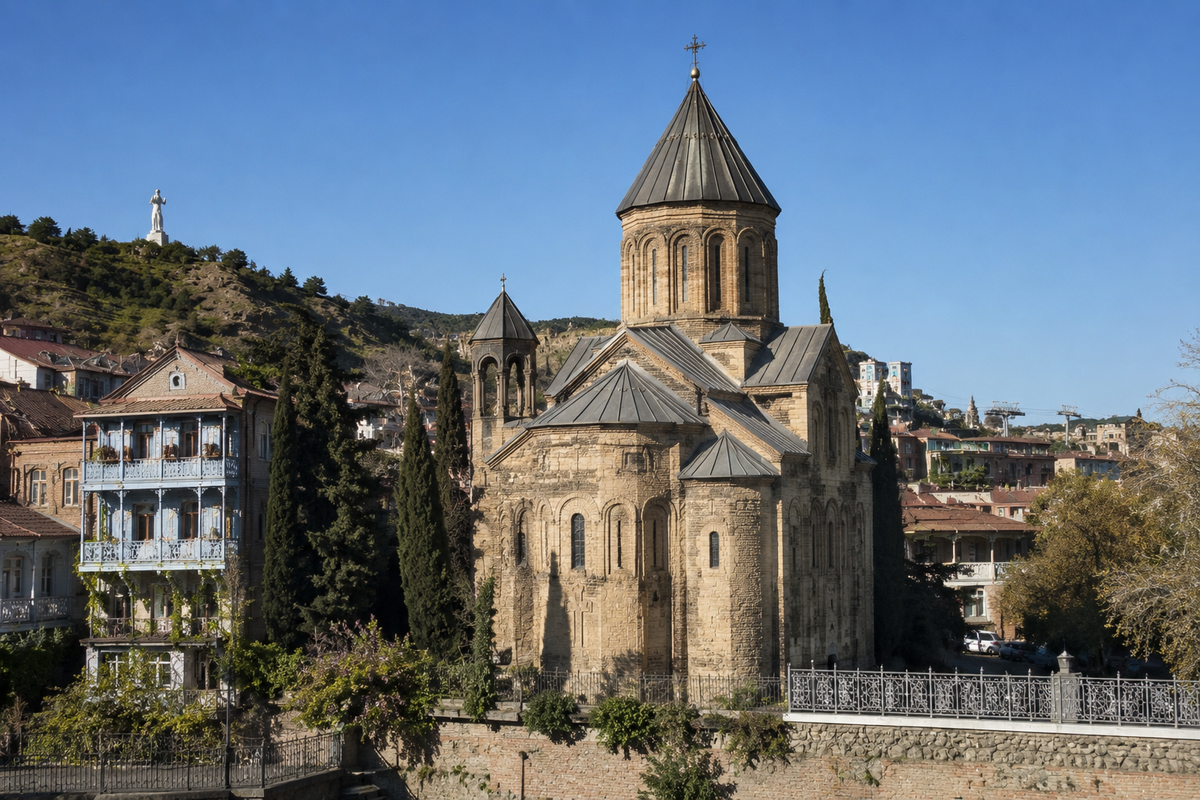
The oldest active Armenian church in Tbilisi and the only cathedral of the Armenian Apostolic Church in Georgia. It stands beneath the cliff of Narikala Fortress, just above Meidan Square.
Built in 1251 by Armenian nobleman Umek, who fled to Tbilisi from Karin (modern Erzurum) after the Mongol invasion. In 1616 it was seized during the Persian occupation and used as a mosque for several decades. Unlike most Armenian churches in the city, it survived the Soviet period intact. Restored in 2012–2015; reconsecrated on 31 October 2015 by Catholicos Garegin II.
The walls are almost entirely covered in frescoes by the Hovnatanyan dynasty and painter Gevorg Bashinjaghyan. The church contains an iconostasis — unusual in Armenian churches, where the altar is typically hidden by a curtain. In the courtyard: the grave of Sayat-Nova (1722–1795), the Armenian poet who wrote in Armenian, Georgian and Azerbaijani; and the remains of several generals from the Russo-Turkish War of 1877–1878, relocated here after the Soviet demolition of the Vank Cathedral.
🏛️ Nor Echmiadzin — the active church in Armenian Avlabari
📍 18 Armazskaya St. · Avlabari, near metro «Avlabari»
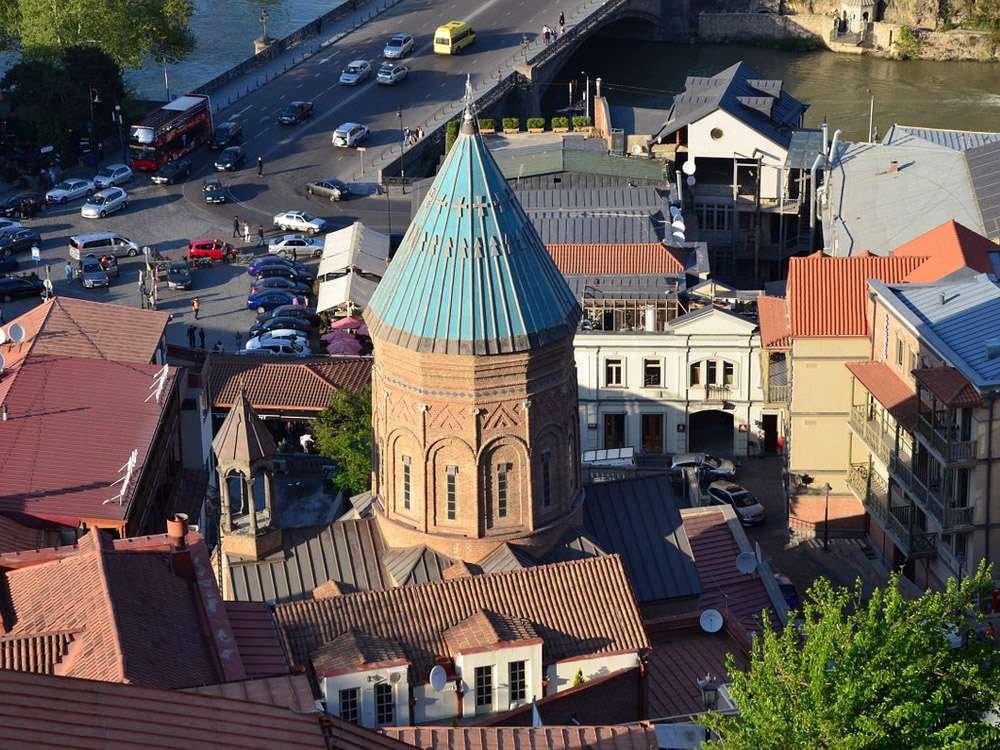
"New Echmiadzin" — named after the main Armenian cathedral in Vagharshapat, Armenia. Built in 1806 by Armenian families forcibly displaced from Echmiadzin and resettled in Avlabari.
The interior is plain: no iconostasis, no frescoes, a single icon in the altar niche. A khachkar at the entrance commemorates victims of the 1988 Spitak earthquake. By the 1990s the building was in critical condition with deep structural cracks; the 2001 earthquake added further damage. Restored in 2006–2010, funded by the Armenian community in Argentina.
The courtyard holds carved stone reliefs from the destroyed Karmir Avetaran cathedral, retrieved from the rubble in 1989. The church stands on Avlabari Square beside the «Mimino» sculpture — the emotional centre of what remains of the city's Armenian quarter.
🔒 Norashen — closed church with an unresolved question
📍 Kote Abkhazi St. (former Leselidze St.) · Old Town
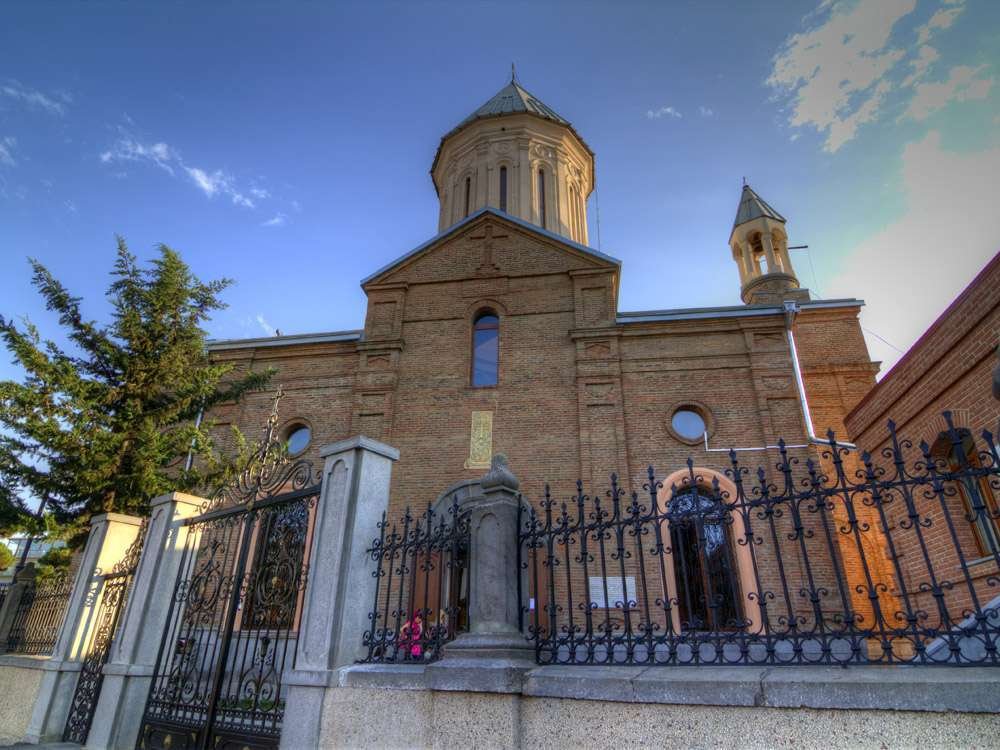
Stands next to the Georgian Orthodox church of Jvaris Mama and a synagogue — three faiths within steps of each other. Two buildings are open; this one is not.
Built in 1467 by an Armenian named Sadat, in memory of his family. Major restoration in 1650 by merchant Khoja Nazar. The exterior is well preserved: a domed basilica with a pale blue floral frieze and an ornate bell tower. Armenian inscriptions and a khachkar are visible from the street.
Closed by Soviet authorities in 1937 and used as a book repository. In February 1995 reconsecrated as Georgian Orthodox. After protests from the Armenian church, closed again pending resolution of ownership. No resolution has come.
🔒 Mugni Surb Gevorg — medieval church in emergency condition
📍 6 Beglar Akhospireli St. · Old Town, Kala district
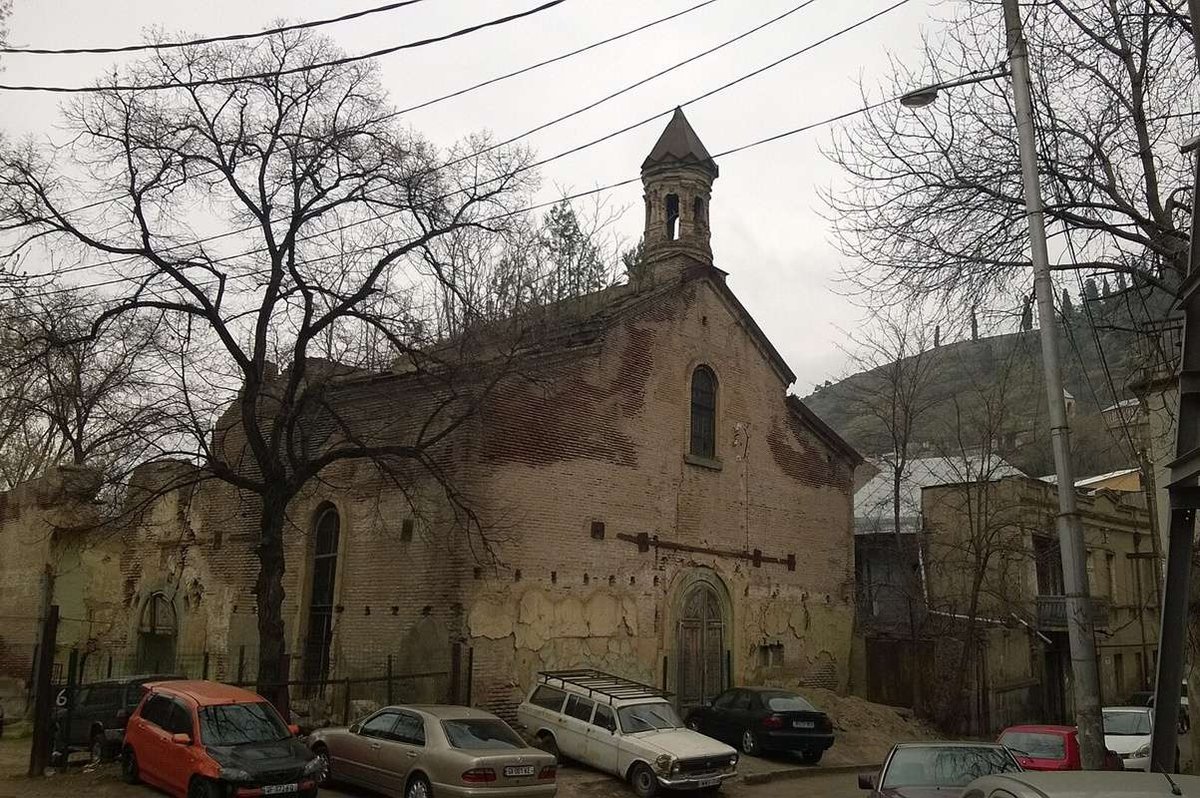
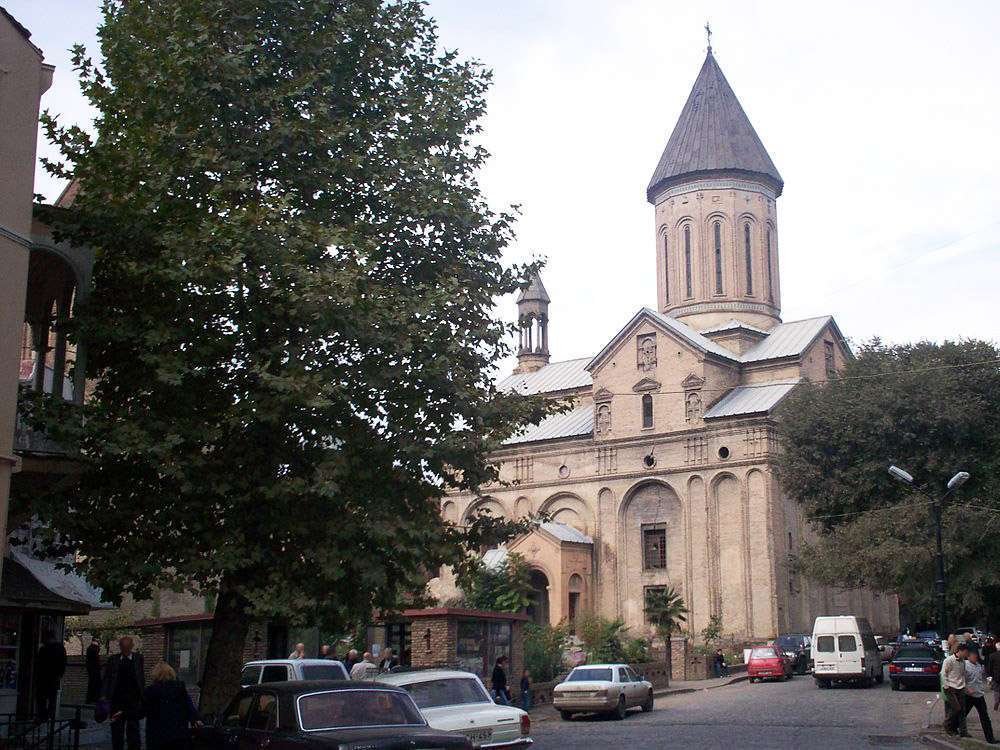
First documented in 1356. The street was named after this church — Mogninskaya — until 1923. After Agha Mohammad Khan's destruction of the city in 1795, every building on the street was razed. The church alone survived.
Used for storage during the Soviet period. After 1991, an ownership dispute between the Georgian Patriarchate and the Armenian Apostolic Church reached an impasse — no repairs were made. The main dome collapsed in 2009. The façade stands; the interior is unsafe. The situation has not changed in fifteen years.
🧱 Karmir Avetaran — ruins of the tallest church in Tbilisi
📍 20 Isani St. · Avlabari (90 m along Metekhis St. from metro «Avlabari», left side)
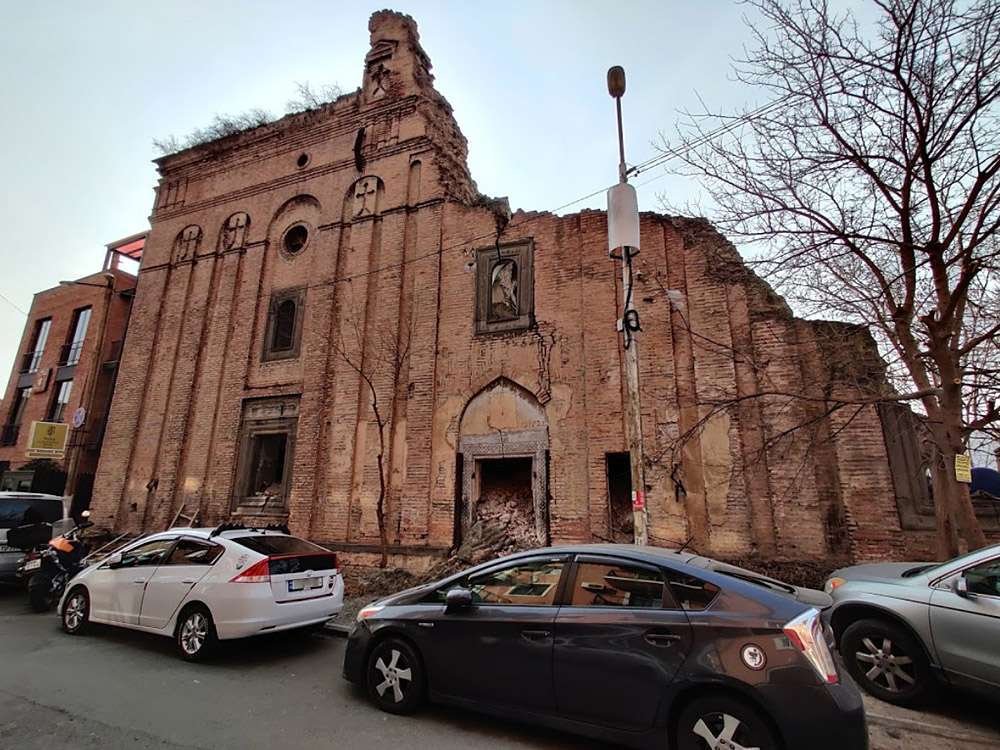
"Red Gospel" — named after a gospel book in a red binding kept on the altar. Founded in 1735 by Armenians resettled from Shamkhor (modern Shamkir, Azerbaijan). After restorations in 1844 and 1858 it became the largest Armenian church in Tbilisi and the tallest building in the city at around 40 metres.
Closed in 1937 and used as a bakery, then a warehouse. On 13 or 14 April 1989 — days after Soviet troops dispersed a peaceful rally killing 20 people — the church was destroyed. The official explanation: structural danger. Armenian sources argue the demolition was deliberate. No conclusive evidence of intent has emerged.
The eastern wall with decorative fragments still stands. Stone reliefs retrieved from the rubble are now in the courtyard of Nor Echmiadzin.
🔒 Surb Nshan — the one often forgotten
📍 20 Armazskaya St. · Avlabari
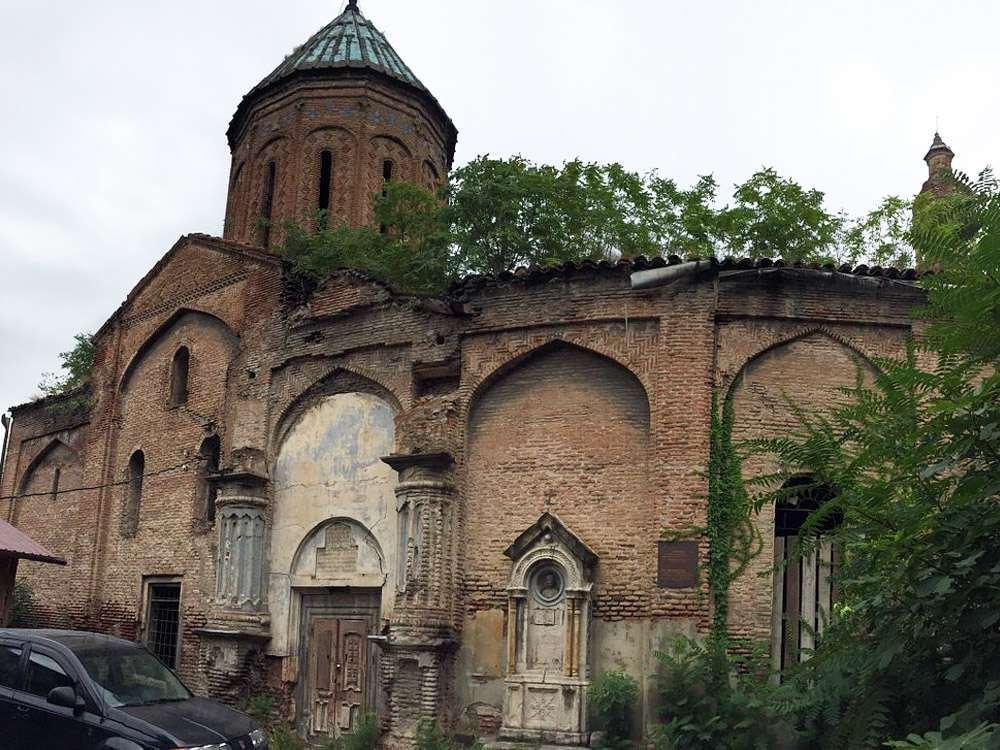
Inactive and weathered, but Armenian inscriptions remain on the walls. A few minutes from Nor Echmiadzin — worth passing by.
Start your Avlabari visit at Nor Echmiadzin — the stone reliefs from Karmir Avetaran are in the courtyard there. Then walk 90 metres to the ruins on Metekhis Street and stand in front of the eastern wall. The gap between what was and what is left registers most clearly when you move from fragment to ruin, not the other way round.
🗺️ What makes an Armenian church different from a Georgian one
Step inside and you notice: no iconostasis, a quieter interior, a different atmosphere. This is not neglect — it is a different tradition.
The Armenian Apostolic Church adopted Christianity in 301 AD and separated from other churches at the Council of Chalcedon in 451 AD, developing independently ever since. In practice: the altar is hidden by a curtain rather than a screen; services are in Grabar, the classical Armenian language of the 5th century; and khachkars — carved cross-stones with distinctly Armenian ornament — stand at the entrance and inside. Frescoes appear in some churches (Surb Gevorg is covered with them) but not all: Nor Echmiadzin has plain white walls.
🗺️ Walking route: Armenian churches of Tbilisi
The route splits into two blocks — Avlabari and Old Town. One day or two separate visits.
Avlabari block (from metro «Avlabari», about 1.5 hours)
1️⃣ Exit the metro — Nor Echmiadzin (18 Armazskaya St.) is right there. Enter the courtyard: stone reliefs from Karmir Avetaran are stored here.
2️⃣ Avlabari Square — the Mimino sculpture. Historic centre of the Armenian quarter.
3️⃣ 20 Armazskaya St. — Surb Nshan. Inactive; Armenian inscriptions visible outside.
4️⃣ Metekhis St., 90 m from the square — ruins of Karmir Avetaran (20 Isani St.), left side.
Old Town block (from Meidan Square, about 1.5 hours)
5️⃣ 5 Samgebro St. — Surb Gevorg. Courtyard: Sayat-Nova's tomb, generals' graves. Inside: frescoes, Arabic-inscribed khachkar, iconostasis.
6️⃣ Kote Abkhazi St. — Norashen next to Jvaris Mama. Outside: Armenian inscriptions, khachkar, blue frieze.
7️⃣ 6 Beglar Akhospireli St. — Mugni Surb Gevorg. Exterior only: dome collapsed 2009.
💬 What visitors say
"Surb Gevorg is very organically integrated into its surroundings. It was repeatedly ransacked, but the load-bearing walls survived each time and the church was always restored."
"The 18th-century frescoes are stunning. The Sayat-Nova memorial is deeply moving."
"The ruins of Karmir Avetaran are striking and make for great photographs. If you are nearby — go."
"The place is beautiful but leaves you with a quiet sadness."
"The ruins carry not just historical significance — they are a monument to political events as much as to the church itself."
🏁 Before you go
At the start of the 20th century, the Armenian community was building the tallest cathedral in Georgia. Today one wall remains. Two active churches out of twenty-seven is the result of Soviet confiscations, post-independence ownership disputes and demographic change.
Both active churches are open daily, free entry. Norashen and Mugni can be viewed from outside. The Karmir Avetaran ruins are five minutes from metro «Avlabari». Full route: about three hours.
Other churches in Tbilisi: madloba.info/en/tbilisi/churches/
ℹ️ Church status information is current as of publication. Please verify before visiting.
Have you visited the Armenian churches of Tbilisi? What stayed with you most — the frescoes at Surb Gevorg, Sayat-Nova's tomb, the stone reliefs at Nor Echmiadzin, or the ruins of Karmir Avetaran? Leave a comment — we read every one.
❓ Frequently asked questions
💬 Two. Surb Gevorg (5 Samgebro St., Old Town) — the AAC Diocesan cathedral. Nor Echmiadzin (18 Armazskaya St., Avlabari) — the second active church. Both open daily, free entry. At the start of the 20th century there were 27.
💬 5 Samgebro Street — Old Town, Kala district, beneath the cliff of Narikala Fortress, above Meidan Square. From Meidan, walk uphill along Samgebro Street for about 5–7 minutes.
💬 "New Echmiadzin" — named after the main Armenian cathedral in Vagharshapat, Armenia. Built in 1806 by Armenian families forcibly displaced from Echmiadzin and resettled in Avlabari. Address: 18 Armazskaya St., metro «Avlabari».
💬 In 1995 it was reconsecrated as Georgian Orthodox. The Armenian church disputed this — records from 1467 onward identify Norashen as Armenian. After negotiations it was closed again pending resolution. No resolution has come. The exterior is well preserved; inscriptions and a khachkar are visible from the street.
💬 An 18th-century church that became the tallest in Tbilisi after 19th-century expansions (around 40 metres). Destroyed in April 1989, days after Soviet forces dispersed a peaceful rally. Official reason: structural danger. The eastern wall remains at 20 Isani St., a few minutes from metro «Avlabari».
💬 The Armenian Apostolic Church separated from others at the Council of Chalcedon in 451 AD. In practice: no iconostasis (altar behind a curtain), services in Grabar — the classical Armenian language of the 5th century — and khachkars with Armenian ornament inside and outside. Interiors tend to be plainer than Georgian Orthodox churches.
💬 Weekdays and early mornings — fewer tourists. Surb Gevorg is best in the morning: quiet courtyard, good light for frescoes. The Avlabari block works better in the afternoon, when sun hits the ruins' eastern wall and the reliefs in Nor Echmiadzin's courtyard.
💬 Not advisable. Mugni's dome collapsed in 2009; Karmir Avetaran is also structurally unstable. Both can be seen clearly from outside.

3 comments
Log in to leave a comment
Ich finde es spannend, wie viel Geschichte in diesen Mauern steckt. Aber wie steht es um die Erhaltung dieser Orte? Gibt es Initiativen, die sich um den Erhalt der weniger bekannten Kirchen wie die von Karmir Avetaran kümmern?