



💧 Thermal and Hot Springs in Georgia: A Natural Guide by Region
💧 Where to find hot springs in Georgia
Warm water rises out of the ground almost everywhere in this country, from the capital to the mountains of Javakheti. Sometimes it's historic domed bathhouses, sometimes Soviet-era sanatoriums, and sometimes just a hot stream on a riverbank.
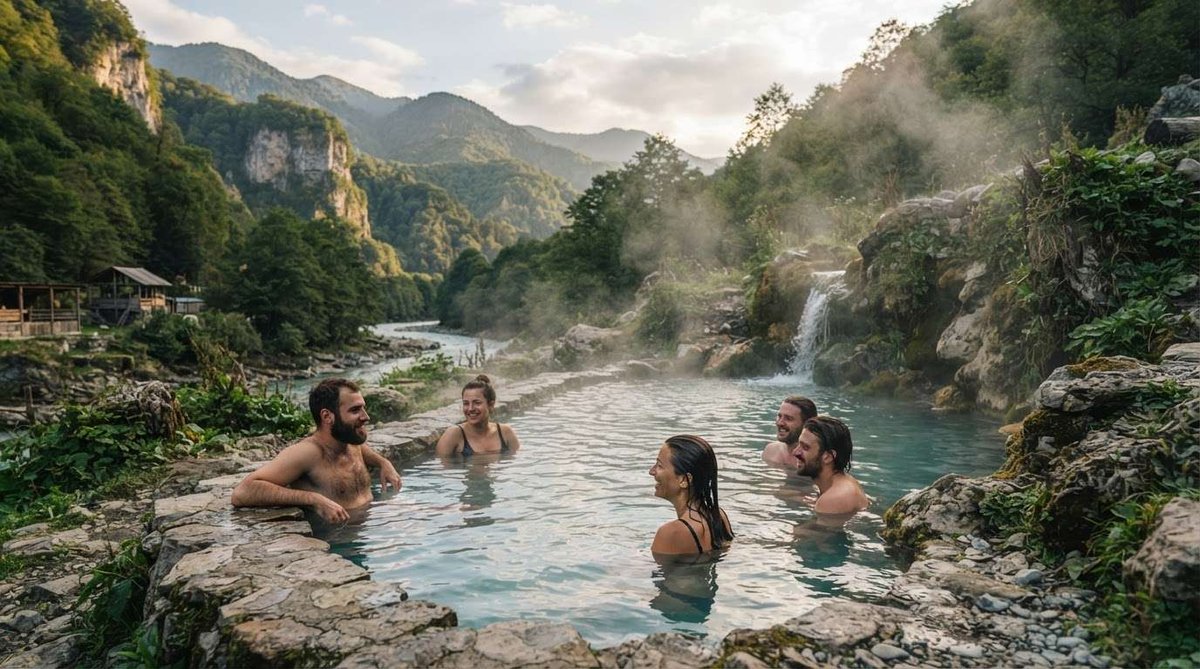
In Georgia, hot water is practically baked into the capital's name. "Tbili" means "warm" in Georgian, and legend has it King Vakhtang Gorgasali founded the city after his hunting falcon fell into a hot spring. True or not, the sulfur baths of Tbilisi have stood on that spot for centuries.
This isn't a guide to sanatoriums, it's a guide to the water itself: where it actually surfaces, where you can get in right now, how far the trip is, and what to expect once you're there. If what you're after is a proper medical resort with doctors and treatments, that's a different topic, covered in our piece on balneological resorts in Georgia.
🌊 Are there hot springs in Batumi
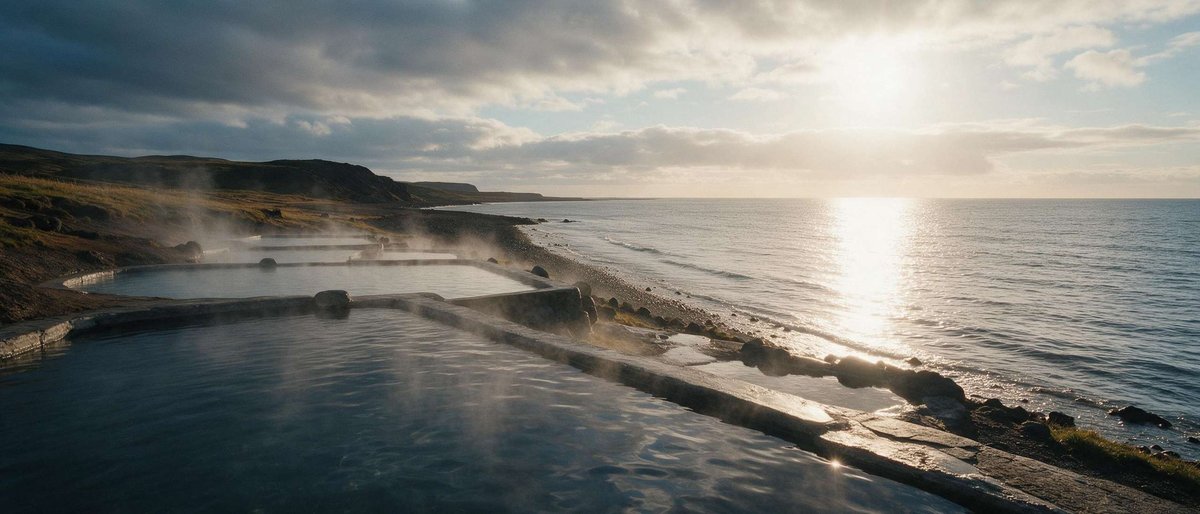
Short answer, and one that disappoints a lot of people: there are no natural hot springs in Batumi itself. But you won't have to go far.
Kobuleti is closest, about half an hour's drive up the coast to the north. It has thermal baths on Tavisupleba Street, the most common answer to "where can I warm up in hot water near Batumi." By most accounts, it's a no-frills spot without much resort polish, but it's close.
Beyond that, the options multiply, but you're looking at a day trip. Tour operators run excursions from Batumi to the thermal baths near Vani, the hot springs at Nokalakevi, and Tskaltubo, often bundled with the Martvili canyons and Prometheus Cave. If you have a car, the same route works fine on your own; all of these sit in Imereti and Samegrelo, two to three hours away.
🏛️ The sulfur baths of Tbilisi
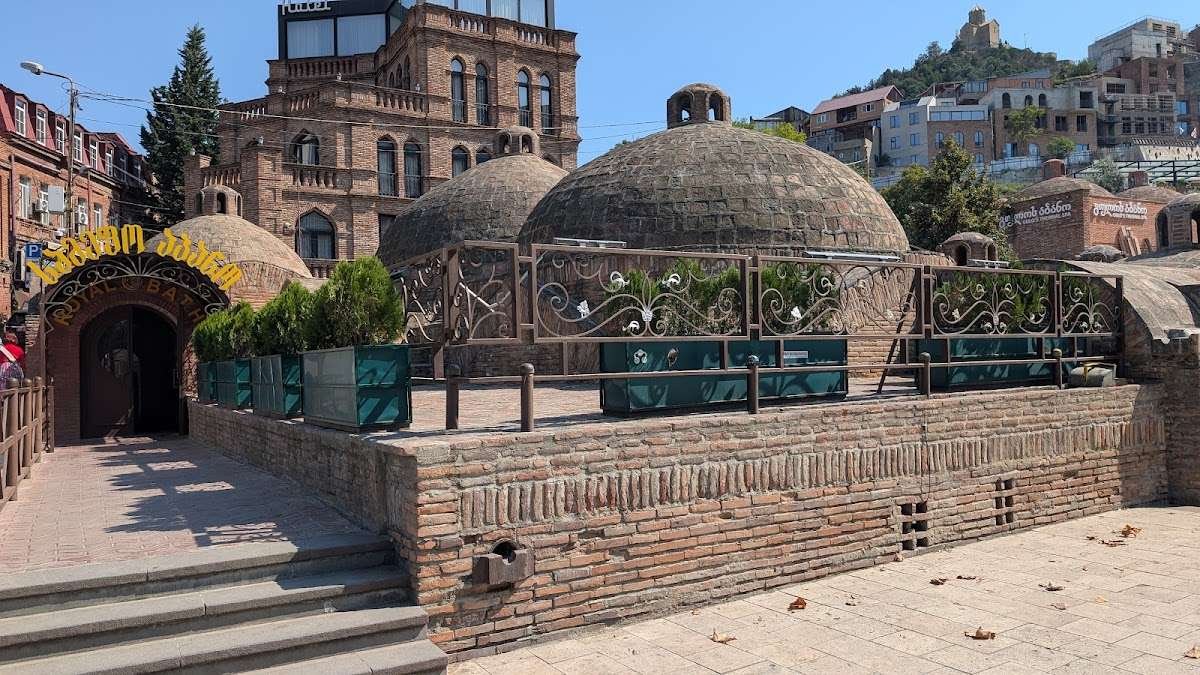
The most accessible option in the whole country, and also the most urban.
The baths are clustered in Abanotubani, in the old town, at the foot of Narikala Fortress. You'll spot them from outside by the brick domes poking straight up out of the pavement, and by the distinctive smell of sulfur. Inside there are shared halls as well as private rooms, which groups book by the hour. Attendants offer a traditional kese scrub with a coarse mitt, and your skin feels completely different afterward.
The water here is sulfurous and hot, so people don't sit in it for long; you typically go in a few times with breaks in between.
Addresses and details for specific bathhouses are in our directory: baths and saunas in Tbilisi. For the medical side of Tbilisi's waters, if that interests you, we've covered the Tbilisi balneological resort separately.
🍂 Tskaltubo and its radon springs
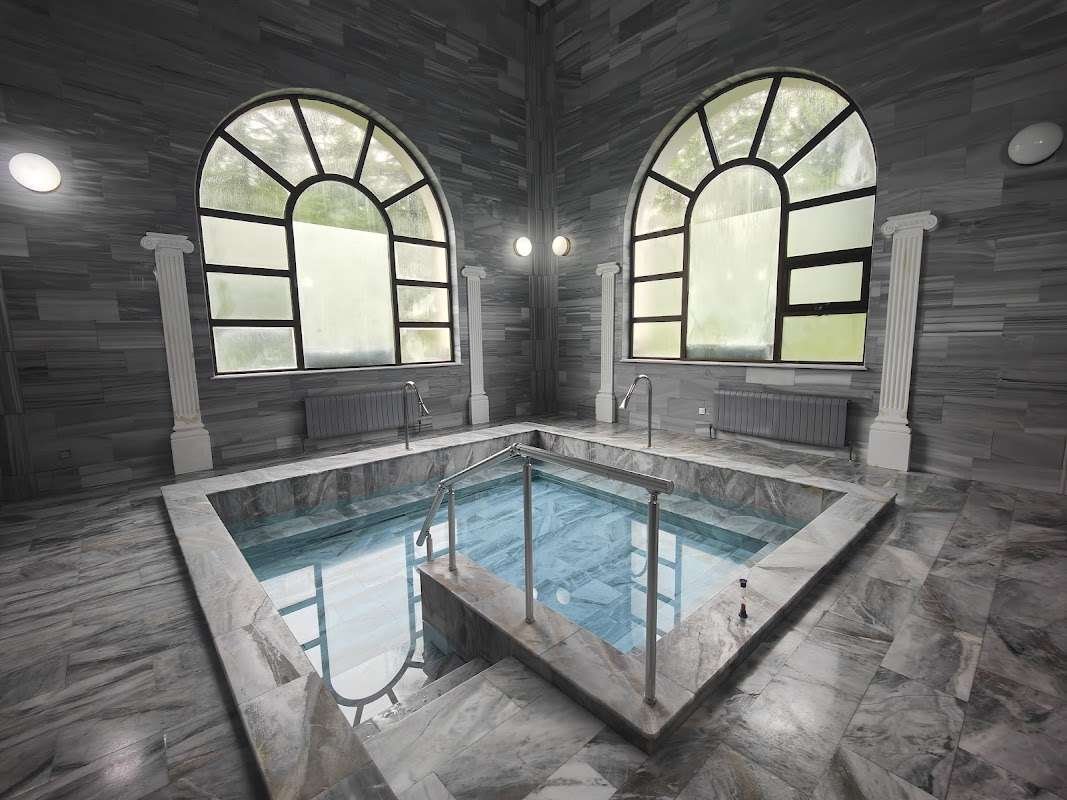
If you're heading to hot springs in autumn, Tskaltubo is almost always on the list, and for good reason: demand here noticeably picks up in autumn, once the summer heat fades and warm water starts feeling especially good.
Tskaltubo sits half an hour from Kutaisi. This old Soviet resort became famous for its radon-carbonate water, described as sitting close to body temperature, so you can soak for a long time without ever feeling like you're being boiled. The town itself is a striking place: working baths sit right next to abandoned Soviet-era sanatoriums, and plenty of people come as much for that contrast as for the water.
More on the town, the resort's history, and what's worth seeing nearby is in our piece on Tskaltubo. Half an hour away, there's another mountain balneological resort at Sairme.
🔥 The hot springs of Nokalakevi on the Tekhuri River
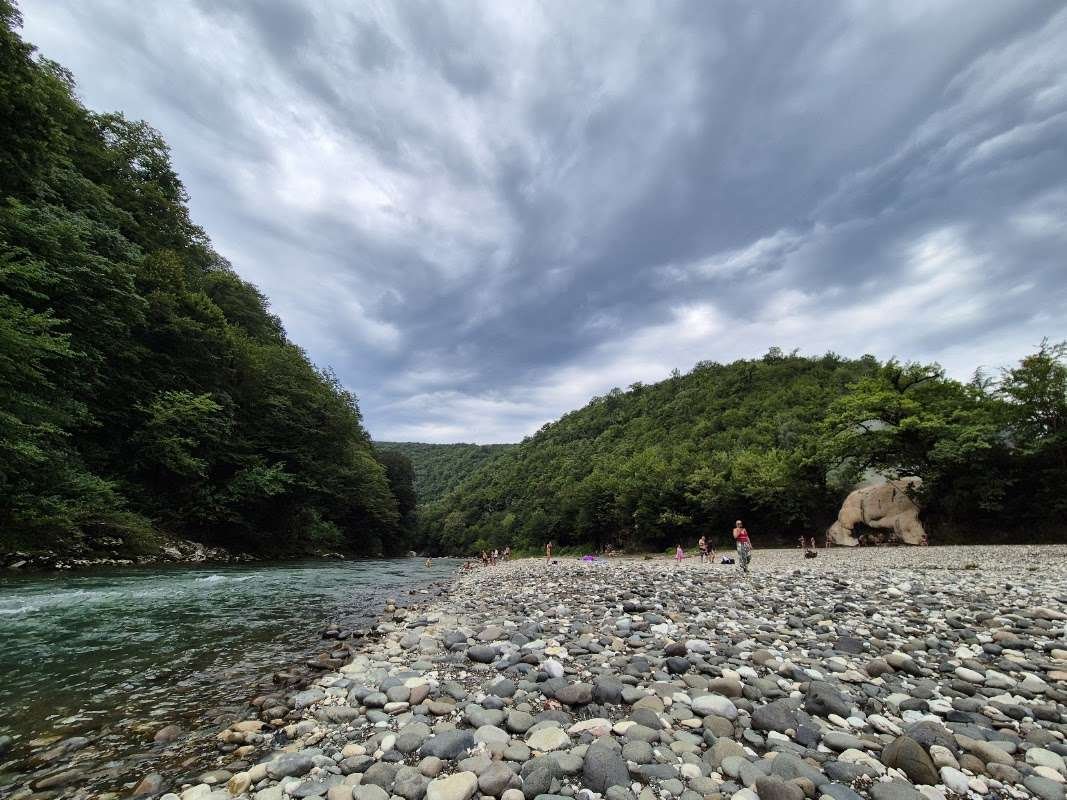
This is the genuinely "wild" option a lot of people go looking for this topic to find.
The hot sulfur springs sit on the banks of the Tekhuri River, a couple of kilometres upstream from the pedestrian bridge at Nokalakevi fortress. Hot water rises out of the rocks and mixes with the river, and in places it's built up unusual white mineral deposits over the years, almost like frozen foam.
Worth knowing what you're getting into: the site is completely undeveloped. No changing huts, no ticket booth, no staff, not even a proper name. It's just hot water, out in nature. For some people, that's exactly the appeal; for others, it's a reason to pick somewhere more developed instead.
Getting there. About an hour's drive from Kutaisi. By public transport, you can take a marshrutka from Martvili and ask to be dropped near Nokalakevi fortress, then walk along the river from there. By travellers' accounts, Samegrelo has only two hot sulfur springs, this one and the one at Tsaishi.
Worth visiting the fortress and the ancient town of Archaeopolis nearby while you're there; we've covered them in our piece on Nokalakevi.
♨️ The hot springs of Borjomi and Samtskhe-Javakheti
Borjomi is famous for its mineral water, but you can swim here too, and it's one of the most pleasant stops on this whole list.
Where the Borjomi spring is. The famous drinking spring sits in Borjomi's central park, inside a pavilion where you can fill a cup and taste the warm mineral water straight from the tap. It's the hot mineral water spring, and the taste, fair warning, is an acquired one: warm, faintly salty, with a distinct smell.
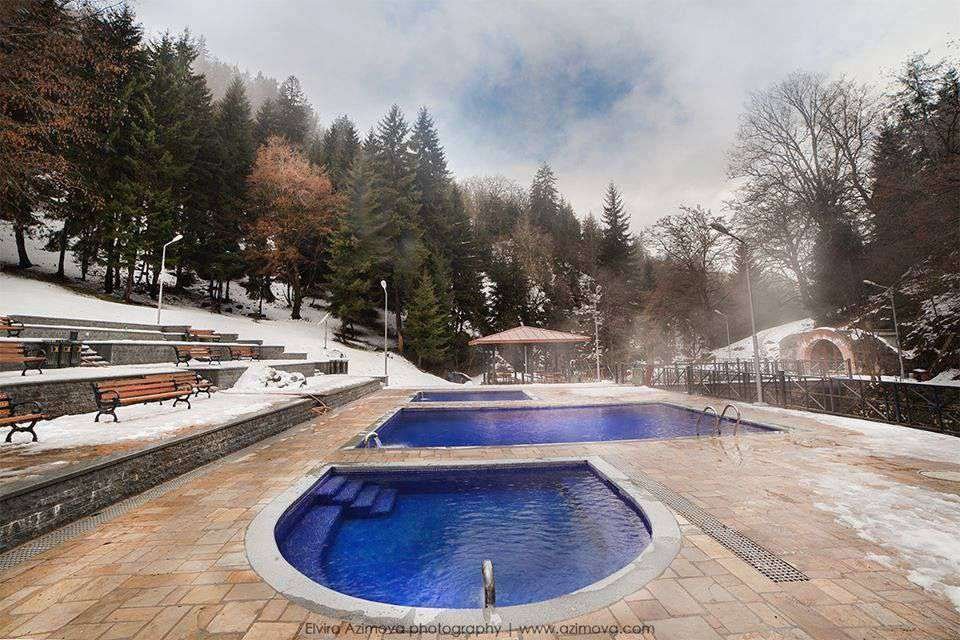
Where to actually swim. Keep walking further up through the park and you'll reach the Borjomi sulfur pools, open-air pools of warm water tucked into the forest. Especially good on a cool day, when steam rises off the surface.
More on the town and its water is in our piece on Borjomi. Nearby, in Bakuriani, there's also a sulfur spring.
Further south, in Javakheti, travellers point to thermal pools and sulfur baths in Aspindza, Vardzia, and Abastumani. These are simple, no-frills spots, but easy to tack onto a trip to the cave city of Vardzia.
🌿 Georgia's lesser-known hot springs
Beyond the well-known names, Georgia has plenty of places with warm water and no crowds.
Tsaishi, near Zugdidi, Samegrelo's second hot sulfur spring alongside Nokalakevi. Menji, near Senaki, another balneological resort in western Georgia. The Nunisi Valley, in the Kharagauli area, with warm mineral baths surrounded by forest. And Nabeghlavi, in the hills of Guria, better known for its mineral water than for swimming.
Worth a separate mention: Akhtala, near Gurjaani. This isn't a hot spring at all, it's a therapeutic mud resort, but it gets mentioned alongside the others often enough that it's worth clarifying the difference.
📅 When to visit Georgia's hot springs
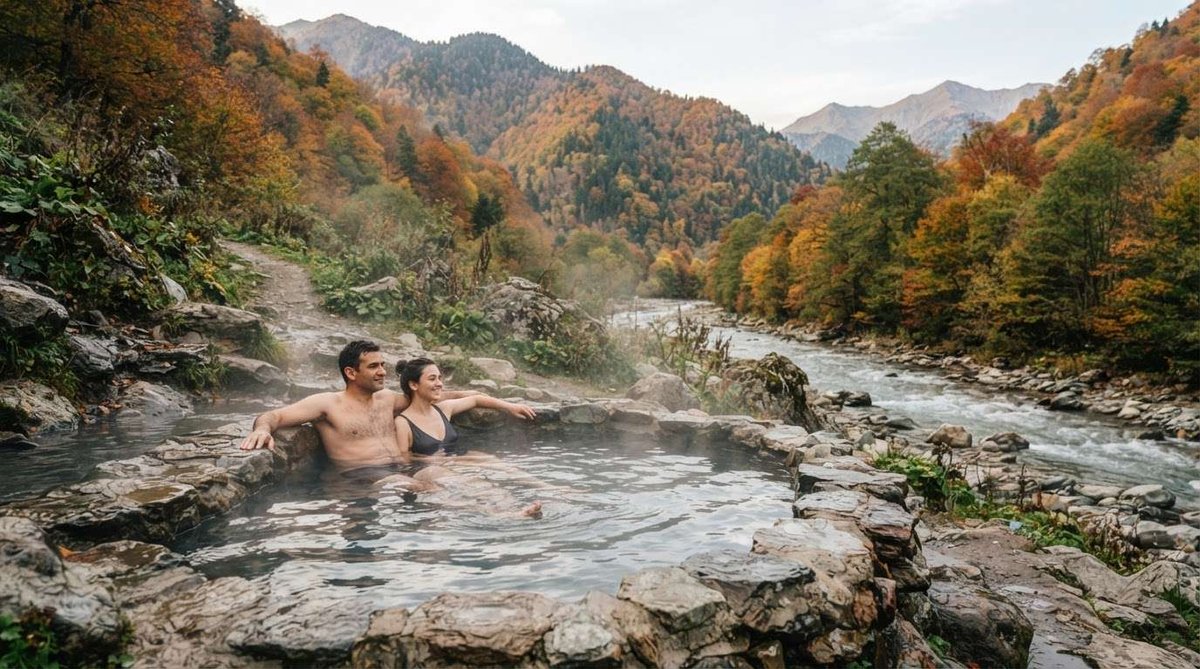
The best time is autumn and winter. September, October, November, and for the indoor baths in Tbilisi, the whole winter works too. Warm water on a cool day is an entirely different pleasure than in the July heat, when you're ready to climb out of a hot pool within a minute.
The springs run in summer too, it's just better to go early morning or evening. For wild springs like Nokalakevi, aim for a dry stretch: after heavy rain the river rises, and reaching the water can get difficult.
For how the spring-rich regions sit relative to the main highways, our map of Georgia is worth a look.
Bring old sandals and a towel you don't mind ruining. Sulfur smell clings to fabric for a long time, and at wild springs the rocks are slippery, unpleasant to cross barefoot.
And combine your trip. The hot springs of Imereti and Samegrelo sit right next to canyons, caves, and ancient fortresses. Nokalakevi pairs easily with the Martvili canyon, Tskaltubo with Prometheus Cave, Borjomi with Vardzia. That makes for a full day, with a soak in warm water the perfect way to end it.
Been to any hot springs in Georgia? Leave a review on Madloba: tell us where you swam, how hot the water actually was, what you paid, and whether it was crowded. Fresh reviews of the wild springs are especially valuable; their condition changes season to season faster than any guide can keep up with.
Information is current as of September 2026. The condition of natural springs, access to them, bathhouse hours, and prices all change. Open sources disagree on water temperatures, so we haven't included specific figures. Bathing in mineral or sulfur water isn't a substitute for treatment: if you have a chronic condition, heart or blood pressure issues, or are pregnant, check with a doctor first.
❓Frequently Asked Questions
💬 No natural hot springs exist in Batumi itself. The closest option is the thermal baths in Kobuleti, about half an hour's drive north. Batumi also runs excursions to the springs near Vani, Nokalakevi, and Tskaltubo.
💬 On the banks of the Tekhuri River, a couple of kilometres upstream from the pedestrian bridge at Nokalakevi fortress. The site is completely undeveloped, no changing huts, no staff. About an hour's drive from Kutaisi, or a marshrutka from Martvili.
💬 In Abanotubani, in the old town, at the foot of Narikala Fortress. The baths are easy to spot by their brick domes. There are shared halls and private rooms, which groups book by the hour.
💬 Demand for Tskaltubo traditionally rises in autumn: warm radon water feels especially good once the summer heat fades. Winter and spring work well too; in summer, aim for morning or evening.
💬 The famous drinking spring sits in Borjomi's central park, inside a pavilion where you can taste the warm mineral water straight from the tap. Keep walking further up through the park and you'll reach open-air sulfur pools where you can actually swim.
💬 Yes, in the sulfur pools in the upper part of the central park. These are open-air pools of warm water set in the forest, especially pleasant on a cool day.
💬 Only where a spring is specifically set up for drinking, like the pavilion at Borjomi. Water from wild springs, such as those on the Tekhuri River, isn't meant for drinking.
💬 Hydrogen sulfide in the water tarnishes silver. It's best to take jewellery off beforehand rather than clean it afterward.
💬 No. If you have heart conditions, blood pressure issues, a chronic illness, or are pregnant, check with a doctor before getting in. Hot water puts a real strain on the body, especially with long soaks.

0 comments
Log in to leave a comment