




🌆 Batumi in October: Rain, Empty Beaches and How to Fill a Day
🌆 Batumi in October: who it suits and who it does not
The city empties, prices fall and restaurants run without queues. But October here is one of the two wettest months of the year, and a beach holiday does not work in it. A city holiday works very well.
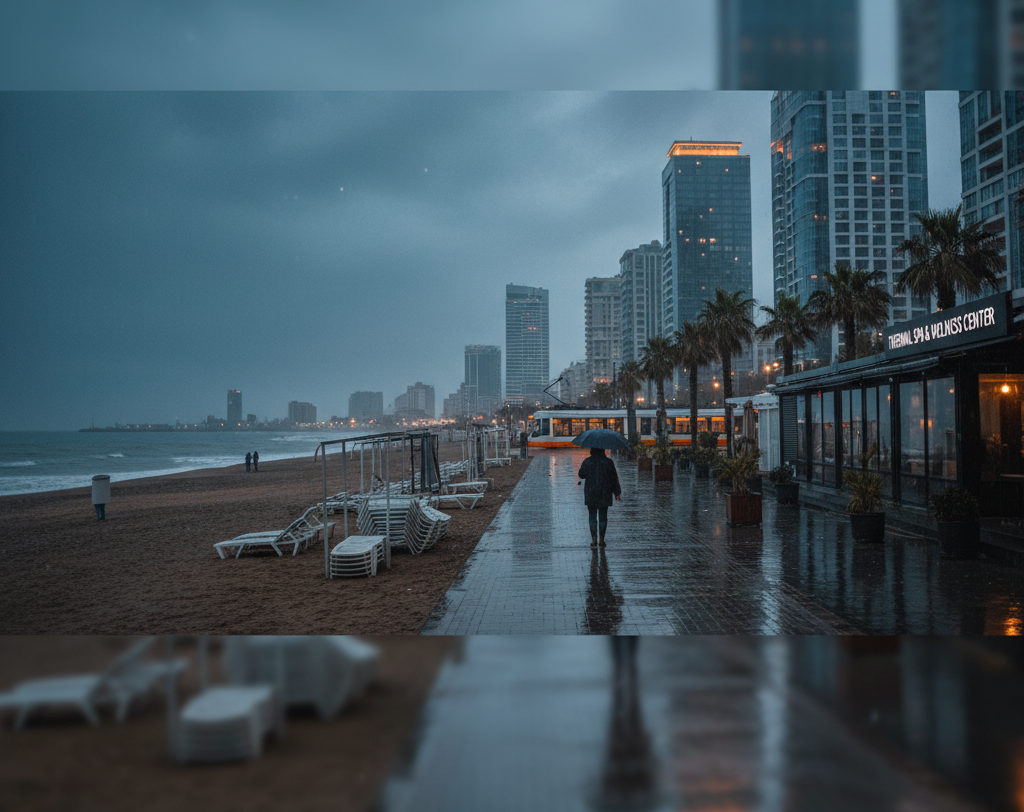
October is Batumi after the season. The crowds have gone, the promenade is empty, restaurants have free tables and accommodation costs noticeably less than in summer.
In exchange you get rain. A lot of it. And the question is not whether it will pour but what you will do when it does. That is what follows.
🌧️ Weather: warm, but bring a jacket
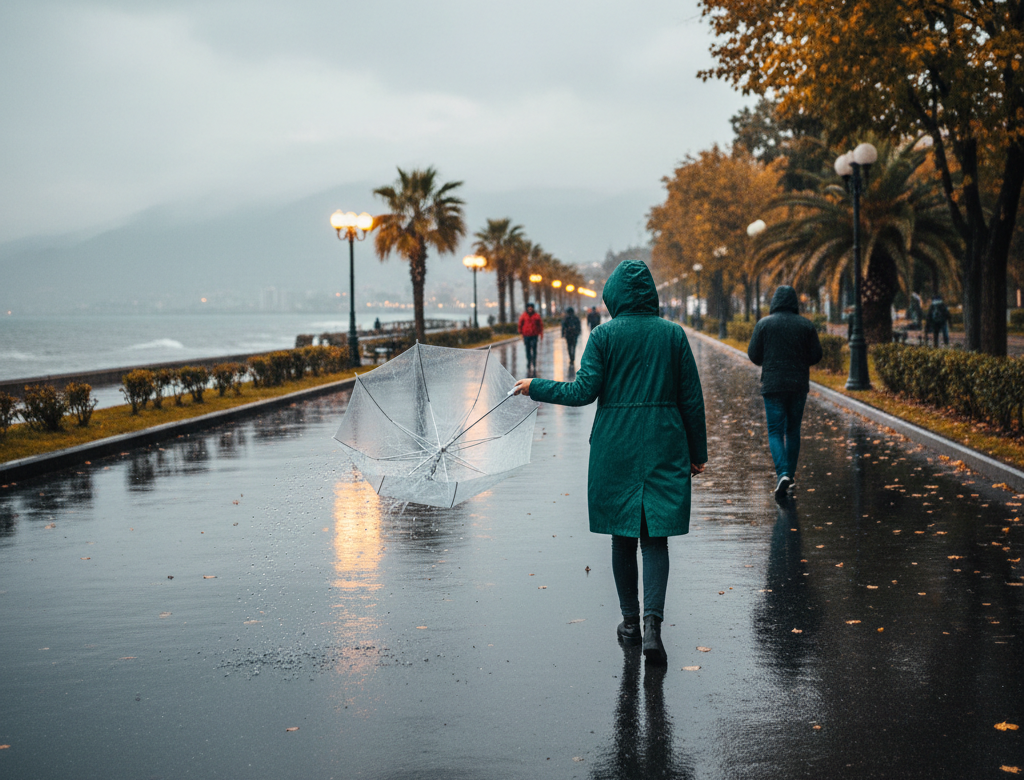
Around 20°C by day and about 13°C at night. On temperature this is comfortable autumn: neither hot nor cold, and pleasant for walking.
There is a lot of rain. By climate normals September and October are the two wettest months of the year in Adjara, roughly equal at about 250 mm each. Different weather services give the title to one or the other, and the difference sits within the margin of error.
What matters more is that the rain comes in runs. Not half an hour a day but two or three days together, then a sunny window, then more rain. A week's forecast is therefore useless; two days ahead is worth checking.
The practical conclusion. Do not plan the days in advance. Keep two lists ready, "if sunny" and "if wet", and decide in the morning.
An umbrella works worse here than a rain jacket: the sea wind turns it inside out almost at once.
🌊 Sea and beaches: the first ten days
The water sits around 20-21°C at the start of October, cools noticeably by mid-month, and by the end the swimming season is over.
Technically you can swim; in practice it is a few minutes in the water. The sea breeze makes twenty degrees feel considerably cooler, and you come out chilled.
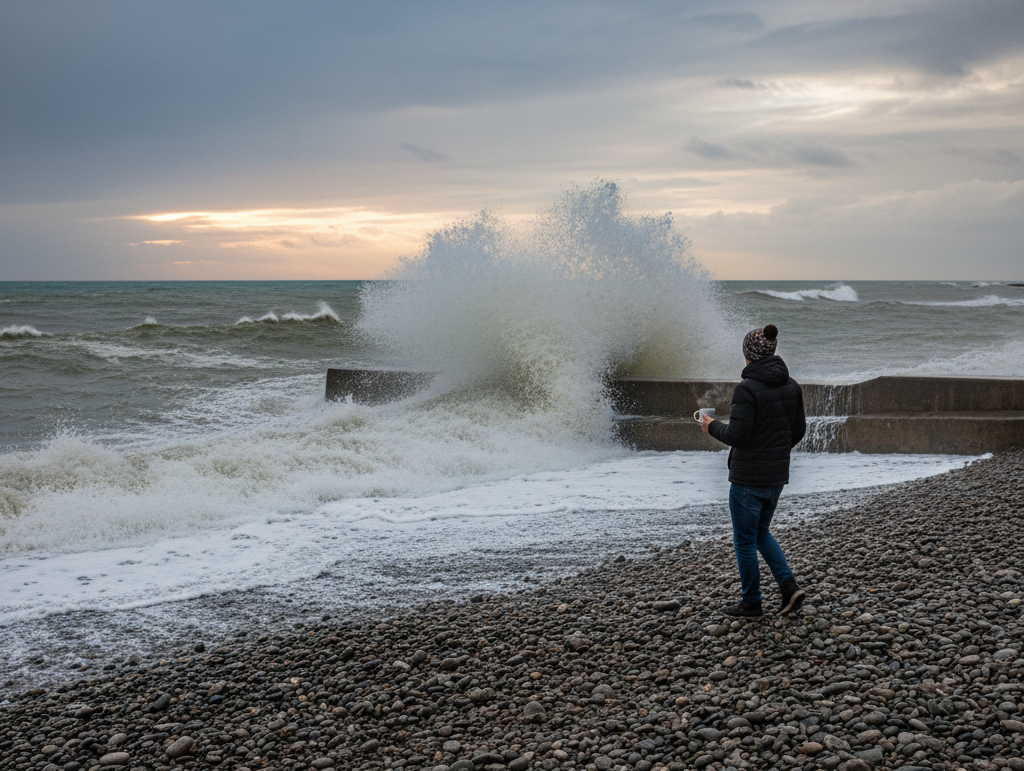
But the beach in October is not about swimming. It is empty, which in Batumi is rare. And there are the October storms, which some people come specifically for: the waves hit the seafront, and this is the best month of the year for photographing the coast.
A walk along the pebble shore in a storm with a coffee is a decent way to spend two hours.
☔ What to do when it pours
This is the main section of the piece, because in October it is what decides the trip. The good news: Batumi has more indoor options than any other town on the coast.

Swimming pools. The obvious answer to rain and the most overlooked. Indoor pools operate at hotels and sports complexes, and many admit visitors off the street on a single ticket. The selection is in the ranking of indoor pools in Batumi. There are outdoor pools too, but in October they open selectively, so check.
Bathhouses and spas. In cool weather they finally make sense; in summer they are stifling. The options are in the round-ups of the best spas in Batumi and bathhouses and saunas. This is also the best answer to what to do in the evening while a storm runs outside.
Museums. Batumi has more of them than it appears, and most visitors do not know they exist. The survey is in the hidden treasures of Batumi.
Food. In October restaurants run without queues, and here the rain actually helps: you can sit down calmly in places you cannot get into in August.
🌳 Walking on the dry days
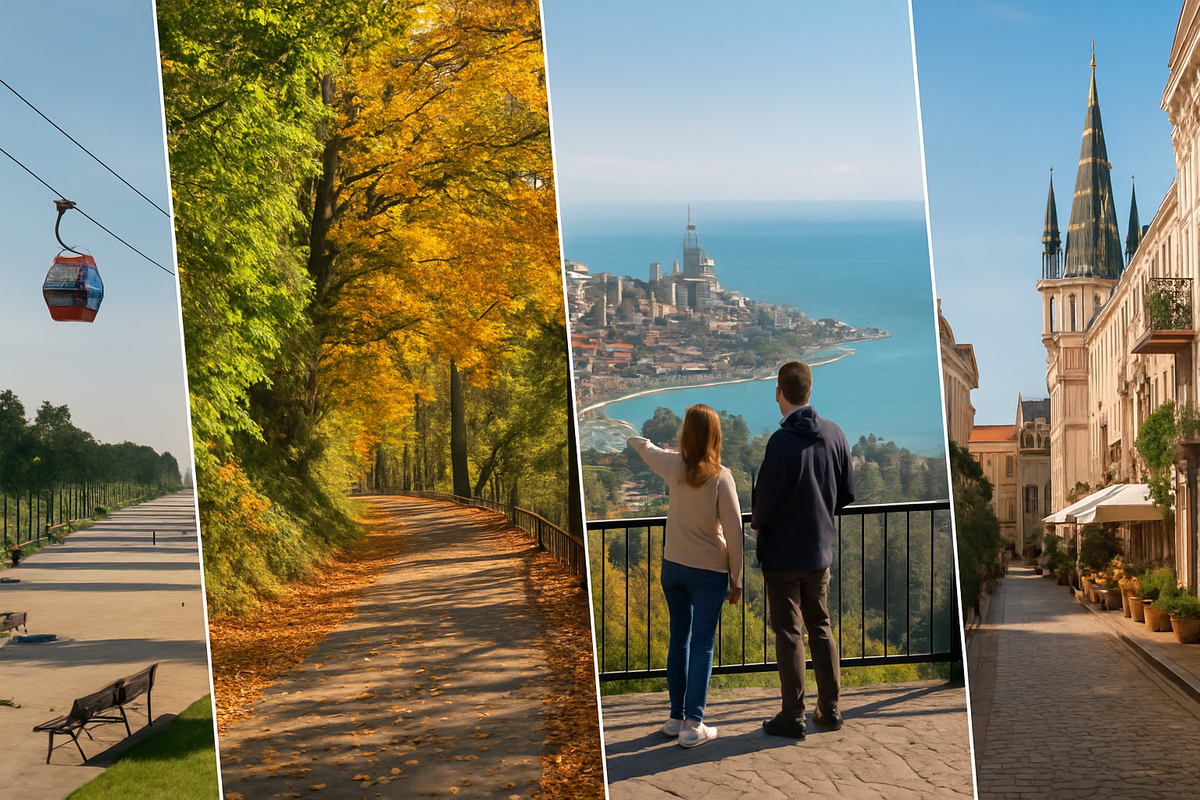
Sunny windows do come in October, and they need using at once rather than saving.
The promenade without crowds. In summer you walk the Batumi seafront in a stream of people; in October it is almost empty. It is a different city, and many prefer it.
The botanical garden. Autumn is its best form of the year: the heat has gone but the greenery is still full, with autumn colour on the deciduous species. Covered in detail in the Batumi Botanical Garden, and the city's other green spaces in the parks and gardens of Batumi.
The Argo cable car. The ride up Anuria with views over the city and the sea. On a clear October day the visibility beats summer, since the haze has gone. You can also walk up to the top station, and the route is described separately.
Old Batumi. The blocks around Piazza and Europe Square, which are more interesting to walk in the off season, when the café terraces are not full.
On opening hours. The cable car and the botanical garden may change their hours in autumn, and the cable car is stopped in strong wind. Check on the day.
🍊 Tangerine season begins
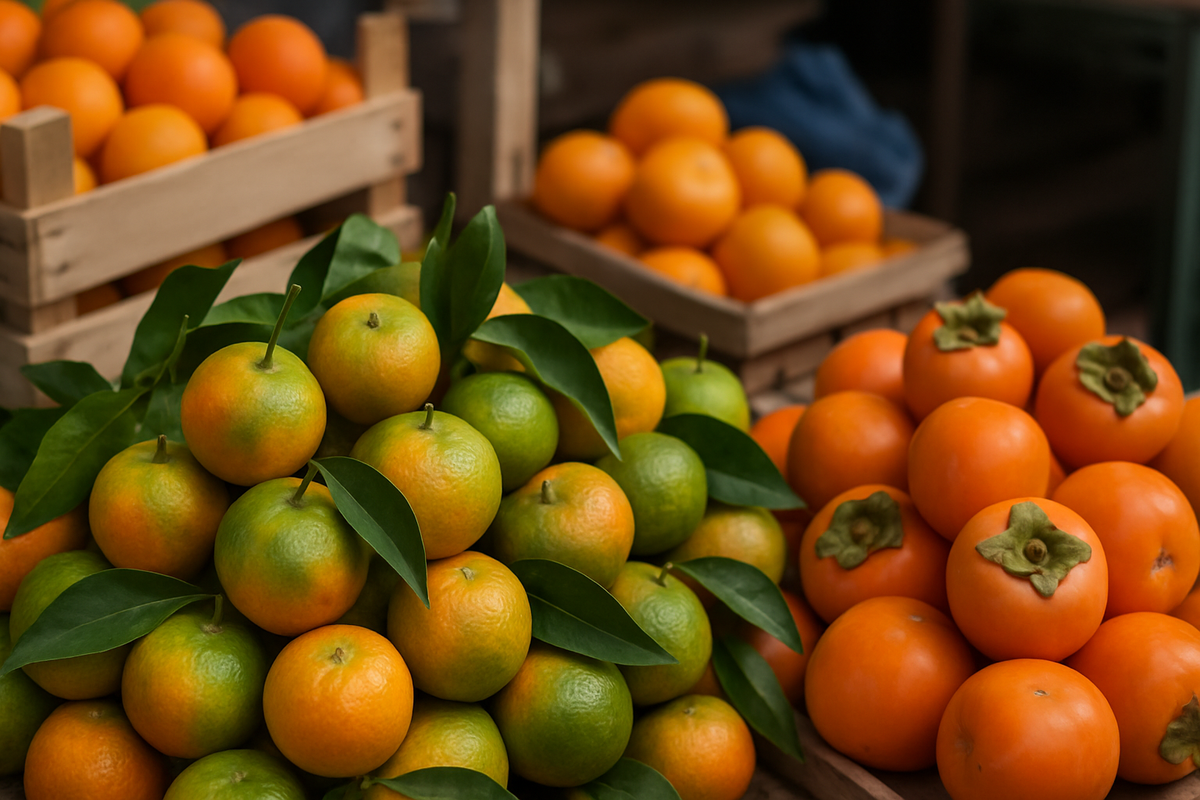
A late-October story that few visitors know about.
Adjara is Georgia's main tangerine region, and the first local fruit reaches the markets around the end of October. They are still sharp and green on one side, but that is exactly how many people like them.
Persimmon arrives at the same time, and by November there is plenty of it at very low prices.
Where to buy. At the city markets rather than in supermarkets: the difference in price and taste is noticeable. On the road into upland Adjara, growers sell crates by the roadside, cheaper still.
The seasonality of Georgian fruit is covered in Georgian fruit.
🚗 Trips out of Batumi
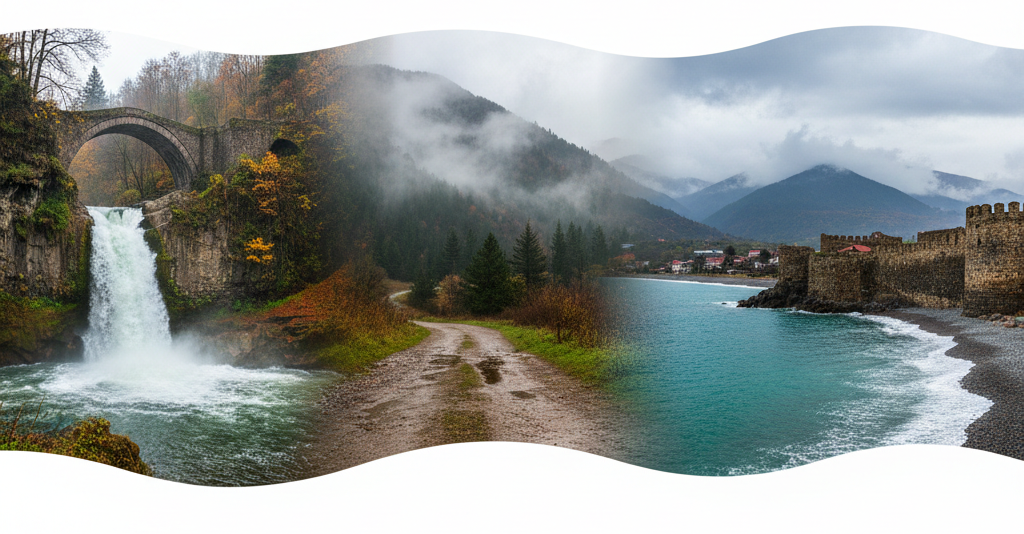
October rain does one thing better than summer: it fills the waterfalls.
The Makhuntseti waterfall and Queen Tamar's arched bridge beside it, about an hour from town. The falls run noticeably stronger in autumn than in a dry August.
Mount Mtirala and the national park of the same name. The name translates as "the weeping one", and this is the wettest place in Georgia, which in October should be taken literally. Go only in a dry window.
Gonio Fortress, twenty minutes south. A Roman-era stronghold, among the oldest on this coast, and it barely depends on the weather. Nearby are Gonio and Kvariati, where the pebbles are larger and the water clearer than in Batumi.
Kobuleti, half an hour north and emptier in October than Batumi itself.
A note on the roads. Some unpaved stretches in upland Adjara turn to mud after rain. If Mtirala or the further waterfalls are on your list, check the forecast the day before.
💰 Prices: a third below summer
October in Batumi is the low season, and your wallet notices.
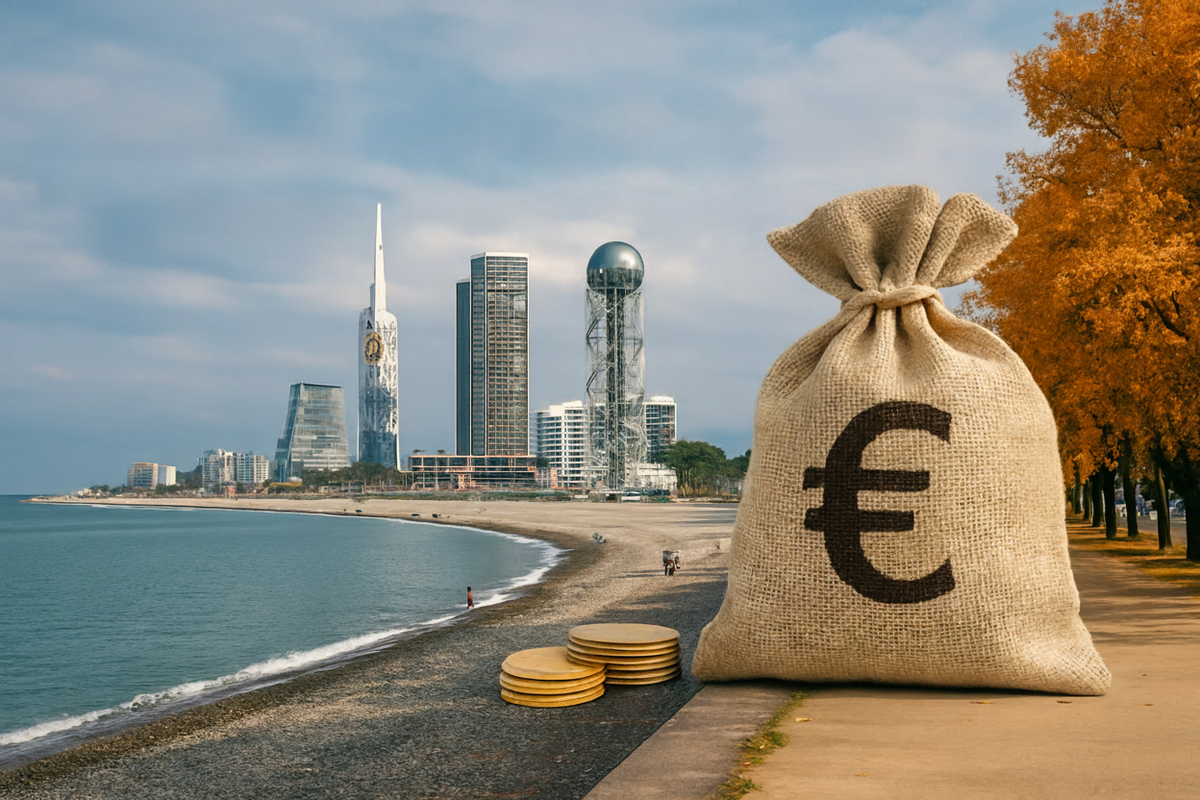
Accommodation drops appreciably, and the gap with August is substantial. Sea-view apartments that go months ahead in summer sit empty in October at a fraction of the price.
Restaurants run without queues and without booking. Menu prices are unchanged: Georgian hospitality carries no seasonal markup.
Transport does not shift with the season either. Buses, marshrutkas and taxis cost what they cost in February.
Flights in October are usually cheaper than in summer, since demand falls while the summer schedule is still running.
What does go up. Nothing in Batumi itself. But if you head inland, note that the spa towns run the other way: October is their high season.
🧭 Is it worth coming: the short answer
Yes, if you want the city rather than the beach. If you are coming to walk, eat, visit the bathhouses, photograph storms and buy tangerines, October is one of the best months of the year.
No, if the trip is conceived as a seaside one. Swimming realistically covers the first ten days and only for the committed, and you cannot count on sun.
The borderline case: families with children. There is no beach, but there are pools, parks and an empty city. It works if you are prepared for an indoor programme.
The wider picture of the month across the country is in an October trip to Georgia, and September on the coast in can you swim in Batumi in September.
The main mistake with an October trip to Batumi is a rigid plan. People map the week out day by day, hit three days of rain and write the holiday off.
What works instead. Look out of the window in the morning and choose from two prepared lists. Sun: the promenade, the botanical garden, the cable car, a drive to the waterfall. Rain: a pool, a bathhouse, a museum, a long lunch. Over a week in Batumi you will get through both, just not in the order you planned.
Been to Batumi in October? Leave a review on Madloba: tell us which dates you travelled, how many days it rained, and what turned out to be the best thing to do in the wet.
Information is current as of September 2026. The climate figures are long-term averages rather than a forecast. Opening hours for the cable car, the botanical garden and the pools change in autumn, so check before you go.
❓ FAQ
💬 In the first ten days, yes, with caveats. The water is around 20-21°C and the air around 20°C, and the sea breeze makes it feel considerably cooler. By mid-month only a few swim, and by the end the season is over.
💬 Around thirteen wet days out of thirty and about 250 mm of rain. September and October are the two wettest months of the year in Adjara, roughly equal. The rain comes in runs of several days with sunny windows between them.
💬 Yes, if you are coming for the city: walking, bathhouses, museums, food without queues, an empty promenade. No, if the trip is planned as a beach holiday: swimming realistically covers the first ten days and you cannot count on sun.
💬 Accommodation drops appreciably and the gap with August is substantial. Restaurants and transport carry no seasonal markup at all. Flights are usually cheaper than in summer, since demand falls while the summer schedule still runs.
💬 Indoor pools at hotels and sports complexes, bathhouses and saunas, spas, museums, and long lunches in restaurants you cannot get into in summer. All of it is in town, with no travel needed.
💬 Around 20-22°C by day early in the month and 18-19°C by the end, with about 13°C at night. On temperature it is comfortable autumn; the question is only the rain.
💬 The first local tangerines reach the markets around the end of October. They are still sharp and green on one side. Persimmon arrives at the same time, and by November there is plenty of it. Buy at the city markets or from growers by the roadside into upland Adjara.
💬 Gonio Fortress, twenty minutes south, barely depends on the weather. The Makhuntseti waterfall runs fuller in autumn than in summer, though the road there is worse after heavy rain. Mount Mtirala, the wettest place in Georgia, is worth visiting only in a dry window.
💬 It does, but the hours may change and the lift is stopped in strong wind. Check on the day. There is also a walking route to the top station, which the wind does not affect.

0 comments
Log in to leave a comment