




Georgian Literature Museum named after Giorgi Leonidze
📚 Literary museum · ⏱️ 1–2 hours · 📍 Tbilisi, former palace of the Russian viceroy's deputy
📖 Before you visit
| 📍 Building | Former palace of the Russian Emperor's deputy viceroy of the Caucasus (since 1938) |
| 📅 Founded | 1929. Officially opened 1930 on the initiative of Titsian Tabidze and the Writers' Federation |
| 🗃️ Collection | 130,000 manuscripts · 2,000 paintings/graphics · 27,000 photographs · 40,000+ books |
| 💎 Unique exhibit | "Book of Praise to the Georgian People," 17th c. (Khatia-Sofieysky Codex) — the only copy |
| 🕐 Opening hours | Daily except Mondays |
| 🔄 Restoration | 2018 — façade and interior restored, exhibitions updated |
| 💰 Entry | Free. Guided tours available for an additional fee |
🧭 Who this article is for
The Museum of Georgian Literature tends to stay in the shadow of Tbilisi's more "photogenic" attractions. But this is where 130,000 manuscripts are held, along with a 17th-century codex that has no second copy and the personal archives of every major Georgian writer. Entry is free. The building is a former viceroy's palace. This article is for those who want to understand what to look for in these rooms.
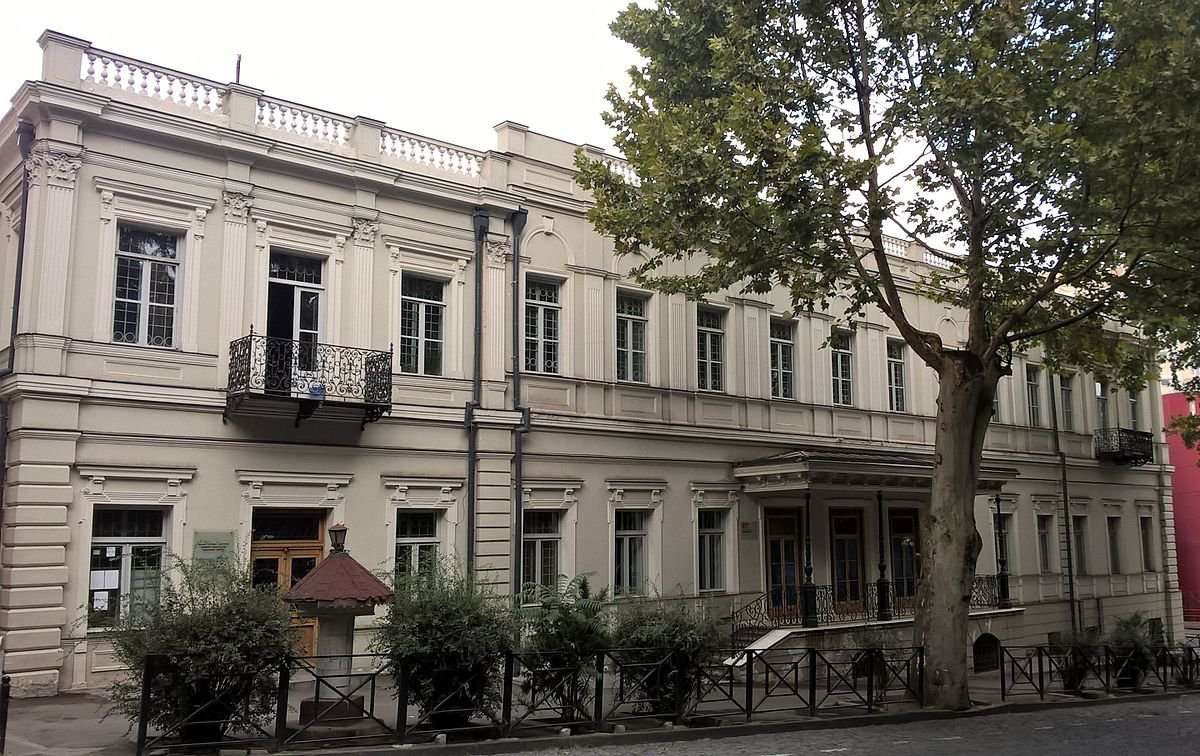
🏛️ History: from a jubilee exhibition to a viceroy's palace
In 1829 Tbilisi marked the centenary of Alexander Griboyedov with a jubilee exhibition. The objects displayed there became the first fund of the future museum.
In 1930 the museum was officially opened on the initiative of poet Titsian Tabidze and the Georgian Writers' Federation. A systematic collection effort began immediately: personal archives of writers and public figures buried on Mtatsminda — Dmitry Kapiani, Ilia Chavchavadze, Akaki Tsereteli, Nino Nikoladze.
In 1931 the poet Giorgi Leonidze was appointed director — and under his leadership the bulk of the unique exhibits was assembled.
The name changed with the growing archive. In 1935 — "Mtatsminda Museum of Georgian Writers." In 1938 — "Georgian State Museum of Literature." That same year the museum moved to the former palace of the deputy of the Russian Emperor's Viceroy of the Caucasus, where it remains today. In 1967 it was named after Giorgi Leonidze.
In 2018 a major restoration was completed: the façade and interior were restored, exhibitions updated.
📖 What the collection holds
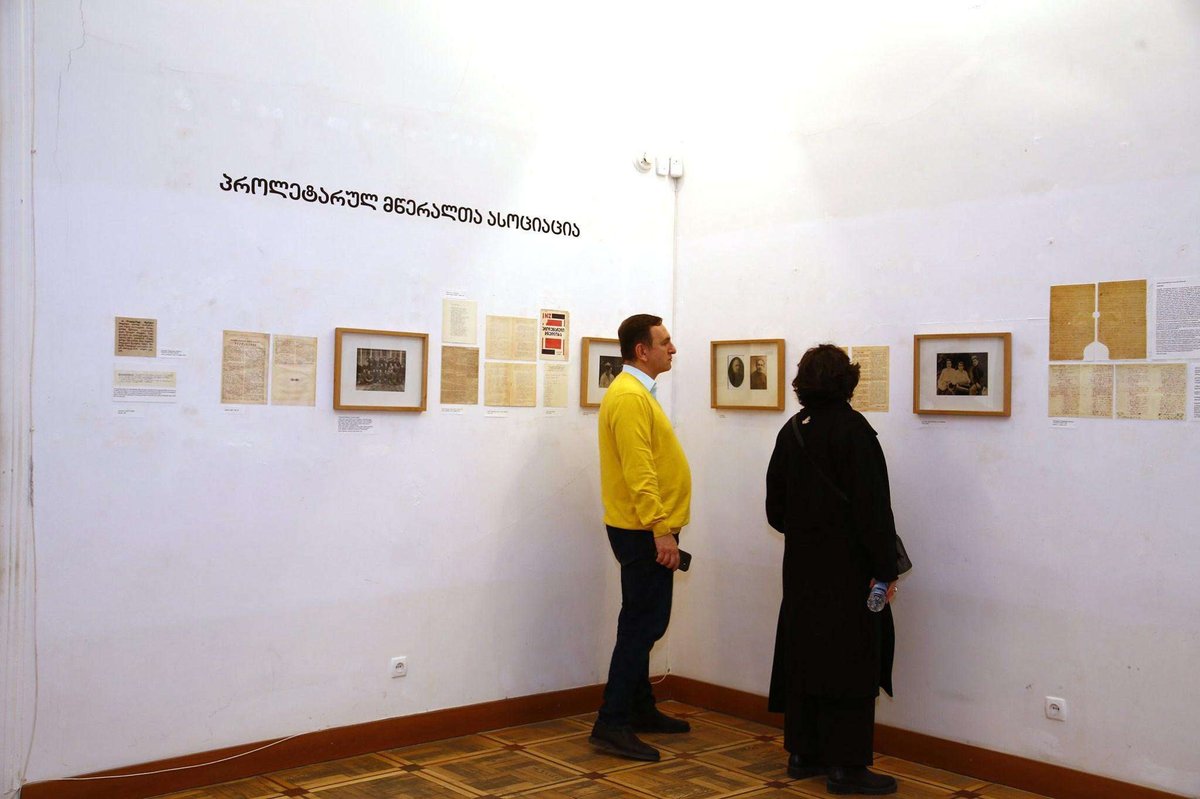
- 130,000 manuscripts — the museum's core value. Original manuscripts, drafts, letters and documents of all the key Georgian writers.
- 2,000 paintings and graphic works — portraits of writers, illustrations for their works, genre scenes from Georgian literary life.
- 27,000 photographs — a documentary archive: images of writers, editorial offices, literary evenings, places connected with Georgian culture.
- Over 40,000 books — the museum's library, including rare editions.
- Around 1,000 memorial objects — personal effects, furniture, everyday objects belonging to writers.
The centrepiece
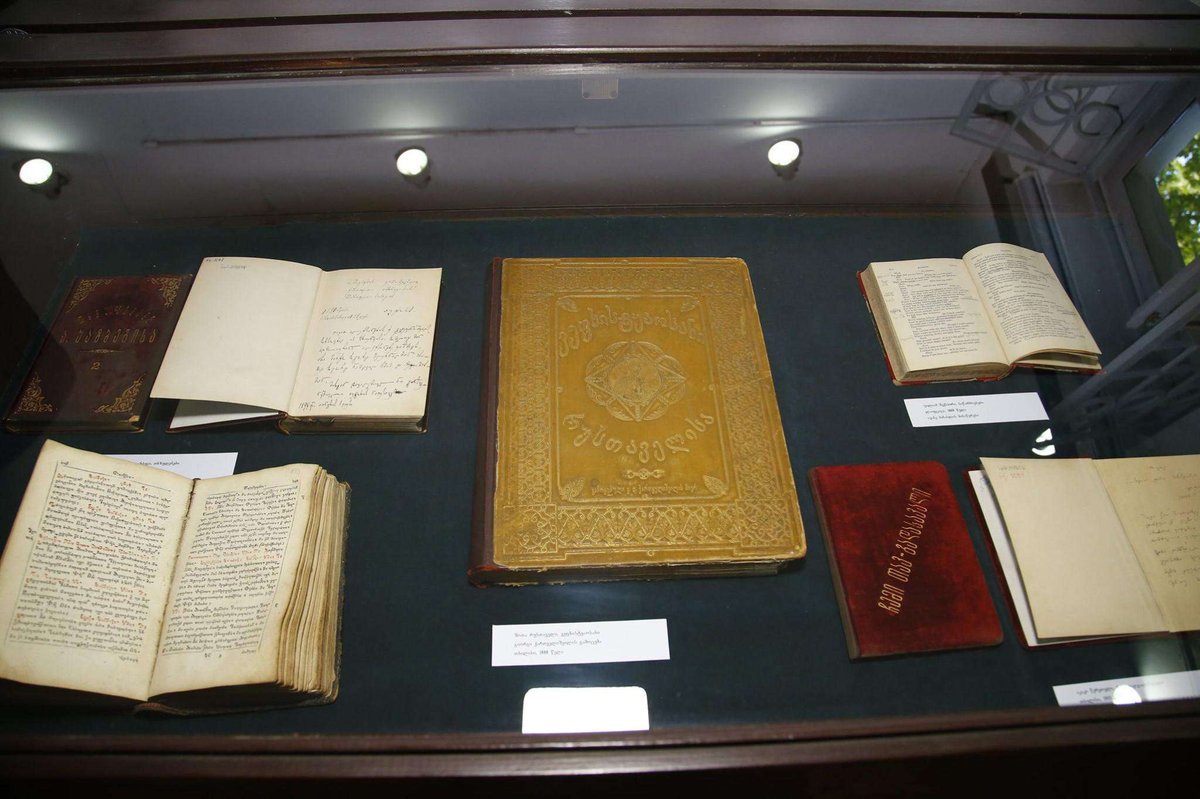
"Book of Praise to the Georgian People" (the Khatia-Sofieysky Codex, 17th century) — the only surviving manuscript describing life and culture in medieval Georgia. No second copy exists anywhere.
The Rustaveli exposition
Since 2014 a permanent exhibition "Dedication to Shota Rustaveli" has been on display — drawings, engravings and other materials connected with "The Knight in the Panther's Skin."
Ask to see the Khatia-Sofieysky Codex — 17th century, the only copy in existence. Ask staff directly: they know the exhibition well and share details that aren't on the labels. If you want a full guided tour, book it in advance. Entry is free, and the manuscript room is worth taking slowly.
🗺️ How to plan your visit
1️⃣ Enter and look at the building — a former palace of the Russian deputy viceroy. The 19th-century architecture is interesting in its own right.
2️⃣ Start with the biographical halls — a chronology of Georgian literature from the Middle Ages to the 20th century through personal archives.
3️⃣ Find the Khatia-Sofieysky Codex — the only surviving 17th-century manuscript describing life in medieval Georgia.
4️⃣ Spend time with the photo archive — 27,000 documentary images give a vivid sense of Georgian literary life across different eras.
5️⃣ Visit the "Dedication to Shota Rustaveli" hall with drawings and engravings based on "The Knight in the Panther's Skin."
💬 What visitors say
"Absolutely striking — a collection of 130,000 manuscripts, 27,000 photographs, 40,000 books and 2,000 artworks. The Giorgi Leonidze State Museum of Literature is definitely a place you should visit."
"After visiting I spent the whole evening looking for Georgian writers' books. Georgian literature turned out to be much richer than I'd imagined."
"The guides told many interesting things and answered all my questions. The Khatia-Sofieysky Codex from the 17th century was of particular interest."
🏁 Is it worth going
Free entry to a 19th-century palace building, 130,000 manuscripts, the world's only copy of a medieval codex — and almost no queues. This is the kind of museum that opens a deeper understanding of a culture than any tourist route. An hour or two, and you'll know more about Georgian literature than most people who never came here.
ℹ️ Entry is free. The museum is closed on Mondays. Guided tours are bookable separately — confirm availability and language. Information is current at the time of publication.
Have you been to the Leonidze Museum? Which exhibit made the biggest impression — the 17th-century codex, the manuscripts, the Rustaveli hall? Tell us — we read every comment ❤️
❓ Questions people ask most often
💬 In the historic building of the former palace of the Russian Emperor's deputy viceroy of the Caucasus. The museum has been in this building since 1938. Confirm the exact address before your visit.
💬 In 1929 — prompted by a jubilee exhibition marking Griboyedov's centenary. Officially opened in 1930 on the initiative of poet Titsian Tabidze and the Writers' Federation.
💬 Yes. Entry is free for everyone. Guided tours with a professional guide can be booked for an additional fee.
💬 The "Book of Praise to the Georgian People" — a 17th-century manuscript and the only surviving document describing life and culture in medieval Georgia. No second copy exists. It is held at the Leonidze Museum.
💬 Up to 130,000 manuscripts, up to 2,000 paintings and graphic works, up to 27,000 photographs, around 1,000 memorial objects and over 40,000 books. One of the largest literary collections in the Caucasus.
💬 A Georgian poet (1899–1966) who headed the museum from 1931. Most of the unique exhibits were assembled under his direction. The museum was named after him in 1967.
💬 On Mondays. Open all other days. Confirm the current schedule before visiting.

34 comments
Log in to leave a comment