




🥙Turkish cuisine in Tbilisi — 12 places for kebab, pide, and baklava
Turkish cuisine in Tbilisi isn't just a quick döner on the go. The city offers options for a hearty lunch, a charcoal-grilled dinner, fresh pide from the oven, and dessert with tea at the end. But just because the word "Turkish" appears on a sign doesn't guarantee that the place will suit your needs: some places feature a stronger grill, others baked goods, others sweets, and still others have a menu that mixes other Middle Eastern fare. This ranking will help you make a meaningful, not a random, choice: understand where to go for a kebab, where to look for pide, when to expect baklava, and what to check before your visit to ensure the food, the style, and your expectations are right. This selection is designed for both tourists and those living in Tbilisi who want to quickly distinguish a full-fledged Turkish experience from just a convenient döner place.
Who is this ranking for?
- Those looking for Turkish cuisine in Tbilisi for lunch, dinner, or a hearty snack.
- Those who value kebabs, charcoal-grilled dishes, and a clear meat menu, rather than a randomly mixed menu.
- Those who want to find a place for pide, lahmajun, and baked goods.
- Those who choose not only a main course but also dessert: baklava, kunefe, tea.
- Tourists and city residents who need a clear choice without the hassle of comparing dozens of menu items.
The best places according to the MADLOBA rating


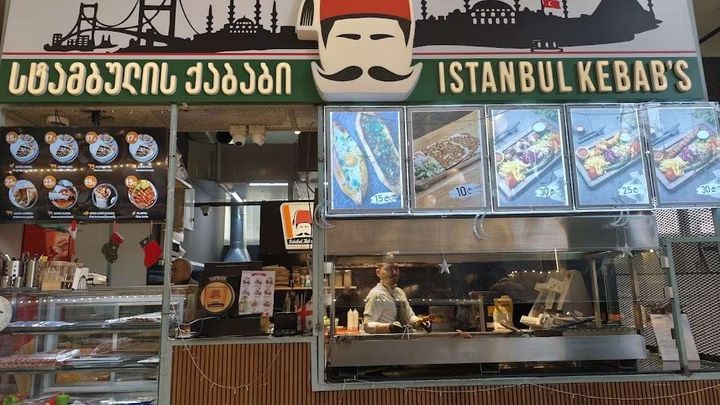
4 more worthy options for your choice


Additional places to consider

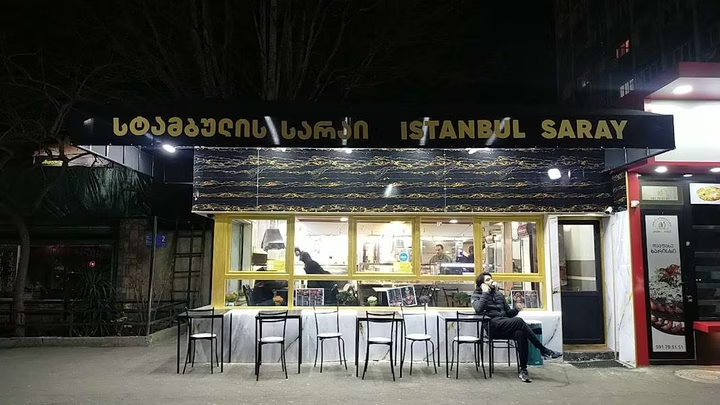


Where to find Turkish cuisine in Tbilisi: a ranking map
The map is especially useful if you're choosing not just "what to eat," but the entire city scene. Turkish places in Tbilisi operate at different paces: some are convenient for a quick lunch between errands, while others open up in the evening, when there's time for meze, a hot meal from the oven, tea, and dessert. Therefore, for this ranking, it's important to look not only at the menu, but also at the neighborhood, route, and seating arrangements.
How to tell if you're in a truly Turkish restaurant, not just a döner place with a mixed menu
Quick guidelines:
- The establishment has a clear focus: grill, oven, homemade baked goods, family-style dining, or a dessert-and-tea menu;
- Turkish classics on the menu are not decorative additions, but the foundation;
- kebabs, pides, and pastries occupy a prominent place, not get lost among random sections;
- bread, flatbreads, and dough are served fresh, not reheated;
- dessert and tea appear as a logical conclusion to the menu, not a formal line at the bottom.
In Tbilisi, the word "Turkish" is sometimes overused. It can include full-fledged restaurants, fast-casual formats, and mixed halal establishments with a Middle Eastern menu. For this rating, something else is important: Turkish cuisine should not be the background, but the primary language of the establishment. If the menu is built around kebab, pide, lahmajun, meze, soups, tea, and sweets, the format is immediately obvious. However, if too many different cuisines are placed side by side without logic, it's a different story.
A strong place in this category is usually recognized by its discipline. A good kebab relies not only on spices, but also on the texture of the meat, the heat, and the pure flavor of the coals. Pide should arrive hot, with a lively edge to the dough, and a filling that doesn't turn the pastry into a heavy casserole. Baklava is valued not for its sweetness per se, but for its layers, nuts, syrup, and balance. When these three pillars are firmly established, it's easier to trust the establishment in everything else.
Another useful indicator is the logic of the visit. Some places excel at grilled dishes and large portions for a group. Others are better suited to those who come specifically for the baked goods. Still others excel when you want to finish your dinner with tea and dessert. A rating with such intent should help distinguish these formats, rather than lumping them into one faceless category.
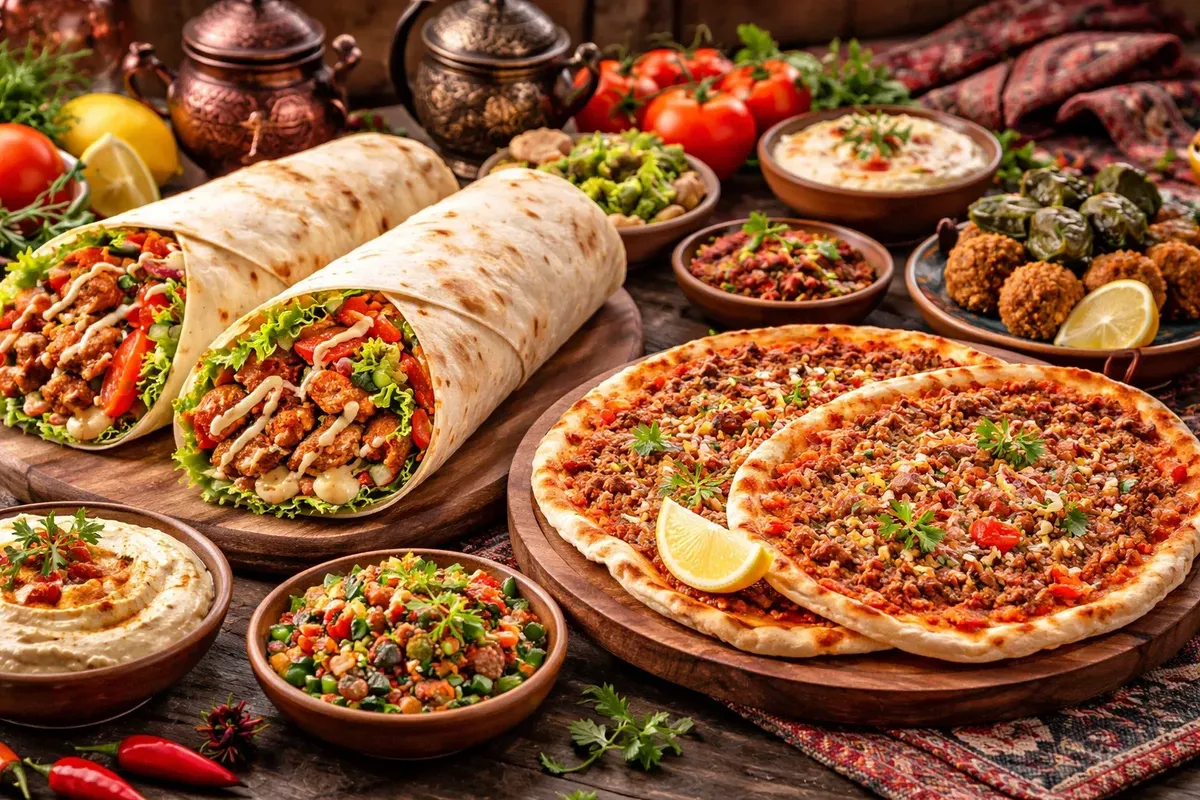
What to check before your visit to avoid missing out on kebab, pide, and baklava
What to look for first:
- Are you looking for a quick lunch or a relaxed sit-down dinner?
- Is mild spice important?
- Do you want one large meat order or several items per table?
- Is halal a priority for you?
- Are you counting on a fresh dessert and tea in the evening?
If you're going for the first time, don't just order a large amount of meat. It's much more beneficial to see the kitchen from both sides: one grilled item and one oven-baked item. For two, the typical pattern is kebab or shish, pide or lahmacun, followed by tea and baklava. This way, it's easier to understand how confident the place is with fire, dough, and the final course of the meal.
If you don't like spicy food, it's best to discuss this beforehand. On Turkish menus, the level of spiciness can vary, even among seemingly similar dishes, and this is a perfectly normal question. If halal certification is important to you, it's also worth checking before your visit or before ordering, rather than relying solely on the sign or someone else's description.
For an evening visit, it's helpful to check two often-overlooked things in advance: whether desserts are available later and whether a service charge is included in the bill. Furthermore, pastries and sweets work best where they are in good circulation. If fresh baklava or kunefe are essential for you, don't hesitate to ask if they are being made today and whether they are served hot.
Review from a catalog reader
Ahmet Yildiz, Ankara, Turkey
It was important to me to find places in Tbilisi with an authentic taste of Turkish cuisine, and this rating pleasantly surprised me. It's clear that the selection was carefully curated—there are establishments here that truly strive to preserve traditions. We chose one place from the list and tried kebab, pide, and, of course, baklava—everything was excellent: juicy meat, perfectly crafted dough, and rich flavors. The atmosphere was also delightful—cozy, quiet, and attentive to detail.
I liked that the rating offers a variety of options—you can stop in for a quick lunch or a full dinner. An excellent guide for those who miss Turkish cuisine or want to discover it for themselves 🥙✨
Why Turkish cuisine in Tbilisi isn't just kebab, but also a culture of dough, tea, and long dinners
What's important to understand:
- The Turkish style relies not only on the grill but also on oven-baked food;
- pide, lahmacun, and börek are just as important as meat dishes;
- tea and sweets are part of the experience, not an incidental addition;
- the same word "Turkish" can mean both a quick lunch and a place for a long sit-down meal.
For many visitors, their introduction to Turkish cuisine begins with a kebab, but it doesn't end with the grill. Pide and lahmacun demonstrate how the kitchen works with dough and an oven. Meze and soups make the format convenient for lunch. Baklava, kunefe, and tea transform a visit into a longer, more relaxed pause, not just a filling stop along the route.
That's why in Tbilisi, it's useful to distinguish Turkish cuisine from any "Eastern fast food." There may be overlap between the two in meat, bread, and halal requirements, but a good Turkish format is usually understood as a holistic experience: it links the bread, main course, dessert, and the rhythm of presentation. When this logic is in place, it's easier for a person to choose a place that suits their needs—a quick lunch, dinner with family, a meeting with friends, or a gastronomic break after a walk.
❓ Frequently Asked Questions about Turkish cuisine in Tbilisi
This ranking includes places where Turkish cuisine is the foundation: kebabs, pide, lahmacun, soups, tea, desserts, and charcoal-grilled dishes. If Turkish items make up only a small part of a randomly mixed menu, that’s a different format and a different user intent.
For a first visit, it’s better not to pick just one thing, but to experience the cuisine as a set. If you’re two people, a good approach is one grilled dish, one pide or lahmacun, and tea with baklava at the end. This gives a clearer sense of the overall quality.
Good pide depends on temperature, dough, and balance of filling. It should arrive hot from the oven, with a lively crust and no excess moisture inside. If baking is a core part of the menu rather than an afterthought, the chances of a successful result are higher.
Yes, but freshness is key. Baklava is best where desserts have a steady turnover, and künefe should be ordered in places where it’s actually prepared, not just kept as a menu item. Don’t hesitate to ask if the dessert is fresh today.
Yes, and this is a common request. Even if the kitchen uses spices, the level of heat can usually be clarified or adjusted in advance. If it matters to you, it’s best to ask which dishes are milder and which are more intensely seasoned.
Such options exist, but not every Turkish restaurant is automatically halal. If this is important, it’s better to check the type of meat and the restaurant’s approach before visiting or ordering.
Yes, it’s one of the most convenient formats for a group. Shared appetizers, bread, grilled dishes, baked items, and tea work well for several people at the table. Before visiting, it’s helpful to check the seating capacity, layout, and evening hours.
If you plan an evening visit, go on a weekend, or dine with a group, a reservation is a wise choice. For a quick lunch or spontaneous snack, it’s not always required, but checking availability in advance is still useful.
📌 Help us keep our Turkish cuisine rating in Tbilisi up-to-date.
Have you been to any of the places on this list? Tell us in the comments what you ordered: kebab, pide, baklava, tea, or something else. If you notice an inaccuracy in the listing or know of a place that truly meets this intent, please let the editor know—we'll check everything manually.
Have you tried Turkish cuisine in Tbilisi? Tell us in the comments which place you'd recommend for a kebab, fresh pide, or a good dessert.
How this rating is compiled
This rating is compiled by the MADLOBA editorial team using the "Where to Eat" category methodology. The selection takes into account relevance to the page's intent, clarity of format, menu structure, practicality for the reader, user signals, map, and the relevance of the establishment listings.

9 comments
Log in to leave a comment