




⛪ Desert Fathers Monastery in Guria: What to Know and How to Get There
A quiet monastic place in Guria, near the village of Shua Ganakhleba. The main landmarks here are the Saint John the Baptist church, rock caves, a stone church and the natural setting.
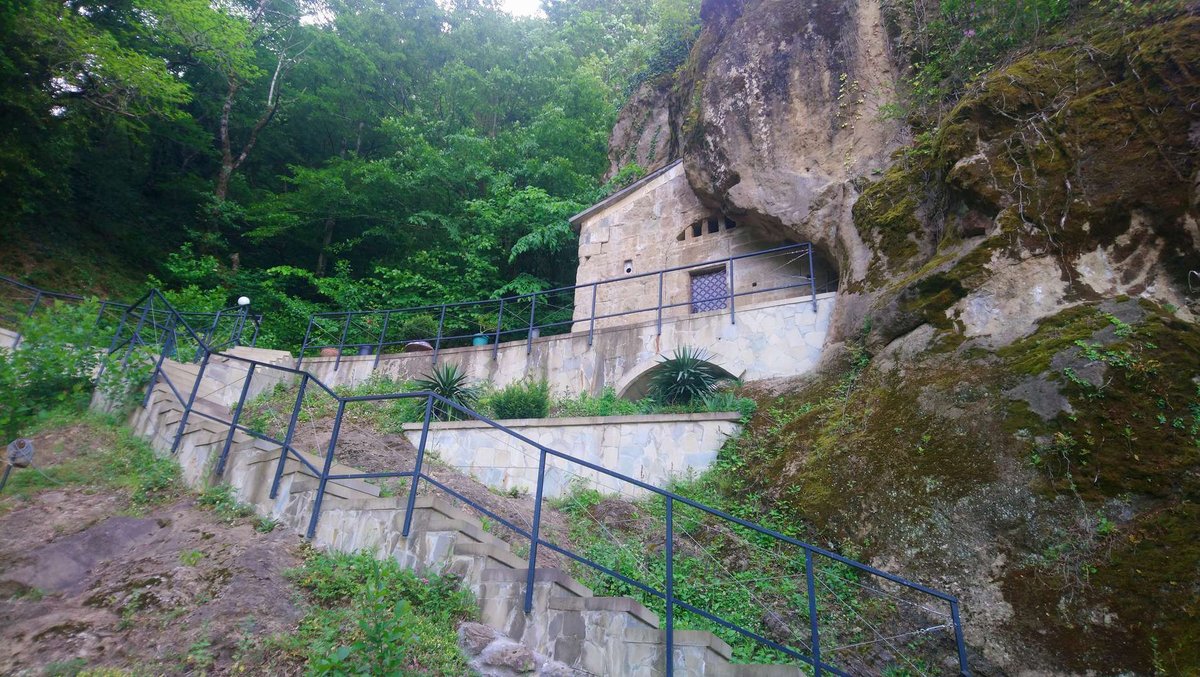
Guria Desert Fathers Monastery is located in Chokhatauri Municipality, near the village of Shua Ganakhleba. This place does not feel like a large monastery complex with a stream of visitors. Its character is different: stone, caves, a small church of Saint John the Baptist, green Guria around it and a sense of seclusion.
The monastery suits travellers already exploring Guria who want to add not only well-known churches, but also quieter religious places to their route. It is a good stop for a calm visit, a short pilgrimage and a closer look at a rock-shaped monastic space.
There are not many open details about this object. So it is better to see it honestly: not as a place with a detailed story written out at every step, but as a quiet monastic corner where much is read through the relief, caves, road and atmosphere.
📍 Where the Desert Fathers Monastery is Located
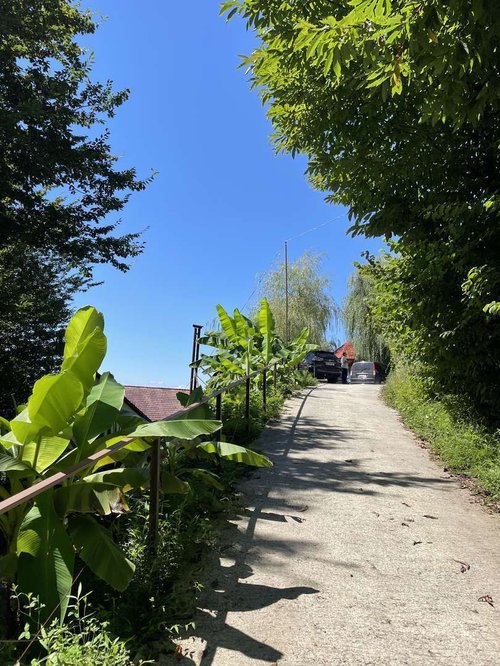
The monastery is located in Guria, in Chokhatauri Municipality, near the village of Shua Ganakhleba. For navigation, use the coordinates: 42.21910, 42.05798.
The nearest clear route landmark is Chokhatauri. From there, it is easier to plan the road towards the monastery and continue in the direction of Shua Ganakhleba. If you are travelling independently, save the point in advance, as mobile signal and navigation can be unstable in rural parts of the region.
This is not an urban attraction and not a place for a quick walk between cafés and museums. The road leads to a quieter part of Guria, where greenery, rock relief, monastery territory and small local roads come together.
The monastery fits well into a route through churches and monasteries in Guria. This way, the trip becomes not just a visit to one point, but part of a calm religious route through the region.
⛪ Why the Monastery is Called Udabno
The name is connected with the word “Udabno”. In Georgian, it means “desert”, but in monastic tradition this image is often linked not to sand, but to solitude, silence and distance from everyday noise.
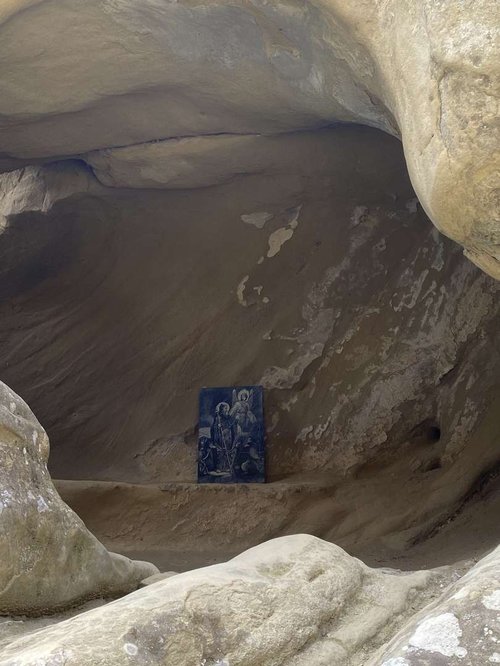
For this place, the name feels fitting. Rock caves, a stone church, a small temple and quiet surroundings create the impression not of a ceremonial monastery, but of a stricter space for prayer and seclusion.
There are other places called Udabno in Georgia, so when planning the trip, focus on the Gurian site near Shua Ganakhleba. For the route, use the object card, coordinates and Chokhatauri Municipality as your main references.
🕯️ The Church of Saint John the Baptist
The central point of the monastery is described as a small church of Saint John the Baptist. It is convenient to begin the visit there: first find the church, then look at how it connects with the rock, caves and surrounding space.
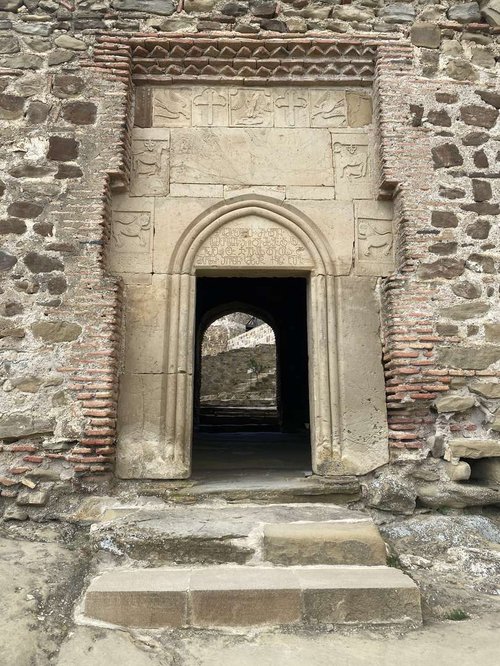
The church does not feel separate from the relief. The important combination here is stone, walls, entrances, shadows, caves and the quiet territory around them. This is what makes the monastery different from ordinary village churches in Guria.
A stone church in the rock is also mentioned nearby. Its exact dating remains open to discussion, so it is better not to call it ancient or medieval without additional verification. For visitors, something else matters more: the stone church strengthens the rock character of the site and makes the route visually more expressive.
⛪ Rock Caves and the Monastic Relief
Rock caves are one of the main features of the Guria Desert Fathers Monastery. They shape the mood of the place: there is no sense of a flat site where everything is visible at first glance. The space is read gradually, through stone, recesses, passages and shadow.
Places like this are better seen slowly. Start with the general view, then the Church of Saint John the Baptist, then the caves and stone sections nearby. In this order, the monastery opens not only as a religious site, but also as part of the natural landscape.
Do not expect developed tourist infrastructure. This is a quiet place where the value lies not in signs and arranged routes, but in the atmosphere itself: stone, greenery, road, silence and the feeling of being away from daily bustle.
📜 What is Known About the History
The history of Guria’s Udabno has been preserved only in fragments. According to descriptions of the object, the place is connected with the Church of Saint John the Baptist, rock caves and a stone church in the rock.
Some details connect the monastery with spiritual and book culture. These should be treated as part of the monastic tradition and the object’s description until a more detailed registry or church source is found.
The main point can be said without overloading the text: the monastery belongs to the quiet religious places of Guria, where not only the church buildings matter, but also the setting itself. Rocks, caves, the small church and the secluded location create an image of a place connected with prayer and solitude.
If additional sources appear with a precise dating of the stone church or a fuller history of the monastery, this section can be expanded. For now, it is safer not to add extra dates or turn debated details into firm facts.
🚗 How to Get to the Monastery
For the route, Chokhatauri is the easiest starting point. From there, you can drive towards Shua Ganakhleba and continue to the monastery coordinates: 42.21910, 42.05798.
Travelling by car or with a local driver is easier. It is better not to promise public transport directly to the object: open sources do not provide a reliable schedule that can be used as a practical instruction.
If you are travelling from Batumi, Kutaisi or Tbilisi, the monastery is best included in a wider route through Guria. This makes the road more logical: Chokhatauri, the Desert Fathers Monastery, other churches in the region or natural places nearby.
Save the offline map before the trip. In rainy weather and after heavy rain, check the road in advance. Comfortable shoes will also help, as the place is connected with rock relief and a natural setting.
The basic route landmark is Chokhatauri. From there, it is convenient to drive towards Shua Ganakhleba and continue to the monastery coordinates.
🙏 What to Consider When Visiting
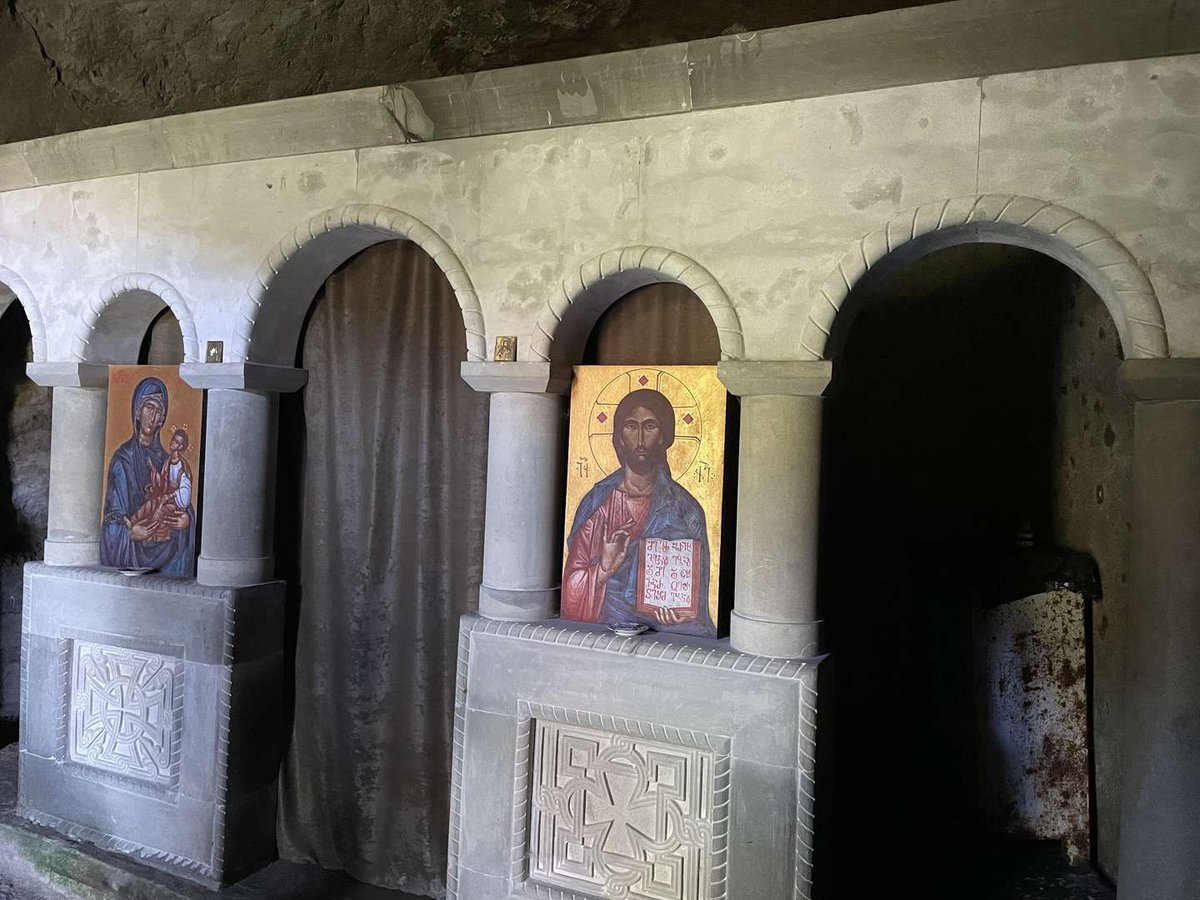
Monastic places in Georgia call for calm behaviour. Even if the object is small and little known, it is important to speak quietly, avoid disturbing people and not enter areas that look closed.
Choose modest clothing. Women may want to take a scarf, while men should avoid very open clothing. Comfortable shoes are useful because the place is connected with rocks, uneven relief and a natural setting.
Take photos carefully. General outdoor shots are fine if they do not disturb anyone. Photography inside the church, as well as photos of people, clergy or prayer, should be agreed on site.
Do not expect developed tourist infrastructure. Take water, save the map, check your phone charge and do not plan the visit too close to dark.
📸 What to See and Photograph
The first photo is best taken as a general view: the church, stone, greenery and approach to the monastery. This shows that the place is connected not only with architecture, but also with natural relief.

Then look at the rock caves. They help explain why the object feels secluded and strict. What matters here is not decoration, but the connection between the monastic space and the stone.
Pay special attention to the Church of Saint John the Baptist. Even if the church is small, it remains the central point of the route. Look not only at the façade, but also at how the church stands in relation to the rock and courtyard.
Overcast weather is not a problem. In Guria, soft light often helps you see the stone, greenery and silence of the place more clearly. The main thing is not to travel in heavy rain without checking the road.
🗺️ What to See Nearby
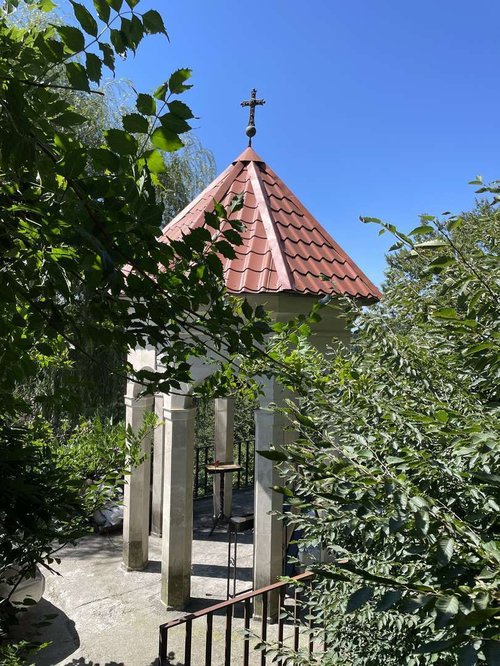
The closest logical combination is Chokhatauri and the villages of the municipality. If you are already travelling in this part of Guria, the Desert Fathers Monastery can become one of the quiet stops on the route.
To continue the religious theme, open the selection of churches and monasteries in Guria. This way, Udabno becomes part of a route through the region’s churches and monasteries, not a random point on the map.
For a wider day in the region, the catalogue of things to see in Guria will be useful. You can add natural places, small churches and routes through Chokhatauri Municipality.
Over to you
Have you visited the Guria Desert Fathers Monastery or are you only planning the trip? Tell us what the road was like, whether it was easy to find the place, and what you remember most: the church, caves, stone, silence or the view around. Your review on Madloba will help other travellers prepare for the route.
The information in this article is current as of June 2026. Before travelling, check the road, weather and visiting conditions at the monastery, especially after rain and outside the active tourist season.
❓ Frequently Asked Questions
The monastery is located in Chokhatauri Municipality, near the village of Shua Ganakhleba. Coordinates for navigation: 42.21910, 42.05798.
The easiest route is from Chokhatauri, by car or with a local driver. Before travelling, save the map and check the road.
Descriptions of the object name a small Church of Saint John the Baptist as the central point.
Yes, rock caves are mentioned near the church. They make the place visually different from ordinary village churches in Guria.
Open sources describe the history of the object only in fragments. The stone church in the rock is mentioned as an object with debated dating, so exact dates should not be stated without additional verification.
Calm outdoor photos are fine if they do not disturb anyone. Photography inside the church and photos of people should be agreed on site.
Comfortable shoes, water, an offline map and a charged phone. If you travel during a rainy period, add extra time for the road.
Calmly and respectfully: do not make noise, do not enter closed areas, do not disturb people and choose modest clothing.
If you are interested in monasteries in Guria, rock religious places or quiet routes, the object can be included in your trip. For a regular travel day, it is more convenient to combine it with Chokhatauri and other places in the region.

2 comments
Log in to leave a comment
But wait, how’s the trail for someone who’s not super fit? I wanna enjoy the journey without dying halfway up! Got any tips for tackling that trek? Cheers!