



Street Art and Mosaics of Batumi: where to find 50+ murals, graffiti and mosaics
Batumi differs noticeably from Tbilisi when it comes to street art. Tbilisi's scene is more uniform, mainly contemporary murals from recent years. Batumi has more layers. Soviet smalt mosaics from the 1970s and 80s still hold on the façades of residential buildings, bus shelters, schools and community centres. Alongside them are the works of Georgian artists from the 2010s, and fresh graffiti sits alongside those. That layering of eras is what makes Batumi street art unlike anything else in Georgia.
Batumi's mosaics took shape in the late Soviet period: monumental decorative panels decorated façades following a standard template, and some have survived to this day. In parallel, the 2010s brought the first murals from local and invited artists. Since 2013 the city has hosted a graphic arts festival every year, which explains the sharp increase in quality work on the walls.
The best way to look for street art is to focus on four districts: Old Batumi with Gamsakhurdia, Parnavazi and Gorgasali streets, where the concentration is highest; the boulevard promenade and Dolphinarium area with its marine themes; 6 May Park and the surrounding blocks; and Ortabatumi with Soviet mosaics on bus shelters and façades.
🧱 Soviet Mosaics of Batumi
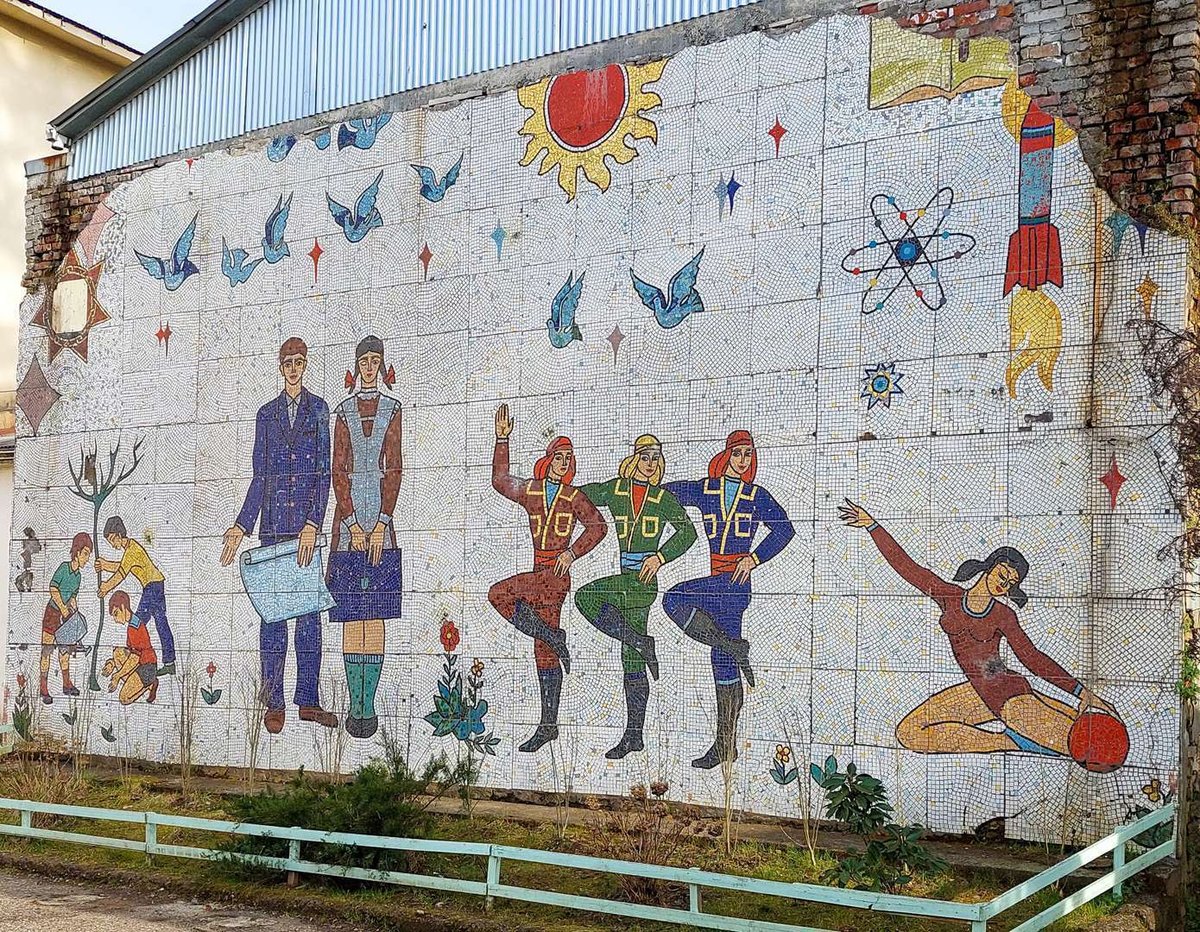
This is the main layer of local street art, and what sets Batumi apart from other Georgian cities. The Soviet mosaics are made from smalt or ceramics and have survived remarkably well: vivid colours, large figures, themes characteristic of the era (sea, labour, children, nature). In recent years they have become sought-out points of interest for photographers and lovers of retro aesthetics.
Mosaic at Piazza Square
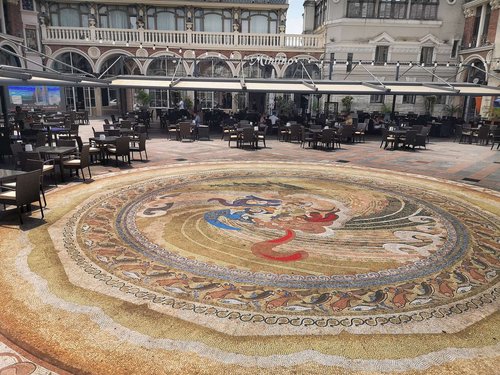
Piazza Square sits in the centre of Old Batumi, close to the promenade. Its main feature, known to everyone who has ever walked here, is the figurative mosaic on the floor of the square. In scale it is an exceptional object: it is described as the largest figurative mosaic in Europe. The square was conceived as an Italian-style quarter with arcades, cafés and restaurants, and the mosaic, completed in 2010, became its focal point.
The designs were created by Nathalie de Pita-Amirejibi, and the mosaic was manufactured in Abu Dhabi before being installed here. The subject matter is dense and multi-figure; you can spend a long time looking at the details. People often sit around the square with coffee, and the mosaic is literally walked on, which gives it a lively, non-touristy character.
Address: Piazza Square, Old Batumi, exit to the promenade. Catalogue card: Mosaic at Piazza Square.
Dolphin Mosaic
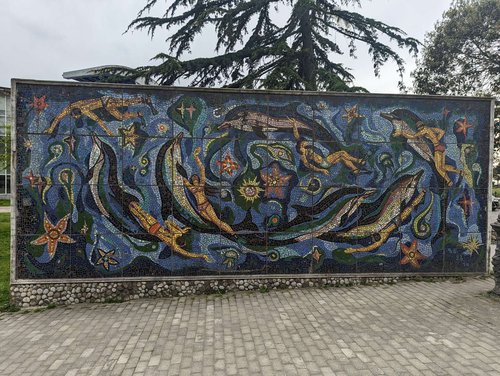
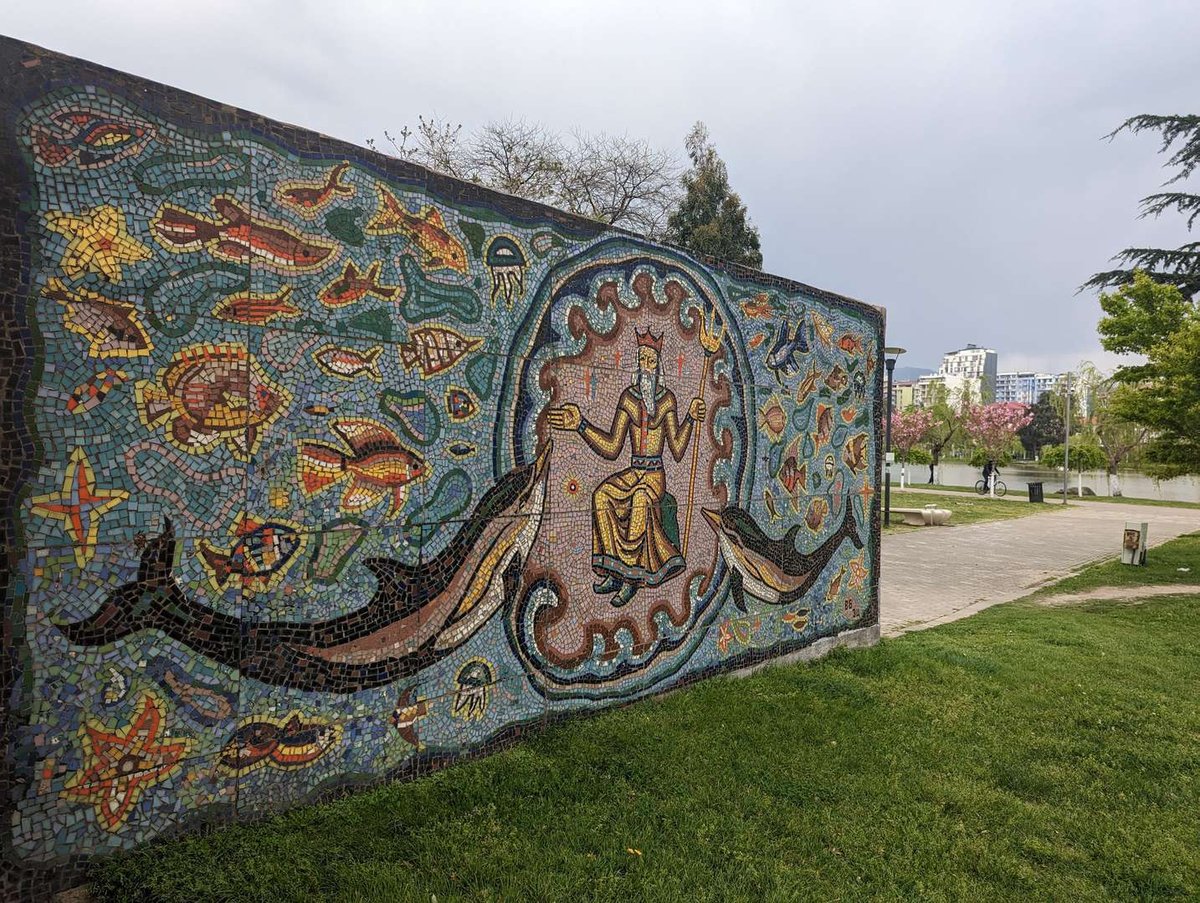
Next to the Batumi Dolphinarium, on the wall of a building, is a surviving smalt mosaic with a marine theme: dolphins, Poseidon or related imagery. This is a typical example of Soviet monumental decoration for public entertainment buildings. Its condition is decent, though individual fragments need attention.
Look for it during a walk along 6 May Park and the Dolphinarium area: several other works with marine motifs are close by, making this small stretch one of the most thematically coherent. Catalogue card: Dolphin Mosaic.
House of Culture Bonn Mosaic
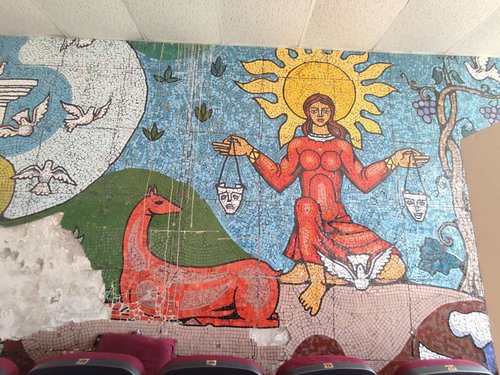
One of the lesser-known but characteristic Soviet objects. The mosaic decoration on the façade of a building that in Soviet times served as a community centre (Dom Kultury) has survived on its walls. The imagery is typical of the era: generalized figures, symbols of labour and leisure, the saturated colour palette of smalt. The building is in a residential area, so a visit here is best suited to those who are purposefully seeking out Soviet heritage.
For the address, find it in the catalogue: House of Culture Bonn Mosaic.
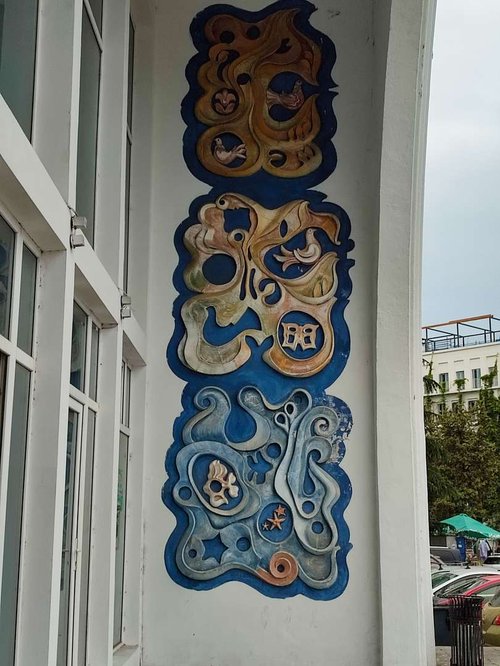
Soviet Bas-Relief at the Sea Terminal
The Batumi Sea Terminal is itself a Soviet building, and on its façade a bas-relief has survived. Unlike the colourful mosaics, this is a monochrome three-dimensional work in the style characteristic of Soviet official art: enlarged figures, generalised gestures, marine and labour themes. Best viewed during a walk along the promenade towards the port. Catalogue card: Soviet Bas-Relief at the Sea Terminal.
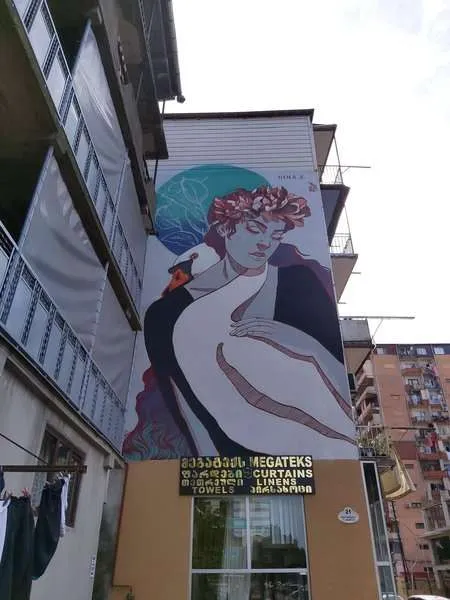
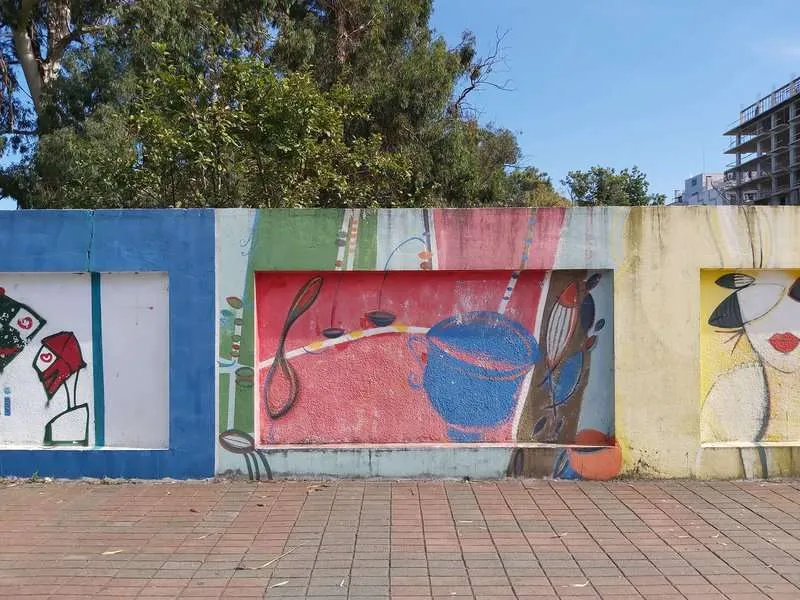
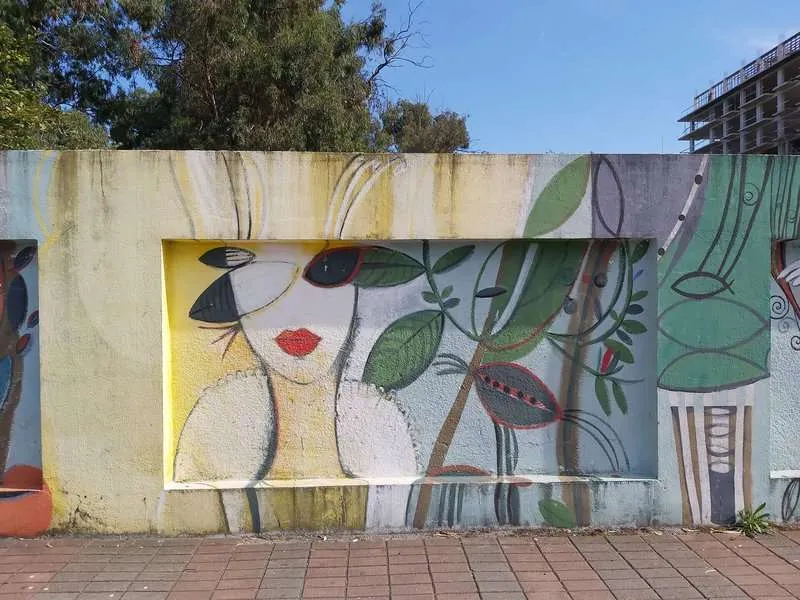
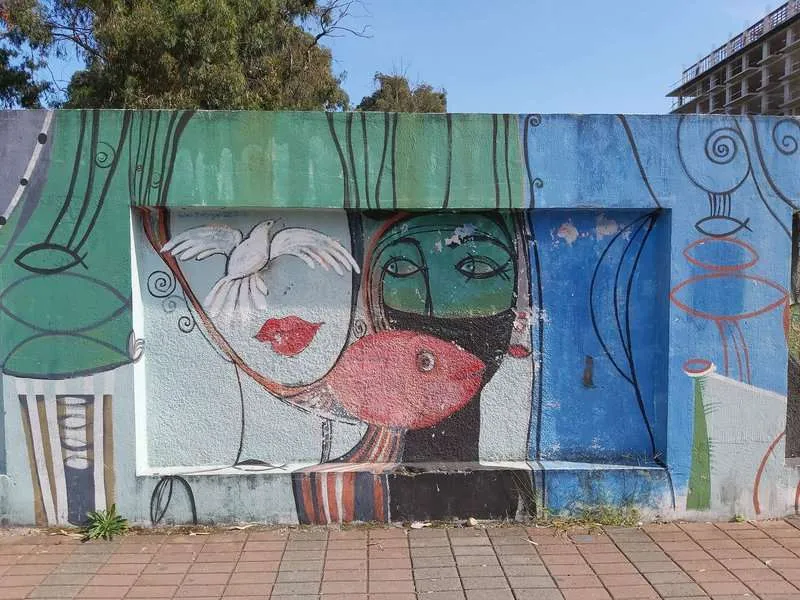
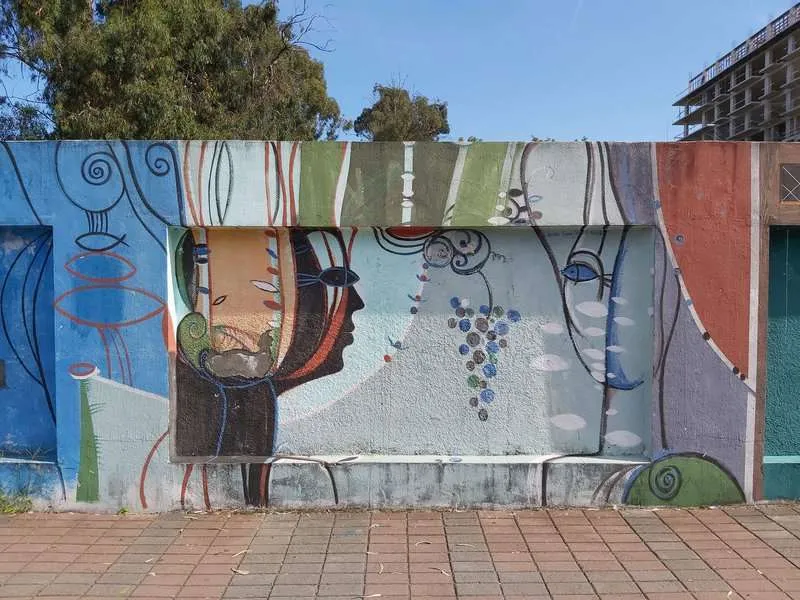
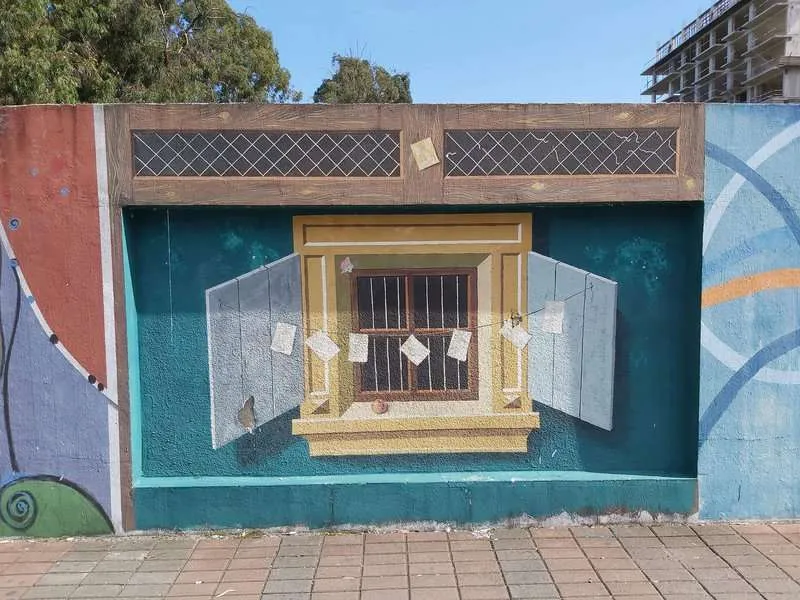
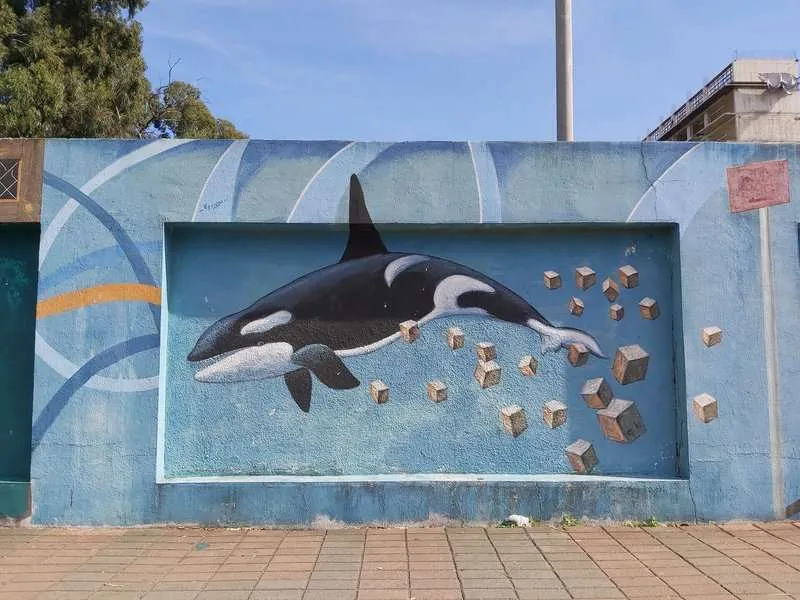
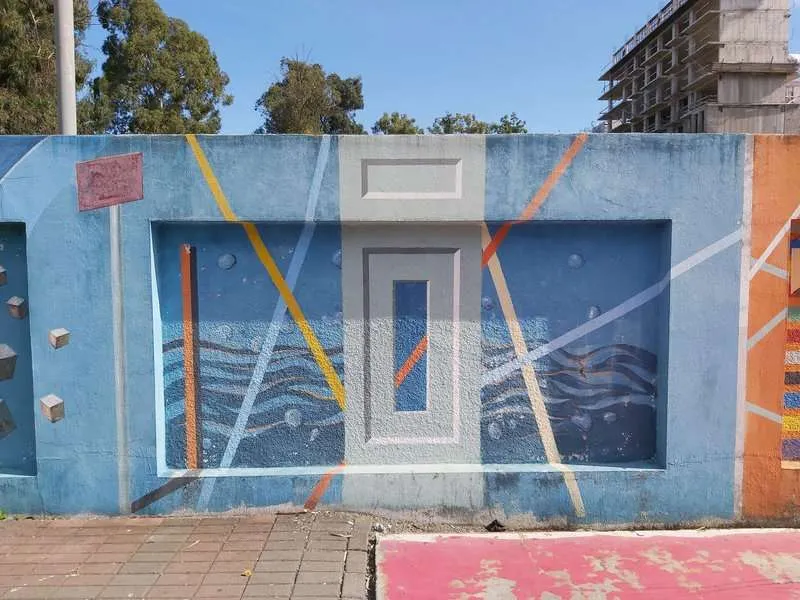
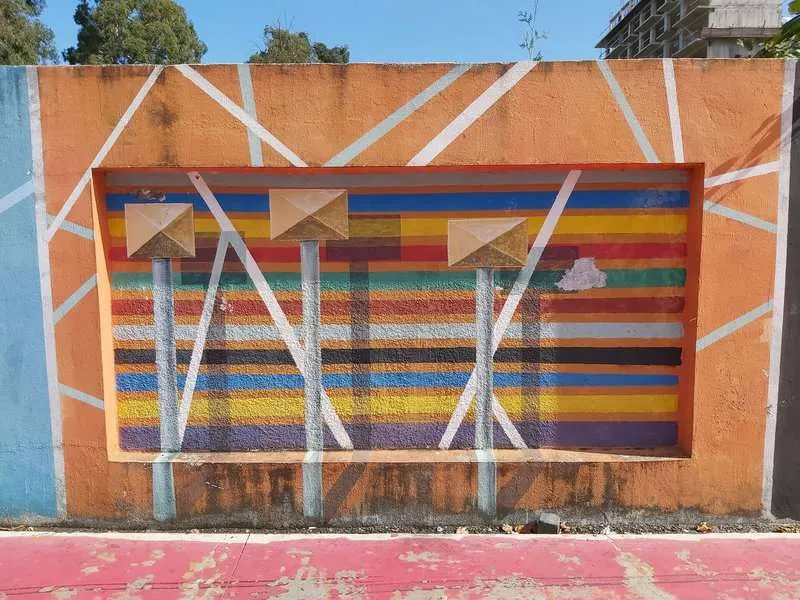
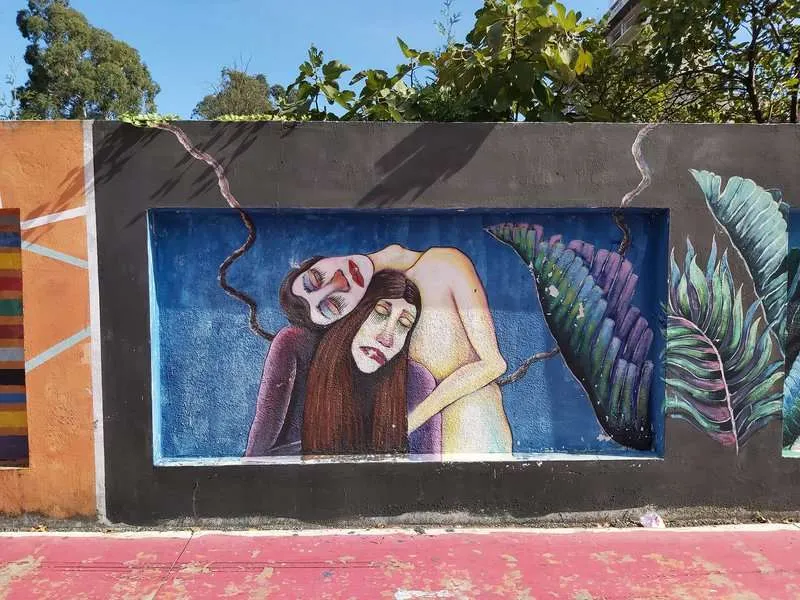
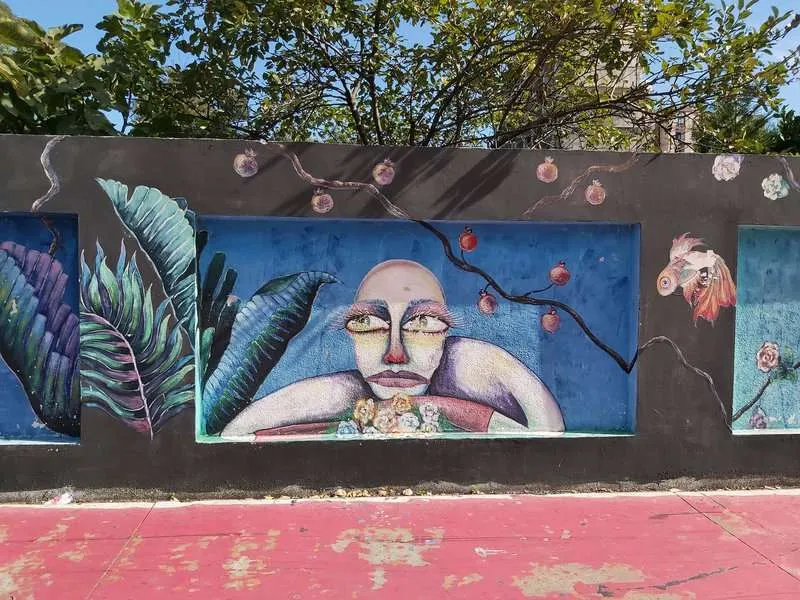
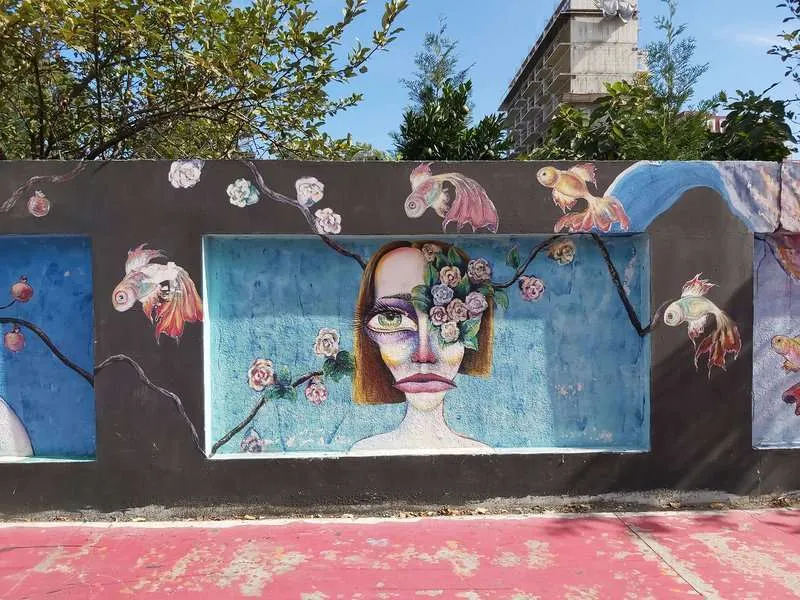
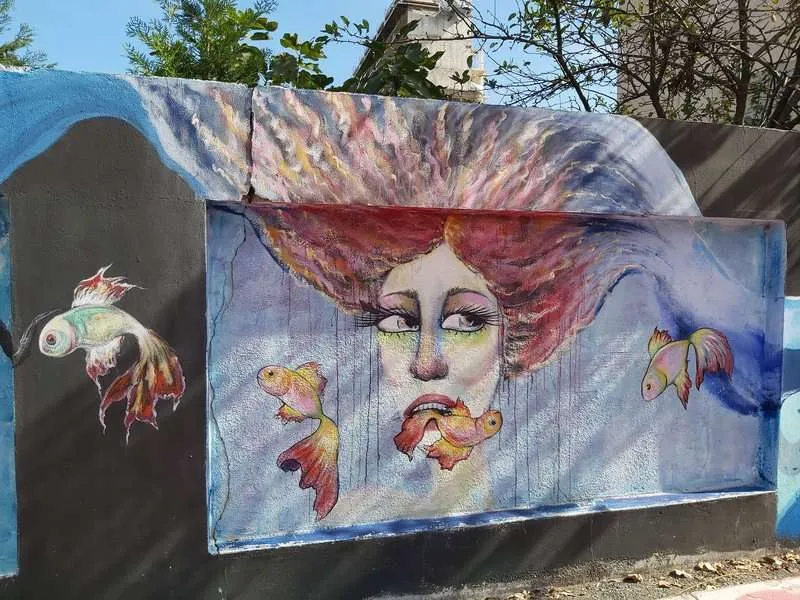
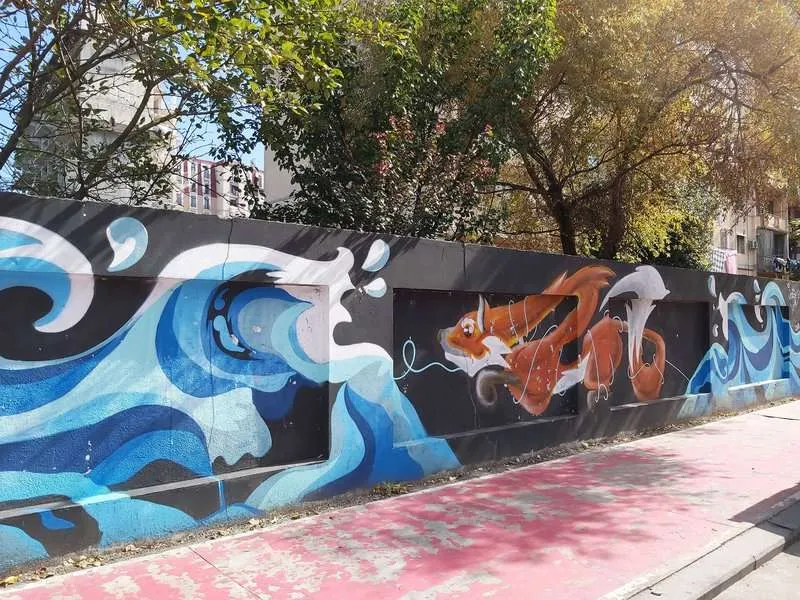
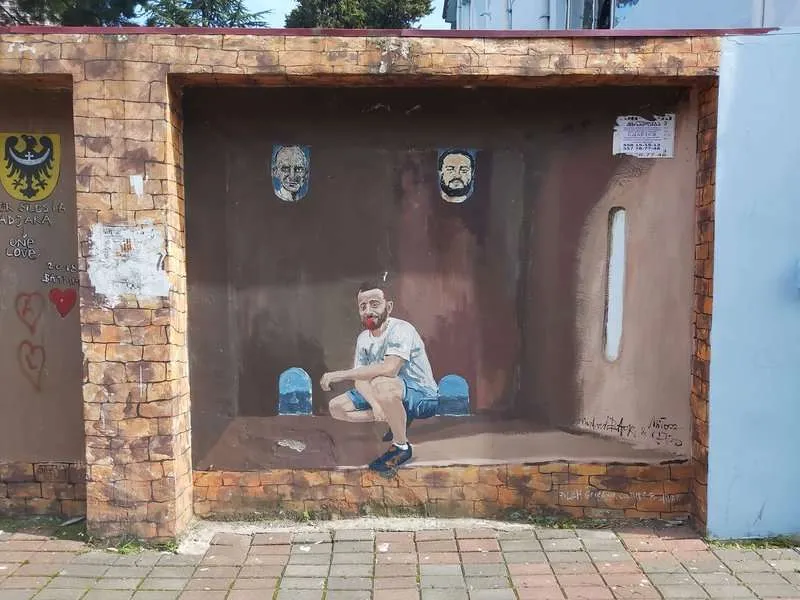
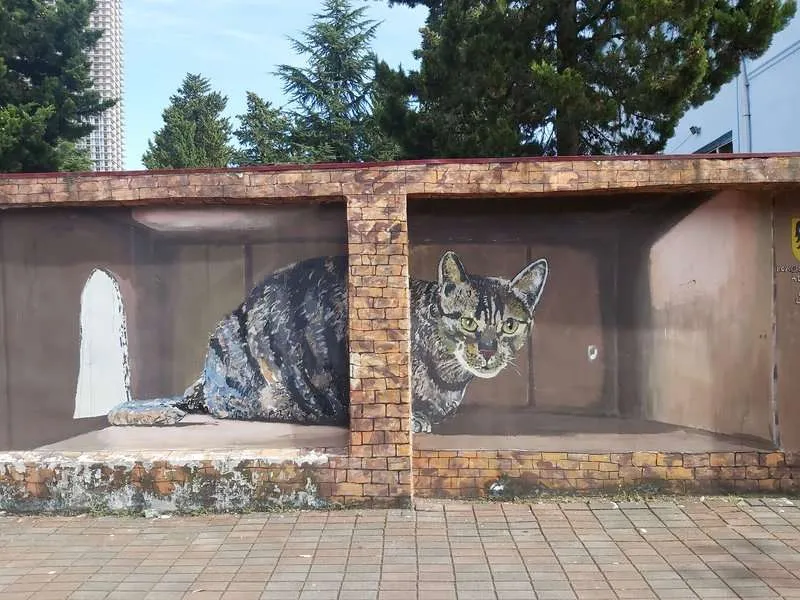
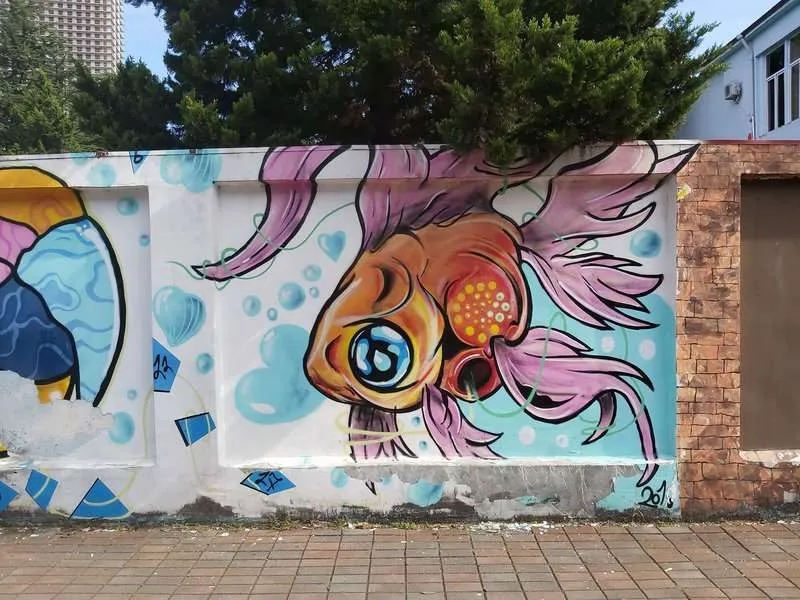
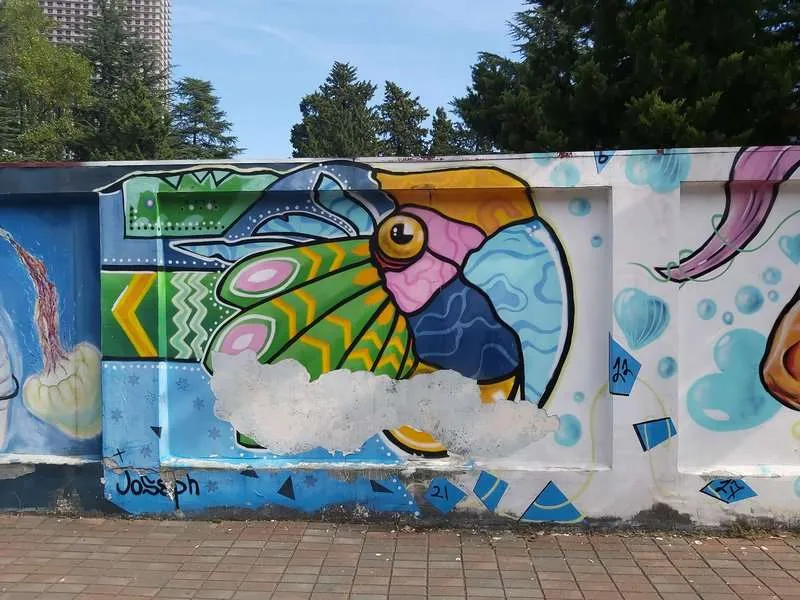
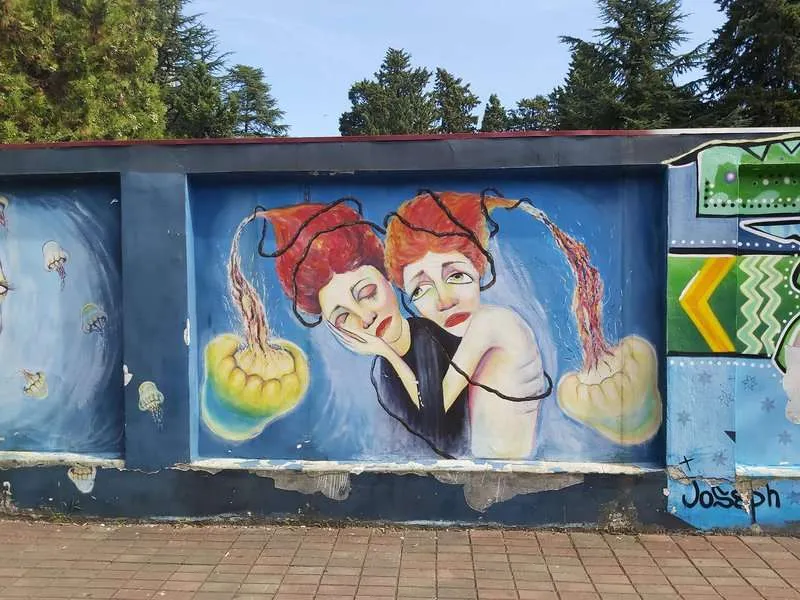
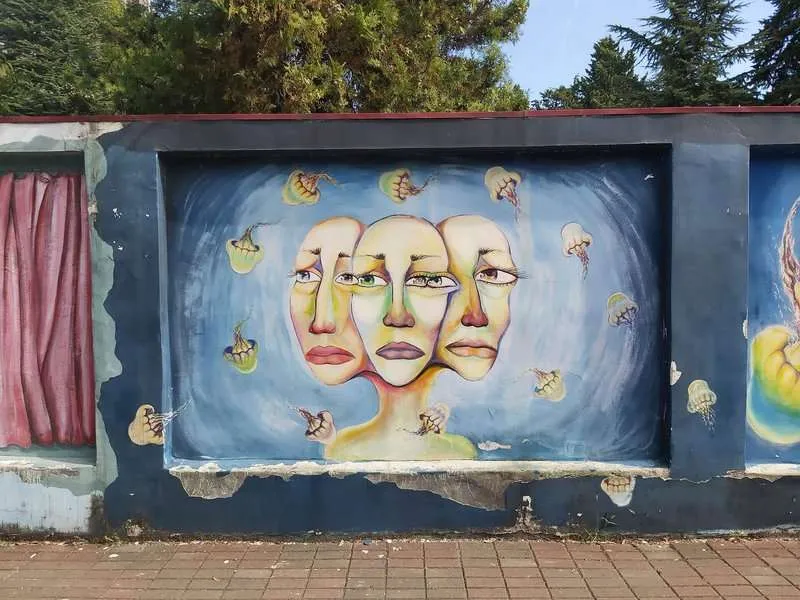
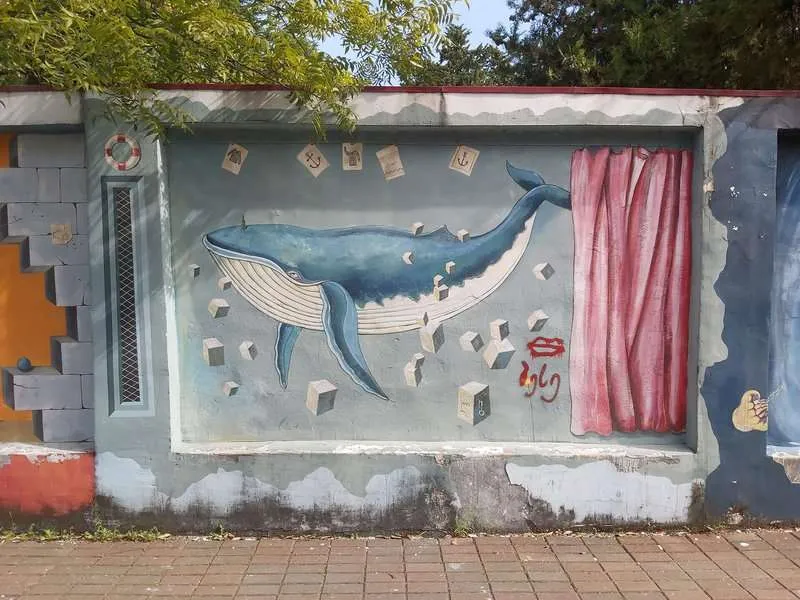
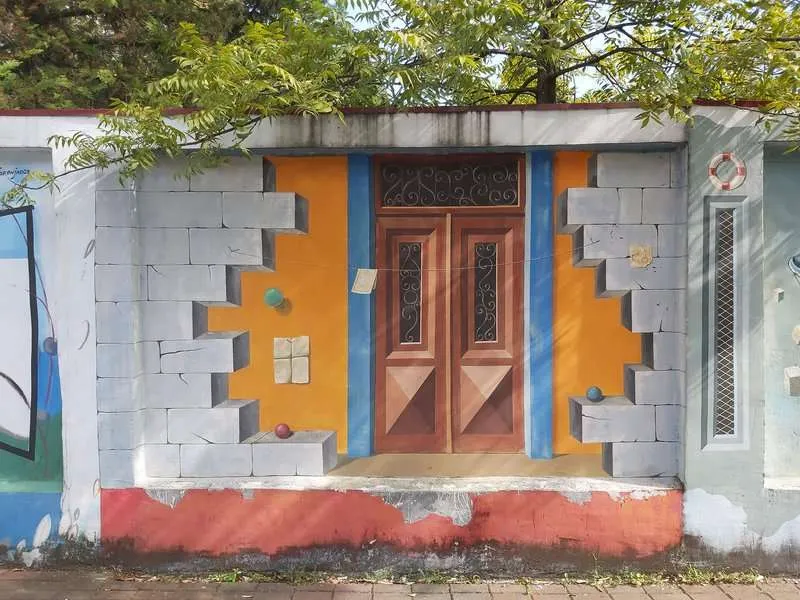
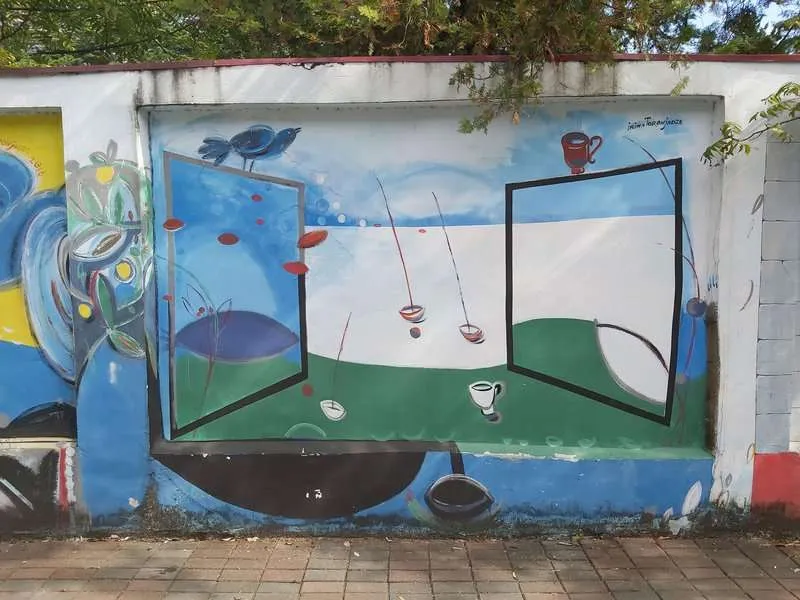
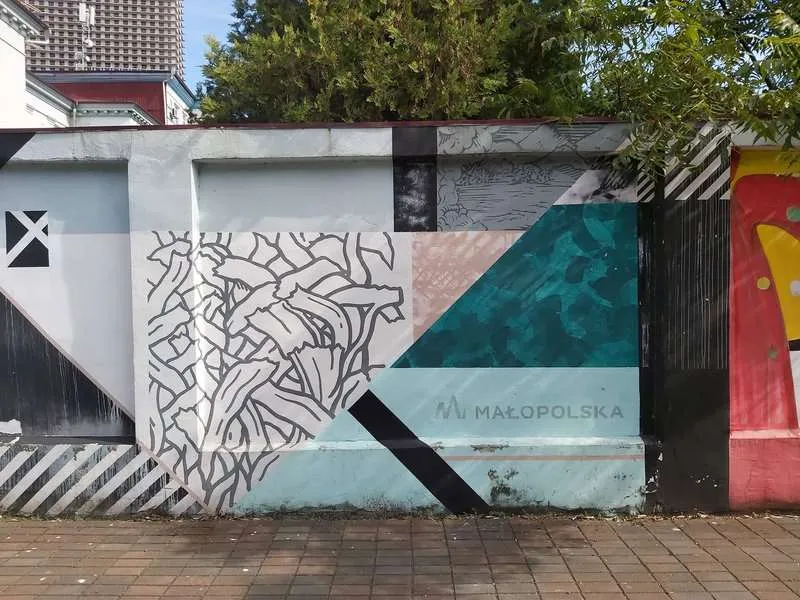
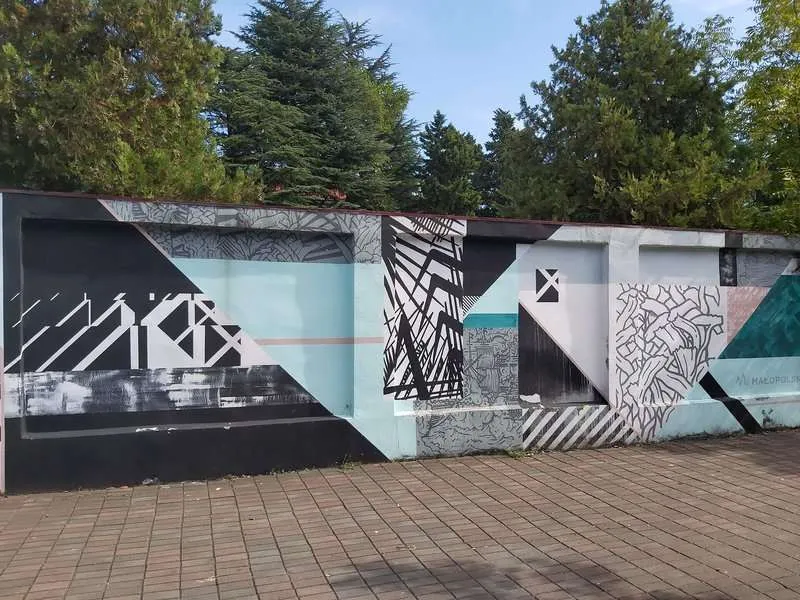
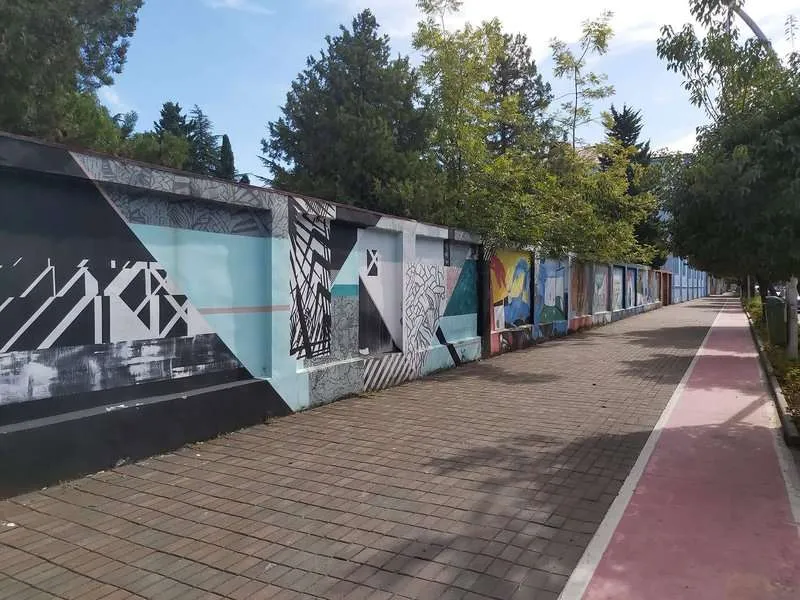
Each Soviet mosaic has its own catalogue card: Bus Stop Ortabatumi, Children mosaic, School façade, Gogol Street façade, Kindergarten fence, Soviet Dolphin mosaic. All Soviet mosaics with addresses in the Batumi street art catalogue.
🖼️ Contemporary Murals of Batumi
The wave of contemporary murals in Batumi rose in the 2013-2015 period and has not subsided. The Batumi Graphic Arts Festival brings artists from different countries every summer, while local artists add new works independently. Today there are more than twenty significant contemporary murals.
Kupata the Dog
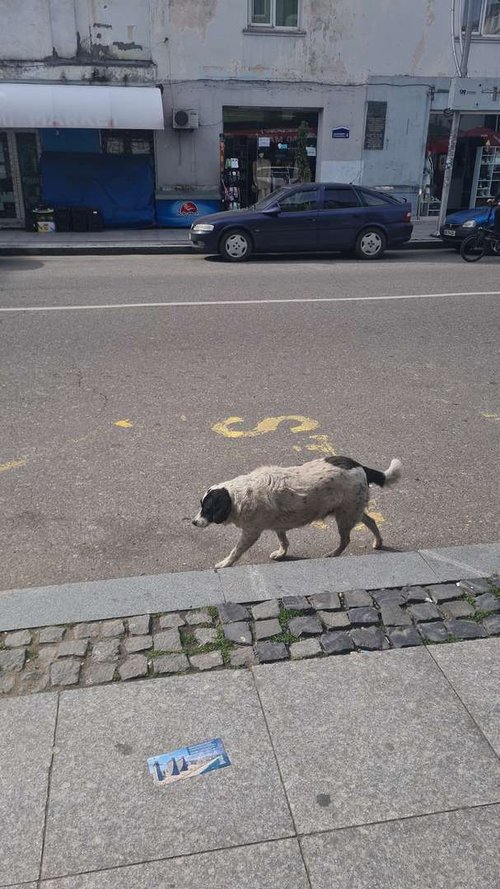
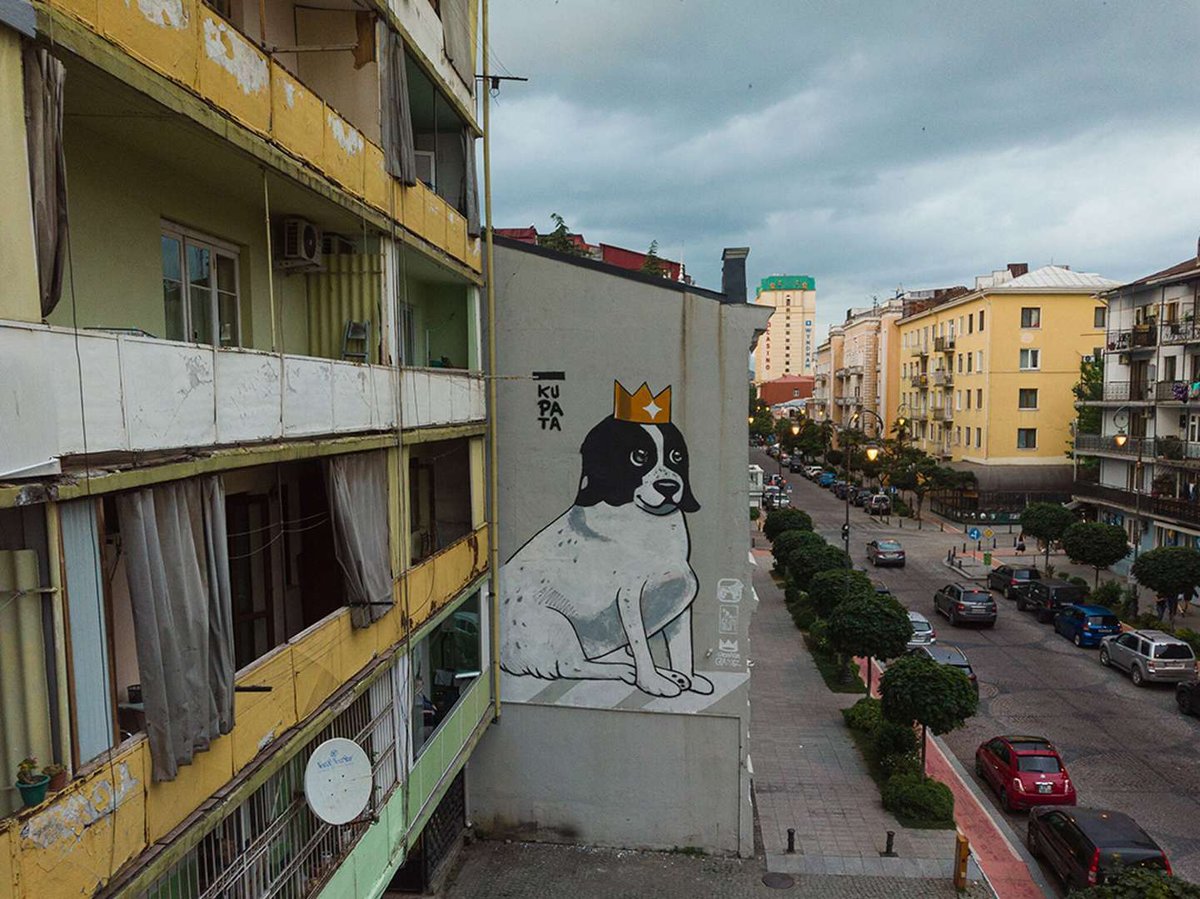
The mural depicting a red-brown stray dog with a golden crown on Memed Abashidze Street has been one of the most sought-out pieces of street art in Batumi for several years. Kupata's story is simple and at the same time touching: an ordinary stray dog, named after a Georgian sausage by a local butcher, spent several years independently "guarding" a pedestrian crossing nearby. When children passed, she would step onto the road, bark at cars and wait until the schoolchildren had crossed.
In 2020 a video of Kupata gathered tens of millions of views worldwide. American television network ABC devoted a report to her. Batumi gave her an honorary kennel inscribed "People's Choice." That same year artist George Gamez painted her portrait with a golden crown on Abashidze Street. One political party officially nominated Kupata as a candidate for Prime Minister of Georgia.
In October 2023 Kupata died. The Lovely Kupata page on Facebook announced it and continues as a platform for helping stray dogs in Batumi. In 2025 an animated film about her was released in Georgia. The mural still stands, and people come to it now as a kind of memorial.
Address: Memed Abashidze St, near Rhino Coffee. Catalogue card: Kupata Dog Mural.
Batman at 6 May Park
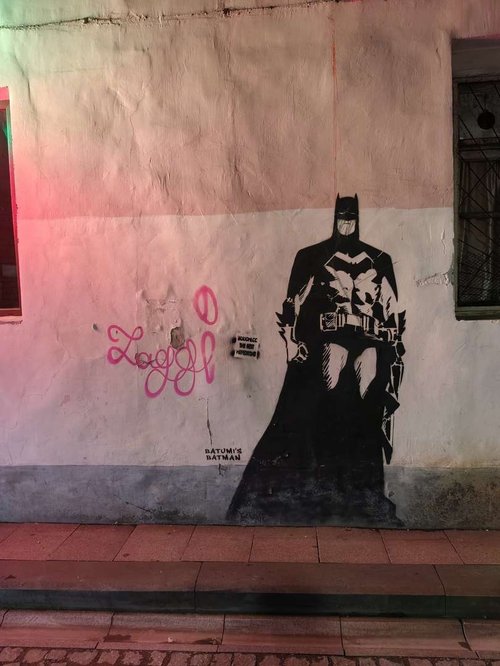
One of Batumi's most recognisable murals is located near 6 May Park, by Vakhtang Gorgasali Street. The "Batman" here is not a literal caped superhero but a character embedded in the Batumi cityscape, with the recognisable traits of 2010s urban street art. The work has attracted a wide audience: the query "batman batumi" is consistently one of the most popular searches relating to street art in the city.
6 May Park is one of the oldest in Georgia, founded in 1881. Its grounds include the Dolphinarium, Nurigeli Lake and a small zoo. The Batman mural has become a natural waypoint on this route: from the park you can continue to the nearest works with marine themes.
Address: Vakhtang Gorgasali St 6, near 6 May Park. Catalogue card: Batumi Batman Mural.
Khvicha Kvaratskhelia
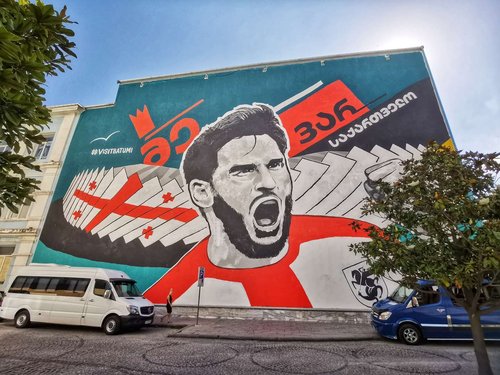
On the wall of Batumi Shota Rustaveli State University, a large portrait of Khvicha Kvaratskhelia: captain of the Georgian national team, who grew up in Batumi and began his career at Dynamo Batumi. The mural spans several floors of the façade. In scale and degree of recognition it has become one of the main symbols of Batumi in recent years. The painting took about ten days.
Address: Rustaveli St, on the university building, near the Hilton Hotel. Catalogue card: Khvicha Kvaratskhelia Mural.
Underwater World on Javakhishvili Street
On a residential building on Javakhishvili Street, an artist has painted a large underwater scene: fish, jellyfish, the atmosphere of Black Sea depths. This is one of several "marine" murals in Batumi that look naturally at home in a seaside city. The work is executed in a realistic style with a vivid colour palette. Catalogue card: Underwater World on Javakhishvili St.
Individual catalogue cards for the gallery: Man with Mule, Mermaid, Chill Flamingo, Girl with Swan, European Sturgeon, Rebirth.
Other notable contemporary murals: Sea Selfie by Dr. Love on Ninoshvili St near the Hilton; Meama Coffee mural; Fishermen (David Samkharadze, Gorgasali St 19); Fox and Pink Sheep (Mishiko Sulakavari) in the centre. The full list of 30+ contemporary murals with addresses is in the catalogue.
🎭 Graffiti and Street Art Objects
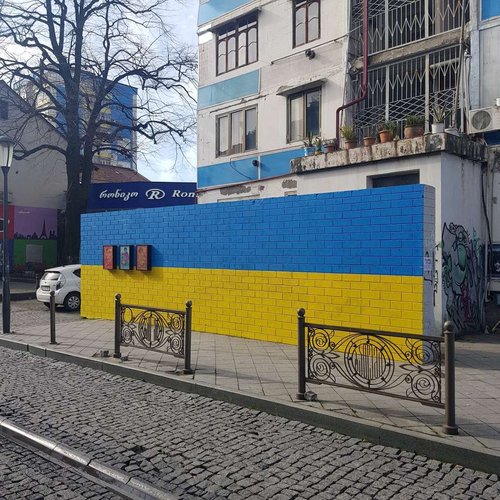
Ukrainian Flag Graffiti
One of the most visible politically motivated works in Batumi. The image of a Ukrainian flag appeared in 2022 as a sign of solidarity: Georgia received a large number of Ukrainian refugees, and this graffiti reflects one part of the city's response. The work is neatly executed and covers a substantial wall surface. Catalogue card: Ukrainian Flag Graffiti.
Footballers Graffiti on Gamsakhurdia Street
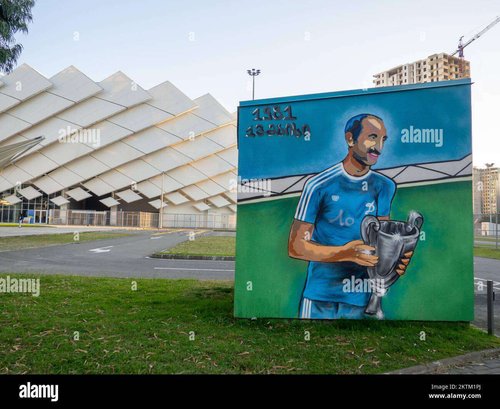
On one of the walls of Gamsakhurdia Street, several stylised footballer figures. The work is in the genre of sports street art: dynamic poses, flags, the atmosphere of a stadium stand. Catalogue card: Footballers Graffiti.
Calligraphy in Batumi
Several works in Batumi use Georgian calligraphy as their primary expressive element. This is a rare genre in Georgian street art: Mkhedruli script in monumental scale looks unexpected and striking. A few such works are located in the city centre. Catalogue card: Calligraphy.
Also worth finding: the Banksy-style Corn Seller (authenticity not confirmed, but the legend draws visitors) and the Black Cats drawings in the city centre.
🎨 Who Creates Street Art in Batumi
The first important context: Batumi's street art emerged along two parallel paths. Soviet mosaics were made by anonymous craftspeople at state decorative enterprises: the makers were professionals, but authorship in the Soviet tradition was not recorded.
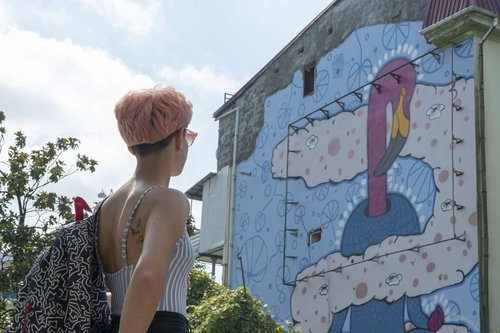
Contemporary works belong to specific people. From local artists, Masho Margishvili (Masholand) stands out, her Chill Flamingo having become one of the symbols of Batumi. Nina Khurtsilava (Nina K.) specialises in poetic female imagery. Of Georgian but non-local artists, Tamoonz (Tamuna Tsakhnakia) from Tbilisi painted the Mermaid, and artist Dante created the European Sturgeon.
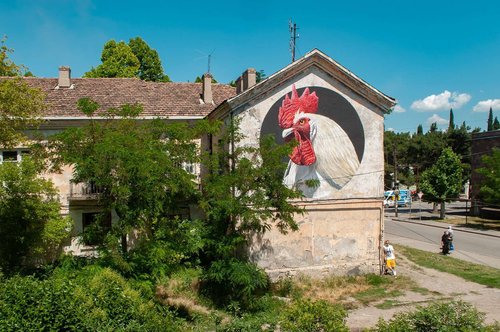
From international artists: German Matthias Mross (Urban Cowboys series) worked in Batumi in 2019; Sepe, Krashkid, Kera1 and other festival participants left works in different years.
The Batumi Graphic Arts Festival has run since 2013, usually in August: artists from dozens of countries arrive and work alongside Georgian painters. Many of the landmark works appeared during this period.
Over to you
Found a mural in Batumi that grabbed you? Tell us in the comments where it is and what makes it special. If you have spotted new works not yet in the catalogue, that is equally valuable information 🎨
❓ Frequently asked questions
More than 50 objects: modern murals, graffiti, mosaics and Soviet bas-reliefs. The full list with addresses is in the Batumi street art catalogue.
The densest zone is the centre — Gamsakhurdia, King Parnavazi, Gorgasali streets. The second area is by the sea, near the Dolphinarium and Sea Terminal.
Yes, Soviet smalt mosaics and bas-reliefs survive — on bus shelters, school façades, in Ortabatumi and at the Sea Terminal.
There's a "Corn Seller" stencil often attributed to Banksy, but independent sources don't confirm its authenticity. It's more accurate to call it a Banksy-style work.
Largely thanks to the Batumi Graphic Art Festival (since 2013): every summer artists from different countries come to the city and work alongside Georgian painters.
Nothing — everything is on the streets, accessible at any time. No guided tour required; the main spots take 2–3 hours on foot.
The marble figurative mosaic at Piazza Square — said to be the largest figurative mosaic in Europe, laid in 2010.
From the street — freely. But many works are in courtyards: don't enter private property without permission.
Street art is a living environment — works appear, are restored and sometimes painted over. Information is accurate as of 1 June 2026.

4 comments
Log in to leave a comment