




🏰 Partskhisi Fortress: Ruins of a Medieval Citadel above the Algeti River
🏰 What to Know About Partskhisi Fortress
The ruins of a medieval fortress in Tetritsqaro municipality, on a hill above the Algeti River, about 43 km from Tbilisi. First mentioned during the reign of King Bagrat IV (from 1027), though the walls likely stood even earlier.
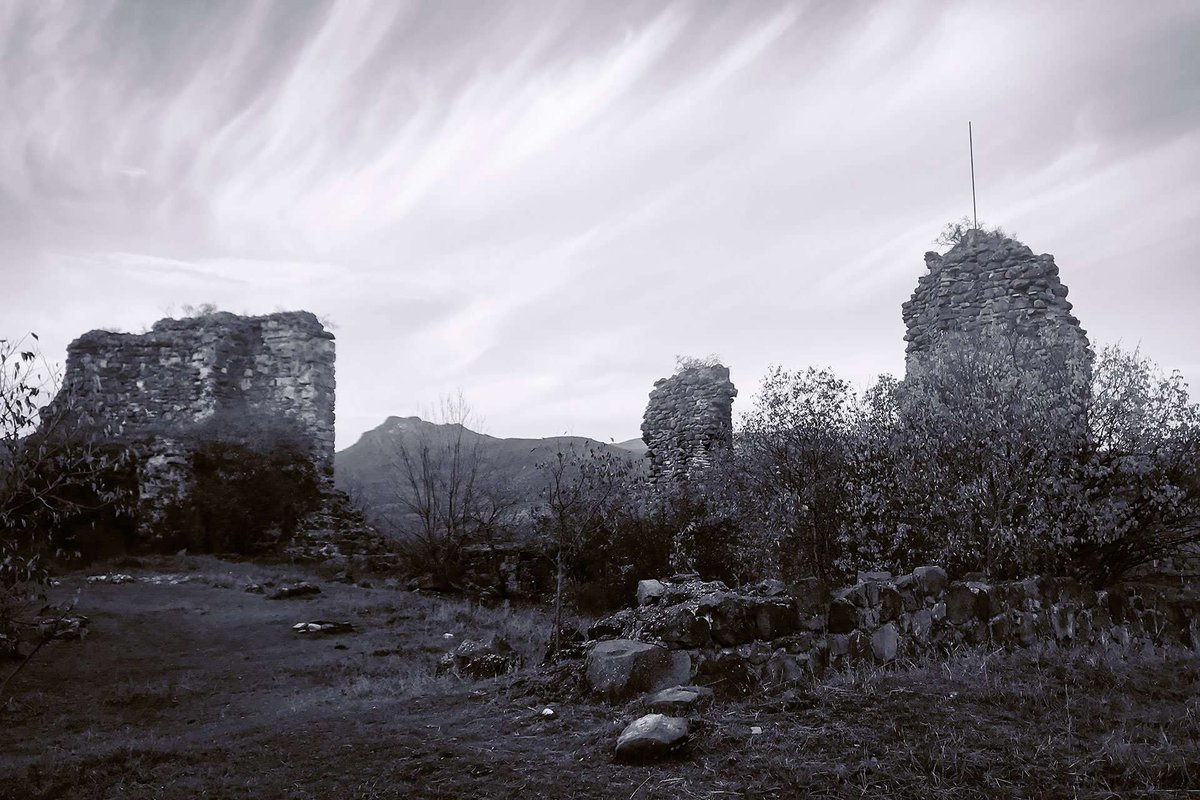
High on a hill, to the left of the Algeti River, in Tetritsqaro municipality in Kvemo Kartli, stand the ruins of Partskhisi Fortress. The site stays silent about its exact origins: no source records when construction began, and the first written mention dates to the reign of King Bagrat IV, who took the throne in 1027. That only confirms the fortress already existed by then, not when it was actually built.
The location was no accident: the fortress sits on one of the region's main roads, and from its highest point several other strongholds of Kvemo Kartli come into view at once, Birtvisi Fortress, Orbeti and part of Kojori. That vantage point made Partskhisi a convenient place to keep watch over the surrounding land, whether over trade routes or approaching threats.
🗺️ Partskhisi Fortress on the Map
Directions in Google Maps📜 History: From Bagrat IV to the Capture of King Simon I
Archaeological digs around Partskhisi have turned up material from the Stone Age, the Bronze Age, antiquity and the early medieval period, evidence that the area was continuously settled across many centuries. In written sources, the village and its fortress are first mentioned during the reign of King Bagrat IV.
Partskhisi is tied to two significant battles in Georgian history. In 1074, King George II of Georgia defeated the treasurer Sarang here. The second battle, in 1569, ended in tragedy for the Georgian side: King Simon I of Kartli was captured by Qizilbash forces (Persian troops) as a result of betrayal by Kakhaber Korghanashvili. The traitor himself was later seized by Sachino Baratashvili and thrown from the cliff.
The village and fortress also appear in several significant Georgian chronicles: Vakhushti Bagrationi's "Description of the Kingdom of Georgia", the "Chronicle of Kartli" ("Kartlis Tskhovreba"), the "Life of King David", Beri Egnatashvili's "Life of New Kartli", and Archil's "Dialogue Between Teimuraz and Rustaveli". The exact date the fortress itself was built remains unknown even to historians.
🏛️ What Survives: the Citadel, the Gate and a Tunnel Legend
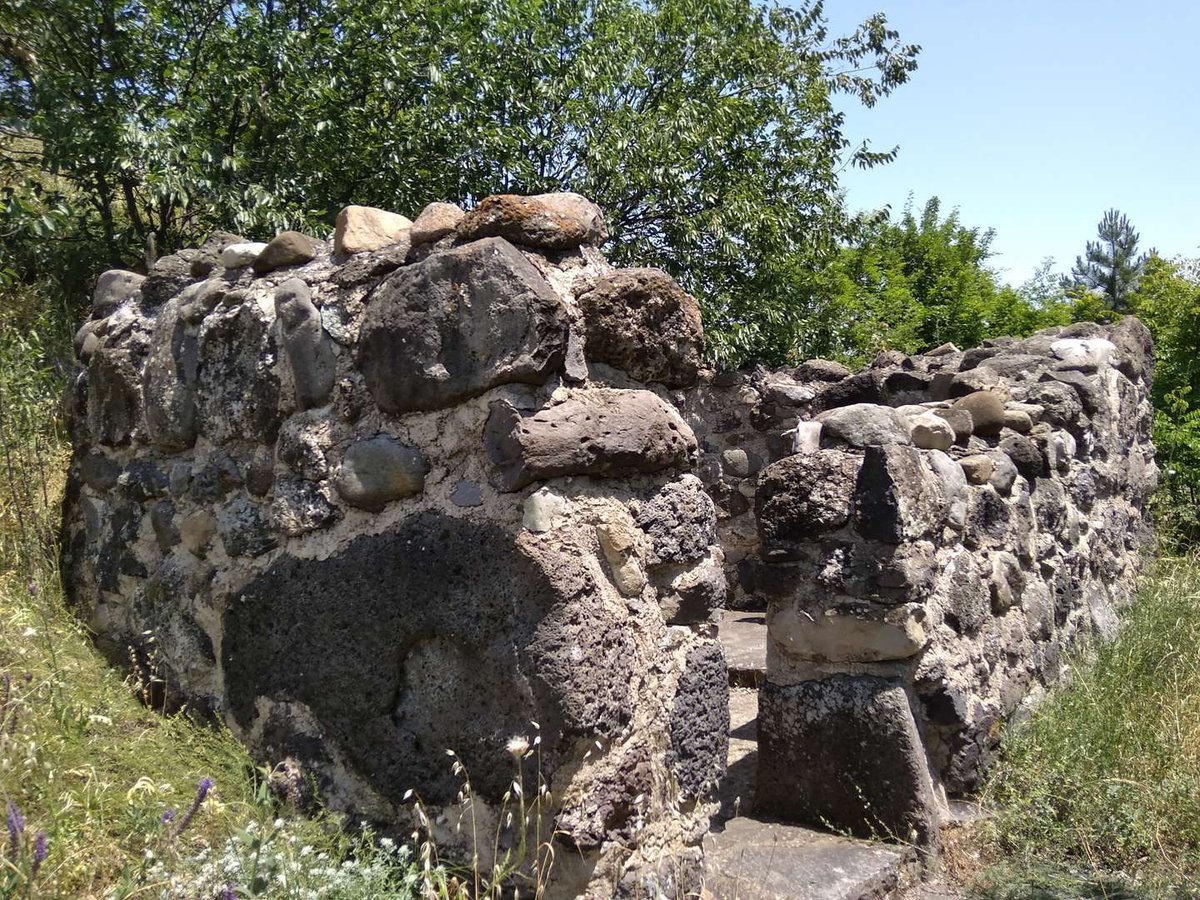
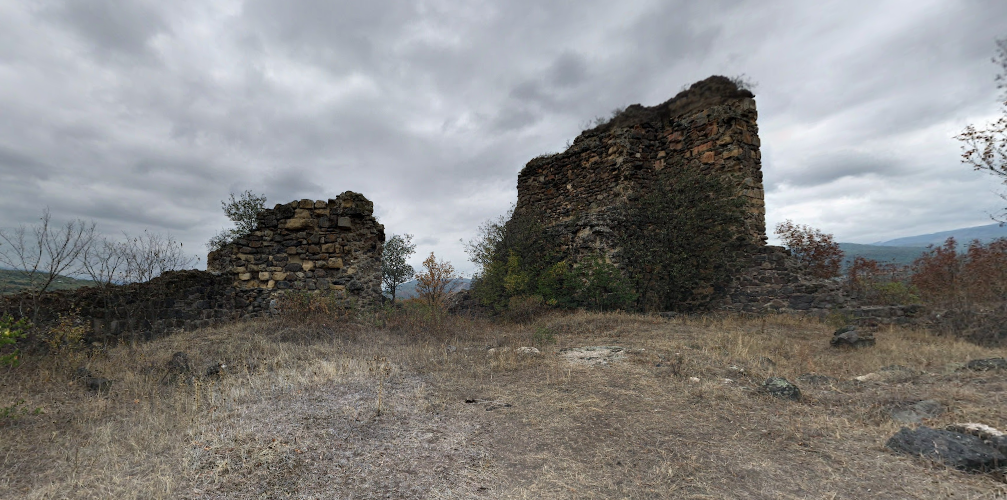
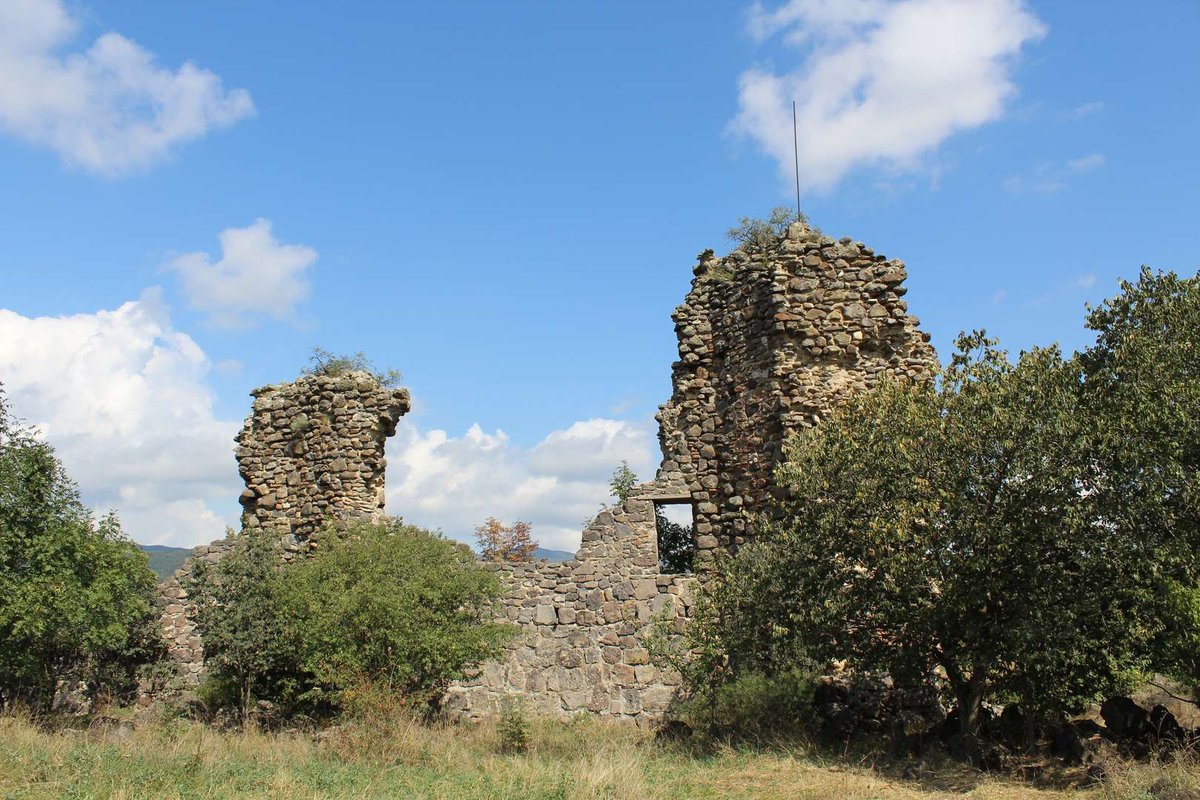
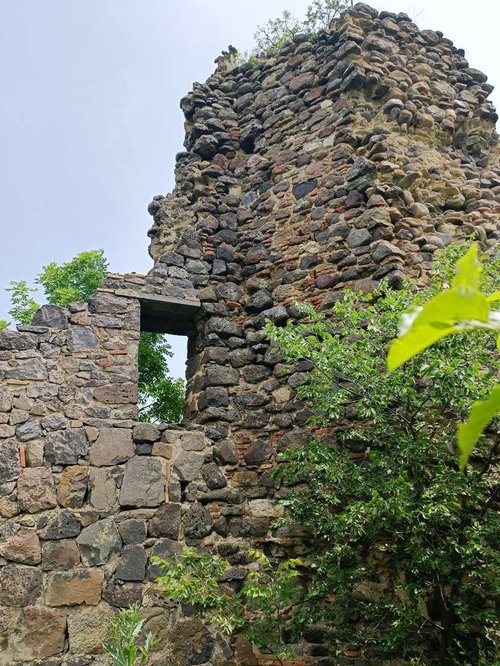
Today the fortress is heavily ruined, and only isolated stretches of wall have survived to the present. Excavations have clarified its structure somewhat: it appears to have consisted of two parts, a central citadel and an outer wall wrapping around it in a roughly concentric pattern. The entrance through the walls is now lost, the only surviving opening sits to the north, at the top, where an impressive arched gate stands out, brick skilfully interwoven with stone.
The walls are built from rubble stone, with dressed stone used in the upper courses, and traces of later restoration are visible too. The western section of the citadel is separated by a double wall, suggesting the structure was once considerably larger, possibly rising three or even four storeys.
Among visitors, a legend circulates about a secret underground tunnel running from the fortress down to the Algeti River, through which residents supposedly could slip away unnoticed during a siege. There's no documentary evidence for this, but the detail says a great deal about how locals still regard the fortress today, as a place holding genuine military secrets of the past.
🥾 Partskhisi and Birtvisi: Two Fortresses of One Frontier
Partskhisi's history is inseparable from that of neighbouring Birtvisi Fortress, 6-7 km to the east, set among limestone cliffs. In the Middle Ages, the two strongholds together defended the western edge of what is now Kvemo Kartli. Birtvisi, carved into the rock of a natural canyon, is considered one of Georgia's most impregnable fortresses: even Tamerlane took it in 1403 only through cunning, sending a soldier to scale the sheer cliff face by night and lower a rope for the rest.
It's from Partskhisi that the well-known walking trail to Birtvisi begins. If you'd like more detail on that route, see our feature on Birtvisi Fortress. For a traveller, the two sites naturally form one outing: a historical stop along the way, and a hike's full destination.
🚗 How to Get to Partskhisi
From Tbilisi to Partskhisi is about 43 km. You can get there by minibus running from Samgori metro station towards Tsalka, or by car via Tetritsqaro. The road from the village to the fortress runs between houses and doesn't take long, local dogs often tag along and sometimes climb the fortress walls right alongside visitors.
Have you been to Partskhisi Fortress? Tell us whether you made it to the citadel, spotted Birtvisi and Kojori in the distance, and whether locals shared the legend of the tunnel to the Algeti River with you.
Information is current as of July 2026. The condition of the ruins and trail access can change, check with locals before you go.
❓Frequently Asked Questions
💬 The ruins of a medieval fortress in Tetritsqaro municipality, Kvemo Kartli, on a hill above the Algeti River. First mentioned in written sources during the reign of King Bagrat IV, in the 11th century.
💬 Two significant ones: in 1074, King George II defeated the treasurer Sarang here, and in 1569, King Simon I of Kartli was captured by Qizilbash forces after being betrayed by Kakhaber Korghanashvili.
💬 The two fortresses together defended the region's western frontier in the Middle Ages. Today a well-known walking trail to Birtvisi, 6-7 km to the east, begins right at Partskhisi.
💬 Isolated stretches of wall, an arched gate to the north, and traces of the central citadel with its surrounding wall. Some evidence suggests the structure was originally three or even four storeys tall.
💬 About 43 km, by minibus from Samgori metro station towards Tsalka, or by car via Tetritsqaro.

32 comments
Log in to leave a comment
Но даже след от этого строения впечатляет.