




⛲ Colchis fountain in Kutaisi: the main symbol of the central square
🟨 The key facts first
| ⛲ What it is | The Colchis Fountain, a cascading fountain with golden figures on the central square of Kutaisi |
| 📍 Where | The central square, the corner of Queen Tamar Street and Rustaveli Avenue |
| 📅 Year and author | Opened in 2011, architect David Gogichaishvili |
| 🏺 How it is decorated | About 30 gilded figures, copies of Bronze Age Colchian gold |
| 🕒 Access | An open urban space, around the clock and all year round |
| 🗺️ More details | The Colchis Fountain |
💡 Tip: the fountain stands right in the centre, so you can see it on the way to other sights, and the best shots come from the park side and in the evening, with the lighting on.
🟦 What this article is about
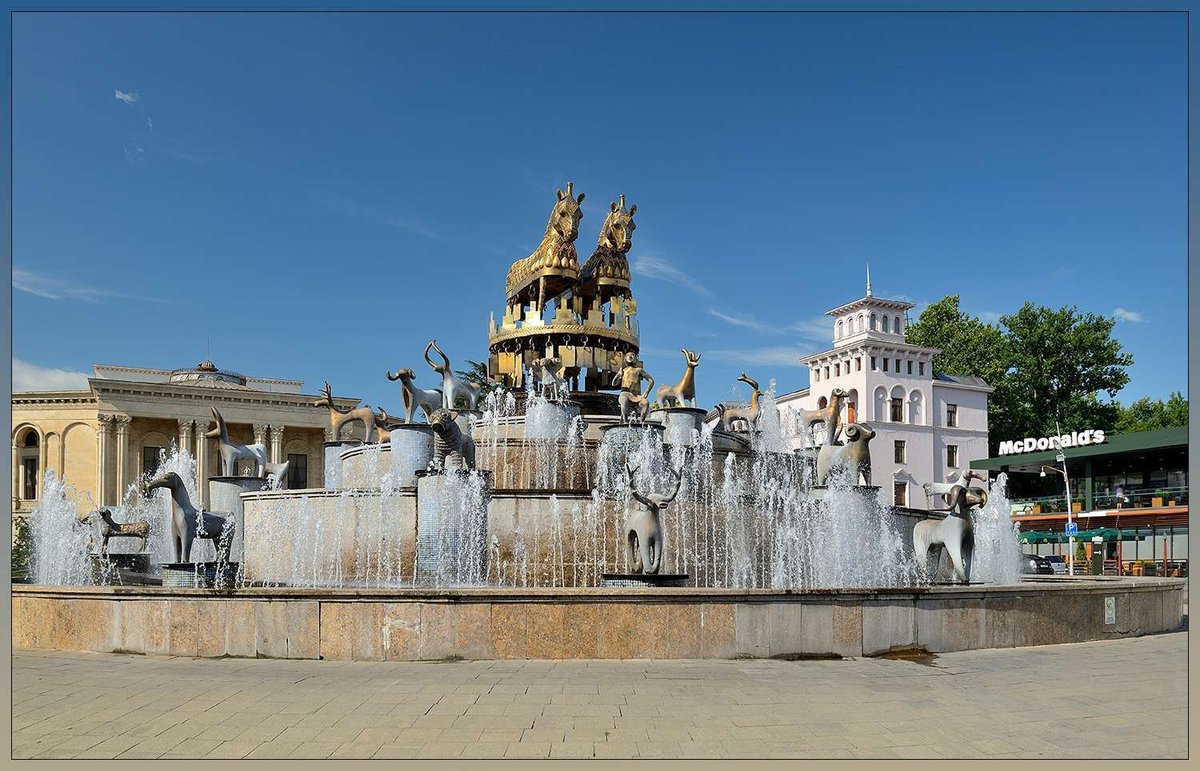
The Colchis Fountain is the first thing that catches the eye on the central square of Kutaisi: a huge cascading structure strewn with golden figures. Here we will sort out what kind of fountain it is and when it appeared, who its author is and why it is called the most expensive in Georgia, what the golden beasts on its tiers symbolise, and what ancient story lies behind the name "Colchis."
It will be useful if you are walking through the centre of Kutaisi and want to understand what you are looking at, are interested in the myths of Colchis and the Golden Fleece, or are simply searching online for "Colchis Fountain" and want to learn more about it.
⛲ What the Colchis Fountain is and where it stands
The Colchis Fountain is perhaps the most recognisable landmark of Kutaisi. It stands in the very heart of the city, on the central square, where Queen Tamar Street and Shota Rustaveli Avenue meet. The huge round structure of several tiers, strewn with golden figures, is visible from afar, and for many it is the fountain that becomes the first vivid impression of the city.
The fountain has one peculiarity: it stands on a roundabout with cars constantly moving around it. So it is not always possible to come right up to it, and many admire it from the side of the adjacent park or from the windows of nearby cafes. But even from a distance the sight is impressive, especially when the jets of water shimmer in the sun and the gilding of the figures flashes with bright glints.
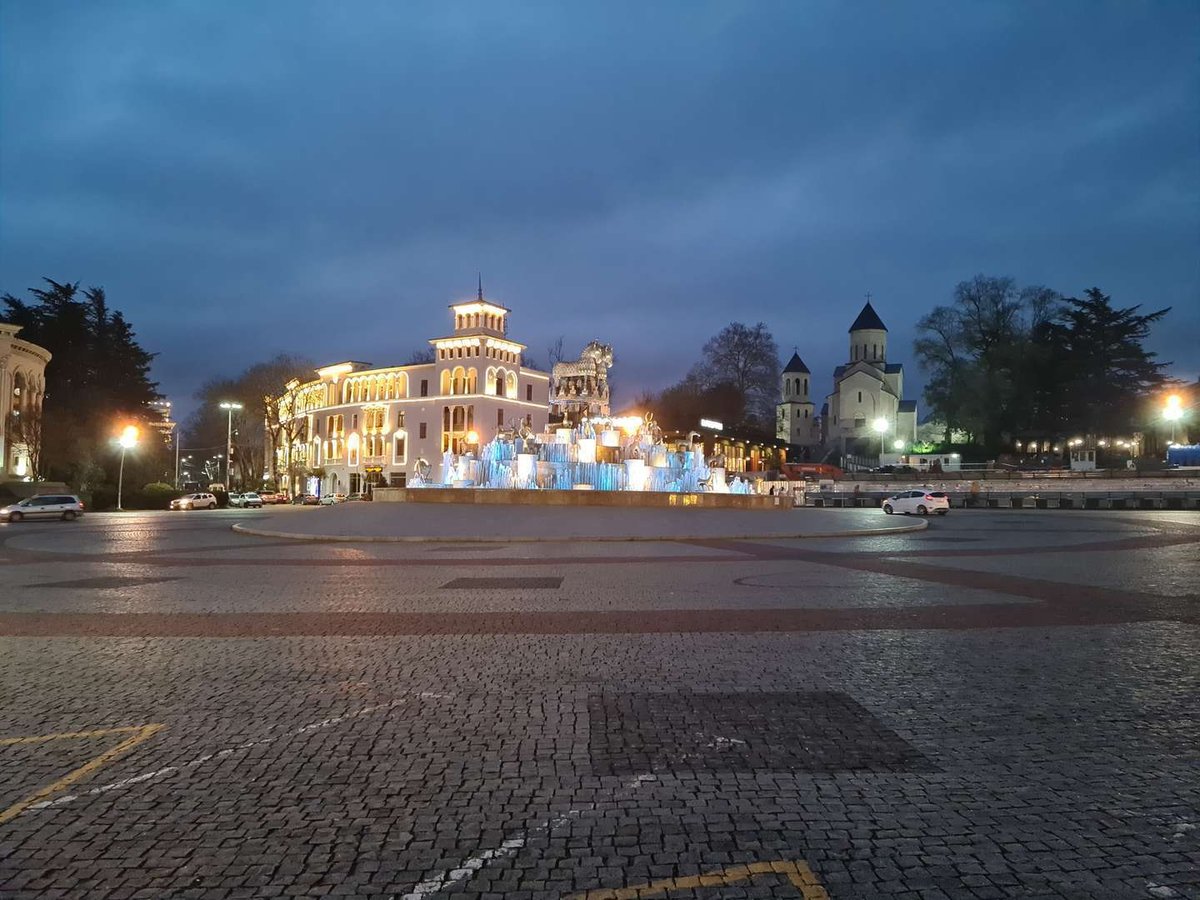
It is worth coming here separately in the evening. As darkness falls the lighting comes on, and the fountain turns into a glowing art object around which both locals and tourists gather. It works all year round and at any time of day, so you can almost always catch it in action.
🏛️ History: the year, the author and the most expensive fountain in Georgia
The Colchis Fountain appeared on the central square of Kutaisi relatively recently: it was opened in 2011. The author of the project was the Georgian architect David Gogichaishvili, and it was his design that turned an ordinary square into one of the city's main calling cards.
The fountain immediately became famous as the most expensive in Georgia. No funds were spared in its creation, and the scale, the multi-level cascading construction, the abundance of gilded figures, really is impressive. For the city this was not just a fountain but a statement of a new look for the centre: bright, ambitious and recognisable.
The backstory of the place is curious too. Until 2011, an equestrian monument to David the Builder stood on this square; for the sake of building the fountain it was moved to the railway station, where it stands today. So over the past decades the central square of Kutaisi has changed its main symbol: in place of the unifying king came a fountain dedicated to an even more ancient era, the times of Colchis. You can read more about this story in our article about the monument to David Agmashenebeli.
🏺 The gold of Colchis: what the figures symbolise
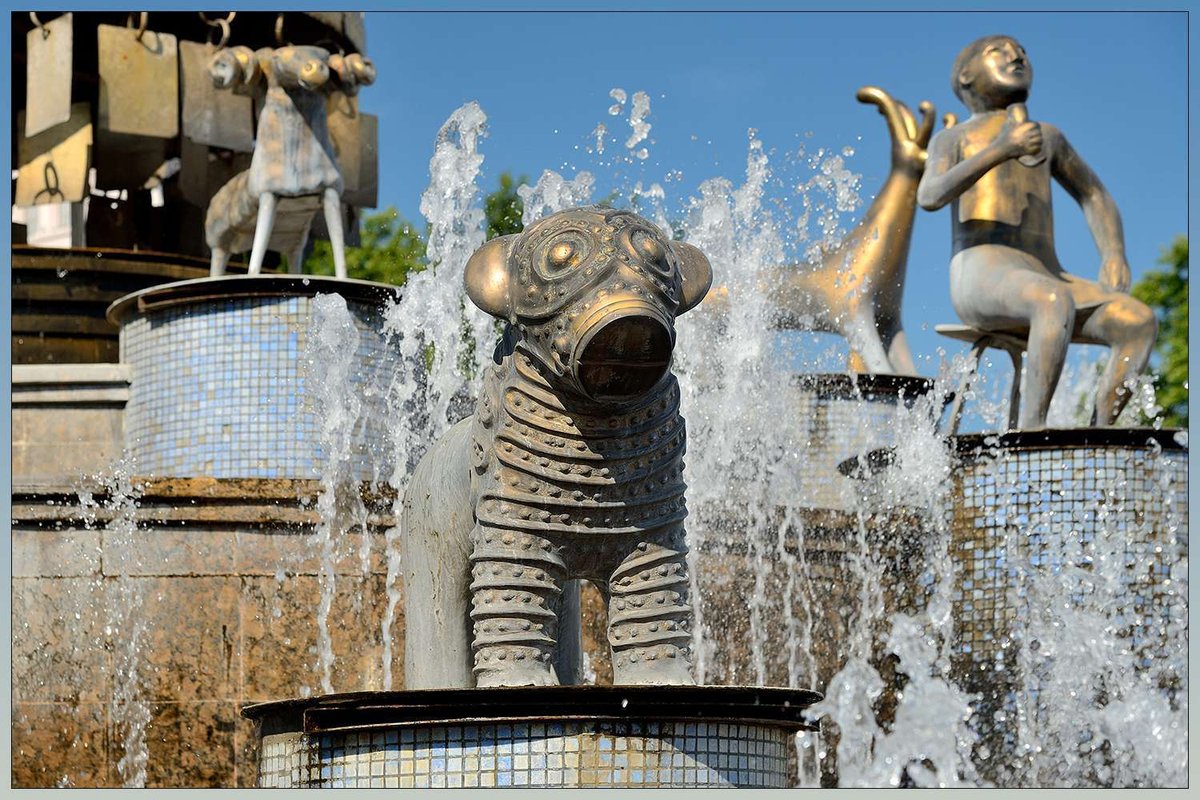
The main feature of the fountain is its golden figures. There are about thirty of them, and each is an enlarged copy of a real Bronze Age piece of jewellery found during excavations on the territory of ancient Colchis. The originals of these miniature gold and bronze statuettes are kept today in the Georgian National Museum, while on the fountain they appear on a monumental scale.
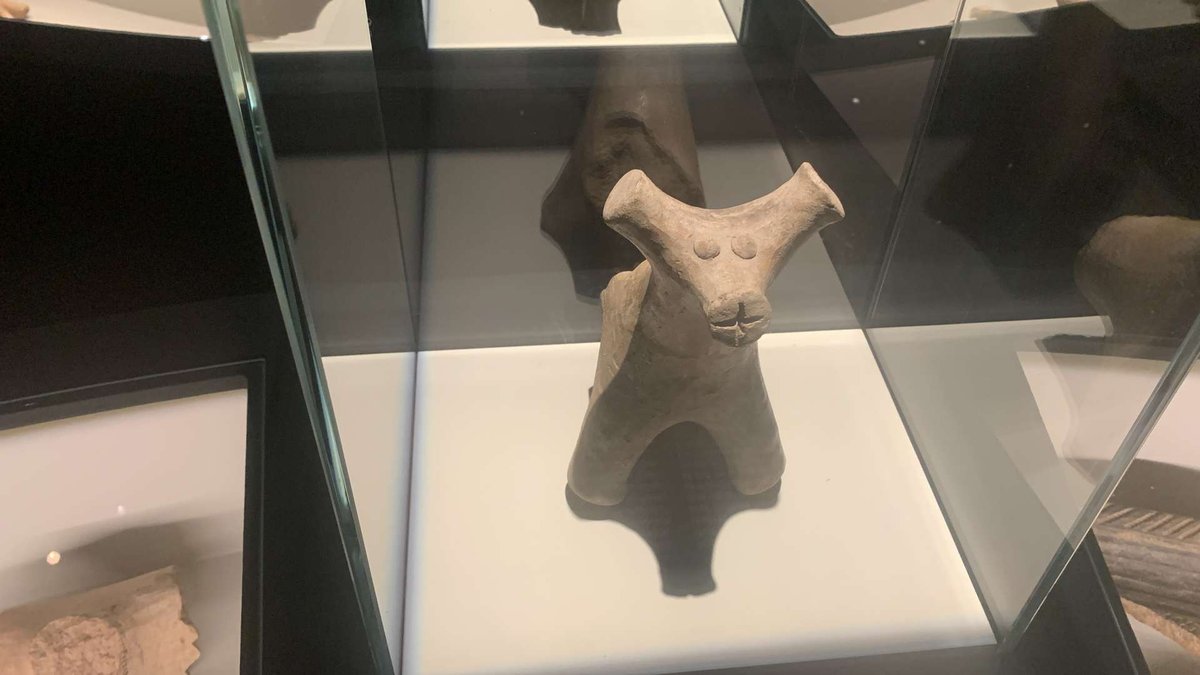
The figures are arranged for a reason. At the very top of the fountain stand horses, referring to the famous golden pendant with the horses of the Colchian king. Below, on different tiers, are figures of animals, above all lions and deer, which often appeared in the art of ancient Colchis. Among the figures there is also the image of a tamada, a toastmaster with a horn in his hand, a recognisable symbol of Georgian feasting culture.
So the fountain is not just striking decor but a kind of open-air museum. Each figure refers to real archaeological finds and reminds us how ancient and rich the culture of these lands was, long before modern Kutaisi appeared.
⛲ The fountain in facts
- Year of opening: 2011
- Architect: David Gogichaishvili
- Figures: about 30 gilded sculptures
- Prototypes: Bronze Age gold found in Colchis (originals in the Georgian National Museum)
- Location: the central square of Kutaisi, the corner of Queen Tamar Street and Rustaveli Avenue
🐏 Colchis and the Golden Fleece: the myth behind the fountain
The name of the fountain refers to Colchis, an ancient country that lay on the territory of western Georgia, and Kutaisi was one of its centres. For the ancient world Colchis was a land of fabulous wealth, and it was here that ancient Greek myths placed one of their most famous stories, the voyage of the Argonauts for the Golden Fleece.
According to the legend, the hero Jason, together with the crew of the Argonauts, set off for Colchis to obtain the Golden Fleece, the hide of a magical ram that was kept in the domain of King Aeëtes. He was helped by the king's daughter, the sorceress Medea, who fell in love with Jason. This story of a distant golden land at the edge of the world known to the Greeks is much of what made Colchis famous.
That is why the gold on the fountain is not a random choice. Ancient Colchis really was famous for its developed metalworking, and the gold objects found by archaeologists confirm that the legends of the wealth of these lands had a real basis. The Colchian culture existed here as early as the 15th–13th centuries BC, long before the Greek seafarers arrived. So the fountain unites myth and history, reminding us that modern Kutaisi has very ancient roots.
🚶 How to get there and what is nearby
Getting to the fountain is not difficult: it stands in the very centre of Kutaisi, on the main square, so on the way to it you will pass most of the city's sights anyway. It is a few minutes' walk from the embankment of the Rioni and the bridges. Be careful: the fountain is surrounded by a roundabout with car traffic, so cross the road carefully, and look for the best angles for photos from the side of the adjacent park. The exact location, coordinates and photos can be found in the fountain's card.
The fountain is convenient to make the centre of a walk through Kutaisi. From here the embankment with its bridges is within easy reach, and on the hill you can see the city's main symbol, Bagrati Cathedral. If you head towards the station, you can see the monument to David the Builder, the very one that once stood on this square. So in a single walk the whole history of the city comes together: from ancient Colchis to the modern centre.
📍 Nearby in the centre of Kutaisi
🗿 Monument to David the Builder
An equestrian statue by the station, it used to stand on this square.
Read more⛪ Bagrati Cathedral
The main symbol of Kutaisi on a hill, visible from many points in the city.
Read more🏛️ Palace of Solomon II
The residence of the last king of Imereti, a page of Kutaisi's history.
Read more❓ Frequently asked questions about the Colchis Fountain
💬 On the central square of Kutaisi, where Queen Tamar Street and Shota Rustaveli Avenue meet. It is the very heart of the city, a few minutes from the Rioni embankment and the bridges.
💬 The fountain was opened in 2011. Its author is the Georgian architect David Gogichaishvili. The fountain is considered the most expensive in Georgia.
💬 They are enlarged copies of Bronze Age gold and bronze objects found during excavations of ancient Colchis. At the top are the horses of the Colchian king, on the tiers are figures of animals, as well as the image of a tamada with a horn. The originals of the finds are kept in the Georgian National Museum.
💬 It is dedicated to Colchis, an ancient country on the territory of western Georgia with its centre in the Kutaisi area. It is with Colchis that the Greek myth of Jason, the Argonauts and the Golden Fleece is connected.
💬 The fountain stands on a roundabout with active traffic, so you need to approach it carefully. Many admire it from the side of the park or cafes, and in the evening a beautiful lighting comes on.
💬 Yes, until 2011 an equestrian monument to David the Builder stood on this square. For the sake of building the fountain it was moved to the railway station, where it stands now.
🧡 The main points in brief
The Colchis Fountain is a modern calling card of Kutaisi and a case where a new art object blends organically with the city's ancient history. Opened in 2011 to a design by the architect David Gogichaishvili, it is decorated with golden figures, copies of Bronze Age jewellery finds, and recalls the times of legendary Colchis, the land of the Golden Fleece and the Argonauts. It is not for nothing that it is called the most expensive fountain in Georgia.
If you come to Kutaisi, be sure to drop by the central square: by day the fountain shimmers in the sun, and in the evening it turns into a glowing art object. At the same time, put together a route through the centre, to the embankment with its bridges, Bagrati Cathedral and the monument to David the Builder, which once stood on this very spot. That way, in a single walk you will travel the path from ancient Colchis to today's Kutaisi.
🧡 Read more about Kutaisi
- Monument to David the Builder: history and meaning
- Palace of Solomon II: residence of the last king of Imereti
- A one day walk through the centre of Kutaisi
💾 Save the article to come back to it before your trip to Kutaisi.
🗣️ Now over to you
Have you seen the Colchis Fountain in Kutaisi? Share your impressions and help other travellers.
- Which did you like more, the fountain by day or with the evening lighting?
- Did you manage to come up close and look at the golden figures?
- Did you know the story of Colchis and the Golden Fleece before your trip?
- Which nearby places are worth adding to a walk through the centre?
Share in the comments, we read every story and add your findings to the article. ❤️
ℹ️ The operating schedule of the fountain and its lighting may change by season, and because of road works the approaches to the square are sometimes limited. The exact location, coordinates and photos can be found in the fountain's card.

2 comments
Log in to leave a comment
But honestly? I was also a bit overwhelmed by the crowd. It’s one thing to admire a piece of art, and another to share that moment with a bunch of tourists all aiming for that perfect Instagram shot. Still, I couldn’t help but appreciate how the fountain brings life to the square.
What’s your favourite spot nearby to escape the buzz?