




The Astronomical Clock in Batumi: How to Read Europe Square's Dial
The astronomical clock on Europe Square shows far more than the hour — around 14 astronomical values in total, from moon phases to the current zodiac sign. Built in 2011 on the façade of an old bank: think of it as a beautiful city detail and photo spot, not a medieval relic.
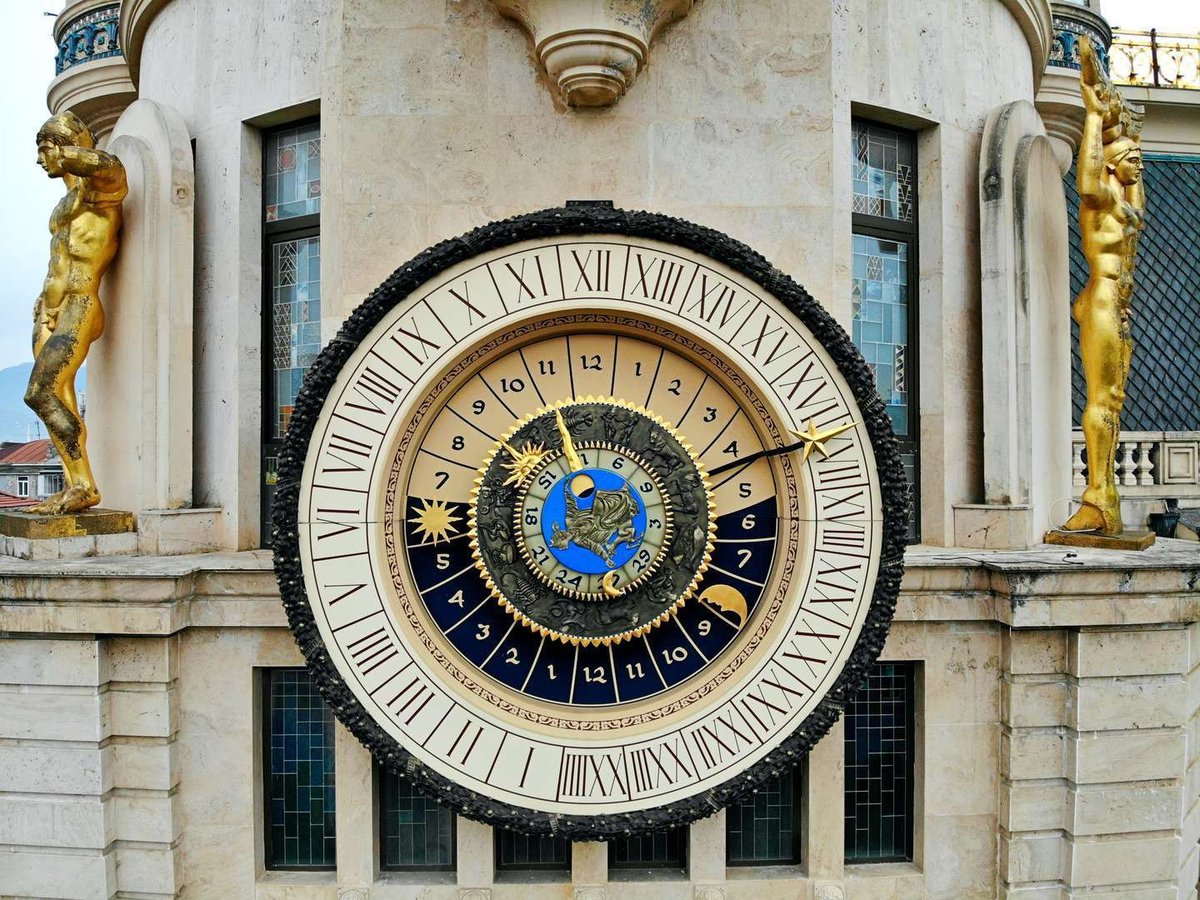
One of Batumi's most photographed corners hides in plain sight: the astronomical clock on Europe Square 🕰️ A dial with more hands and scales than seems reasonable sits on the old National Bank façade, and most people stop in front of it not because they planned to, but because it catches the eye. Some are hunting a photo, some read "just like Prague's" online, some simply want to know what all those symbols mean. Below: where to find it, what it shows, how to read it, and what to do after.
📍 Where to Find the Clock
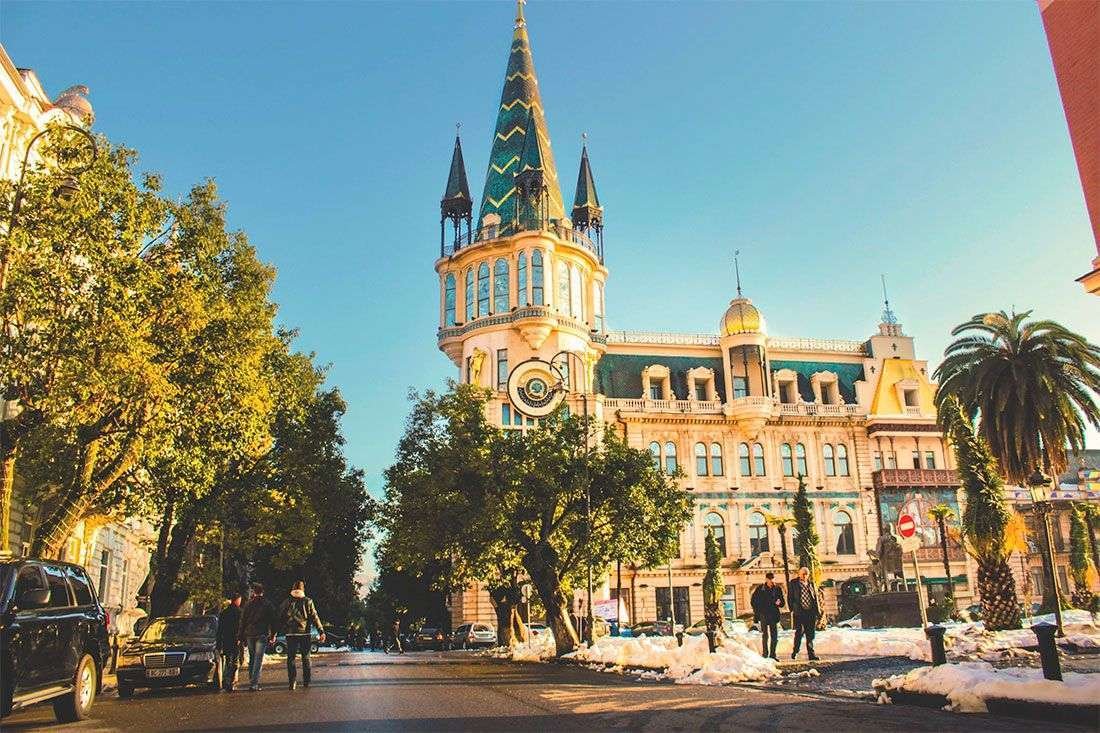
The clock adorns the façade of the former National Bank of Georgia at the corner of Europe Square — 44 Konstantine Gamsakhurdia Street in the heart of old Batumi. Getting there couldn't be simpler: if you're strolling toward the Alphabetic Tower, the boulevard or the old centre, Europe Square appears naturally on the route. The dial is visible from a distance, and at night it's lit. It's not worth a trip across town on its own, but it's absolutely worth a stop on the way.
🔭 What the Clock Shows and How to Read It
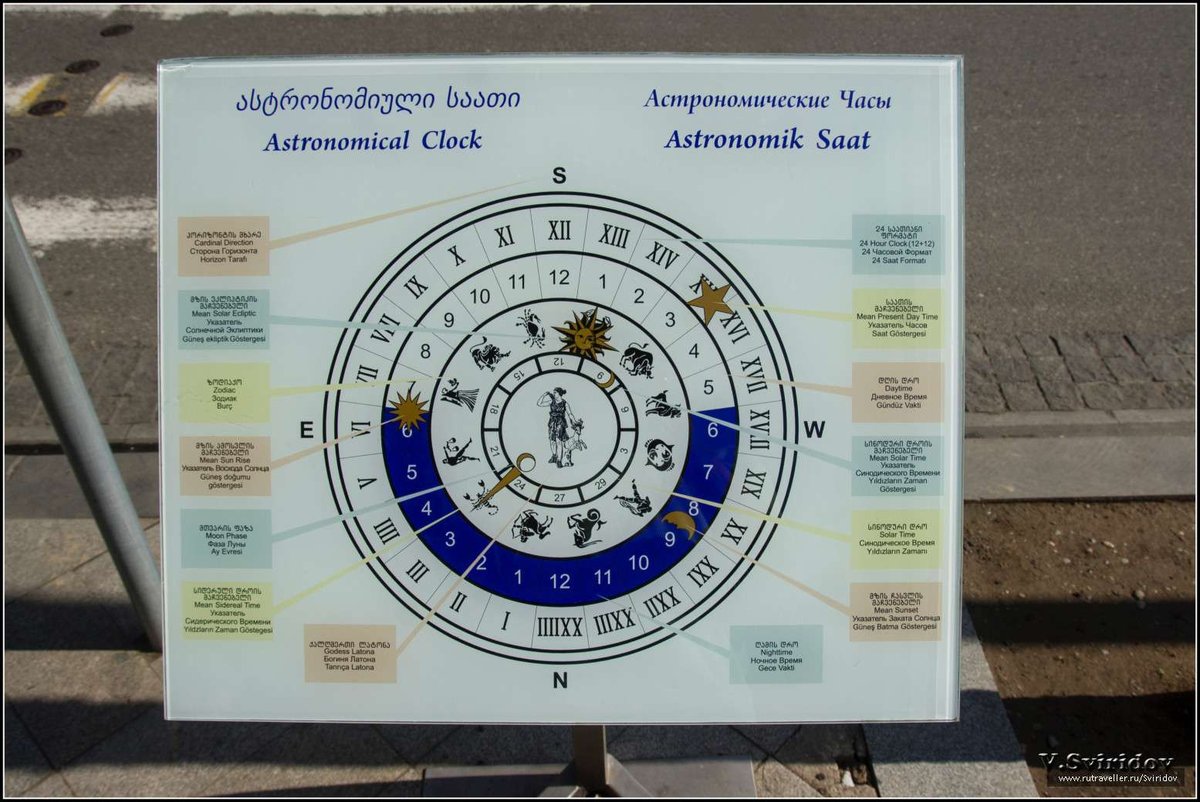
The headline fact is that time is the least interesting thing this clock does. A Roman-numeral face sits at the centre, but around it a set of scales and pointers records around fourteen different astronomical values. There's an information board in front of the clock that breaks down every element — even if you know nothing about astronomy, you can decode the dial on the spot.
How to read it in practice: start with the familiar hands and Roman numerals — that's your time. Then find the zodiac ring around the edge: the pointer shows which constellation the Sun is currently in, which tells you the astronomical season. The moon indicator and its age show how bright the night will be. And the sunrise/sunset pointers are simply practical — they tell you exactly when the best light hits the boulevard.
🏛️ History: a German Mechanism on an Old Bank
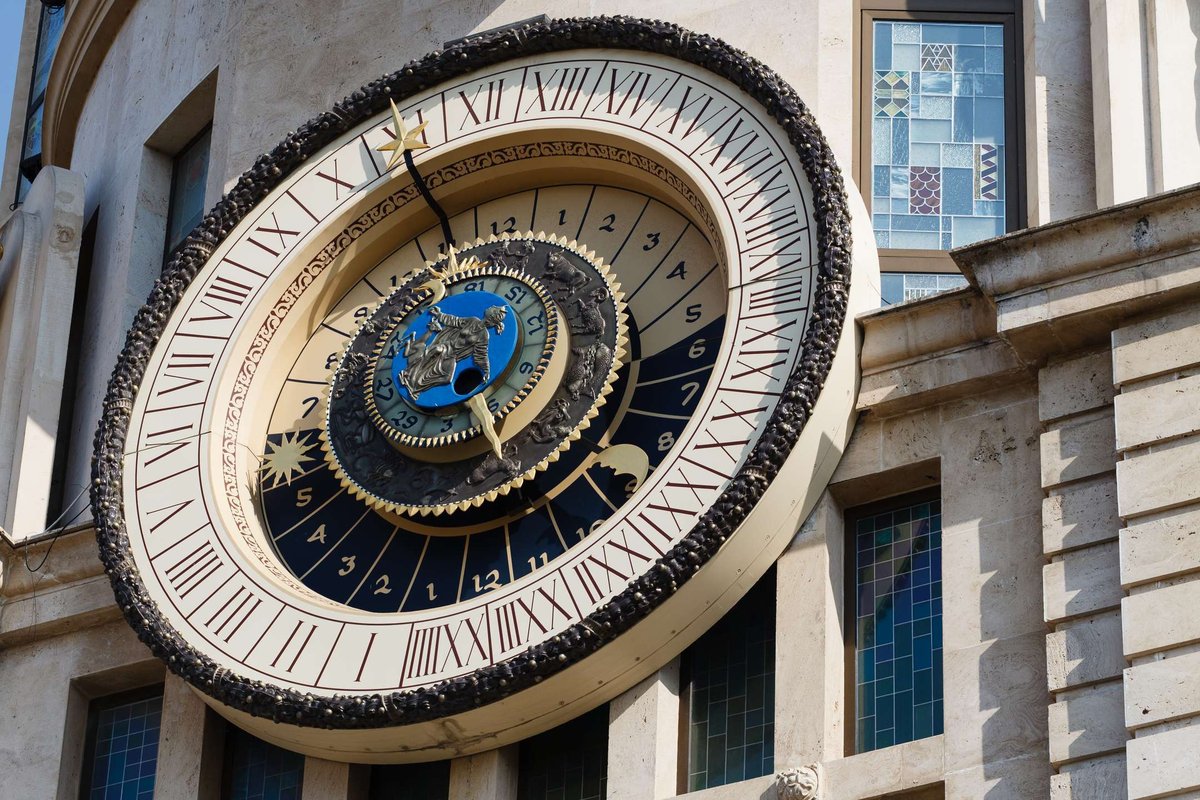
In 2010 Batumi's city council decided to install a rare kind of object to raise the city's appeal as a destination, and by 2011 the project was complete. The mechanism was manufactured in Germany to the city's order, at a cost of around 1.7 million GEL. The dial was mounted on the restored façade of the former National Bank of Georgia — which is why the local nickname "clock tower" stuck.
By the standards of its famous relatives, the Batumi clock is very young, and that's fine. Its value isn't in age, but in the fact that a complex astronomical instrument works in a small seaside city, right in the middle of a walking route.
⚖️ Batumi and Prague: Why Everyone Compares Them
The Prague comparison appears in almost every review, and it's understandable: similar principle, zodiac scales, astronomical rings, a photogenic façade. But the difference is real and worth knowing before you arrive.
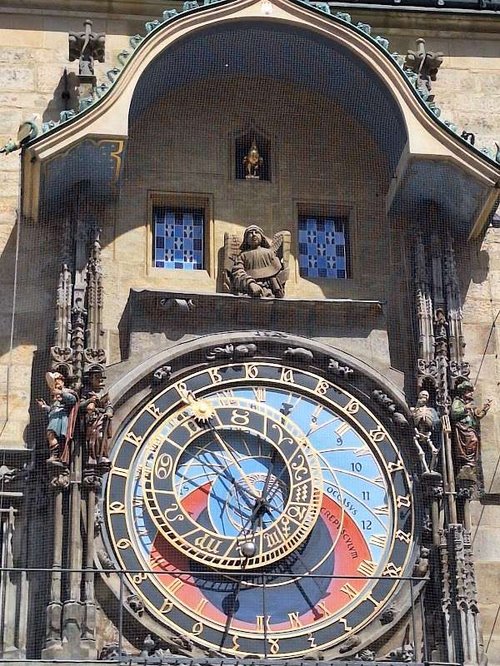
- Made in Germany in 2011
- Modern mechanism
- No moving figures
- 14 astronomical readings
- Free entry, explanatory board outside
- Built in the 15th century
- Medieval mechanism
- Apostle parade on the hour
- One of the oldest in the world
- Tourist queue is the norm
🔀 Two Mix-Ups That Spoil the Visit
Out of all the tourist mistakes around these two clocks, these come up most often. The Piazza square with its own clock tower is a completely different place — an Italian-style square with arcades, cafés and the largest figurative mosaic in Europe. Easy to confuse with "that clock tower in Batumi."
📸 When to Visit and How to Photograph It
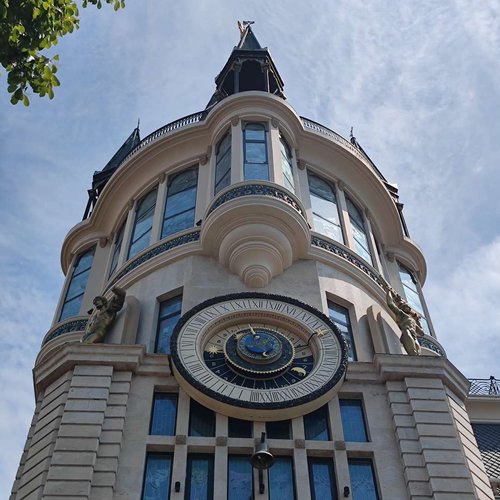
The clock is free and open around the clock — it's a street-level object. But the experience depends heavily on light, and there are three distinct scenarios:
- Clear daytime — the golden details catch the sun and the dial is easiest to read.
- Sunset — soft light and an interesting sky make for a better photo.
- Evening — illumination switches on and the whole square becomes particularly photogenic.
In winter, a Christmas tree and a small festive market go up right in front of the clock. For a shot without crowds, early morning is the answer. And don't skip the information board — without it, half the dial stays a mystery.
🗺️ What to See Nearby
The clock is just the reason to linger on Europe Square. A quick walk takes in the Medea statue with the Golden Fleece at the centre of the square, the Alphabetic Tower a short walk away, and the wider range of observation decks and towers for those who want height and views. For a full day in the city, the one-day Batumi itinerary fits the clock into a natural morning route.
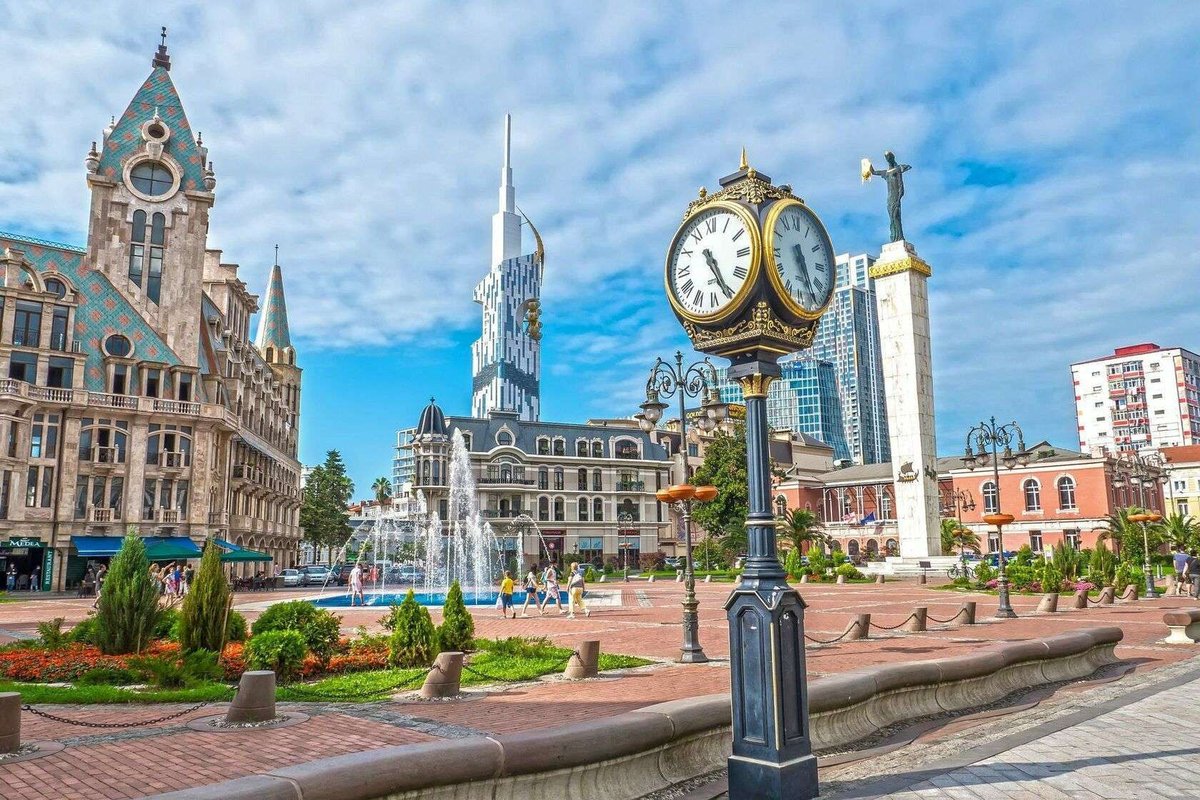
🌙 How to Fit the Clock Into Your Evening
The clock doesn't need its own trip — it works perfectly as a stop in an evening walk.
✅ Worth a Visit or Skip It?
The astronomical clock isn't for everyone. Some people love it; others walk away saying "well, it's a clock."
- you love architecture and city details
- astronomy interests you even a little
- you're already walking through the centre
- you want a good sunset shot
- you expect a medieval show like Prague
- you want a museum or an attraction
- it's your first day and time is short
- it's raining — the clock loses half its magic
⚠️ Common Tourist Mistakes
The first one is confusing Europe Square's clock with the Piazza tower: people arrive looking for "that clock tower" and end up in an Italian courtyard, or vice versa. The second is walking past the information board — without it the dial is just pretty, and half the meaning is lost. The third is coming in harsh midday sun expecting a great photo; evening with the lights on is noticeably better. The fourth is budgeting too much time: this is a 15–20 minute stop, not a museum.
Over to you
Seen the astronomical clock in Batumi? Tell us in the comments whether you caught the chime and what time gave you the best shot 🕰️ And if you worked out what any of the more mysterious scales show, share it — it genuinely helps other visitors.
❓ Frequently Asked Questions
On Europe Square, on the façade of the former National Bank of Georgia building (44 K. Gamsakhurdia Street), right in the heart of old Batumi. It's a pedestrian area near the fountain and the Medea statue.
Beyond the time, around 14 values: the positions of the Sun and Moon, moon phases and moon age, the Moon's motion around Earth, planet positions, the current zodiac sign, the meridian, horizon, cardinal directions, and sunrise and sunset times.
The former National Bank of Georgia on Europe Square. Because of the small tower with the dial, locals often call it the "clock tower."
The clock was manufactured in Germany on the order of Batumi's city council. The decision was made in 2010; installation was completed in 2011 at a cost of around 1.7 million GEL.
Yes. It's an outdoor object, accessible at any time, no ticket required.
Start with the Roman-numeral clock face and the hands — that's the time. Then find the zodiac ring around the edge and the moon and sun/sunset pointers. The information board in front of the clock explains every element.
The principle is similar, but Batumi's is modern (2011) with no moving figures, while Prague's dates to the 15th century. A beautiful contemporary object — not a medieval mechanism.
No, those are two different places. The clock tower is at Piazza (an Italian-style square with a large mosaic), while the astronomical clock is on Europe Square.

4 comments
Log in to leave a comment
الأجواء حول الساحة الأوروبية تجعل كل شيء يبدو أكثر سحراً. لكنني أجد نفسي أتساءل، هل حقاً يمكنني قراءة تلك القراءات المعقدة أم أنني سأكتفي فقط بالتقاط صور للساعة؟ أحيانًا أشعر أنني أفتقر إلى هذا الفهم الدقيق، لكن جمالها يسحبني بطريقة ما.
لذلك، هل هناك نصائح معينة حول كيفية قراءة الدرجات الفلكية عليها بشكل أفضل؟
في عالم مليء بالهواتف الذكية، قد تبدو هذه الساعة وكأنها تلعب دور المتفرج. وهي بالتأكيد مكان رائع لالتقاط الصور، لكن هل هي فعلاً عملية؟ من ناحية أخرى، يبدو أنها تضيف لمسة من السحر إلى ساحة أوروبا. لا أدري، ربما أنا فقط شخص يفضل البساطة.
إذا كنت بالفعل في باتومي، هل ستخصص وقتًا لقراءة عقاربها الفلكية أم ستستعين بجهازك في جيبك؟
But honestly, when I was there, I couldn’t help but wonder - do locals ever really look at it, or is it just another photo op for tourists? Have you ever tried reading the dial? It looks complicated!