




Alaverdi in Kakheti: Cathedral and Monastery
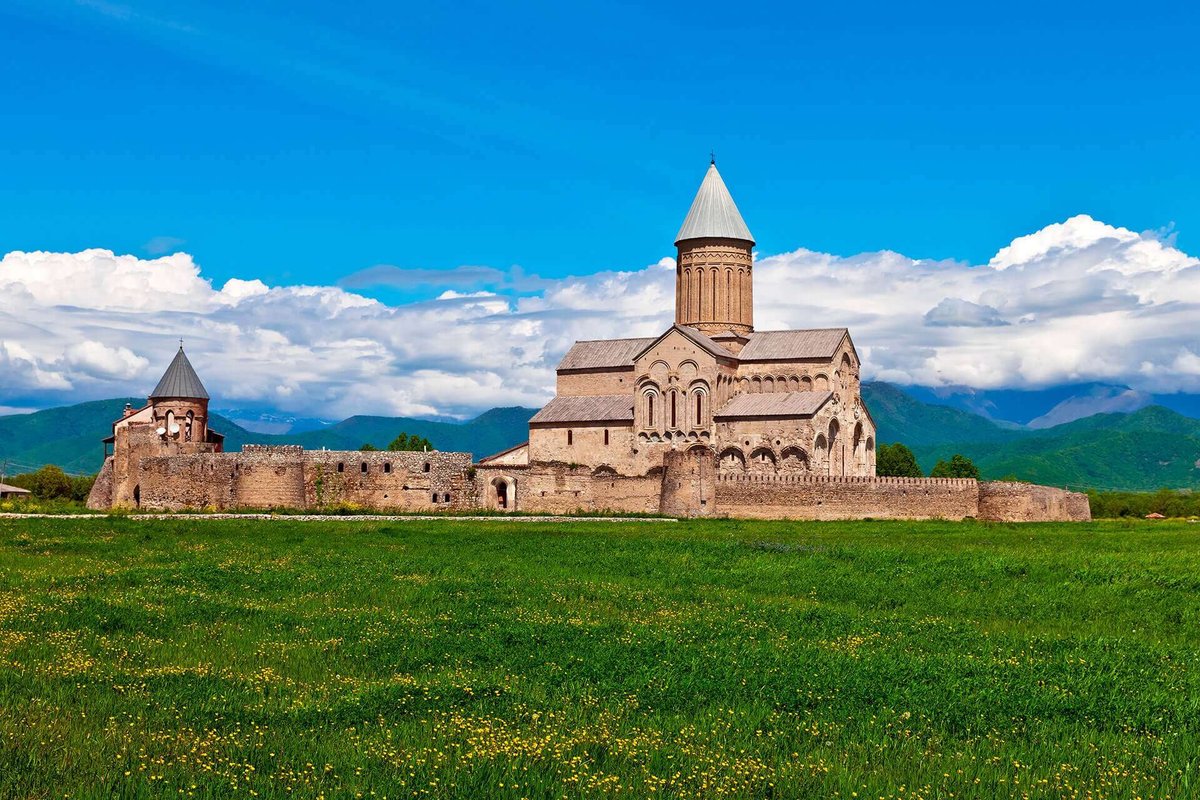
In the sunny land of wine and vineyards—Kakheti—stands the majestic Alaverdi Cathedral. It was located in the Alazani Valley near the village of Alaverdi. The valley is often visited by wine lovers and experienced sommeliers, but Georgia offers much more than just traditional wine. The valley is located at the foot of the snow-capped Caucasus Mountains.
You can get here from Telavi. Buses and taxis depart from the city, and the journey takes just 10-15 minutes, as the village is located just 20 kilometers from the city.
Cathedral
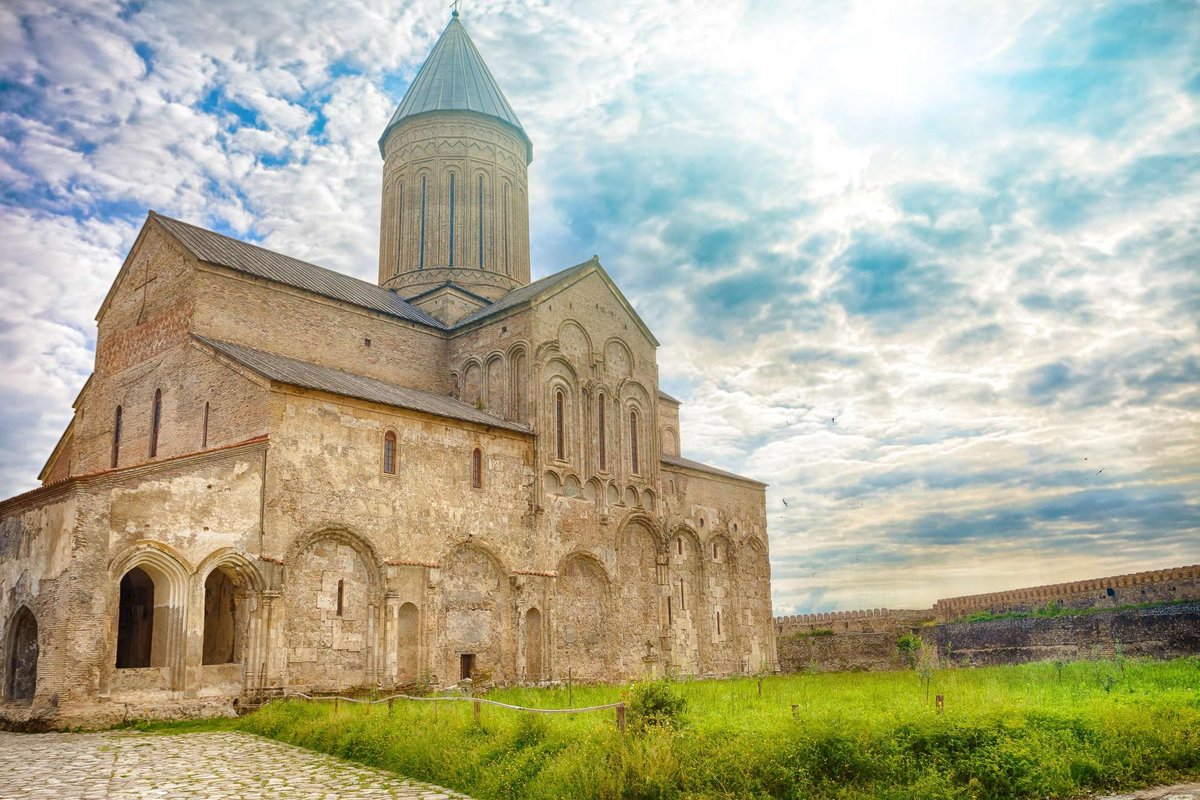
The Alaverdi Cathedral is one of the largest examples of Georgian religious architecture. Rising 50 meters above the ground, its sheer size is impressive. The entire building is constructed of hand-made brick.
The cathedral does not stand alone; it is an entire architectural complex. The ensemble consists of the Alaverdi Cathedral of St. George, which occupies the central position. A chapel is adjacent. Further away stands the palace of Khan Peykar. A medieval bathhouse and wine cellar can also be seen. The palace of Khan Peykar is worthy of special attention. It is a three-story structure, the ground floor of which is a refectory with high ceilings that extend to the floor in an arched shape. The living quarters have an interesting shape—octagonal, with arched ceilings and numerous chambers. The entire area is guarded by a fortress, which was built significantly later than the main buildings, in the 17th and 18th centuries. The founder of the Alaverdi Cathedral is Joseph Alaverdeli, one of the holy fathers of the ancient people of Asia, who lived in the mid-6th century AD.
Almost five centuries later, in the 11th century, King Kvirike undertook the expansion of the church complex: on the site of the small church of St. George, he built a more massive monastery.
The Alaverdi Cathedral is an outstanding example of medieval architecture, rightfully considered one of the most beautiful places in Georgia. This place is imbued with the atmosphere of an ancient country, its traditions and customs, reflected in every element of the monumental structure.
The monastery complex hosts many important events in the life of the church, one of which is Alaverdoba. The festival takes place in early autumn, from September to October. People of various nationalities gather for the celebration, including residents of Georgia, Kist, Dagestan, and many others.
History
According to historical sources, the exact date of the monastery's construction dates back to the 6th century, and it was led by one of the Assyrian Fathers, Joseph Alaverdeli.
Several centuries later, the monarch who ruled the country in the 11th century, Kvirike, rebuilt the building, significantly expanding the scale of the original church. Thanks to the actions of the King of Kakheti, one can now see one of the most impressive cathedrals in the country.
From this time (the 11th century), the cathedral became the center of ecclesiastical life in Katekhiya and the central seat of the diocese's leadership. Not only the leading figures of the Georgian religion but also members of the royal family resided here. Subsequently, the cathedral became a royal burial vault.
Due to the region's high seismic activity, the cathedral was subject to regular earthquakes, which negatively impacted its integrity. It was repeatedly restored, with a major restoration undertaken only in the second half of the 15th century, during the reign of King Alexander. As a result, the main dome and walls were restored. In the first half of the 18th century, a strong earthquake significantly damaged the cathedral building. Queen Tamara undertook its restoration, and after her death, Erekle II took over the restoration of one of the most beautiful cathedrals.
In 1966, research was conducted on the cathedral grounds, and during the cleaning of the walls, frescoes from various eras were discovered. The oldest paintings date back to the 11th century, while frescoes from later periods can be seen on the southern side of the monastery. They date back to the 15th and 16th centuries, while the most recent frescoes date back to the 16th and 17th centuries and are located on the western and northern walls of the cathedral.
Initially, the cathedral served as a monastery; later, in the 17th and 18th centuries, a convent was established here, where even some members of the royal family resided.
The cathedral also served as a venue for literary activity; many works by renowned Georgian chroniclers were created here.
Legend
Georgia's landmarks boast not only a rich history but also captivating legends, and the medieval Alaverdi Cathedral is no exception.
The legend describing the monastery's founding tells how one day, the ruler, Nagara Khan, went hunting with his faithful companion, a falcon. The falcon spotted a pheasant and flew toward it. At that moment, the monk Joseph, one of the Twelve Assyrian Fathers, happened to be passing by. He hid the pheasant from the bird of prey's claws. When Nagara Khan noticed what the monk had done, he ran up to Joseph and demanded that he hand over the pheasant. The monk refused, and for his disobedience, the khan decided to kill both the monk and the bird he had hidden. When Nagara Khan raised his sword, it turned to ice. The ruler demanded a cure from the monk, in exchange for which he promised to fulfill any of his wishes. Joseph agreed and helped the khan. In exchange, he asked for a church to be built in the valley in the name of St. George, and his wish was granted.
Late April is especially beautiful here; nature comes alive. Dandelions bloom in abundance between the rows of grapes.

38 comments
Log in to leave a comment
Lubię te miejsca, które nie tylko pokazują historię, ale mówią coś o duszy regionu. Jednak mam pewien dylemat - dojazd z Telavi jest naprawdę szybki i prosty, ale czy nie lepiej byłoby spędzić więcej czasu w samej wiosce, poznając lokalne tradycje? Może w Alaverdi jest coś więcej do odkrycia, niż tylko katedra i wina? Co myślicie, warto poświęcić tam cały dzień?
Собор просто завораживает - он смотрится так величественно на фоне Кавказа, будто охраняет этот уголок от всех невзгод. А прогулка по территории монастыря - как путешествие в прошлое. А вы там что-нибудь пробовали из местной еды? Интересно, как её там готовят! 🍇🍷
Мне особенно понравилось, что в рейтинге есть не только описание самого сооружения, но и исторические факты, легенды о его основании и советы от людей, которые уже побывали там. Это помогает не только понять, как добраться из Телави, но и ощутить атмосферу древнего монастырского комплекса с его архитектурными деталями, фресками разного времени и винным подвалом, где монахи когда‑то создавали собственное вино.
Вечером я ещё планирую заглянуть в небольшой местный ресторан неподалёку, который в комментариях упоминали как уютное место для дегустации кахетинских вин после экскурсии. Такая комбинация истории, архитектуры и гастрономии делает поездку незабываемой.
Как вы думаете, стоит ли посещать Алаверди в одиночку рано утром ради тишины и панорам долины или лучше выбрать время ближе к обеду, чтобы успеть на местный праздник Alaverdoba?
Мне кажется, побывать там все равно, что стать частью увлекательного сюжета, красивой истории, настолько это место окутано сказочным волшебством.