




Tsachkhuroba: Georgian Festival of Cradles and Faith in Miracles
Tsachkhuroba: Ancient Georgian tradition, miracles, faith and hope in the fight against infertility
Motherhood is a precious and indescribable feeling that some happy women experience, while others, unfortunately, are deprived of this joy. Is there an answer to the question of the causes of such injustice? Christian morality teaches us to come to terms with fate, but how can we come to terms with the desire to hug our baby, sing a lullaby and take care of him, especially when medicine is unable to help?
Nevertheless, a person's faith works wonders and allows them to hope. Orthodox Christians from all over the country come to the Church of the Archangel, near the village of Tsachkhuri in Martvili.
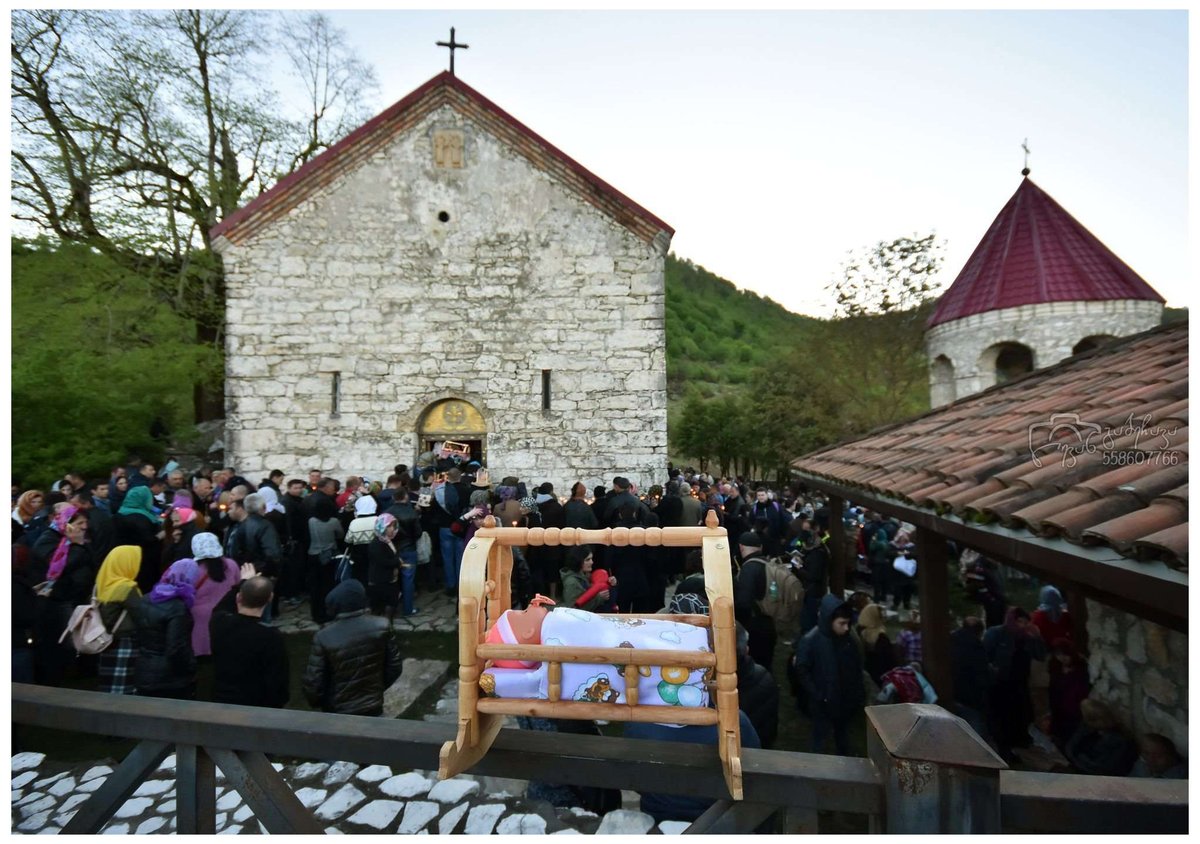
The traditional Tsachkhuroba festival is held in this place every Thursday of Easter Week. On this day, childless spouses from all over Georgia gather in the church of St. Andrew the First–Called, offer prayers and leave gifts in the hope of fulfilling their most cherished desire - to become parents..
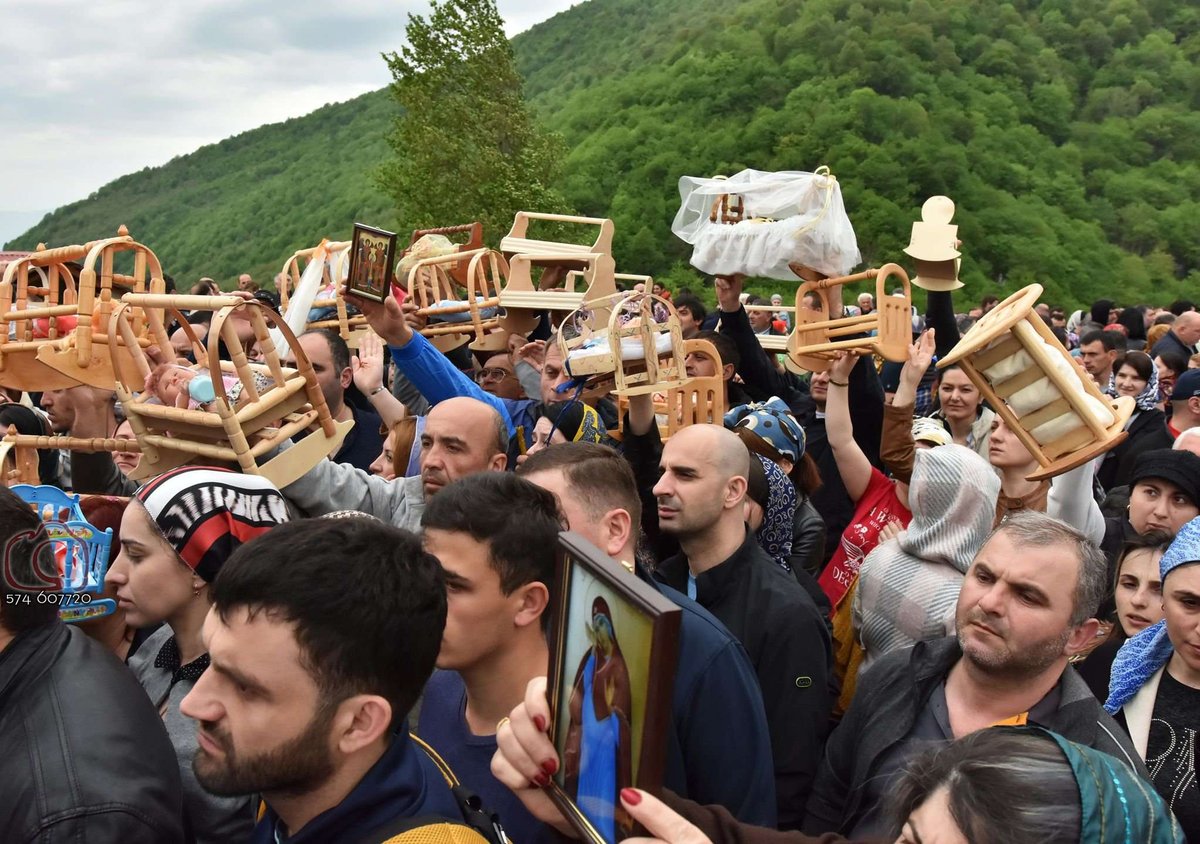
Those who have already become parents after previous visits to Tsachkhuroba also come to the holiday. All of them bring with them traditional Georgian cradles (akvani). Some come to take the consecrated cradles, others to give them to new childless couples. Visiting the temple three times on this holiday is considered a prerequisite for experiencing the happiness of motherhood and fatherhood.
The Tsachkhuroba ceremony is an example of how faith and traditions help people cope with the difficulties of life and hope for a miracle. The support of the community, which unites its efforts and prayers for the happiness of young families, is crucial.
The path to the shrine
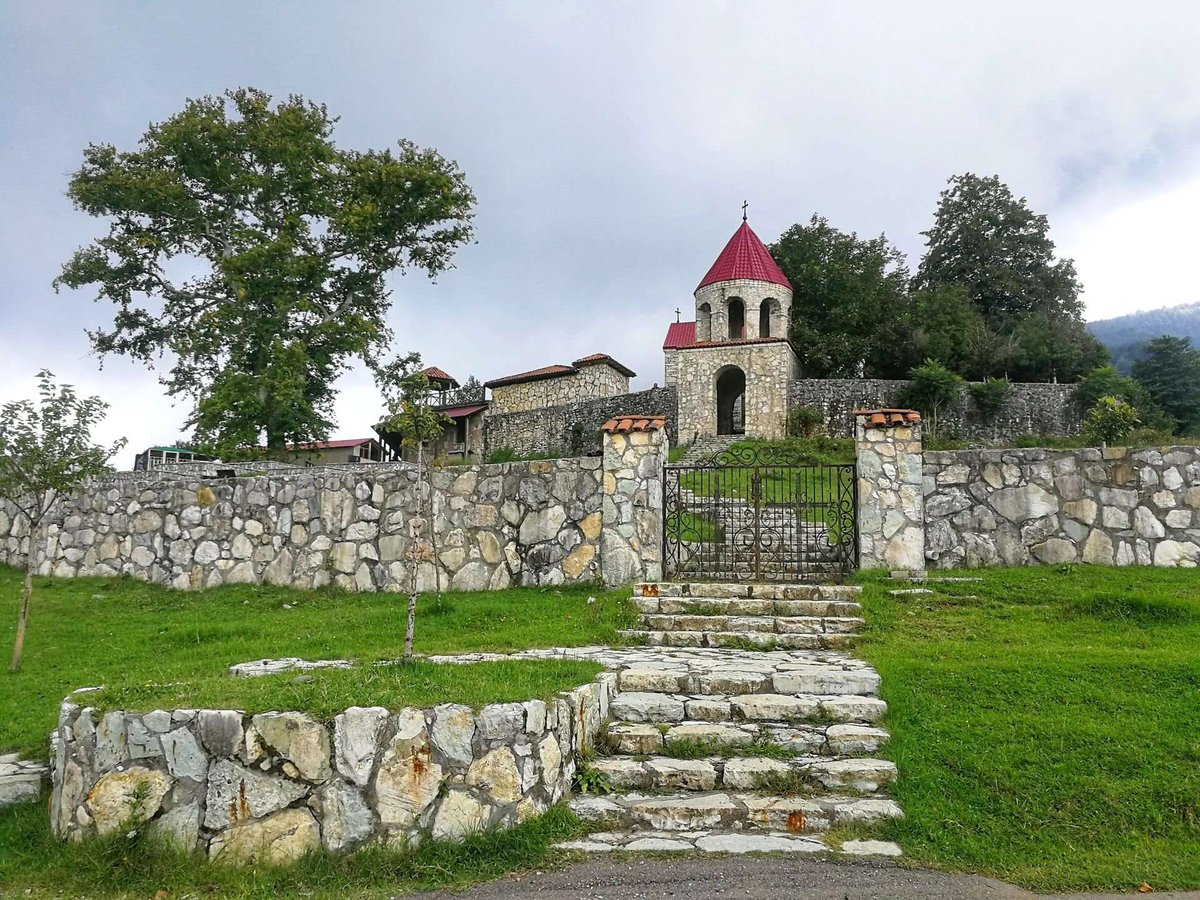
According to an ancient legend, Andrew the First-Called, one of the apostles of Jesus Christ, erected a stone cross on the site where the church was later built. It happened during his journey from Samegrelo to Svaneti. In the 8th century, a church appeared on the site of the cross, which was destroyed and rebuilt in the 18th century. Thus, the Tsachhur church has survived to the present day.
The church is located on a hill, and to get to it, you have to walk seven kilometers from the village center. The pilgrims walk along a country path that goes up.
The day before the holiday, it usually rains, and people walk through mud up to their ankles. Climbing by car is possible, but difficult due to the large number of pilgrims occupying the road.
This is a big event for the residents of neighboring villages, and they try to preserve traditions by preparing feasts for guests and passing pilgrims. People start climbing at dawn to catch the morning service at the temple. Some rise the day before to spend the night in the mountains.
On the way to the temple, an amazing thing happens: strangers become closer, begin to communicate, as if they had known each other for a long time. At this moment, it seems that nothing else matters, and the events here and now become the main ones.
As you climb, a magical landscape opens up: a green valley, a winding road, and pilgrims moving slowly upward. Oncoming travelers sometimes catch up with each other, then fall behind, and sometimes disappear from sight altogether. The whole journey is filled with mysticism and a sense of unity with nature and other pilgrims.
Performing the rite and blessing
When the church bells ring, the eyes of all those gathered are turned to the bell ringer. Soon the ringing of the bells subsides and the priest begins to say a prayer, after which he sprinkles holy water on the cradles raised high above their heads.
Where did the tradition of celebrating Tsachkhurob come from?
No one can say for sure how the cradle of childlessness ritual, as it is called here, originated. It is said that in ancient times, a pagan shrine called Moshe Tsachhuru was located on the site of the current temple. According to legend, once a year idol worshippers came to the shrine, praying for procreation. With the spread of Christianity, a cross was erected on this site, and then a temple. The name of the place has been preserved to this day - Tsachhuru.
Since the beginning of the 20th century, services in the Tsachkhur temple have stopped due to the political situation. However, people did not stop coming here, bringing cradles and praying to the Almighty for a miracle. The ritual continues today, and the number of pilgrims is increasing every year. Today, Tsachkhuroba is considered a fully Christian holiday. Looking at the bright, hopeful faces, for some reason you begin to believe that they will definitely succeed. They will carry their prayers to heaven, and the miracle will come true.…
National customs on Tsachkhuroba
Not only childless couples come here, but also those who have children after the ceremony. They pray as a sign of gratitude and demonstrate a miracle by their example. The most desperate find hope here.
It is considered a special tradition to bring aquani with you. It is a small wooden Georgian cradle. It is better to make it yourself, but it is not forbidden to buy it from the local population. Many people put dolls and dolls in the cradle. It is very symbolic and looks extremely beautiful from the outside.
After the service and the consecration ceremony, those who have become parents leave Aquani in the temple, and those who hope for a miracle take her with them.
The locals have their own belief: whoever feeds the most guests will be blessed for the coming year. Therefore, everyone is a welcome guest in all Georgian families. Everyone is greeted with joy and obligatory food.
How to get to the pilgrimage site on Tsachkhuroba
To get to the Church of the Archangel on Holy Week, first you need to get to Martvili. Buses run here from Kutaisi every hour. The journey from Tbilisi will take about 4 hours to Kutaisi and about half an hour to Martivili itself.
Then you will need to get to Salkhino. It is from here that people begin their pilgrimage on foot to the temple. Most of the way lies on a dirt road where a car can pass. However, most leave their cars in the village and walk to the holy place.
The path goes through the village of Tsachkhuri, which is located north of Salkhino, then the road goes to the right and up. Naturally, you can't do without a navigator or the help of local residents. Although on the Tsachkhurob holiday, you can follow the crowd. A crowd of people will accurately point the way and lead to the right place.

29 comments
Log in to leave a comment
Добраться до этого святого места не так просто. Путь к храму для кого- то станет символом нелегкого пути к родительству, но, лишь преодолев все трудности, возможно исполнить свою мечту.
Цачхуроба - это также прекрасный способ окунуться в грузинскую культуру и понять ее глубинный смысл. Стоит посетить этот праздник, если вы хотите прочувствовать атмосферу настоящей Грузии и испытать незабываемые впечатления. Ну а если вы мечтаете о малыше, тогда обязательно посетите храм Архангела трижды за этот праздник и если повезет, возьмите аквани (колыбельку). И вполне возможно, счастье материнства коснется и вас.