




🧩 Tbilisi in color. Discover 8 vibrant mosaic stories of the city
Eye-catching mosaics of Tbilisi
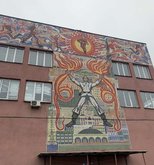

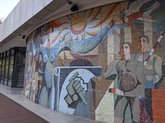

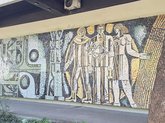

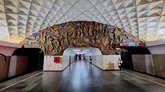

🖼️ Mosaics of Tbilisi on the Map
🔍 The city that speaks in mosaics — why these panels are worth seeing
In Tbilisi, mosaics are not just wall decorations. They are the language of the city that tells stories about time, people, and dreams. These bright paintings are a trace of a bygone era, when art met architecture not in galleries, but right on the facades of buildings.

The panels and bas-reliefs of the Soviet period still retain their charm and power. They make the city brighter, add color to the background of old neighborhoods and gray buildings. And most importantly, they allow you to see Tbilisi from a new side, through the prism of art and ideology of that time.
Our rating will show where these mosaic treasures are hidden and why they are worthy of your attention.
🧩 History of mosaic masterpieces — who created them and why
Most of the mosaics and bas-reliefs presented in our rating were created in the 1970s–1980s. This was the period when Tbilisi was actively being built and renovated, and buildings were decorated with monumental scenes glorifying labor, industry, and science.
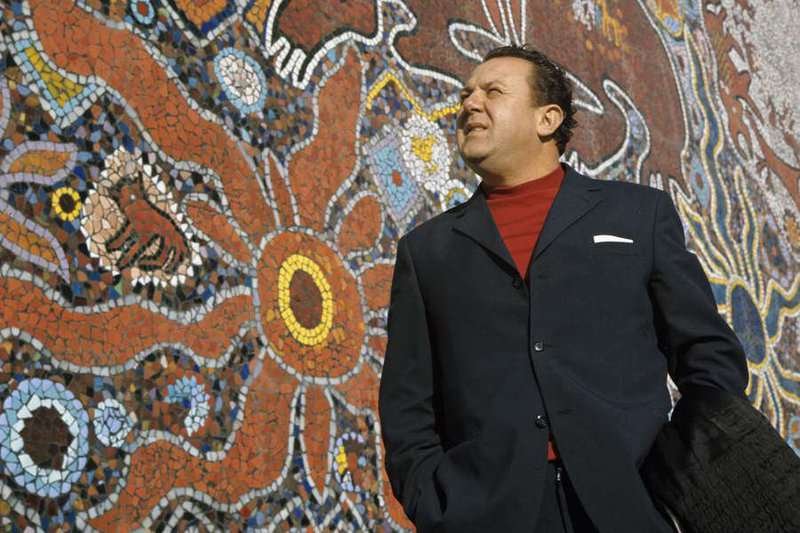
(Zurab Tsereteli at his work. Photo: RIA Novosti/Eduard Pesov)
The authors of the mosaics were famous artists and architects of the time, among whom Zurab Tsereteli, Merab Berdzenishvili, and their colleagues stand out. Their works can be seen on the facades of houses, metro stations, and public buildings.
The choice of themes was not accidental — the mosaics illustrated progress, industrial development, and the greatness of human labor. These images inspired residents and created a visual metaphor for the strength and harmony between man and nature.
🕰 Soviet Georgia — how the era is reflected in mosaics
The time when Tbilisi mosaics and bas-reliefs were born was the 60s–80s of the 20th century. A period of active industrial growth, ambitious architectural projects and large-scale urban development.
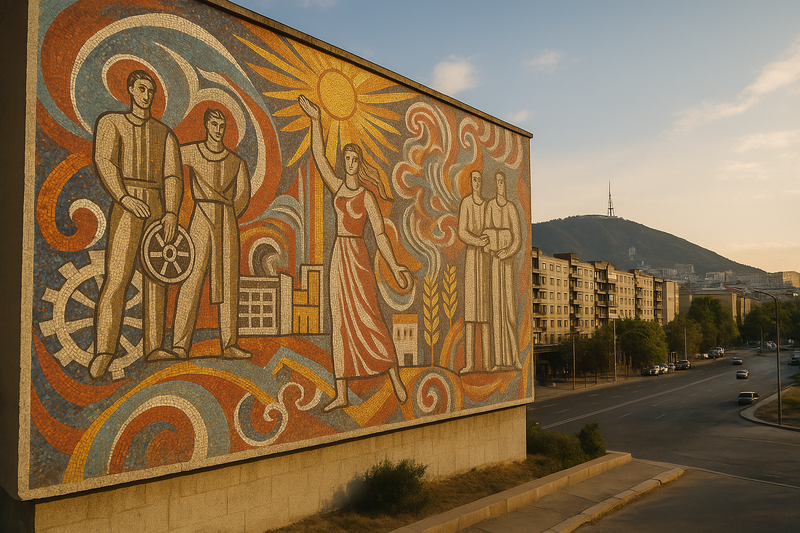
The mosaics became a visual reflection of the ideology and mood of that era. The plots include heroes of labor, scenes from the life of industrial Tbilisi, symbols of science, progress and social harmony. These works did not just decorate streets and buildings — they served an educational function, inspiring residents to participate in building a bright future.
Today, these panels are perceived differently — as art objects and as a document of their time. They help to feel the atmosphere of a bygone era and see the city through the prism of the artistic language of Soviet modernism.
Unusual mosaics of Tbilisi






🚶♀️ Where to look for mosaics today — routes and tips
Although many of Tbilisi's mosaics were created as public art, today some of them are hidden from the eyes of random passers-by. Some panels still decorate the facades of buildings, others are hidden in courtyards, at metro stations or on the territories of former Soviet institutions.
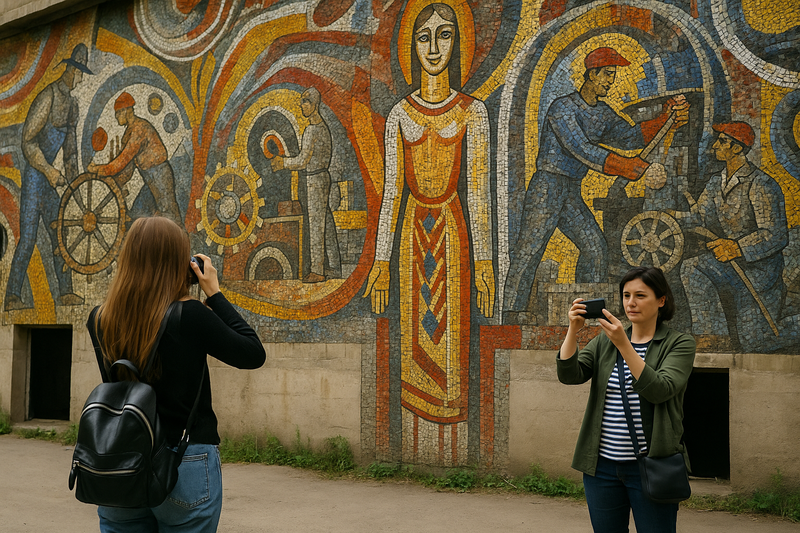
To see all the mosaics from our rating, it is best to plan a route in advance. The locations are scattered across different areas of the city: from the center to Saburtalo and Vake. Some of the objects are conveniently combined into a walking tour, and some are better reached by taxi or public transport.
Particular attention should be paid to abandoned buildings, where the mosaics have only partially survived - such places are especially atmospheric, but require caution when visiting.
Tip: in order not to miss interesting details and learn more about the plots, look at the cards of organizations - there you will find addresses, tips and photographs.
📸Mosaics as art objects and photo locations
Soviet mosaics of Tbilisi are not only cultural heritage, but also real art objects that fit perfectly into the frame. Their bright colors, expressive shapes and unusual plots make them a magnet for photographers, bloggers and anyone looking for non-standard visual stories about the city.
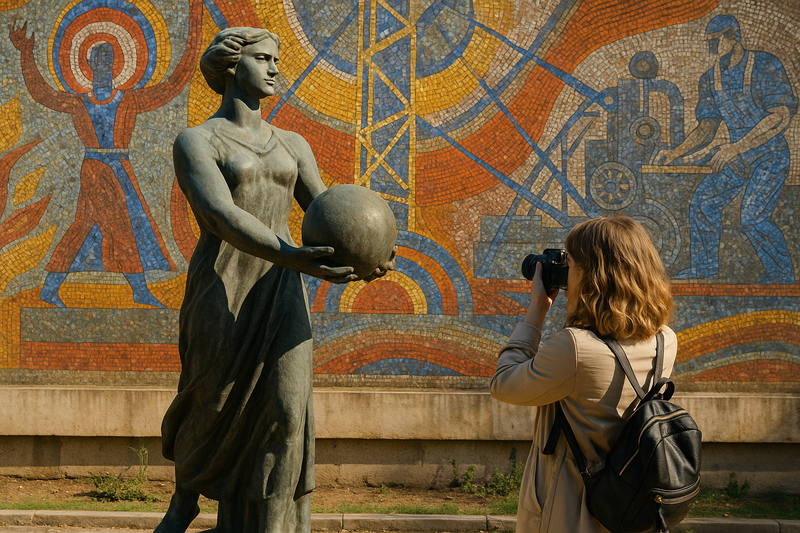
Textured surfaces, plays of light and shadow, geometry and details - each of the mosaics reveals itself in its own way at different times of the day and from different angles. Even if you are not a fan of street art, these panels will definitely add brightness and new impressions to your route.
Many of the mosaics are entire scenes filled with allegories and symbols that are interesting to look at and interpret. And the photos taken here will become not just beautiful shots, but living stories about Tbilisi and its past.
🌟 New life for old walls — how Tbilisi mosaics survive time
Many mosaics that were once the pride of Tbilisi's new districts are going through hard times today. Some panels are still pleasing to the eye, preserving the brightness of colors and integrity of the compositions. Others, alas, are gradually disappearing under layers of time, rust and indifference.
Nevertheless, mosaics continue to live — they are removed, discussed, sought out and rediscovered. Some initiatives to preserve street art have already appeared in the city, and lovers of urbanism and art are increasingly including mosaics in their routes.
These works are part of the visual history of Tbilisi. And they will live exactly as long as we notice them, photograph them and tell others about them.
Answers to frequently asked questions
On the facades of buildings in the Vake and Saburtalo districts, as well as at metro stations and former public institutions.
Among the most striking are the panels on the Political Education building, the bas-relief at Laguna Vere and the mosaic “Man, Labor, Meaning and Beauty of Being”.
Partially, yes. But for convenience, it is better to plan a combined route using transport.
Because of the bright color palette, texture and rare subjects, reflecting the spirit of the Soviet era and utopian progress.
The bas-reliefs at the Technological University metro station and the Political Education building are better preserved than others.
It was a visual embodiment of ideology - the mosaics promoted labor, science, development and created an image of a bright future.
Zurab Tsereteli, Merab Berdzenishvili and other monumentalists of that time.
Partially - some have been restored, but many are in a state of neglect or are in danger of disappearing.
Yes, some of the objects are located in remote areas and on the outskirts, for example, near industrial zones and former enterprises.
The most convenient way is to look at the organization cards in our rating, where addresses and photos are indicated.

0 comments
Log in to leave a comment