




Akhtala
In the municipality of Gurjaani, in the Akhtala basin, there are the most famous natural deposits of therapeutic mud in Georgia. On an area of 4-5 hectares, there are nine sources of mud, closely related to each other, although they never act simultaneously. From a depth of 250 m, mud and combustible gas with a small amount of liquid oil come out of volcanic craters. Mainly 3-4 hills are involved.
When one hill is activated, the second and third hills weaken or completely cease to act. The mud is gray in color, has a liquid consistency, consists of mineral waters, silicate crystal fragments and colloidal particles. The daily flow rate of mud is on average 37-47 m3. The specific gravity of mud varies accordingly with the content of water and precipitation.
The temperature of the dirt also changes - it depends on the air temperature. Therefore, in July-August mud is the warmest, and the coldest - in December and January.
AKHTALA RESORT
The beneficial effect of Akhtala mud for various diseases was known to the population in ancient times: one of the first to provide information about Akhtala was Vakhushti Bagrationi: "At the foot of the mountain there are Akhtala, which they say that there was once a settlement here, now flooded. From here comes boiling resin."
It is interesting that Vakhushti Bagrationi's idea of flooding the village still lives among the locals today. As they say, in the old days there was a big earthquake that took the whole village underground. A lake was formed in place of this village. It is said that from time to time Akhtala mud takes out all sorts of household items: shovels, axes and various ornaments for horse-drawn teams.
The first medical institution was built in Akhtala in 1836. It was a department of the Tbilisi Military Hospital. Mud treatment turned out to be such a functioning medical institution.
Currently, Akhtala mud is intensively used by the Tbilisi Balneological Center. In Akhtala itself, it is planned to upgrade the old infrastructure and revive the resort.Tbilisi
📍 Location
Alazani Valley, at the foot of the northeastern slope of the Tsiv-Gombori Ridge.📏 Distance
Telavi — 25 km · Tbilisi — 145 km⛰ Elevation
1800 m above sea level🌄 Relief
Plain terrain🌤 Climate
Moderately continental. January — 0.9°C · August — 23°C🌧 Annual precipitation
741 mm per year💧 Humidity
Average 72%☀ Sunshine duration
2100–2200 hours per year♨ Natural healing factors
Low mountain climate and pseudo-volcanic therapeutic mud.🩺 Types of treatment
Mud baths (general and local), vaginal and rectal applications, passive climatotherapy.❤️ Medical indications
Diseases of the musculoskeletal, peripheral nervous and genitourinary systems.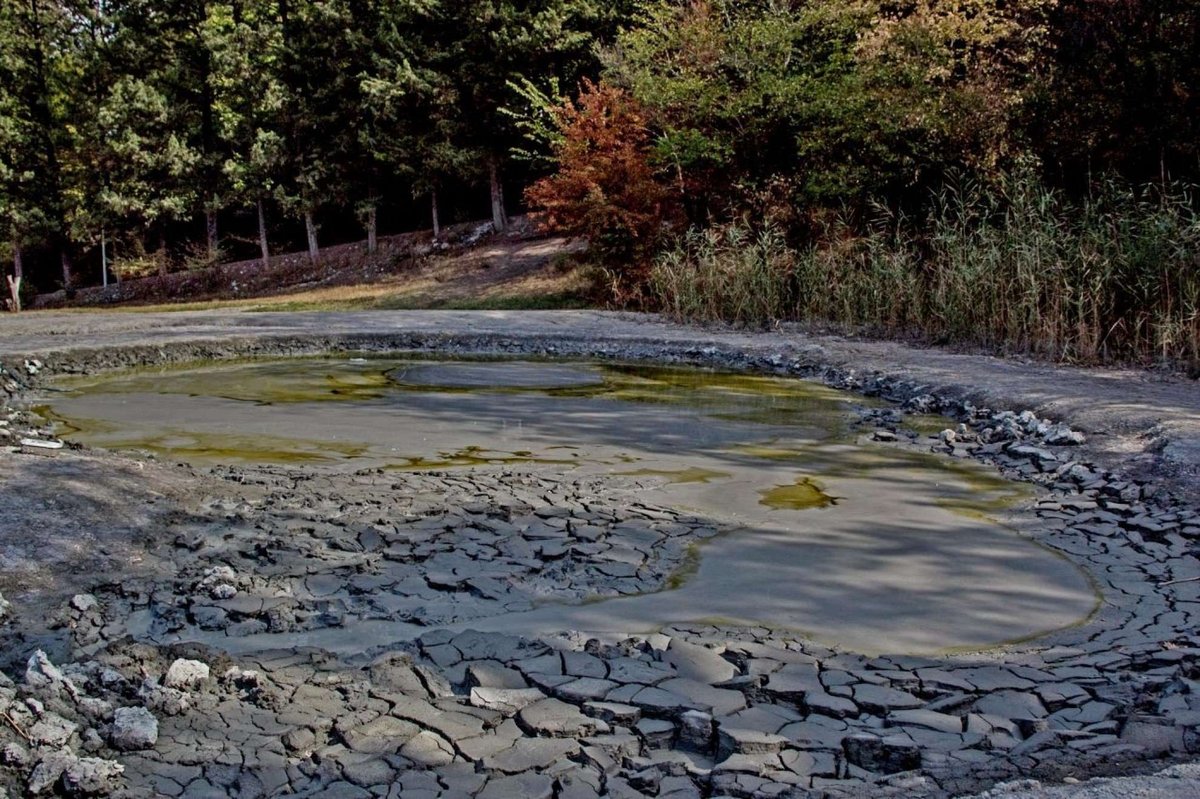
Akhtala is an unusual resort that can amaze tourists with its unique mud baths. These muds turned out to be so effective that a treatment facility was built on the site where they were found.
There are nine sources of mud that are closely related, but never act at the same time. These muds have amazing therapeutic properties and are used to treat diseases of the bone and joint system. But that's not all: Akhtala mud baths are famous for the fact that they often contain ancient objects. Word of this phenomenon has spread far beyond Georgia, and now the resort is visited not only by tourists who want to try the therapeutic mud, but also by archaeologists willing to explore this unique phenomenon. Mud springs, which emerge from volcanic craters 250 meters deep, are formed from therapeutic minerals such as sulfur, silicon, calcium, potassium, magnesium, sodium and many others. Precisely because of this rich composition the muds have unique therapeutic properties and are effectively used for medical purposes. According to legends, even in ancient times people knew about the curative properties of the mud, but the first scientific studies began only in the early XX century. In the 1930s there was built a specialized clinic for the treatment of diseases of the bone and joint system using the mud. Here patients can receive professional treatment, as well as enjoy the beautiful scenery and pleasant climate.
The use of Akhtala mud is recommended in the treatment of diseases of the musculoskeletal system, such as arthritis, arthrosis, bursitis, osteochondrosis and injuries of bones and joints. In addition, the mud is effective in treating diseases of the nervous system, gynecological diseases, psoriasis and other skin diseases. The modern Tbilisi Balneological Center, which is 15 km away from the city, is one of the largest mud treatment centers in Georgia. It offers a wide range of treatments, including mud baths, mud wraps, inhalations, massages and other therapies. Great attention is paid to the individual approach to each patient and the development of an individual treatment program. However, in addition to their therapeutic properties, mud springs are also an object of interest for archaeologists and historians. Thanks to rumors that the mud often brings ancient objects to the surface, ancient artifacts have been found here, which attest to the ancient history of the area. In addition to the mud baths, there are many other attractions that attract tourists from all over the world. Not far from the mud springs there is Ahtala Castle, which was built in the 12th century and is one of the most important historical sites in the region. You can also visit a monastery that was founded in the VI century and is one of the oldest monasteries in Georgia. The first medical facility in Akhtala was built in 1836 as a branch of the Tbilisi military hospital.
The resort is located on the shore of the river Lagodekhistskali, at the foot of the southern slope of the Caucasus Mountains, 25 km from Telavi and 155 km from Tbilisi. At an altitude of 460 meters above sea level, on a plain, with a moderately humid climate characteristic of low mountains. Winters are mild and snowless, with an average temperature of only 0.9°C in January. Summers are very warm, the average temperature in August reaches 24.1°C. Average annual precipitation is 1076 mm and the average relative humidity is 72%. The duration of sunshine per year is 2300 hours.
Akhtala Resort, thanks to its natural healing factors and rich history, is one of the interesting places to visit in Georgia. If you want to feel the healing power of the mud and enjoy the beautiful views of the mountainous area, then you must visit this resort. Don't forget to leave your comments below the article and ask questions - we will be happy to answer them!

0 comments
Log in to leave a comment