




Sataplia
The Sataplia Nature Reserve is the only place in the world where an area of 800 sq. About 200 traces of herbivorous and predatory dinosaurs have been found.
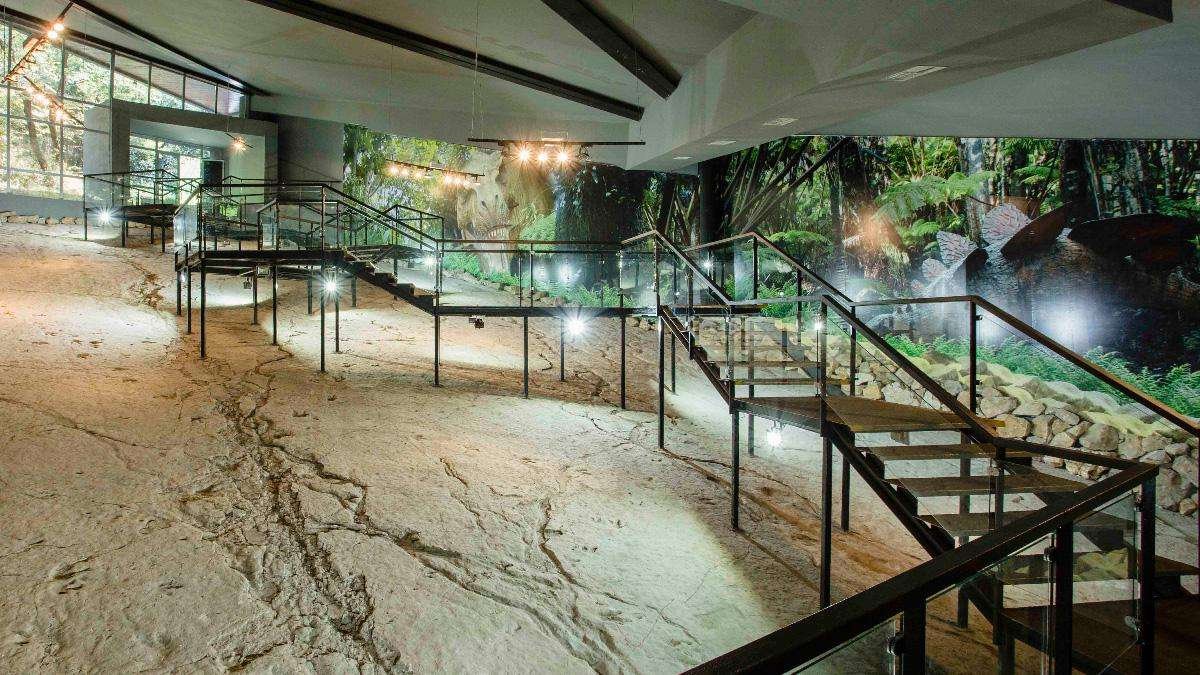
These rare traces were discovered in 1933 by the naturalist Petre Chabukiani near the Sataplia cave, on the marl limestone layers of the Lower Cretaceous period. Thousands of years ago, the footprints of dinosaurs were covered with a sedimentary layer of 2 m. The dinosaurs of a new group walked along this trail, leaving their own traces.
Thus, the tracks of dinosaurs are placed in two tiers: on the lower tier – the tracks of carnivorous dinosaurs, and on the upper – the tracks of herbivores, in many ways superior in body weight to their predatory "tribesmen".
The name "Sataplia" is associated with bees that have been nesting in limestone crevices since time immemorial. Bees live there and collect honey in our time. The cave is a natural channel of the Ogaskuri River. For 30 million years ago, this small river slowly made its way and expanded the corridors of the cave. The total length of the cave complex is 900 m, depth – 10 m, width – 12 m.
The Sataplia State Reserve was established in 1935. Its area is 330 hectares. The reserve is complex in nature and includes geological, paleontological, speleological, zoological and botanical monuments. 95% of the territory is covered with forests of relict Colchian type trees.
The reserve's infrastructure includes: a visitor center, a structure for the preservation of dinosaur tracks, an exhibition hall, a glass observation tower, a cafe, landscaped caves and marked trails.

0 comments
Log in to leave a comment